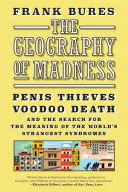
The Geography of Madness
 83
83

The Geography of Madness
Frank Bures’ The Geography of Madness is a robust exploration of afflictions tied to specific cultural landscapes, moving beyond simplistic diagnoses. Bures’ strength lies in his tenacious reporting; he doesn't just read about Koro, he seeks out those afflicted by it. His account of witnessing a Malaysian man “run amok” is particularly vivid, illustrating the raw power of culturally amplified panic. A limitation, however, is the occasional feeling that Bures, as an outsider, is observing rather than fully inhabiting the experiences he describes. The chapter detailing the “death date” phenomenon, where individuals are convinced they will die on a specific day and subsequently do, is compelling but could benefit from deeper exploration of the underlying neurological or psychological mechanisms beyond cultural suggestion. Despite this, the book offers a vital perspective on how collective belief can shape individual reality. It is an important contribution to understanding the mind's cultural plasticity.
📝 Description
83
Frank Bures' 2016 book investigates afflictions tied to specific cultures, from Koro to 'running amok'.
In The Geography of Madness, Frank Bures travels the world to examine culture-bound syndromes, afflictions that appear only within particular societies. He recounts his direct experiences with conditions such as Koro, a sudden anxiety about penis retraction, and the Malayan concept of 'running amok,' a state of frenzied violence. Bures seeks the origins of these phenomena not in universal psychological disorders, but in the unique beliefs and social pressures of the groups that experience them. The book offers a personal account of his research, presenting baffling conditions through his encounters and investigations.
This work is for readers interested in anthropology, psychology, and unusual aspects of human experience. It challenges simple explanations for mental distress, examining how culture, belief, and the body interact. Academics in comparative religion, ethnopsychiatry, and folklore will find its fieldwork useful. General readers drawn to narrative journalism that probes the limits of the human mind will also find it engaging.
While not strictly occult, this book engages with a tradition of inquiry into altered states and belief-driven realities that touches on esoteric thought. It follows anthropological and psychiatric work that grappled with phenomena outside Western norms, questioning the universality of diagnostic categories. By examining how localized beliefs manifest physically and psychologically, it touches on themes of mind-body connection and the power of collective consciousness, areas often explored in esoteric studies.
💡 Why Read This Book?
• You will learn how specific cultural beliefs, like those surrounding Koro, can manifest as tangible physical anxieties, a concept explored in the book's detailed accounts of affected individuals. • You will gain an understanding of the phenomenon of "running amok" in Malaysia, not as random violence, but as a culturally understood, albeit extreme, response to social or personal pressures. • You will grasp the profound impact of collective certainty on individual fate, particularly through the examination of people convinced they will die on a specific date, a phenomenon Bures investigates.
⭐ Reader Reviews
Honest opinions from readers who have explored this book.
❓ Frequently Asked Questions
What are culture-bound syndromes as discussed in The Geography of Madness?
Culture-bound syndromes are distinct patterns of illness or distress that are recognized within specific cultural groups but may not align with universal diagnostic criteria, as Frank Bures investigates in his global exploration.
Does Frank Bures offer medical explanations for these syndromes?
Bures primarily explores the cultural, social, and belief-based origins of these phenomena, often contrasting them with standard Western medical explanations, highlighting how context shapes perceived illness.
What is Koro and how is it presented in the book?
Koro is presented as a culture-bound syndrome, primarily in Southeast Asia, characterized by extreme anxiety over the perceived shrinkage or disappearance of one's genitals, a topic Bures delves into through personal accounts.
How does the book approach the phenomenon of 'running amok'?
The book examines 'running amok' as a culturally specific state of frenzied, violent behavior, exploring its triggers and interpretations within Malay culture, moving beyond simple notions of madness.
Is The Geography of Madness an academic text or journalistic narrative?
It is primarily a work of narrative journalism, blending investigative reporting and Bures' personal journey with anthropological and psychological observations on culture-bound syndromes.
What is the significance of the year 2016 for this book?
2016 marks the original publication year of Frank Bures' The Geography of Madness, a period when global cultural studies were increasingly influential.
🔮 Key Themes & Symbolism
Culture-Bound Syndromes
The central theme is the existence and nature of culture-bound syndromes, afflictions unique to specific societies. Bures argues these are not necessarily 'less real' than universal diagnoses but are deeply embedded in local belief systems, social structures, and historical contexts. He presents cases like Koro and the 'death date' phenomenon to illustrate how shared cultural narratives can manifest as profound individual distress, challenging the universality of Western psychiatric models.
Belief and Reality
The book powerfully explores how deeply held beliefs can shape an individual's perception of reality and even their physical experience. Whether it's the conviction that one's penis is retracting or the certainty of a specific death date, Bures shows how cultural narratives create powerful internal states. This theme questions the objective nature of 'reality' when confronted by the subjective, culturally mediated experience of intense psychological and psychosomatic phenomena.
Journalistic Investigation
Bures employs a boots-on-the-ground journalistic approach, traveling to different countries and engaging directly with individuals experiencing these syndromes. This method highlights the importance of ethnographic detail and personal testimony in understanding complex human experiences. His own journey through these diverse cultural landscapes serves as a narrative thread, emphasizing the challenges and insights gained from immersive, cross-cultural reporting.
The Global Mind
The work posits a 'global mind' of sorts, not in a collective consciousness sense, but in how human anxieties and responses to existential threats find diverse cultural expressions. By tracing similar underlying fears across disparate cultures, Bures suggests commonalities in human vulnerability, even as the manifestations of distress vary wildly. This perspective encourages a more inclusive understanding of psychological well-being worldwide.
💬 Memorable Quotes
Direct passages from the work, attributed to the author.
“Why do some men become convinced—despite what doctors tell them—that their penises have, simply, disappeared.”
— This rhetorical question expresses the core puzzle of culture-bound syndromes, particularly Koro, highlighting the stark conflict between internal conviction and external medical consensus.
“Why do people across the world become convinced that they are cursed to die on a particular date—and then do?”
— This highlights the unsettling power of self-fulfilling prophecy and fatalistic belief systems, a key area of Bures' investigation into how cultural narratives can dictate personal destiny.
“Why do people in Malaysia suddenly “run amok”?”
— This points to a specific, culturally recognized pattern of violent outburst, prompting an examination of its social triggers and meaning within Malay culture, rather than a generic diagnosis of aggression.
“It’s a fascinating, and at times rollicking, adventure into the stranger aspects of the human psyche.”
— This interpretation suggests the book offers an engaging, lively exploration of unusual psychological states, promising both intellectual stimulation and an entertaining reading experience.
“The book investigates these and other “culture-bound” syndromes, tracing each seemingly baffling phenomenon to its source.”
— This describes the book's central mission: to uncover the origins and contextual factors behind unusual psychological and psychosomatic conditions that are specific to certain cultural groups.
🌙 Esoteric Significance
Tradition
While not strictly within a defined esoteric lineage like Hermeticism or Kabbalah, The Geography of Madness touches upon themes relevant to comparative mysticism and Gnostic thought. It explores how deeply ingrained cultural beliefs can create subjective realities that appear inexplicable from an outside perspective, mirroring Gnostic ideas of illusion and the creation of false worlds by lesser deities. The work's focus on the mind's power to shape experience aligns with esoteric traditions that emphasize consciousness as a primary reality-shaping force.
Symbolism
The book doesn't employ overt esoteric symbols but rather uses the phenomena themselves as potent symbols of cultural anxieties. Koro, for instance, symbolizes deep-seated fears of emasculation and existential threat, amplified by specific cultural narratives. The 'running amok' state can symbolize societal pressures and collective hysteria boiling over. The conviction of a predetermined death date symbolizes a cultural confrontation with mortality and fate, where belief itself becomes the mechanism of destiny.
Modern Relevance
Contemporary thinkers in fields like critical psychology, medical anthropology, and even certain branches of consciousness studies find value in Bures' work. It supports arguments against the over-medicalization of human experience and underscores the importance of cultural context in understanding mental well-being. Practices focusing on mindfulness and embodied cognition, which acknowledge the mind-body connection, can find parallels in Bures' explorations of how belief manifests physically, resonating with modern holistic approaches to health.
👥 Who Should Read This Book
• Anthropologists and cultural studies scholars: To examine case studies of culture-bound syndromes and their societal implications, gaining nuanced perspectives on human behavior. • Journalists and narrative non-fiction enthusiasts: To appreciate a model of immersive, global reporting that tackles complex psychological and cultural phenomena with compelling storytelling. • Readers interested in comparative psychology and the philosophy of mind: To explore the profound ways in which cultural beliefs can shape individual perception, experience, and even physiological states.
📜 Historical Context
The Geography of Madness, published in 2016, emerged within a range of anthropology and transcultural psychiatry that had long grappled with the concept of culture-bound syndromes. Following foundational work by scholars like Franz Boas and later figures in medical anthropology and ethnopsychiatry during the mid-to-late 20th century, Bures’ book offers a contemporary, journalistic take. It engages implicitly with the DSM (Diagnostic and Statistical Manual of Mental Disorders) by questioning its Western-centric diagnostic categories. While not directly engaging with a specific contemporary author's critique in its original blurb, the work’s approach echoes discussions raised by scholars like Arthur Kleinman, who advocated for greater cultural sensitivity in understanding illness. The book's reception likely resonated with readers interested in global mental health and the limitations of universalizing psychological frameworks, a growing concern in the 2010s.
📔 Journal Prompts
The phenomenon of Koro and its cultural context.
The concept of 'running amok' as a culturally specific behavior.
Personal reflection on a belief that significantly impacted your reality.
The role of collective certainty in shaping individual outcomes.
Investigating the 'source' of a baffling personal or cultural phenomenon.
🗂️ Glossary
Culture-Bound Syndrome
A mental or physical illness recognized within a specific cultural group, often with symptoms or explanations not found in Western diagnostic systems. Frank Bures investigates these phenomena globally.
Koro
A culture-bound syndrome, prevalent in parts of Asia, characterized by extreme anxiety over the perceived shrinkage or disappearance of the penis or vulva.
Running Amok
A state of frenzied, violent behavior described in Malay culture, often triggered by perceived insults or social pressures, which Bures explores in detail.
Transcultural Psychiatry
A field of study that examines the influence of culture on mental illness and its treatment, questioning the universality of psychiatric diagnoses.
Psychosomatic
Relating to physical symptoms or illness that arises from or is aggravated by mental factors such as stress or emotional trauma.
Ethnography
The scientific description of the customs of individual peoples and cultures, often involving immersive fieldwork, a method Bures employs.
Fatalism
The belief that all events are predetermined and therefore inevitable, a concept relevant to individuals convinced of a specific death date.