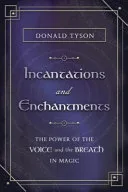
Incantations and Enchantments
 79
79

Incantations and Enchantments
Donald Tyson's "Incantations and Enchantments" offers a detailed, almost academic, dissection of breath as a magical force. Rather than relying on vague spiritual pronouncements, Tyson meticulously breaks down the mechanics of breath manipulation for occult purposes. His strength lies in synthesizing diverse cross-cultural understandings of breath—from "chi" to "ruach"—into a coherent magical system. A particularly illuminating section discusses the precise phonetic and energetic qualities of specific vocalizations used in conjunction with breath, moving beyond simple chanting. However, the book's dense theoretical structure might be a hurdle for less experienced practitioners, occasionally sacrificing accessibility for depth. While the 2024 publication date firmly places it in contemporary esoteric discourse, its core principles are deeply rooted in historical magical thought. It is a demanding but rewarding text for those serious about refining their energetic practices.
📝 Description
79
Donald Tyson's 2007 book, Incantations and Enchantments, posits breath as the fundamental conduit for spiritual energy.
Donald Tyson's "Incantations and Enchantments" examines the energetic potential of the human breath in magical theory and practice. The book moves beyond simple breathing exercises to show how vocalization and conscious respiration can influence spiritual and material reality. It argues that breath is the primary channel for channeling spiritual energy, a concept found in many ancient cultures. This volume is intended for experienced practitioners of Western esotericism, ritual magic, and comparative mythology. Readers should have a basic understanding of energy work, occult principles, and be ready to engage with complex theoretical ideas. It is not an introductory text, but a way to deepen existing magical disciplines for those wishing to improve their control over subtle energies.
The core concepts are placed within a lineage of thought that views breath as vital energy, referencing terms like the Greek "pneuma" and the Hebrew "ruach." Tyson draws on historical magical traditions, ancient philosophies, and cross-cultural spiritual practices to support his argument. The book offers a rigorous, systematic approach to breath magic, distinguishing it from more general meditation or mindfulness techniques. The central thesis is that the "spiritual energy of breath" is the main vehicle for magical manipulation. Tyson details methods for "vocalizing" this energy, suggesting a connection between sound, breath control, and intentionality.
This work situates breath work within a tradition that recognizes it as vital energy, drawing parallels with concepts such as the Greek 'pneuma' and Hebrew 'ruach.' Tyson connects these ideas to historical magical traditions, ancient philosophies, and cross-cultural spiritual practices. The book's focus is on a systematic approach to breath magic, differentiating it from general mindfulness practices. It emphasizes the "spiritual energy of breath" as a tool for magical manipulation through vocalization, sound, and intentionality to achieve specific outcomes.
💡 Why Read This Book?
• You will learn to harness the specific energetic qualities of "chi" (spiritual energy) through controlled breath and vocalization, a technique detailed with practical exercises not found in general esoteric texts. • Gain insight into the historical and cross-cultural understanding of "pneuma" and "ruach" as integral to magic, providing a scholarly foundation for practices often treated superficially. • Discover advanced methods for directing "spiritus" (the Latin term for breath/spirit) for targeted magical effects, moving beyond basic breathing exercises to sophisticated energy work.
⭐ Reader Reviews
Honest opinions from readers who have explored this book.
❓ Frequently Asked Questions
What specific ancient terms for breath energy does Donald Tyson discuss in "Incantations and Enchantments"?
The book explores terms like the Chinese "chi," the Hebrew "ruach," the Greek "pneuma," and the Roman "spiritus," highlighting their shared recognition of breath as a vital spiritual force across cultures.
Is "Incantations and Enchantments" suitable for beginners in magic?
No, this is an advanced text. It requires prior knowledge of magical principles and energy work, focusing on deepening existing practices rather than introducing fundamental concepts.
What is the primary focus of the magical techniques presented in the book?
The book's primary focus is on utilizing the human breath and its associated vocalizations as a potent tool for spiritual energy manipulation and achieving specific magical outcomes.
When was "Incantations and Enchantments" first published?
The book was first published on August 8, 2024.
Does the book offer practical exercises for breath magic?
Yes, while deeply theoretical, the book provides detailed methodologies and exercises for practitioners to apply the principles of breath and vocalization in their magical work.
What distinguishes Tyson's approach to breath magic from general meditation techniques?
Tyson's approach is distinct in its rigorous, systematic application of breath and vocalization for specific magical intent and energetic manipulation, moving beyond general relaxation or mindfulness.
🔮 Key Themes & Symbolism
Breath as Spiritual Conduit
The central theme posits the human breath as the primary vessel for spiritual energy, a concept intricately woven through global traditions. Tyson meticulously examines how "chi," "ruach," "pneuma," and "spiritus" are not mere biological functions but energetic forces capable of being directed. The book argues that by consciously controlling and vocalizing the breath, practitioners can tap into and manipulate this fundamental life force for magical ends, moving beyond theoretical understanding to tangible energetic application.
Vocalization and Energetic Resonance
This theme explores the synergistic relationship between breath control and vocalization in magical practice. Tyson emphasizes how specific sounds, uttered with controlled exhalation, can amplify and shape the spiritual energy carried by the breath. The work investigates the precise phonetic and resonant qualities of incantations, suggesting that the proper articulation of words, coupled with breath manipulation, creates specific energetic signatures capable of influencing reality.
Advanced Energy Work Methodology
"Incantations and Enchantments" offers a systematic, advanced methodology for practitioners seeking to refine their energetic control. It moves beyond introductory concepts to detail sophisticated techniques for channeling and directing the breath's inherent power. The book provides a structured framework for understanding the mechanics of breath magic, enabling experienced individuals to integrate these principles into their existing occult disciplines for enhanced efficacy.
Cross-Cultural Esoteric Synthesis
Tyson synthesizes diverse cross-cultural understandings of breath as a spiritual force, drawing parallels between ancient Greek, Hebrew, Chinese, and Roman concepts. This theme highlights how seemingly disparate traditions converge on the idea of breath as the seat of spirit. By presenting this synthesis, the book provides a broader, more integrated perspective on breath magic, demonstrating its universal relevance within esoteric studies and historical mystical thought.
💬 Memorable Quotes
Direct passages from the work, attributed to the author.
“The human breath is recognized as the seat of spirit across cultures.”
— This highlights the foundational principle of the book: breath is not merely physical but the very essence of spiritual energy, a universal concept Tyson explores.
“Vocalize the Spiritual Energy of Breath for Potent Magic.”
— This is the core directive of the book, emphasizing that active vocalization, not just passive breathing, is key to unlocking powerful magical effects through breath manipulation.
“Chi, ruach, pneuma, spiritus refer to the same invisible energy.”
— This statement underscores Tyson's method of synthesizing diverse esoteric traditions by identifying common underlying concepts, specifically the vital energy inherent in breath.
“Maximize the potential of this energy in your magic.”
— This points to the practical, results-oriented nature of the book, aiming to equip readers with advanced techniques to enhance their existing magical abilities through breath work.
“The breath as the seat of spirit.”
— A concise restatement of the central thesis, emphasizing the profound connection between the physical act of breathing and the manifestation of spiritual essence.
🌙 Esoteric Significance
Tradition
The work draws heavily from Western Hermeticism and incorporates elements of comparative mythology and ancient philosophies. It fits within the Hermetic tradition by emphasizing the principle of "As Above, So Below," applied here to the microcosm of the human body (breath) influencing the macrocosm (reality). Tyson's approach seeks to provide a systematic, almost scientific, method for practices that have historically been more intuitive or divinely inspired.
Symbolism
The primary symbol is the breath itself, representing life force, spirit, and the bridge between the material and spiritual realms. Vocalizations function as symbolic utterances, acting as keys to unlock specific energetic potentials. The concept of "chi" (or its equivalents like "ruach") is a core motif, symbolizing the invisible energy that permeates all existence and can be manipulated through focused intent and breath control.
Modern Relevance
Contemporary practitioners in advanced Western esoteric orders, particularly those focused on ritual magic and energy manipulation, find value in Tyson's detailed methodologies. His work is relevant to modern occultists seeking to refine their control over subtle energies and vocal components of ritual. It also appeals to scholars of comparative religion and esotericism interested in the cross-cultural significance of breath practices within magical traditions.
👥 Who Should Read This Book
• Experienced ritual magicians seeking to deepen their understanding and application of breath control and vocalization in spellcraft. • Students of comparative esotericism interested in the historical and cross-cultural significance of breath as a spiritual force, from "chi" to "ruach." • Advanced practitioners of energy work looking for systematic, detailed techniques to enhance their energetic manipulation and focus through breath-based methods.
📜 Historical Context
Published in 2024, Donald Tyson’s "Incantations and Enchantments" arrives in a contemporary range of esoteric literature that often revisits ancient concepts through modern lenses. The work engages with a long tradition recognizing breath as a vital force, echoing the philosophical inquiries into "pneuma" by Stoic philosophers in ancient Greece. It positions itself against more generalized mindfulness or New Age approaches to breathwork by grounding its practices in a rigorous, occult framework. While not directly engaging with a specific contemporary author for refutation or affirmation, its detailed systematic approach offers a counterpoint to the more eclectic or intuitively-based magical systems that have gained prominence. The book's focus on breath magic places it within a lineage that includes historical figures like Eliphas Levi, who explored the connection between breath, sound, and magical will, though Tyson’s approach is notably more detailed and analytical.
📔 Journal Prompts
The energetic potential of "chi" during exhalation.
Specific vocalizations and their impact on "spiritus."
Connecting "pneuma" to intention in ritual.
The role of "ruach" in energetic projection.
Refining breath control for focused magical outcomes.
🗂️ Glossary
Chi
The vital life force or spiritual energy in Chinese philosophy and traditional medicine, often associated with breath and circulation.
Ruach
A Hebrew term often translated as spirit, wind, or breath, signifying the divine animating force or the spirit of God.
Pneuma
A Greek term meaning breath, spirit, or soul, used in philosophy and theology to denote the vital principle or animating force.
Spiritus
The Latin word for breath, spirit, soul, or courage, historically used to denote the vital animating principle.
Vocalization
The act of producing vocal sound, which in this context is employed as a tool to shape and direct spiritual energy through breath.
Energy Work
The practice of consciously manipulating subtle energies for various purposes, including healing, spiritual development, and magical manifestation.
Incantation
A series of words said in a ritual or spell, intended to have a magical effect, often used in conjunction with breath control.