The Essential Vedanta
 77
77

The Essential Vedanta
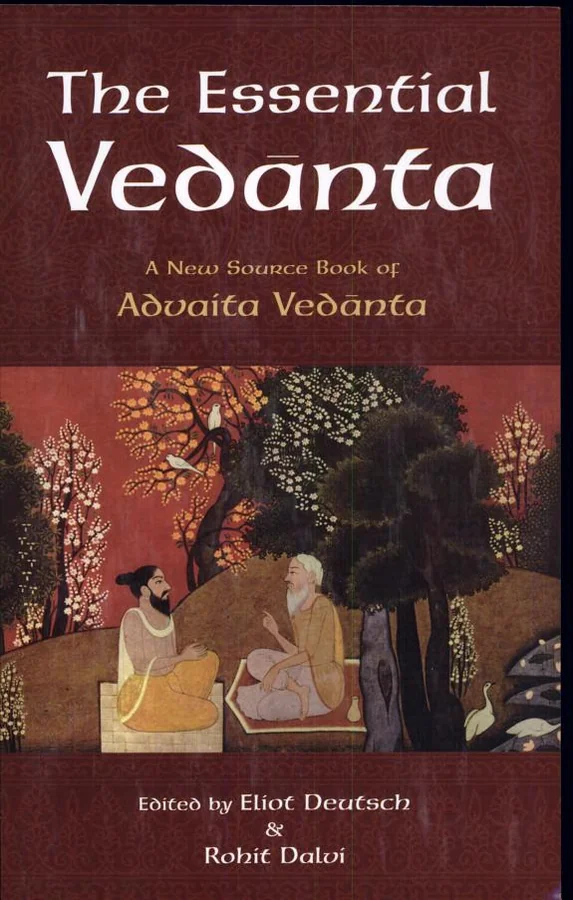
Eliot Deutsch and Rohit Dalvi's "The Essential Vedanta" offers a disciplined approach to a vast philosophical landscape. Its strength lies in its systematic deconstruction of Advaita Vedanta, presenting arguments with a clarity that aids comprehension, even for those unfamiliar with Indian philosophical jargon. The discussion of Maya, for instance, moves beyond simplistic definitions to explore its function in obscuring the true nature of reality. However, the text occasionally feels more like an academic exercise than a spiritual guide; the section on the practical application of Vedanta, while present, could benefit from more nuanced exploration of lived experience. A particularly illuminating passage details the concept of *neti neti* (not this, not that) as a method for realizing Brahman by negation. Ultimately, this book serves as an excellent scholarly primer, though it may leave practitioners wanting deeper experiential guidance.
📝 Description
77
Eliot Deutsch and Rohit Dalvi's 2008 book introduces Vedanta's philosophical and spiritual core.
This volume offers a scholarly yet accessible look at Vedanta, a major school of Hindu thought. It examines the tradition's fundamental ideas about reality and the self. The book breaks down core tenets, focusing on metaphysical ideas and how they apply to understanding existence.
It is useful for students of Hinduism who need a clear overview. It also serves those in Western philosophy and comparative religion interested in Vedanta's non-dualistic viewpoint. Spiritual seekers on various paths will find its explanations of complex ideas helpful.
The book details key Vedanta ideas like Brahman, the ultimate reality; Atman, the self; Maya, illusion; and Moksha, liberation. It explains how these connect, especially the Advaita Vedanta claim that Atman and Brahman are one. This challenges common dualistic views of life.
Vedanta's roots lie in the Upanishads, part of India's ancient Vedas. Its philosophical structure developed over centuries. Adi Shankara, in the 8th century CE, was a major figure who articulated Advaita Vedanta, a non-dualistic approach that significantly shapes contemporary understanding and is central to this book's discussion.
💡 Why Read This Book?
• Gain a precise understanding of Brahman and Atman, learning how the concept of their non-difference, central to Advaita Vedanta, challenges Western notions of individual selfhood. • Grasp the function of Maya, the cosmic illusion, as explained in the text, recognizing its role in creating perceived duality and separation from the ultimate reality. • Explore the *neti neti* method for self-realization, as presented in the book, discovering a specific philosophical tool for negating false identifications to approach understanding of the Absolute.
⭐ Reader Reviews
Honest opinions from readers who have explored this book.
❓ Frequently Asked Questions
What is the primary philosophical school of Vedanta covered in "The Essential Vedanta"?
The book primarily focuses on Advaita Vedanta, the non-dualistic school of thought. This tradition, significantly expounded by Adi Shankara in the 8th century, posits the identity of the individual soul (Atman) with the ultimate reality (Brahman).
When was "The Essential Vedanta" by Eliot Deutsch and Rohit Dalvi first published?
The initial publication date for "The Essential Vedanta" by Eliot Deutsch and Rohit Dalvi was August 12, 2004.
Who is the intended audience for "The Essential Vedanta"?
This book is aimed at students of Hinduism, those studying Eastern and Western philosophy, and spiritual seekers interested in understanding the non-dualist tradition of Vedanta.
What are the core concepts explained in the book?
Key concepts include Brahman (ultimate reality), Atman (the self), Maya (illusion), and Moksha (liberation). The book elaborates on the non-dual relationship between Atman and Brahman.
Does the book discuss the historical origins of Vedanta?
Yes, the book provides historical context, tracing Vedanta's roots to the Upanishads, which are part of the Vedas, India's oldest sacred texts.
What is the significance of Advaita Vedanta?
Advaita Vedanta is significant for its assertion that the apparent multiplicity of the world and individual selves is ultimately an illusion, and that only Brahman is real. This non-dualistic perspective has deeply influenced Indian philosophy and spirituality.
🔮 Key Themes & Symbolism
The Nature of Brahman
The text meticulously examines Brahman not merely as a supreme deity, but as the singular, undifferentiated Absolute Reality underlying all existence. It distinguishes Brahman from anthropomorphic conceptions, emphasizing its attributeless (nirguna) nature in its ultimate essence. The work explores how this concept challenges conventional ontology, proposing a unified ground of being that transcends all dualities of subject-object, existence-non-existence, and form-formlessness, as articulated in the Upanishads.
The Self (Atman) and its Identity
Central to the book is the exploration of Atman, the inner self or consciousness. It details the Advaitic perspective that Atman is not a separate entity but is identical with Brahman. The work contrasts this with common misconceptions of the self as the ego or personality, highlighting the process of realizing this fundamental unity through philosophical inquiry and spiritual practice, often described through the negation of empirical identifications.
Maya: The Veil of Illusion
Deutsch and Dalvi address Maya, the concept of cosmic illusion or phenomenal appearance. The book explains Maya not as outright non-existence, but as the power that causes the One Reality (Brahman) to appear as the manifold world of names and forms. It elucidates how this principle accounts for the perceived separation between individual souls and the ultimate reality, and how its removal leads to liberation.
Moksha: The Goal of Liberation
The ultimate aim of Vedanta, Moksha, is presented as the realization of one's true nature as Brahman, thereby transcending the cycle of birth and death (samsara). The book discusses Moksha not as an afterlife reward but as an immediate, albeit often unrecognized, state of being. It outlines the path to this liberation through knowledge (jnana), emphasizing the importance of direct realization over mere intellectual assent.
💬 Memorable Quotes
Direct passages from the work, attributed to the author.
“The world of multiplicity is neither wholly real nor wholly unreal.”
— This statement expresses the concept of Maya, suggesting that the phenomenal world possesses a transactional reality but lacks ultimate, independent existence, being superimposed upon Brahman.
“The true Self is beyond all conceptualization and description.”
— This highlights the nature of Atman as described in Vedanta, emphasizing that it is not an object of perception or thought, but the very consciousness that allows for these functions, pointing towards a transcendent reality.
“Brahman is existence-consciousness-bliss (Sat-Chit-Ananda).”
— This classic formulation defines the essential nature of the Absolute. It suggests that Brahman is pure being, pure awareness, and pure beatitude, forming the fundamental qualities of ultimate reality.
“Discrimination between the Real and the unreal is the first step.”
— This highlights the importance of discernment in the Vedantic path. It suggests that the process of distinguishing what is eternal and unchanging (Brahman) from what is transient and illusory (the phenomenal world) is crucial for spiritual progress.
💡 Key Ideas
Editorial paraphrase of the work's core concepts — not direct quotes.
Ignorance is the root cause of suffering.
This paraphrase points to the Vedantic understanding that suffering arises not from external circumstances, but from a fundamental misapprehension of one's true nature, mistaking the transient ego for the eternal Atman.
🌙 Esoteric Significance
Tradition
Vedanta, particularly Advaita Vedanta as presented here, occupies a unique position within esoteric traditions. While not strictly Hermetic or Kabbalistic, its exploration of ultimate non-duality, the nature of consciousness, and the illusory nature of the manifest world shares conceptual parallels with Gnostic and Neoplatonic thought. It is a central to Indian yogic and meditative practices, offering a metaphysical framework for states of consciousness sought through esoteric disciplines.
Symbolism
The concept of Brahman itself can be seen as a symbolic representation of the ineffable Absolute, often described through negation (*neti neti*). The symbol of the wave and the ocean is frequently used to illustrate the Atman-Brahman relationship: the wave appears distinct but is fundamentally identical with the ocean. Another motif is the rope mistaken for a snake in dim light, symbolizing Maya's power to project a false reality onto the true substratum of Brahman.
Modern Relevance
Contemporary thinkers and spiritual teachers across various disciplines continue to draw from Vedanta. Its non-dual perspective influences modern consciousness studies, psychology exploring self-identity, and various mindfulness and meditation movements seeking to cultivate awareness of the present moment and the nature of the mind. Philosophers of religion and comparative mythologists also engage with its sophisticated metaphysical system.
👥 Who Should Read This Book
• Students of comparative philosophy: Those examining the relationship between Eastern and Western metaphysical systems will find a clear exposition of a major Indian philosophical school. • Spiritual seekers exploring consciousness: Individuals interested in non-dual traditions and paths to understanding the nature of the self and reality will benefit from its core teachings. • Academic researchers in religious studies: Scholars needing a foundational text on Vedanta's principles, historical context, and key figures like Adi Shankara will find it a valuable resource.
📜 Historical Context
Published in 2004, "The Essential Vedanta" emerges from a long lineage of philosophical inquiry dating back to the Upanishads, compiled around the 1st millennium BCE. Its specific focus on Advaita Vedanta places it within a tradition rigorously systematized by Adi Shankara in the 8th century CE. This period saw a flourishing of Indian philosophical discourse, with Shankara's monistic interpretation often contrasted with other schools like Vishishtadvaita (qualified non-dualism) championed by Ramanujacharya slightly later. The book's appearance in the early 21st century reflects a sustained Western academic and spiritual interest in Indian thought, a trend amplified by figures like Swami Vivekananda in the late 19th century who introduced Vedanta to a global audience at the Parliament of Religions in Chicago in 1893.
📔 Journal Prompts
The concept of Brahman as unqualified existence.
The relationship between Atman and Brahman.
The function of Maya in perceived reality.
The implications of *neti neti* for self-understanding.
The goal of Moksha and its immediate relevance.
🗂️ Glossary
Advaita Vedanta
A prominent school of Hindu philosophy emphasizing non-dualism, meaning that reality is ultimately one and undifferentiated, and the individual soul is identical with the Absolute.
Brahman
The ultimate, unchanging reality or Absolute Being that is the ground of all existence in Hinduism. It is often described as infinite, eternal, and beyond all attributes.
Atman
The individual soul, self, or consciousness. In Advaita Vedanta, Atman is considered identical to Brahman.
Maya
A Sanskrit term referring to illusion, deception, or the phenomenal world that conceals the true nature of reality (Brahman). It is the power that creates the appearance of multiplicity.
Moksha
Liberation or release from the cycle of birth, death, and rebirth (samsara). In Vedanta, it is achieved through the realization of one's true identity with Brahman.
Upanishads
Ancient Sanskrit texts forming the concluding part of the Vedas. They contain philosophical discussions and teachings that are the basis of Vedanta philosophy.
Neti Neti
A Sanskrit phrase meaning 'not this, not that.' It is a method of negation used in Vedanta to approach understanding Brahman by progressively discarding all conceptual limitations and identifications.
This book appears in 1 collection
🔮 Readers Also Liked
Browse all →









From the “Vedanta” Collection
View all →






More Free Occult Philosophy Books
View all →