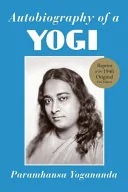
Autobiography of a Yogi
 79
79

Autobiography of a Yogi
Paramhansa Yogananda’s Autobiography of a Yogi is more than a memoir; it’s an initiation into a world where the spiritual and the mundane are demonstrably intertwined. The narrative’s strength lies in its directness, presenting extraordinary claims about yogic powers and divine encounters with an almost matter-of-fact tone. Yogananda’s childhood encounters with saints, his tutelage under Swami Sri Yukteswar, and his eventual mission to the West unfold with a clarity that compels belief, or at least profound contemplation. A notable passage details the levitation of a saint, a seemingly impossible feat rendered with such detail that it demands serious consideration within the book’s own established logic. However, for the skeptical reader, the sheer volume of miraculous accounts might become a hurdle, occasionally bordering on the didactic. The work’s enduring power, though, is undeniable, offering a compelling case for a reality far richer than typically perceived. It remains a foundational text for understanding the influx of Indian spiritual thought into 20th-century Western consciousness.
📝 Description
79
Paramhansa Yogananda's autobiography, published in 1946, chronicles his spiritual training and mission to bring yoga to the West.
Autobiography of a Yogi recounts the life of Paramhansa Yogananda, an Indian guru who introduced Kriya Yoga and meditation to Western audiences. The book details his spiritual education under Swami Sri Yukteswar Giri in India, his subsequent travels, and the founding of Self-Realization Fellowship in the United States. It is written for those interested in spiritual truth, Eastern philosophies, comparative religion, and the intersection of science and spirituality. The narrative presents a personal account of yogic science and its masters.
The work first appeared in 1946, a time when Western interest in Eastern spirituality was growing. Yogananda's direct, personal narrative offered a contrast to more academic discussions of Indian philosophy. The book covers concepts such as Kriya Yoga, a specific meditation practice for spiritual progress, and the role of gurus and masters in divine guidance. It also addresses cosmic consciousness, reincarnation, and yogic phenomena, proposing a scientific basis for these experiences that challenged prevailing Western scientific views.
Published in 1946, this autobiography emerged as Western interest in Eastern spiritual traditions began to increase. Yogananda's account provided a personal testimony of yogic practices and masters, contrasting with the more academic or abstract philosophical texts available. It coincided with a broader cultural moment where figures like Aldous Huxley were engaging with Vedanta and Theosophy was gaining attention. Yogananda's work played a role in popularizing Indian spiritual concepts and practices within America, bridging Eastern and Western mystical thought.
💡 Why Read This Book?
• Understand the core principles of Kriya Yoga, a specific meditation technique for spiritual advancement, as detailed in Yogananda’s teachings originating from Babaji and Lahiri Mahasaya. • Gain insight into the lives of Indian saints and masters from the late 19th and early 20th centuries, experiencing Yogananda’s personal encounters with figures like Swami Sri Yukteswar Giri. • Explore the concept of yogic science and its potential to bridge Eastern spirituality with Western scientific understanding, as presented in the book’s original 1946 publication.
⭐ Reader Reviews
Honest opinions from readers who have explored this book.
❓ Frequently Asked Questions
What is Kriya Yoga as described in Autobiography of a Yogi?
Kriya Yoga is presented as an ancient meditation technique, passed down through a lineage of masters including Babaji and Lahiri Mahasaya. Its practice is said to accelerate spiritual evolution by focusing on breath control and energy manipulation, leading to higher states of consciousness.
Who was Paramhansa Yogananda's guru?
Paramhansa Yogananda's guru was Swami Sri Yukteswar Giri. The autobiography details their profound relationship and Yogananda's extensive spiritual training under Sri Yukteswar's guidance in India.
When was Autobiography of a Yogi first published?
The Autobiography of a Yogi was first published in 1946. This edition is a verbatim reprinting of that original publication, preserving its initial presentation and impact.
What is the significance of Self-Realization Fellowship mentioned in the book?
Self-Realization Fellowship (SRF) was founded by Paramhansa Yogananda in 1920. The book recounts its establishment as his primary vehicle for disseminating the teachings of Kriya Yoga and spiritual self-discovery in the West.
Does the book discuss miracles performed by yogis?
Yes, the autobiography is replete with accounts of yogis and saints performing extraordinary feats, often referred to as miracles. These are presented not as supernatural events, but as the natural outcomes of advanced yogic science and spiritual realization.
Is this book available for free online?
The original text of Autobiography of a Yogi, first published in 1946, is widely available. While physical copies and authorized digital versions are for sale, the public domain status of early editions may allow for free access through certain archives.
🔮 Key Themes & Symbolism
The Guru-Disciple Relationship
Central to the narrative is the profound bond between Paramhansa Yogananda and his guru, Swami Sri Yukteswar Giri. The book illustrates this relationship not merely as one of teacher and student, but as a conduit for divine transmission and accelerated spiritual growth. It highlights the guru's role in guiding the disciple through rigorous spiritual discipline, testing their devotion and understanding, and ultimately facilitating their realization of the divine. This dynamic is presented as essential for genuine spiritual progress within the yogic tradition.
Yogic Science and Miracles
Yogananda systematically presents yogic phenomena, often perceived as miracles in the West, as the predictable results of advanced spiritual science. The work details instances of levitation, materialization, and clairvoyance, attributing them to mastery over prana (life force) and the subtle energies of the body and mind. This challenges a purely materialistic worldview, suggesting a deeper, controllable reality accessible through dedicated spiritual practice and adherence to yogic principles like Kriya Yoga.
The East-West Spiritual Bridge
A significant theme is Yogananda's mission to bring the ancient wisdom of India, particularly Yoga and Vedanta, to the Western world. The autobiography chronicles his journey from India to America in 1920, establishing Self-Realization Fellowship. It details his efforts to adapt and present these profound spiritual teachings in a manner understandable and accessible to Western audiences, fostering a cross-cultural dialogue on spirituality and consciousness.
💬 Memorable Quotes
Direct passages from the work, attributed to the author.
“The spiritual man is not a dreamer, but a doer.”
— This interpretation highlights Yogananda's emphasis on active spiritual practice rather than passive contemplation. It suggests that true spiritual attainment comes from applying yogic principles and discipline in daily life, a core tenet of Kriya Yoga.
“The world is my oyster.”
— This phrase, attributed to Yogananda's youthful ambition, reflects his expansive vision and desire to explore the world, both physically and spiritually. It foreshadows his later mission to share India's spiritual treasures globally.
“Miracles are the natural result of the laws of God.”
— This statement, reflecting the book's perspective, reframes extraordinary events. It suggests that what appears miraculous is simply the application of divine principles understood and utilized by advanced yogis, such as those encountered by Yogananda.
“Where there is devotion, there is God.”
— This sentiment underscores the importance of heartfelt devotion in the spiritual path. It implies that sincere love and surrender to the divine, a key element in the relationship with gurus like Sri Yukteswar, opens the way for divine presence and realization.
💡 Key Ideas
Editorial paraphrase of the work's core concepts — not direct quotes.
The shortest path to enlightenment is the guru.
This paraphrased concept emphasizes the central role of a qualified spiritual teacher in accelerating one's spiritual journey. It suggests that direct guidance from a guru, like Swami Sri Yukteswar Giri, provides a more efficient and certain route to self-realization than solitary study.
🌙 Esoteric Significance
Tradition
The work is deeply rooted in the Hindu yogic and Vedantic traditions, specifically the lineage of Kriya Yoga passed down through Babaji, Lahiri Mahasaya, and Swami Sri Yukteswar Giri. It presents a system that synthesizes devotional practices with rigorous yogic techniques for spiritual evolution. While drawing heavily from Samkhya and Vedanta philosophy, it offers a practical, experiential approach, aligning with the tantric emphasis on harnessing energy and consciousness for liberation.
Symbolism
Key symbols include the lotus flower, representing spiritual enlightenment and the unfolding of consciousness; the divine light, often experienced in meditation as a sign of inner illumination and connection to the cosmic source; and the guru himself, who serves as a living symbol of spiritual attainment and the bridge between the human and the divine, guiding disciples towards their own inner light.
Modern Relevance
Contemporary spiritual seekers, meditation practitioners, and yoga instructors frequently cite Yogananda's autobiography as a foundational text. Thinkers in consciousness studies and comparative religion continue to engage with its descriptions of yogic abilities and its philosophical underpinnings. Modern yoga studios and meditation centers often echo the principles of Kriya Yoga and the guru-disciple dynamic it champions, demonstrating its enduring influence on global spiritual movements.
👥 Who Should Read This Book
• Individuals seeking an introduction to the philosophy and practice of Yoga beyond physical postures, particularly those interested in meditation and spiritual development. • Students of comparative religion and spirituality looking for firsthand accounts of Indian saints and yogic traditions from the late 19th and early 20th centuries. • Seekers of spiritual guidance interested in the concept of a guru-disciple relationship and the path of Kriya Yoga as outlined by Paramhansa Yogananda.
📜 Historical Context
Published in 1946, Paramhansa Yogananda's Autobiography of a Yogi arrived at a central moment in the West's engagement with Eastern spirituality. The era saw a growing curiosity about Vedanta and Yoga, partly fueled by figures like Aldous Huxley, who had explored Indian philosophy. Yogananda’s work offered a direct, personal narrative that clarified yogic practices and presented Indian masters not as exotic figures, but as individuals deeply connected to universal spiritual truths. Its reception was notable; it presented a coherent system of yogic science and philosophy that resonated with many seeking alternatives to Western materialism. Unlike more academic treatises, it invited readers into the lived experience of spiritual pursuit. Its impact was profound, significantly influencing the wave of Indian gurus and spiritual movements that would gain prominence in the following decades, marking a critical juncture in the dissemination of yogic thought.
📔 Journal Prompts
Reflect on the concept of Kriya Yoga as described by Yogananda and its potential role in spiritual acceleration.
Consider the qualities Paramhansa Yogananda admired in his guru, Swami Sri Yukteswar Giri, and their significance for spiritual mentorship.
Analyze the descriptions of yogic phenomena in the book; how do they challenge conventional understandings of reality?
Explore the challenges Yogananda faced in bringing Indian spiritual teachings to the West in the early 20th century.
Contemplate the idea of 'cosmic consciousness' as presented in the autobiography and its implications for personal experience.
🗂️ Glossary
Kriya Yoga
An ancient yogic science and meditation technique, revived by Mahavatar Babaji and passed through a lineage including Lahiri Mahasaya and Sri Yukteswar. It involves controlled breathing and concentration to accelerate spiritual evolution and consciousness expansion.
Guru
A spiritual teacher in Hinduism, Buddhism, and Sikhism who imparts wisdom and guidance. The guru is considered essential for spiritual progress, acting as a guide and a link to divine realization.
Paramhansa
A title of honor meaning 'supreme swan' or 'supreme goose.' It signifies a person who has attained the highest spiritual realization, capable of discerning truth from illusion, akin to a swan's ability to separate milk from water.
Prana
The vital life force or energy that pervades all living beings. In yogic philosophy, prana is controlled through breathwork (pranayama) to influence physical and mental states, and to achieve higher consciousness.
Samadhi
A state of profound meditative absorption or enlightenment. It represents a deep union with the divine or ultimate reality, achieved through advanced yogic practices.
Vedanta
A school of Hindu philosophy based on the Upanishads, exploring the nature of ultimate reality (Brahman) and the self (Atman). It forms the theoretical basis for many yogic practices.
Swami
A title of respect for a Hindu man who has renounced worldly life to become a monk or spiritual ascetic. It often denotes a master of religious scriptures and philosophy.
This book appears in 1 collection
🔮 Readers Also Liked
Browse all →









From the “Yoga” Collection
View all →







More Free Esoteric History & Biography Books
View all →