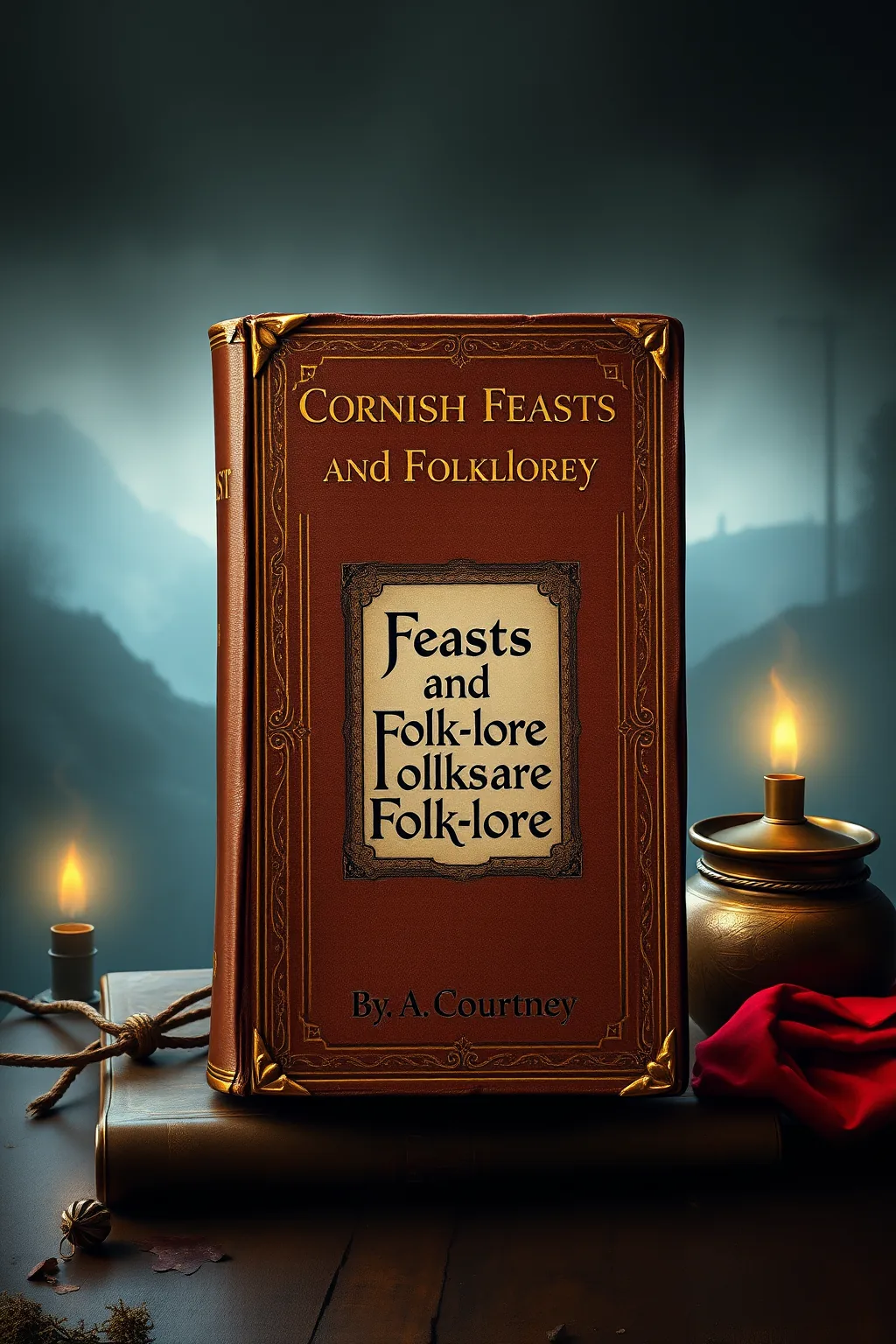
Cornish Feasts and Folk-lore
 81
81

Cornish Feasts and Folk-lore


Lorelei Sage, Contemplative Literature Editor: 'Cornish Feasts and Folk-lore' offers a rare and precious glimpse into a deeply traditional Cornwall, illuminated by M. A. Courtney’s keen eye for the esoteric. Published in 1890, this work transcends mere historical documentation, unveiling a rich tapestry of local magic, saintly lore, and potent superstitions. Courtney masterfully records the essence of community rituals, from seasonal celebrations to the whispered secrets of fairy realms. It is a vital resource for scholars of folklore, comparative religion, and Western esotericism, providing an invaluable on-the-ground ethnography. This book resonates with a palpable sense of place and spirit, making it essential reading for those who seek to understand the enduring power of tradition.
📝 Description
81
M. A. Courtney's 'Cornish Feasts and Folk-lore' was published in 1890.
M. A. Courtney’s 1890 book, 'Cornish Feasts and Folk-lore,' documents the seasonal celebrations and local beliefs of late-Victorian Cornwall. The author details traditions tied to saint's days, parish legends, and the symbolic meaning behind seasonal customs. It covers superstitions, charms, and accounts of Cornish fairies.
Courtney’s writing aims to convey the atmosphere of West Cornwall, inviting readers to connect with the region’s spirit through its festivals and folklore. The work serves as a record of customs that were part of daily life, capturing the magic associated with these practices. It offers insight into the cultural heritage of the area.
Published in 1890, this work falls within the late 19th-century surge of interest in folklore and rural traditions, often viewed through an esoteric lens. Scholars and enthusiasts of the time sought to preserve what they saw as ancient wisdom and connection to the land, distinct from industrializing society. Courtney’s focus on local beliefs, fairy lore, and seasonal rites aligns with a broader movement to record and understand the 'unseen' currents of human experience and their link to nature and community rituals, often seen as remnants of older, more spiritual practices.
✍️ Author

M A Courtney
Erik Courtney (born December 2, 1973) is an American filmmaker and visual FX artist for TV shows including Star Trek: Picard and films including The Tourist. He holds an IMAX patent.
💡 Why Read This Book?
Uncover the hidden spiritual landscape of Cornwall, a region rich in ancient myths and mystical traditions. This book is essential for seekers of esoteric knowledge, scholars of folklore, and practitioners interested in the roots of European folk magic and community rituals. It offers an authentic, ground-level perspective on a bygone era, revealing the enduring power of local beliefs and customs.
⭐ Reader Reviews
Honest opinions from readers who have explored this book.
❓ Frequently Asked Questions
What is the primary focus of 'Cornish Feasts and Folk-lore'?
The book meticulously records the saints' day feasts, parish legends, seasonal customs, superstitions, charms, fairy lore, ballads, games, and foodways of late-Victorian West Cornwall, offering an intimate look at community life and its spiritual underpinnings.
Who was M. A. Courtney?
Margaret Ann Courtney was an observer and recorder of Cornish traditions, whose work in 'Cornish Feasts and Folk-lore' provides an invaluable ethnographic account of the region's cultural and esoteric heritage from the late 19th century.
What kind of esoteric insights can be found in this book?
The book details the symbolic meanings behind local superstitions, the practices associated with folk charms, beliefs in fairies and other elemental beings, and the spiritual significance of seasonal and saintly festivals, offering a window into pre-modern belief systems.
Is 'Cornish Feasts and Folk-lore' suitable for beginners in esoteric studies?
Yes, its clear prose and focus on tangible traditions make it accessible. Beginners can gain a foundational understanding of how folklore and esoteric beliefs were integrated into everyday life, providing context for more complex studies.
What is the historical period covered by this book?
The book primarily focuses on the traditions and social history of West Cornwall during the late Victorian era, specifically around the time of its original publication in 1890.
🔮 Key Themes & Symbolism
The Sacred Calendar and Seasonal Rhythms
Courtney's work illuminates the profound connection between the Cornish people and the cyclical nature of time, marked by vibrant saint's day feasts and deeply ingrained seasonal customs. These celebrations were not merely social gatherings but potent expressions of spiritual devotion, community cohesion, and a connection to the land's inherent energies. The book reveals how the passage of seasons dictated daily life, agricultural practices, and the very rhythm of the soul, imbuing the landscape with a profound sense of the sacred and the eternal.
Whispers of the Unseen: Fairies, Charms, and Superstitions
This volume serves as a vital repository for the wide range of Cornish belief in the unseen. Courtney meticulously documents the pervasive presence of fairies, elemental spirits, and the intricate web of superstitions that governed daily life. From protective charms to omens and portents, these practices reveal a deep-seated understanding of the subtle forces at play in the world, a belief in the power of intention, and a profound respect for the delicate balance between the human and the magical realms.
The Communion of Community: Foodways, Ballads, and Games
Beyond the overtly mystical, 'Cornish Feasts and Folk-lore' offers a vivid portrait of community life through its shared experiences. The book details the everyday foodways, the communal singing of ballads that preserved history and legend, and the spirited games that fostered connection and joy. These elements highlight the importance of shared rituals and traditions in forging a collective identity, reinforcing social bonds, and transmitting cultural wisdom across generations, demonstrating that the mundane can be as sacred as the extraordinary.
💬 Memorable Quotes
Direct passages from the work, attributed to the author.
“Fairies dance where mortals tread with reverence.”
— Implies that the area of the supernatural, specifically fairy folk, is accessible or perceptible to those who approach the world with respect and a spiritual sensibility.
“Each feast a prayer, each song a charm.”
— Connects celebratory rituals and oral traditions to spiritual practice and protective magic, highlighting the sacred and functional aspects of communal gatherings.
“The land remembers its ancient rites.”
— Suggests that the earth itself holds a memory of past ceremonies and beliefs, implying a deep, almost sentient connection between place and its spiritual history.
“Superstition is the echo of forgotten wisdom.”
— Positions seemingly irrational beliefs as remnants of older, perhaps more profound, understandings of the world and its workings that have been partially lost to time.
💡 Key Ideas
Editorial paraphrase of the work's core concepts — not direct quotes.
The old ways linger in the shadows.
This quote suggests the enduring presence of ancient traditions and beliefs, even in a modernizing world, hinting at a hidden continuity of the past within the present.
🌙 Esoteric Significance
Tradition
This work is deeply rooted in the Celtic and British folk magic traditions, with strong undertones of animism and nature veneration. It speaks to an ancient European shamanic worldview where the veil between the physical and spiritual realms is thin. The focus on local saints, elemental spirits (fairies), and seasonal cycles aligns with pre-Christian practices that were later syncretized with Christianity, creating a mix of folk spirituality essential to understanding indigenous European esoteric currents.
Symbolism
The symbolism is rich and embedded in the everyday. Saint's days represent the apotheosis of human spiritual connection and community protection. Seasonal customs symbolize cosmic cycles of death and rebirth, mirroring agrarian and human life. Superstitions and charms reveal a belief in sympathetic magic and the power of intent to influence outcomes, often drawing on natural elements and ancient archetypes. Fairy lore signifies the presence of the 'otherworld' and the delicate balance required for harmonious coexistence with nature spirits.
Modern Relevance
In an age often characterized by disconnection from nature and tradition, 'Cornish Feasts and Folk-lore' offers a vital reminder of the power of community, ritual, and a belief in the unseen. It provides practical insights for modern practitioners of folk magic and Wicca, offering historical context for practices. For general readers, it fosters a deeper appreciation for the spiritual dimensions of everyday life and the enduring human need for connection to myth, place, and the subtle energies of the world.
👥 Who Should Read This Book
This book is a valuable collection for a diverse audience. **Beginners** in folklore and esoteric studies will find it an accessible and engaging introduction to the living traditions of a specific region. **Scholars** of Celtic studies, ethnography, and comparative religion will appreciate its meticulous detail and historical value. **Seekers** of ancient wisdom and spiritual practices will find inspiration in the potent symbolism and enduring beliefs documented within its pages. **Practitioners** of folk magic and nature-based spirituality will discover a wealth of authentic customs, charms, and lore that can inform and enrich their personal work.
📜 Historical Context
Published in 1890, 'Cornish Feasts and Folk-lore' emerges from the late Victorian era, a period marked by both rapid industrialization and a burgeoning interest in preserving perceived 'authentic' folk traditions. As modern life encroached, scholars and enthusiasts began to document the customs, beliefs, and folklore of rural communities, fearing their extinction. M. A. Courtney's work is a product of this antiquarian movement, offering a detailed, on-the-ground ethnography of West Cornwall. It captures a society still deeply connected to its pagan roots, where saint's day celebrations, superstitions, and fairy lore were not mere relics but living aspects of daily existence, providing a crucial counterpoint to the era's scientific and rationalist advancements.
📔 Journal Prompts
Reflect on a personal or community tradition that feels deeply significant. What are its roots, and what makes it feel sacred?
Imagine encountering a Cornish fairy in the present day. What advice or warning might it impart, based on the lore in this book?
How do the seasonal cycles of your own life or environment reflect the themes of death and rebirth found in ancient festivals?
Consider a personal superstition you hold. What is its potential origin or underlying belief, and what does it reveal about your relationship with the unseen?
Write a ballad or short poem inspired by a local legend or a significant place in your community, echoing the spirit of Cornish oral traditions.
🗂️ Glossary
Feasten
Referring to the celebratory feasts and festivities associated with saints' days or other significant occasions, often extending over Sundays and Mondays, signifying a period of communal joy and spiritual observance.
Folk-lore
The traditional beliefs, customs, and stories of a community, passed through the generations by word of mouth, encompassing a wide range of cultural expressions from legends to superstitions.
Parish Legends
Local stories and narratives specific to a particular church parish, often involving saints, miracles, historical events, or supernatural occurrences tied to the locale.
Superstitions
Widely held but unfounded beliefs or practices, often concerning luck, omens, or magical causation, deeply embedded in the cultural fabric of a community.
Charms
Objects or words believed to possess magical properties, used to invoke good luck, protection, or to influence events, often drawing on symbolic associations and ritualistic practices.
This book appears in 1 collection
🔮 Readers Also Liked
Browse all →






From the “Transcendental Meditation” Collection
View all →




More Free Esoteric History & Biography Books
View all →