The Zohar
 73
73

The Zohar
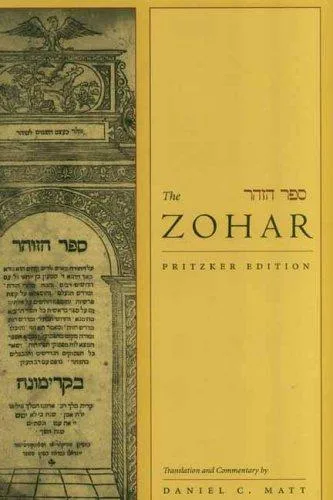
Daniel C. Matt's translation and annotation of The Zohar offer a vital entry point into a text that has shaped mystical thought for centuries. Matt’s scholarly rigor is evident in his lucid prose and insightful contextualization, making the labyrinthine passages of the Zohar more accessible than many previous attempts. His approach respects the text’s inherent complexity without sacrificing clarity, a difficult balance to strike. A particular strength lies in his careful handling of the original Aramaic and Hebrew, providing a scholarly foundation for understanding the nuances of Kabbalistic terminology. However, the sheer density of the Zohar means that even with Matt's expertise, certain passages retain an enigmatic quality. The section discussing the chariot imagery, referencing Ezekiel's vision, remains as challenging and awe-inspiring as ever, demanding sustained contemplation. For those seeking a scholarly yet spiritually engaged encounter with Kabbalah's foundational text, this edition provides an indispensable resource.
📝 Description
73
Daniel C. Matt's translation and commentary bring the Zohar, a central text of Kabbalah, to a modern audience.
The Zohar, a collection of commentaries, dialogues, and visions, interprets the Torah through a mystical lens. Written in Aramaic, it delves into the divine nature, the process of creation, and the soul's relationship with the ultimate reality. Its dense narratives and symbolic language aim to uncover hidden meanings within the biblical text, constructing a complex cosmology and a guide for spiritual awakening.
This work is suited for serious students of Kabbalah, comparative mysticism, and religious philosophy. Readers interested in the historical trajectory of Jewish mysticism, the symbolic language of esoteric traditions, or the philosophical basis of spiritual inquiry will find substantial content. It demands a focused approach and a willingness to grapple with its allegorical prose.
The Zohar emerged in 13th-century Spain, traditionally attributed to Moses de León but with debated origins. It arose within a period of dynamic intellectual exchange in Jewish communities, influenced by and responding to various philosophical and mystical currents. Its ideas spread, ultimately forming a cornerstone of Kabbalistic thought, although its reception was not universal, drawing criticism from some rabbinic figures.
💡 Why Read This Book?
• Gain insight into the Sefirot, the ten divine emanations central to Kabbalistic cosmology, as described in the Zohar's intricate cosmology. • Understand the symbolic language of Hebrew letters and their role in creation, as explored in discussions of gematria and mystical linguistics. • Explore the concept of Ein Sof, the Infinite, and its relationship to the manifest world, a core philosophical inquiry within 13th-century Spanish Kabbalah.
⭐ Reader Reviews
Honest opinions from readers who have explored this book.
❓ Frequently Asked Questions
What is the primary language of the Zohar?
The primary language of the Zohar is Aramaic, though it incorporates Hebrew words and phrases. Daniel C. Matt's translation provides access to its complex Aramaic passages for an English-speaking audience.
When was the Zohar originally written?
The Zohar is generally attributed to Moses de León in 13th-century Spain, with scholarly debate continuing about its precise dating and authorship.
Who is Daniel C. Matt?
Daniel C. Matt is a renowned scholar of Kabbalah and Jewish mysticism, known for his extensive translations and commentaries on foundational Kabbalistic texts.
What are the Sefirot?
The Sefirot are ten divine attributes or emanations described in Kabbalah, through which God manifests and interacts with creation. They are a central concept within the Zohar's teachings.
Is the Zohar a religious text or a philosophical one?
The Zohar functions as both a religious and philosophical text within Kabbalah, offering mystical interpretations of scripture alongside complex theological and cosmological discussions.
What is Ein Sof?
Ein Sof, meaning 'Without End' or 'Infinite,' refers to the unknowable, transcendent aspect of God in Kabbalistic thought, a concept deeply explored within the Zohar.
🔮 Key Themes & Symbolism
The Ten Sefirot
The Zohar systematically details the ten Sefirot, divine emanations that form the structure of existence and the bridge between the Infinite (Ein Sof) and the finite world. These Sefirot—Keter, Chokhmah, Binah, Chesed, Gevurah, Tiferet, Netzach, Hod, Yesod, and Malchut—are not merely abstract concepts but dynamic forces that govern all reality. The text explores their interrelationships, their manifestation in biblical narratives, and their presence within the human soul, offering a map of divine consciousness.
Ein Sof and Divine Unity
A central theme is the nature of Ein Sof, the utterly transcendent and unknowable aspect of God beyond all comprehension or limitation. The Zohar grapples with how this Infinite Essence can give rise to a finite creation, positing the Sefirot as the intermediary channels of divine outflow. This exploration emphasizes the ultimate unity of all existence, stemming from this primordial, boundless source, and the soul's yearning to return to this state of oneness.
The Power of Language and Symbol
The Zohar imbues Hebrew letters, words, and biblical narratives with profound mystical significance. It teaches that the very fabric of reality is woven from divine language, and that through careful study, meditation, and interpretation (like gematria, the numerical value of Hebrew letters), one can access hidden layers of meaning. This perspective highlights the power of sacred texts and the spoken word to reveal cosmic truths and facilitate spiritual connection.
The Soul's Journey
The text offers a complex doctrine of the soul, describing its divine origin, its descent into the physical body, and its potential for spiritual ascent. It discusses concepts such as reincarnation (*gilgul neshamot*), the interconnectedness of souls, and the spiritual disciplines required to purify the soul and achieve union with the Divine. This journey is often depicted through allegorical narratives and mystical visions within the Zohar.
💬 Memorable Quotes
Direct passages from the work, attributed to the author.
“The world is sustained by the breath of schoolchildren.”
— This concept emphasizes the Zohar's belief in the profound spiritual power of innocent devotion and study. It suggests that seemingly simple acts, like children learning Torah, have cosmic significance and are vital for the world's spiritual equilibrium.
“The divine light is hidden within the shell.”
— This captures the Zohar's notion of 'husks' or 'shells' (*klipot*) that obscure the divine presence in the material world. Spiritual work involves penetrating these outer layers to reveal the inner light of holiness and divinity.
“God is hidden in plain sight.”
— This interpretation suggests that the divine is not solely in remote, mystical realms but is also immanent and discoverable within the mundane aspects of existence, requiring a shift in perception to recognize.
“The letters of the Hebrew alphabet are the building blocks of creation.”
— This concept underscores the Zohar's view of Hebrew letters as fundamental forces and divine blueprints. Each letter is seen as possessing unique energies and meanings that contribute to the structure and essence of all things.
💡 Key Ideas
Editorial paraphrase of the work's core concepts — not direct quotes.
Interpretation of the Torah is not fixed; it is fluid and multivalent.
This paraphrased concept highlights the Zohar's approach to scripture, viewing biblical texts not as static pronouncements but as living entities containing infinite layers of meaning accessible through mystical contemplation and allegorical reading.
🌙 Esoteric Significance
Tradition
The Zohar is the foundational text of Kabbalah, a highly influential school of Jewish mysticism. It represents a complex theosophical system that interprets Jewish scripture and tradition through a symbolic, allegorical, and mystical framework, seeking to understand the divine nature, creation, and the soul's relationship with God. It departs from purely philosophical interpretations by emphasizing ecstatic experience, divine emanations, and hidden meanings within the Torah.
Symbolism
Key symbols include the ten Sefirot, which map the divine attributes and pathways of creation, and Ein Sof, representing the unknowable, infinite Godhead. Hebrew letters are treated as sacred building blocks of reality, imbued with cosmic power and meaning. The Tree of Life, formed by the Sefirot, serves as a central diagram for understanding divine structure and the human soul's spiritual journey.
Modern Relevance
Contemporary esoteric practitioners, particularly those within Western Esotericism and New Age spirituality, frequently draw upon Kabbalistic concepts derived from the Zohar. Its ideas on divine emanations, the Tree of Life, and the interconnectedness of all things inform modern magical systems, meditation practices, and spiritual psychology. Thinkers and groups exploring consciousness, symbolism, and the nature of reality often engage with its rich symbolic language.
👥 Who Should Read This Book
• Students of Kabbalah seeking to engage with its primary source text in a critically acclaimed translation. • Comparative religion scholars interested in the development of medieval mystical traditions and their scriptural interpretations. • Individuals drawn to esoteric philosophy and symbolism who wish to understand a core text of Western mysticism.
📜 Historical Context
Emerging from the vibrant intellectual milieu of 13th-century Spain, the Zohar represents an important development in Kabbalistic literature. While traditionally attributed to Moses de León, who published significant portions around 1280, its complex textual history suggests earlier origins. This period saw intense philosophical engagement within Jewish communities, with thinkers like Moses Maimonides advocating rationalist approaches, creating a counterpoint to the burgeoning mystical traditions. The Zohar’s intricate symbolism and theosophical speculations offered a profound alternative, interpreting scripture through a lens of divine emanations (Sefirot) and cosmic processes. Its reception was initially varied; while it gained immense popularity and became central to Lurianic Kabbalah and Hasidism, some rabbinic authorities questioned its authenticity and mystical claims, leading to ongoing scholarly debate about its precise formation and influence.
📔 Journal Prompts
The concept of Ein Sof and its relationship to manifest creation.
The symbolic significance of the Hebrew letter Aleph within the Zohar.
Reflect on the purpose of the Sefirot as divine emanations.
Analyze a biblical passage through the lens of Zoharic interpretation.
Consider the role of 'husks' (klipot) in obscuring divine light.
🗂️ Glossary
Ein Sof
The Kabbalistic term for God in His absolute, infinite, and unknowable aspect, transcending all existence and attributes before manifestation.
Sefirot
Ten divine emanations or attributes through which God manifests and interacts with the created world. They form the structure of the Kabbalistic Tree of Life.
Kabbalah
A system of Jewish mysticism and esoteric interpretation of the Torah, focused on understanding the divine nature and the relationship between God and creation.
Kavanah
Intention or focused concentration, especially in prayer and ritual, considered essential for directing spiritual energy and connecting with the divine.
Klipot
Literally 'husks' or 'shells' in Kabbalah, these represent forces of impurity, negativity, or separation that obscure the divine light and must be overcome.
Gilgul Neshamot
The Kabbalistic concept of the transmigration or reincarnation of souls, a process through which souls can undergo multiple lives to achieve spiritual completion.
Gematria
A method of Kabbalistic interpretation that assigns numerical values to Hebrew letters and words to find hidden meanings and connections between concepts.
🔮 Readers Also Liked
Browse all →








More by Daniel C. Matt
All books →


More Free Kabbalah & Jewish Mysticism Books
View all →