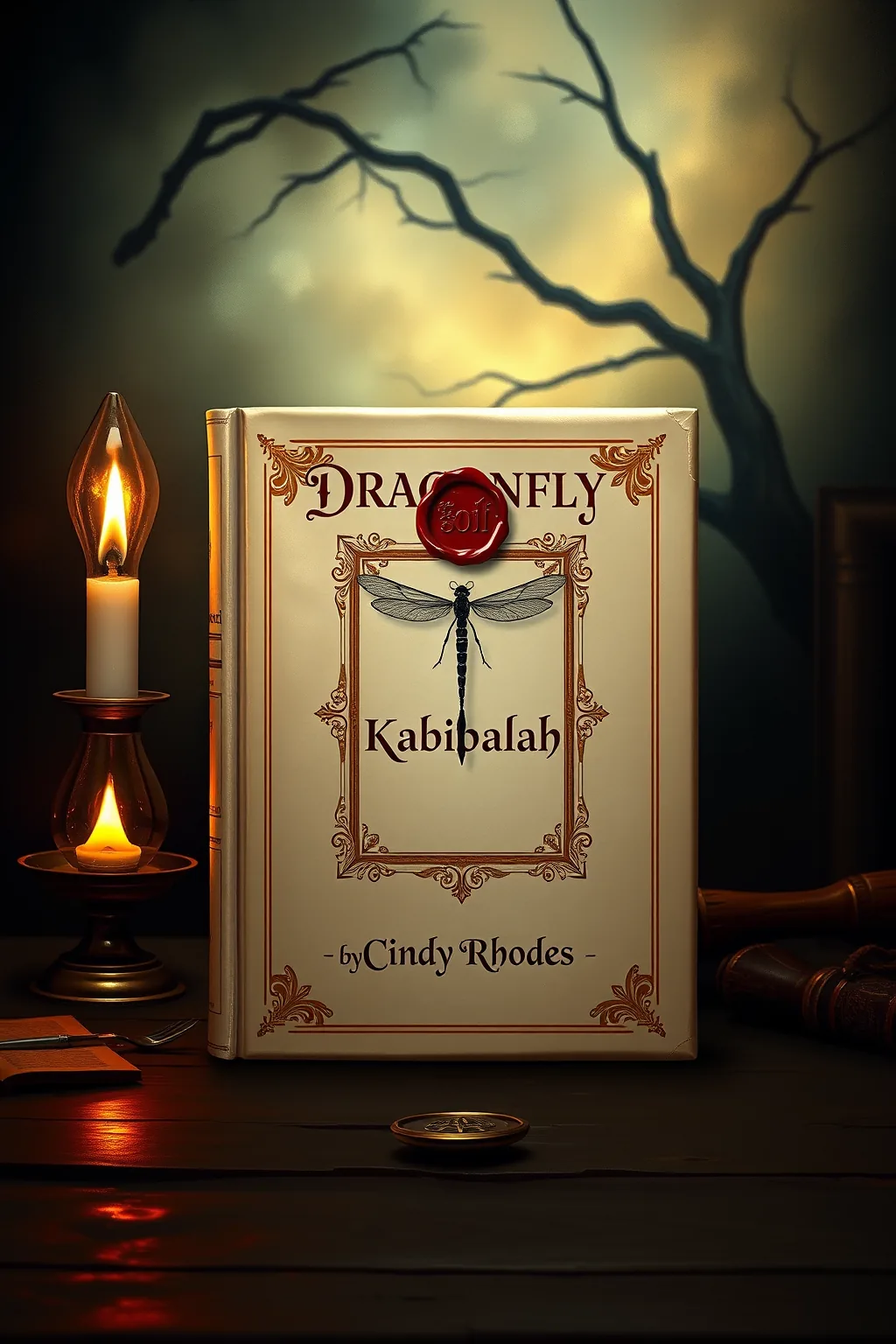
Dragonfly Kabbalah
 61
61

Dragonfly Kabbalah


Silas Hawthorne (Hermetic Studies Editor) — Cindy Rhodes’ "Dragonfly Kabbalah" is a truly illuminating work, offering a refreshing and accessible entry point into the labyrinthine depths of Kabbalistic thought. Rhodes possesses a rare gift for distilling complex esoteric doctrines into comprehensible, yet profoundly resonant, teachings. Her exploration of the Tree of Life is particularly insightful, revealing its dynamic interplay of divine energies and human consciousness. This book is a valuable resource for both neophytes and seasoned practitioners, providing a clear map for navigating the spiritual landscape and fostering a deeper connection to the Divine. It stands as a testament to the enduring power of Kabbalah to inspire and transform.
📝 Description
61
Cindy Rhodes' Dragonfly Kabbalah, published in 2010, interprets Jewish mysticism through the dragonfly's symbolic flight.
Cindy Rhodes' Dragonfly Kabbalah presents an accessible approach to Kabbalah, the Jewish mystical tradition. It moves beyond dense academic study to frame Kabbalah as a dynamic system for comprehending the cosmos. Rhodes connects the symbolism inherent in Kabbalistic texts with numerology and the structure of the Tree of Life. The book aims to make these complex ideas understandable for those seeking spiritual insight.
This work encourages quiet reflection and personal spiritual exploration. It guides readers through complex esoteric concepts with a clear and elegant prose. Dragonfly Kabbalah is for individuals interested in the soul's development and the underlying principles of existence. It connects historical Kabbalistic teachings with personal spiritual awakenings. The book highlights the unity of all things within the framework of Jewish mysticism.
Dragonfly Kabbalah sits within the tradition of modern Kabbalistic interpretation, which often seeks to demystify and personalize ancient texts. Unlike purely historical or theological studies, this work emphasizes the experiential and transformative aspects of Kabbalah. Rhodes' approach aligns with interpretations that view the Tree of Life not just as a diagram, but as a map for consciousness and spiritual growth. It also engages with the broader esoteric interest in symbolic animal totems and their connection to spiritual paths.
💡 Why Read This Book?
Discover the profound, transformative wisdom of Kabbalah through a uniquely accessible lens. "Dragonfly Kabbalah" demystifies ancient esoteric concepts, offering practical insights for spiritual seekers and practitioners. Explore the symbolic language of the Tree of Life and unlock deeper self-understanding and connection to the Divine. Ideal for those yearning for a more profound spiritual practice and a richer understanding of universal principles.
⭐ Reader Reviews
Honest opinions from readers who have explored this book.
❓ Frequently Asked Questions
What is Kabbalah?
Kabbalah is an esoteric tradition within Judaism that explores the mystical nature of God, creation, and the human soul. It seeks to understand the divine through symbolic interpretation of the Torah and the concept of the Tree of Life.
Who is the intended audience for this book?
This book is ideal for spiritual seekers, students of mysticism, and anyone interested in exploring Jewish contemplative traditions. It is written to be accessible to beginners while offering depth for those with prior knowledge.
What is the significance of the 'Dragonfly' in the title?
The dragonfly often symbolizes transformation, adaptability, and the ability to see beyond illusion. In this context, it suggests the book's approach to Kabbalah as a path of profound personal change and enhanced spiritual perception.
Does this book require prior knowledge of Hebrew or Jewish texts?
While prior knowledge can enhance the experience, "Dragonfly Kabbalah" is written to be accessible to readers without extensive background in Hebrew or Jewish scripture. The author provides necessary context and clear explanations.
How can studying Kabbalah benefit a person?
Studying Kabbalah can lead to a deeper understanding of oneself, the universe, and one's connection to the Divine. It offers tools for spiritual growth, ethical development, and a more meaningful engagement with life's challenges.
🔮 Key Themes & Symbolism
The Tree of Life: A Cosmic Blueprint
At the core of "Dragonfly Kabbalah" lies the profound exploration of the Tree of Life, presented not merely as a diagram but as a dynamic, multidimensional map of divine emanation and human consciousness. Rhodes meticulously unpacks the ten Sephiroth, detailing their energetic qualities, symbolic correspondences, and their interconnected pathways. This section looks at how each Sephirah represents a distinct aspect of the Divine and a stage in the soul's journey, offering readers a framework for understanding cosmic order and their own spiritual evolution.
Symbolism and Sacred Geometry
The book is rich with the symbolic language of Kabbalah, where letters, numbers, and geometric forms are imbued with profound spiritual meaning. Rhodes illuminates how Hebrew letters act as vessels of divine energy and how concepts like gematria unlock hidden layers of scriptural interpretation. The interplay of sacred geometry, particularly as manifested in the Tree of Life, is presented as the underlying structure of reality, revealing the elegant, ordered patterns that govern existence and the subtle forces at play.
The Path of Transformation and Illumination
"Dragonfly Kabbalah" emphasizes the transformative power inherent in the study of mystical Judaism. Rhodes guides the reader on a journey of inner alchemy, showing how Kabbalistic principles can be applied to personal growth, self-discovery, and the attainment of higher consciousness. The book encourages a shift in perception, fostering clarity and insight, much like the dragonfly's ability to navigate different realms. It positions Kabbalah as a living practice, a path towards spiritual illumination and a deeper connection with the Divine essence within.
💬 Memorable Quotes
Direct passages from the work, attributed to the author.
“The Tree of Life is not a static diagram, but a living, breathing conduit of divine energy.”
— This highlights the dynamic and interactive nature of the Kabbalistic model, emphasizing its role as a channel for spiritual power and connection rather than a mere intellectual construct.
“Within each letter lies a universe of meaning, waiting to be unlocked.”
— This speaks to the profound depth of the Hebrew alphabet in Kabbalah, suggesting that through diligent study and contemplation, hidden spiritual truths can be revealed.
“The dragonfly's flight mirrors the soul's ascent through the domains of consciousness.”
— This connects the book's titular symbol to the core Kabbalistic concept of spiritual progression, illustrating the journey of the soul towards higher awareness and divine union.
“True wisdom is found not in accumulation, but in integration.”
— This emphasizes a core tenet of esoteric paths: the practical application and assimilation of knowledge for personal transformation, rather than merely acquiring information.
“The Divine is not separate, but interwoven into the very fabric of existence.”
— This points to the immanent nature of God in Kabbalah, asserting that the sacred is present and accessible within all aspects of reality, encouraging a sense of unity and connection.
🌙 Esoteric Significance
Tradition
This work is firmly rooted in the Kabbalistic tradition, a mystical and esoteric branch of Judaism. It draws heavily from the principles of the Zohar and the Lurianic Kabbalah, exploring the divine emanations, the structure of the cosmos, and the path of spiritual ascent. The book aims to present these ancient teachings in a way that is relevant and accessible to contemporary seekers, bridging the gap between historical esoteric knowledge and personal spiritual practice.
Symbolism
The core symbolism revolves around the Tree of Life (Etz Chaim), a diagram representing the ten Sephiroth (divine attributes or emanations) and the 22 paths connecting them. Other key symbols include Hebrew letters, gematria (numerology), and the concepts of divine light (Ohr) and divine vessels (Kelim). These elements are used to decode the divine blueprint of the universe and the journey of the soul.
Modern Relevance
In an age often characterized by disconnection and existential questioning, "Dragonfly Kabbalah" offers a profound framework for understanding the interconnectedness of all things and one's place within the cosmic order. Its emphasis on inner transformation, self-awareness, and the pursuit of wisdom resonates deeply with modern spiritual seekers looking for meaning and purpose beyond material pursuits. The book provides tools for navigating life's complexities with greater insight and spiritual resilience.
👥 Who Should Read This Book
This book is a rich source for a diverse range of readers. **Beginners** to Kabbalah will find it an exceptionally clear and welcoming introduction, clarifying complex concepts without oversimplification. **Scholars** of religious studies and mysticism will appreciate its insightful interpretations and its bridge between traditional texts and contemporary understanding. **Spiritual seekers** yearning for deeper self-knowledge and a connection to the Divine will find practical guidance and profound inspiration. **Practitioners** of meditation and esoteric arts can integrate its wisdom to enhance their existing practices and gain a richer symbolic language.
📜 Historical Context
The Kabbalah, with its roots stretching back to ancient Jewish mystical traditions, experienced a significant surge in development and popularization during the medieval period, particularly in the 12th and 13th centuries in Provence and Spain. Works like the Zohar, a foundational text, emerged during this era, codifying and expanding upon earlier mystical ideas. This period was marked by intense intellectual and spiritual inquiry within Jewish communities, often in response to philosophical challenges and societal changes. The Renaissance and subsequent centuries saw Kabbalistic thought influencing broader esoteric movements across Europe, impacting Christian Kabbalah and Freemasonry, and continuing to evolve into diverse modern interpretations, including those focused on psychological and spiritual growth.
📔 Journal Prompts
Reflect on the concept of divine emanation as described in the Sephiroth. How might this apply to your own life's journey and challenges?
Consider the symbolism of the dragonfly. In what areas of your life are you experiencing transformation or seeking greater clarity?
Explore a specific Hebrew letter or number from the book. What personal insights or connections emerge from contemplating its symbolic meaning?
How does the idea of 'divine vessels' (Kelim) relate to your own capacity to receive and channel spiritual energy or wisdom?
Journal about a time you felt a profound sense of interconnectedness with the universe. How does the Kabbalistic framework help you understand that experience?
🗂️ Glossary
Sephiroth
The ten divine emanations or attributes of God, forming the structure of the Kabbalistic Tree of Life. They represent different aspects of the Divine and the process of creation.
Tree of Life (Etz Chaim)
A central diagram in Kabbalah, depicting the ten Sephiroth and the 22 paths connecting them. It serves as a map of creation, divine emanation, and the soul's journey.
Gematria
A method of Kabbalistic interpretation that assigns numerical values to Hebrew letters and words, revealing hidden connections and meanings within sacred texts.
Ein Sof
The Kabbalistic concept of the infinite, unknowable Godhead, the ultimate source of all existence before any manifestation or emanation occurred.
Tikkun Olam
A Hebrew phrase meaning 'repair of the world.' In Kabbalah, it refers to the cosmic process of restoring divine harmony and wholeness, often involving human participation.
This book appears in 1 collection
🔮 Readers Also Liked
Browse all →









From the “Kabbalah” Collection
View all →





More Free Kabbalah & Jewish Mysticism Books
View all →