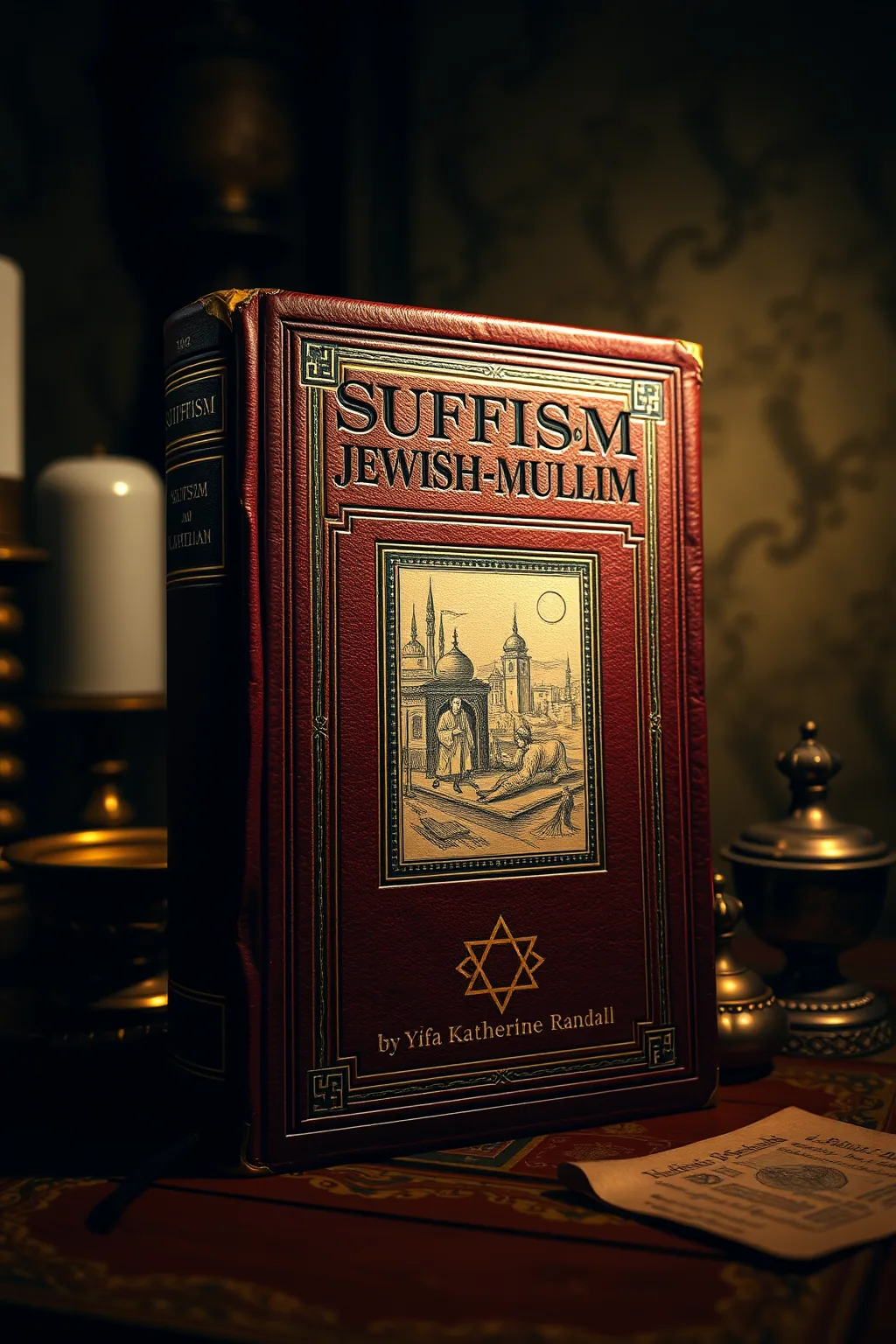
Sufism and Jewish-Muslim Relations
 62
62

Sufism and Jewish-Muslim Relations


Yafia Katherine Randall's 'Sufism and Jewish-Muslim Relations' is a masterclass in comparative mysticism. Randall artfully navigates the intricate tapestry of Sufi and Kabbalistic thought, unearthing striking parallels in their pursuit of divine gnosis. Her exploration of shared symbolic language and contemplative techniques offers invaluable insights for scholars and practitioners alike. This is not merely an academic treatise, but a deeply resonant inquiry into the esoteric dimensions that bind these traditions. It illuminates the universal quest for transcendence, making complex spiritual concepts accessible and profoundly moving. A vital contribution to understanding the mystical underpinnings of Abrahamic dialogue.
📝 Description
62
Yafia Katherine Randall’s 2023 book examines Sufi and Kabbalistic connections.
This book investigates the spiritual and intellectual links between Sufism and Kabbalah. Yafia Katherine Randall traces shared symbolism, contemplative methods, and philosophical ideas that bridge Islamic and Jewish mysticism. The work shows how the spiritual paths of Sufis and Kabbalists often arrive at similar understandings of the divine.
Randall details the historical interactions and parallel developments within these traditions. She highlights instances where Sufi and Kabbalistic thinkers influenced each other or arrived at parallel insights independently. The book aims to clarify these connections for readers interested in the mystical dimensions of both faiths. It presents a view of interfaith mysticism that emphasizes shared spiritual aspirations and the universal quest for ultimate reality.
Within the study of esoteric traditions, this work occupies a space examining historical and conceptual overlaps between major monotheistic mystical paths. It follows scholars who look beyond doctrinal differences to find common ground in the lived experience of spiritual seeking. The focus is on the practical and philosophical elements that form the core of mystical practice in both Sufism and Kabbalah, rather than solely on theological distinctions. This approach seeks to understand the universal patterns of spiritual consciousness that manifest across different religious cultures.
💡 Why Read This Book?
Uncover the hidden spiritual bridges between Sufism and Kabbalah. This book offers profound insights into shared mystical pathways, revealing universal truths in Islamic and Jewish esoteric traditions. Ideal for seekers of interfaith understanding, scholars of mysticism, and practitioners yearning for deeper spiritual connection. Explore ancient wisdom that transcends religious boundaries and illuminates the human quest for the divine.
⭐ Reader Reviews
Honest opinions from readers who have explored this book.
❓ Frequently Asked Questions
What is the primary focus of this book?
The book primarily focuses on the shared mystical and esoteric connections between Sufism and Kabbalah, exploring their commonalities in symbolism, philosophy, and the spiritual quest for divine union.
Is this book suitable for beginners?
Yes, while it delves into complex mystical concepts, Randall's accessible writing style makes it suitable for curious beginners interested in interfaith mysticism and esoteric traditions.
What kind of knowledge does it reveal?
It reveals hidden knowledge concerning shared divine names, meditative practices, the concept of the divine spark within humanity, and the esoteric interpretations of scripture common to both traditions.
How does it approach the relationship between Judaism and Islam?
It approaches the relationship from a perspective of spiritual kinship and shared mystical heritage, highlighting instances of mutual influence and parallel development rather than conflict.
What is the 'Esoteric Library' edition's unique value?
The Esoteric Library edition offers a curated, high-quality presentation of this vital work, often featuring scholarly introductions and a focus on its deep metaphysical and occult significance.
🔮 Key Themes & Symbolism
The Language of the Soul: Shared Symbolism
This theme explores the wide range of symbols, metaphors, and allegories that are common to both Sufi and Kabbalistic traditions. It examines how concepts like the divine light, the ascent of the soul, the presence of angels, and the mystical interpretation of scripture serve as a universal language for expressing the ineffable. Randall highlights how these shared symbolic frameworks allow for a profound understanding of the spiritual journey, bridging the perceived divides between these venerable paths and revealing a common yearning for divine connection.
The Path of Contemplation: Mystical Practices
Here, the focus shifts to the shared methods and disciplines employed by Sufi dervishes and Kabbalistic mystics in their pursuit of direct experience of the divine. This includes an examination of devotional practices, meditative techniques, ecstatic states, and the rigorous inner work required to purify the self and achieve spiritual illumination. The section elucidates how both traditions emphasize the transformative power of focused intention and the experiential nature of spiritual knowledge, offering practical insights into the contemplative life.
Unity in Diversity: Interfaith Dialogue
This crucial theme addresses the historical and philosophical context of Jewish-Muslim relations through the lens of mysticism. Randall demonstrates how, despite societal and political differences, a deep spiritual kinship often existed between individuals and communities from both traditions. The narrative emphasizes the potential for mutual respect, learning, and spiritual enrichment when the esoteric dimensions of faith are foregrounded, revealing a profound unity underlying apparent diversity and fostering a more harmonious understanding of religious coexistence.
💬 Memorable Quotes
Direct passages from the work, attributed to the author.
“Mirrors reflect the divine, but the soul is the source of light.”
— This highlights the Kabbalistic and Sufi understanding that while external teachings and scriptures (mirrors) can point towards God, the ultimate divine spark resides within the human spirit.
“In the echo of the divine name, the self finds its true resonance.”
— This speaks to the power of divine names and remembrance (dhikr/kavanah) in Sufism and Kabbalah, where repeating sacred utterances leads to self-realization and connection to the divine source.
“Where the letter fails, the spirit whispers its secrets.”
— This underscores the esoteric principle that literal interpretations of religious texts are insufficient; true understanding comes from grasping the deeper, spiritual meanings conveyed by the divine essence.
“The journey inward is the shortest path to the divine outward.”
— A paradox that highlights the core tenet of mysticism: that by looking at the depths of one's own consciousness, one can achieve the most direct and profound connection with the universal divine presence.
💡 Key Ideas
Editorial paraphrase of the work's core concepts — not direct quotes.
The veil between the sacred and the mundane is thinnest in the heart of the seeker.
This quote emphasizes that true spiritual perception is not an external acquisition but an internal state, accessible through focused intention and inner purity.
🌙 Esoteric Significance
Tradition
This work is deeply rooted in the esoteric traditions of Sufism (Islamic mysticism) and Kabbalah (Jewish mysticism). It explores their shared philosophical underpinnings, often drawing from Neoplatonism and Gnosticism, while also highlighting their unique developments. The significance lies in demonstrating how both traditions offer pathways to direct, experiential knowledge of the divine, emphasizing inner transformation, the purification of the soul, and the attainment of spiritual union.
Symbolism
The book meticulously examines the rich symbolic language common to both Sufism and Kabbalah. This includes the interpretation of divine names, the concept of the divine light (Nur/Ohr), the structure of the cosmos, the nature of the soul's ascent, and the allegorical meaning of scriptural passages. These symbols serve as a universal lexicon for the mystical quest, illustrating how both traditions perceive the divine immanent in creation and accessible through inner contemplation and spiritual discipline.
Modern Relevance
In an era often marked by interfaith division, the exploration of shared mystical heritage is profoundly relevant. Randall's work offers a counter-narrative, highlighting the deep spiritual connections that can transcend religious boundaries. It provides a framework for understanding how esoteric wisdom can foster empathy, mutual respect, and a recognition of universal truths, offering a path towards spiritual unity and reconciliation in a fragmented world.
👥 Who Should Read This Book
This book is a treasure for seekers of spiritual wisdom, particularly those interested in the esoteric dimensions of Abrahamic faiths. Scholars of comparative religion and mysticism will find its nuanced analysis invaluable. Practitioners of Sufism or Kabbalah will discover enriching parallels and deepen their understanding of their own paths. Beginners curious about interfaith dialogue and the universal quest for the divine will find an accessible yet profound introduction to these sacred traditions.
📜 Historical Context
This book emerges from a rich historical milieu where Jewish and Islamic civilizations, particularly in the medieval and early modern periods, engaged in complex intellectual and cultural exchanges. Despite periods of tension and persecution, there were also eras of profound co-existence and mutual influence. The Andalusian period, for instance, saw flourishing intellectual discourse where Jewish philosophers and mystics were deeply engaged with Islamic thought, and vice versa. This era witnessed the development of sophisticated philosophical and mystical systems in both traditions, often drawing from common Neoplatonic and Gnostic currents, as well as their own unique scriptural interpretations. 'Sufism and Jewish-Muslim Relations' situates itself within this dynamic, exploring how, beneath the surface of socio-political realities, a profound spiritual resonance and shared pursuit of the divine existed, shaping the esoteric range of both faiths.
📔 Journal Prompts
Reflect on a time you felt a profound spiritual connection that transcended your own religious framework. What symbols or feelings were present?
Consider the concept of 'divine names' in your own spiritual practice or understanding. How might different traditions interpret these names differently, yet arrive at a similar essence?
Explore the idea of the 'inner journey' as a path to the divine. What are the greatest obstacles you face on this internal path, and how might Sufi or Kabbalistic practices offer guidance?
How can the shared symbolism discussed in this book be a bridge for understanding and empathy between different faith communities?
Imagine a dialogue between a Sufi Shaykh and a Kabbalistic Rabbi focused solely on their shared esoteric insights. What might be the key themes of their conversation?
🗂️ Glossary
Sufism
The mystical dimension of Islam, focused on inward spiritual development and the direct experience of God through practices like meditation, remembrance, and asceticism.
Kabbalah
The esoteric tradition of Jewish mysticism, concerned with the divine nature, the creation of the universe, and the spiritual meaning of the Torah, often through symbolic interpretation and contemplation.
Gnosis
Spiritual knowledge or insight, particularly a form of knowledge that is intuitive and experiential rather than purely intellectual, leading to salvation or enlightenment.
Neoplatonism
A philosophical system derived from Plato, emphasizing the transcendent nature of the One, the emanation of the cosmos from the divine, and the soul's ascent back to the One.
Dhikr
In Sufism, the remembrance of God, often through the repetition of divine names or phrases, intended to induce a state of spiritual awareness and divine presence.
This book appears in 1 collection
🔮 Readers Also Liked
Browse all →









More by Yafia Katherine Randall
All books →
From the “Kabbalah” Collection
View all →







More Free Kabbalah & Jewish Mysticism Books
View all →