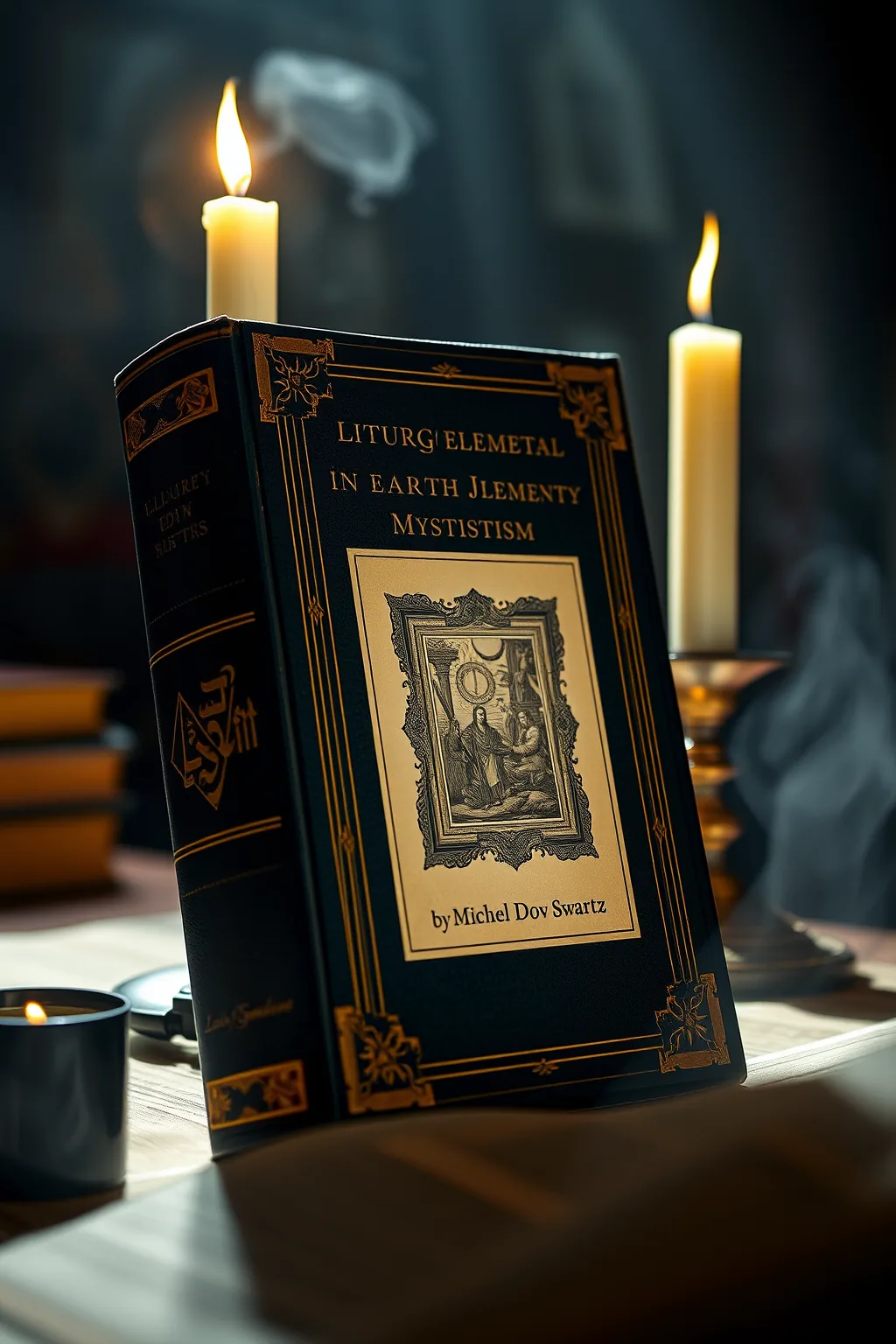
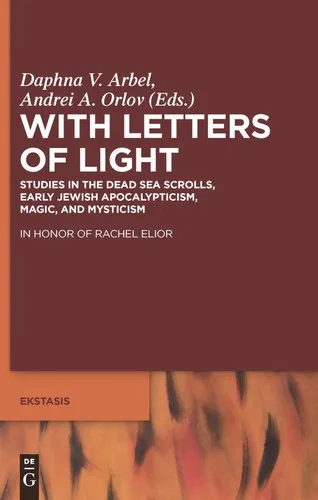
Liturgical elements in early Jewish Mysticism
 61
61

Liturgical elements in early Jewish Mysticism



Lorelei Sage (Contemplative Literature Editor) — Michael Dov Swartz's 'Liturgical elements in early Jewish Mysticism' is an indispensable scholarly exploration into the profound mystical dimensions of ancient Jewish practice. Swartz masterfully deciphers the intricate relationship between liturgy and ecstatic experience, demonstrating how ritualistic elements served as conduits for divine revelation and mystical ascent. His deep engagement with the Hekhalot literature and early rabbinical texts offers readers unparalleled access to the esoteric worldview of these pioneers. This work is particularly valuable for its nuanced analysis of symbolic language and its capacity to unlock hidden spiritual pathways. Essential for scholars and serious seekers of Jewish mysticism.
📝 Description
61
Michael Dov Swartz's 1999 study examines how early Jewish liturgy functioned as a vehicle for mystical experience.
This book investigates the role of prayer and ritual in early Jewish mysticism. Swartz argues that liturgical formulas in ancient Jewish practice were not simply recitations, but tools intended to open paths to celestial realms and direct divine encounters. The work analyzes the symbolic meaning found in hymns, blessings, and the structural elements of worship. It connects these practices to the development of Hekhalot literature and the beginnings of Kabbalistic thought.
The book details how these elements functioned within the mystical traditions of Judaism. It highlights the use of sacred language to achieve a connection beyond the ordinary. The study focuses on the contemplative practices that formed the core of this mystical development. It offers an understanding of the spiritual technologies employed by ancient mystics.
This work situates itself within the study of early Jewish mystical traditions, specifically those that emerged before and during the formative period of Kabbalah. It focuses on the Hekhalot literature, a corpus of texts describing visionary ascents through heavenly palaces. The book's contribution is to show how the structured prayers and rituals of the period were not separate from these mystical aims but were integral to them, acting as a form of spiritual technology for achieving altered states of consciousness and divine communion.
💡 Why Read This Book?
Uncover the hidden mystical power embedded within ancient Jewish prayers and rituals. 'Liturgical elements' reveals how everyday devotion was a sophisticated spiritual technology for achieving ecstatic states and divine communion. Ideal for scholars, students of Kabbalah, and anyone seeking a deeper, more esoteric understanding of Jewish spiritual heritage.
⭐ Reader Reviews
Honest opinions from readers who have explored this book.
❓ Frequently Asked Questions
What is the primary focus of this book?
The book's primary focus is the intricate connection between liturgical elements in early Judaism and the development of mystical practices, particularly within the Hekhalot literature and pre-Kabbalistic traditions.
What is Hekhalot literature?
Hekhalot literature refers to a body of early Jewish mystical texts that describe visionary ascents through celestial palaces (hekhalot) to encounter the divine throne.
Who was Michael Dov Swartz?
Michael Dov Swartz was a respected scholar and author whose work delved deeply into the history and philosophy of Jewish mysticism and its textual traditions.
Is this book suitable for beginners in mysticism?
While scholarly, the book offers foundational insights. Beginners interested in the roots of Jewish mysticism will find it illuminating, though some prior familiarity with Jewish concepts may enhance comprehension.
What makes this book 'esoteric'?
The book explores the hidden, symbolic, and experiential dimensions of Jewish liturgy, revealing practices and beliefs intended for spiritual ascent and direct divine encounter, often beyond exoteric religious understanding.
🔮 Key Themes & Symbolism
The Liturgy as Mystical Technology
This theme explores how early Jewish prayers, blessings, and hymns were not merely devotional acts but sophisticated spiritual tools designed to facilitate mystical ascent. Swartz demonstrates how the precise recitation and understanding of liturgical formulae were believed to unlock divine realms, enabling practitioners to navigate celestial palaces and achieve direct communion with the divine. The book highlights the symbolic language and intentional structure of these prayers as keys to esoteric knowledge and transformative experience, moving beyond simple worship to active spiritual engagement.
Hekhalot Literature and Celestial Ascent
A core focus is the exploration of the Hekhalot literature, a crucial corpus for understanding early Jewish mysticism. Swartz analyzes the visionary journeys described within these texts, where mystics sought to ascend through the heavenly realms. The book illuminates how liturgical practices were integral to these ascents, providing the necessary purification, protection, and divine authorization for the mystic to approach the divine throne. It reveals the intricate cosmology and angelology that underpinned these early explorations of the divine mysteries.
Symbolism and the Hidden Meanings of Ritual
This theme examines the body of symbolism woven into early Jewish ritual and liturgy. Swartz unpacks the deeper, often hidden, meanings behind specific prayers, gestures, and ceremonial objects. He shows how these symbolic elements were understood to correspond to cosmic realities and spiritual states, serving as a bridge between the earthly and the divine. The book emphasizes that for the early mystics, every aspect of the liturgy held profound esoteric significance, intended to guide the practitioner towards spiritual gnosis and transformation.
💬 Memorable Quotes
Direct passages from the work, attributed to the author.
“The sacred word, a key to celestial gates.”
— Highlights the power attributed to the precise utterance and understanding of liturgical texts as instruments for accessing divine realms and hidden knowledge.
“Within the structure of prayer, the universe unfurls.”
— Suggests that the cosmic order and divine mysteries were mirrored and accessible through the organized form and content of early Jewish liturgical practice.
“The mystic sought not just to hear, but to become the divine echo.”
— Emphasizes the participatory and transformative nature of mystical engagement with liturgy, aiming for a profound resonance and union with the divine.
“Beyond the veil of the ordinary, revelation awaited the attentive soul.”
— Points to the esoteric promise within the liturgy: that careful spiritual attention could lead to profound divine insights and experiences hidden from the uninitiated.
💡 Key Ideas
Editorial paraphrase of the work's core concepts — not direct quotes.
Prayer was not mere supplication, but a ladder.
This quote captures the book's central thesis: that early Jewish liturgy was viewed as a dynamic spiritual technology designed for ascent and connection, not just passive petition.
🌙 Esoteric Significance
Tradition
This book is deeply rooted in the esoteric traditions of early Jewish mysticism, particularly the Hekhalot literature and its precursors to Kabbalah. It explores the concept of the 'Merkavah' (Chariot) mysticism, focusing on visionary ascents to the divine throne. The significance lies in revealing how these early mystics viewed liturgy not just as religious observance but as a sophisticated system of spiritual technology for achieving altered states of consciousness and direct divine encounter, a core part of esoteric practice.
Symbolism
The esoteric symbolism explored revolves around the divine names, angelic hierarchies, celestial palaces, and the transformative power of liturgical recitation. Swartz illuminates how specific Hebrew letters, vowel sounds, and prayer structures were imbued with cosmic significance, acting as keys to unlock spiritual realms and divine attributes. The symbolism served as a coded language, enabling mystics to work through the celestial pathways and perceive the hidden interconnectedness of all creation, a hallmark of esoteric traditions seeking deeper reality.
Modern Relevance
The modern relevance of 'Liturgical elements in early Jewish Mysticism' lies in its exploration of ancient spiritual technologies that resonate with contemporary contemplative and mystical practices. It offers clear insights into the power of focused intention, sacred language, and ritualistic structure for spiritual growth and inner transformation. For seekers today, it provides a historical and conceptual framework for understanding how devotion can be a direct pathway to the divine, encouraging a more engaged and profound approach to spiritual discipline and the pursuit of esoteric knowledge.
👥 Who Should Read This Book
This clear work is essential for a diverse audience. Scholars of religion and Jewish studies will find it an authoritative and deeply researched analysis of critical early mystical texts. Students of Kabbalah and Jewish mysticism will gain an invaluable understanding of its foundational elements. Spiritual seekers interested in the history of contemplative practices and the esoteric dimensions of prayer will find profound inspiration. Practitioners of Jewish meditation and ritual can glean clear insights into the deeper purpose and potential of their practices, enriching their spiritual journey.
📜 Historical Context
This work is situated within the critical period of early Rabbinic Judaism and the subsequent development of Jewish mystical traditions, roughly spanning the talmudic era through the Gaonic period (c. 200-1000 CE). This was a time of profound intellectual and spiritual ferment, marked by the consolidation of rabbinic authority, the destruction of the Second Temple, and the emergence of new forms of religious expression. The Hekhalot literature, a primary source for Swartz's analysis, arose during this era, reflecting a deep engagement with visionary experiences and the complex architecture of the divine realms. The development of Kabbalah, which would later build upon these foundations, was also nascent. This period saw a vibrant interplay between exoteric law and esoteric speculation, where the very act of prayer and ritual became a potent vehicle for exploring the divine mysteries and seeking direct spiritual experience.
📔 Journal Prompts
How can the structure of a prayer you know be seen as a pathway rather than just words?
Reflect on a time when reciting words or performing a ritual felt profoundly meaningful. What made it so?
Imagine the ancient mystics’ understanding of divine names. How might this change your perception of everyday language?
Consider the concept of 'celestial palaces.' How can you create a sacred inner space for contemplation?
What symbolic elements in your own spiritual practice or daily life hold hidden or deeper meanings for you?
🗂️ Glossary
Hekhalot
Hebrew for 'palaces' or 'temples,' referring to a genre of early Jewish mystical literature describing visionary ascents through celestial palaces to the divine throne.
Merkavah Mysticism
A form of early Jewish mysticism focused on visionary experiences of the divine chariot (Merkavah) as described in Ezekiel's vision, involving ecstatic ascent through heavenly realms.
Rabbinic Literature
A broad category of Jewish texts produced by rabbis, including the Mishnah, Talmud, and Midrash, covering law, ethics, theology, and narrative.
Esoteric
Intended for or likely to be understood by only a small number of people with a specialized knowledge or interest; relating to hidden meanings or inner spiritual truths.
Gnosis
Greek for 'knowledge,' often referring to a type of spiritual knowledge that leads to salvation or enlightenment, particularly in Gnostic and mystical traditions.
This book appears in 1 collection
🔮 Readers Also Liked
Browse all →








From the “Kabbalah” Collection
View all →







More Free Kabbalah & Jewish Mysticism Books
View all →