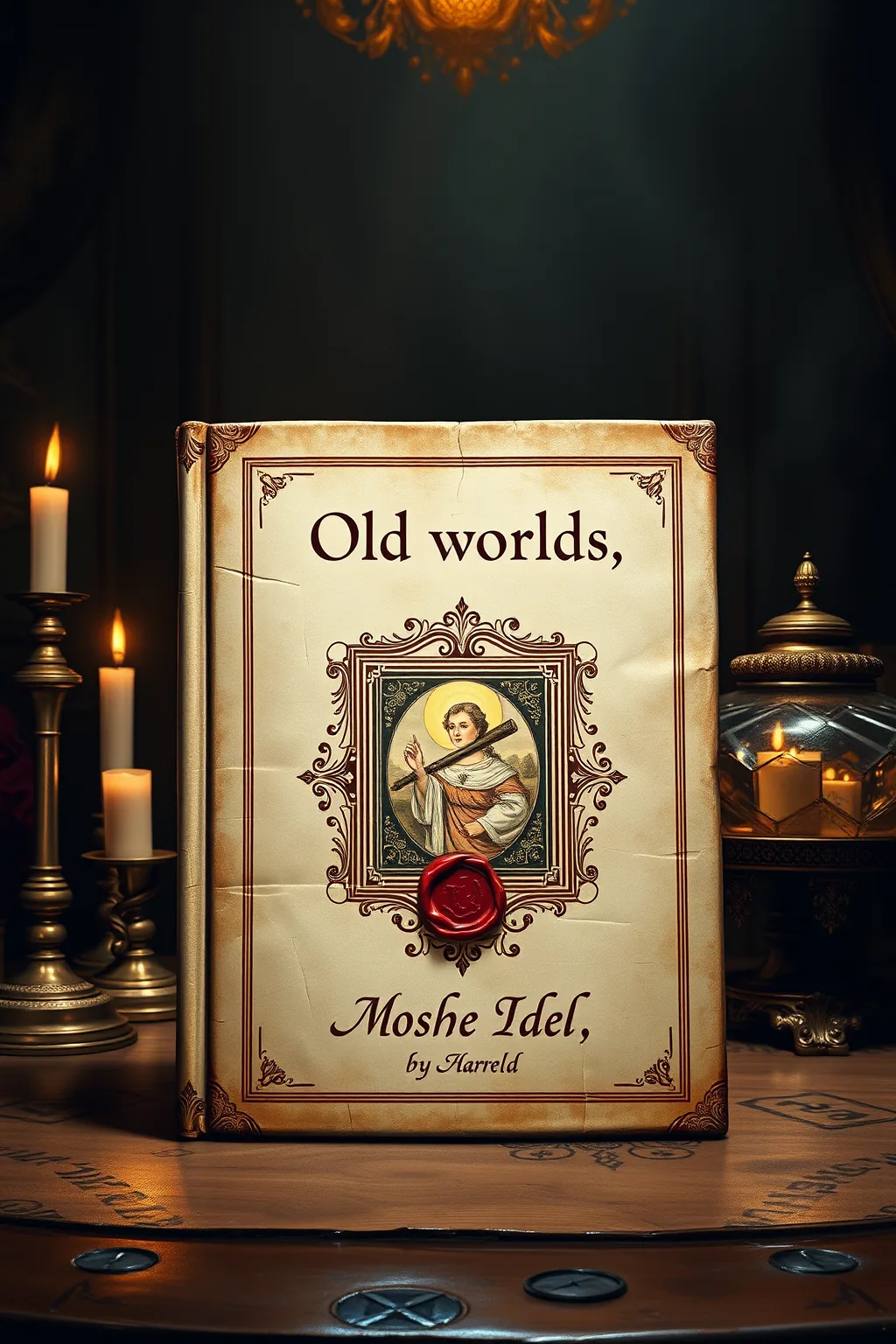
Old worlds, new mirrors
 62
62

Old worlds, new mirrors


Aurelia Blackwood (Occult Philosophy Critic) — Moshe Idel's 'Old Worlds, New Mirrors' is a monumental work, illuminating the often-veiled landscape of Kabbalistic thought. Idel's unparalleled scholarship cuts through complexity, revealing the dynamic interplay of esoteric ideas within Jewish mysticism. He masterfully deciphers ancient symbols and concepts, offering fresh perspectives on the transformative potential of Kabbalah for both the intellectual and the soul. This is essential reading for anyone seriously engaged with Jewish esoteric traditions, offering profound insights into the nature of divine consciousness and its manifestation. Aurelia Blackwood.
📝 Description
62
Moshe Idel's 2009 book, 'Old Worlds, New Mirrors,' examines how Kabbalah has been interpreted across different eras.
In 'Old Worlds, New Mirrors,' Moshe Idel analyzes the historical reception and interpretation of Kabbalistic ideas. He focuses on how concepts like divine emanations, the Sefirot, and mystical experience have been understood and reinterpreted from medieval Kabbalah to modern scholarship. Idel traces the lineage of these ideas, showing how their meaning shifted with changing philosophical and cultural contexts.
The book addresses the transformation of mystical terminology and its adaptation by various thinkers. Idel demonstrates that understanding Kabbalah requires attention to its evolving interpretive frameworks. He offers a scholarly perspective on the continuity and change within Jewish esoteric traditions, moving beyond simplistic notions of a static mystical doctrine. This work provides a detailed look at the scholarly engagement with Kabbalistic sources.
This book situates itself within the study of Jewish mysticism, specifically Kabbalah. It examines the historical layers of interpretation that have shaped our understanding of Kabbalistic concepts. Idel's work acknowledges Kabbalah not as a monolithic entity, but as a tradition whose core ideas, such as the Sefirot and divine symbolism, have been subject to continuous reinterpretation. The book connects medieval Kabbalistic thought to later philosophical and scholarly dialogues.
💡 Why Read This Book?
Embark on a profound journey into the heart of Kabbalistic wisdom. 'Old Worlds, New Mirrors' offers unparalleled insights into Jewish mysticism, revealing hidden symbolic languages and transformative spiritual practices. Ideal for seekers of esoteric knowledge, scholars of religion, and practitioners looking to deepen their understanding of divine connection and cosmic order.
⭐ Reader Reviews
Honest opinions from readers who have explored this book.
❓ Frequently Asked Questions
What is the core focus of 'Old Worlds, New Mirrors'?
The book centers on the intricate philosophical and mystical dimensions of Kabbalah, exploring its historical development and enduring esoteric concepts. It examines how ancient mystical ideas are reflected and reinterpreted across different eras.
Is prior knowledge of Kabbalah required to read this book?
While some familiarity with Jewish mysticism is beneficial, Idel's lucid prose and scholarly approach make it accessible to dedicated readers. The book serves as both an introduction and a deep dive for those already initiated.
What kind of 'mirrors' are discussed in the title?
The 'mirrors' refer to the ways in which Kabbalistic thought has been understood, interpreted, and reflected in different historical periods and by various scholars. It signifies the evolving reception and understanding of these ancient ideas.
How does this book connect to Hasidism?
The book explores the lineage of Kabbalistic thought, including its influence on and development within Hasidic Judaism. It highlights the continuity and transformations of mystical ideas within this influential movement.
What makes Moshe Idel a significant scholar in this field?
Moshe Idel is a preeminent scholar of Kabbalah, renowned for his innovative interpretations and his ability to reveal the dynamic and often surprising aspects of Jewish mysticism, challenging conventional academic views.
🔮 Key Themes & Symbolism
The Luminous Architecture of Kabbalah
This theme studies the intricate conceptual framework of Kabbalah, examining its cosmological structures, the divine emanations (Sefirot), and the pathways of ascent. Idel illuminates how these symbolic systems are not mere abstract theories but profound maps for spiritual navigation, offering seekers a means to comprehend the divine presence within creation and to cultivate a deeper connection with the ineffable.
Symbolism and the Language of the Divine
Central to Idel's exploration is the power of symbolism in Kabbalistic discourse. This theme unpacks the multi-layered meanings embedded within Hebrew letters, divine names, and scriptural narratives. It reveals how these symbolic elements serve as conduits to higher realities, acting as 'mirrors' that reflect divine wisdom and enable the mystical experience of union or communion with the sacred.
Continuity and Transformation in Jewish Mysticism
This theme addresses the dynamic evolution of Kabbalistic thought across centuries, from its medieval origins to its impact on modern movements like Hasidism. Idel demonstrates that while the core esoteric principles remain, their interpretation and application adapt, showcasing the living and breathing nature of this mystical tradition. It highlights how 'old worlds' of wisdom are continually mirrored in 'new' expressions and understandings.
💬 Memorable Quotes
Direct passages from the work, attributed to the author.
“To understand the mirror is to understand the reflection.”
— This metaphor highlights the interconnectedness of perception and reality in mystical thought. Understanding the tools of interpretation (mirrors) is crucial for grasping the divine truths being revealed (reflections).
“The divine is not distant, but immanent in the smallest detail.”
— This speaks to the core Kabbalistic concept of divine presence pervading all of existence, challenging the notion of a remote deity and pointing to the sacredness found within the mundane.
“Every letter is a pathway to the infinite.”
— This emphasizes the profound significance of the Hebrew alphabet in Kabbalah, where each letter is seen as a potent symbol holding divine secrets and offering a potential route to spiritual insight.
“Mysticism is the art of seeing the unseen.”
— This concise definition captures the essence of mystical pursuit, framing it as a skill or discipline focused on perceiving realities beyond ordinary sensory experience.
💡 Key Ideas
Editorial paraphrase of the work's core concepts — not direct quotes.
The Kabbalah is not a static body of knowledge, but a living, breathing organism.
This quote emphasizes the dynamic and evolving nature of Kabbalistic thought, suggesting it is not a fixed doctrine but a tradition that adapts and grows with new interpretations and experiences.
🌙 Esoteric Significance
Tradition
The primary esoteric tradition explored is Kabbalah, the mystical interpretive tradition within Judaism. Idel studies its theoretical aspects, including the Sefirot, divine names, and cosmology, as well as its practical dimensions, such as meditative techniques and ecstatic prayer. The book positions Kabbalah not merely as a historical phenomenon but as a living system of spiritual insight and practice, offering pathways to understanding the divine nature and one's place within the cosmic order.
Symbolism
Symbolism is the bedrock of Kabbalistic expression, and Idel meticulously unpacks its complex nature. Key symbols include the Sefirot (divine attributes/emanations), the Hebrew alphabet (each letter imbued with divine power), divine names (e.g., Tetragrammaton, Elohim), and the Tree of Life (a diagram mapping divine flow). These symbols are not mere decorative elements but active agents, serving as gateways to comprehending divine mysteries, facilitating spiritual ascent, and enabling the meditator to engage directly with sacred forces.
Modern Relevance
Despite its ancient roots, the esoteric wisdom within 'Old Worlds, New Mirrors' holds profound modern relevance. In an era often characterized by materialism and spiritual searching, Kabbalah offers a sophisticated framework for understanding consciousness, interconnectedness, and the sacred immanent in the everyday. Idel's work makes these ancient insights accessible, providing tools for personal transformation, a deeper appreciation of Jewish heritage, and a nuanced perspective on the enduring human quest for meaning and transcendence.
👥 Who Should Read This Book
This key work is essential for a diverse readership. Scholars of religious studies, Jewish history, and comparative mysticism will find Idel's meticulous research and innovative interpretations invaluable. Spiritual seekers and practitioners interested in deepening their understanding of Jewish esoteric traditions, the nature of divine consciousness, and symbolic interpretation will discover clear insights. Even those new to Kabbalah, but possessing an intellectual curiosity and a desire for profound spiritual exploration, will find 'Old Worlds, New Mirrors' a rewarding and informative read.
📜 Historical Context
Moshe Idel's 'Old Worlds, New Mirrors' emerges from a rich academic tradition dedicated to understanding the complex history of Jewish mysticism. The book navigates the intellectual landscape from the medieval period, where Kabbalah first flourished in its documented forms (e.g., the Zohar), through the Renaissance and Enlightenment, to its profound influence on the Hasidic movement of the 18th century and beyond. Idel's work is particularly notable for its engagement with the scholarship of Gershom Scholem, the pioneering scholar who brought Kabbalah to mainstream academic attention, while simultaneously offering his own distinctive interpretations that often challenge established paradigms. The book reflects a period of intense scholarly interest in esoteric traditions, seeking to understand their philosophical depth and cultural impact.
📔 Journal Prompts
Reflect on a time you felt a profound connection to something larger than yourself. How did that experience mirror or contrast with the Kabbalistic concepts of divine immanence discussed in the book?
Consider the concept of 'mirrors' in the title. How do you see yourself or the world as a reflection of deeper truths or hidden realities?
Identify a symbol from your own life or culture that holds deep personal meaning. Explore its potential layers of interpretation, akin to the symbolic language of Kabbalah.
How might the Kabbalistic understanding of divine attributes (Sefirot) inform your approach to personal growth and your interactions with others?
Imagine you are explaining a core Kabbalistic idea to someone unfamiliar with the tradition. What metaphor or analogy would you use to convey its essence?
🗂️ Glossary
Kabbalah
A system of Jewish mysticism, originating in the medieval period, that seeks to understand the nature of God, the universe, and the human soul through esoteric interpretations of religious texts and concepts.
Sefirot
The ten divine emanations or attributes through which God reveals Himself and creates the universe. They are often depicted as a 'Tree of Life' and represent stages of divine unfolding.
Hasidism
A Jewish revival movement founded in the 18th century, characterized by its emphasis on spiritual joy, personal connection to God, and the teachings of charismatic leaders (Rebbes).
Zohar
The foundational text of Kabbalah, a mystical commentary on the Torah, believed by many to have been written by Rabbi Shimon bar Yochai in the 2nd century CE, though modern scholarship dates it to the medieval period.
Immanence
The philosophical or theological concept that God is present and active within the material world and the universe, rather than being wholly transcendent and separate.
This book appears in 1 collection
🔮 Readers Also Liked
Browse all →









More by Moshe Idel
All books →



From the “Kabbalah” Collection
View all →







More Free Kabbalah & Jewish Mysticism Books
View all →