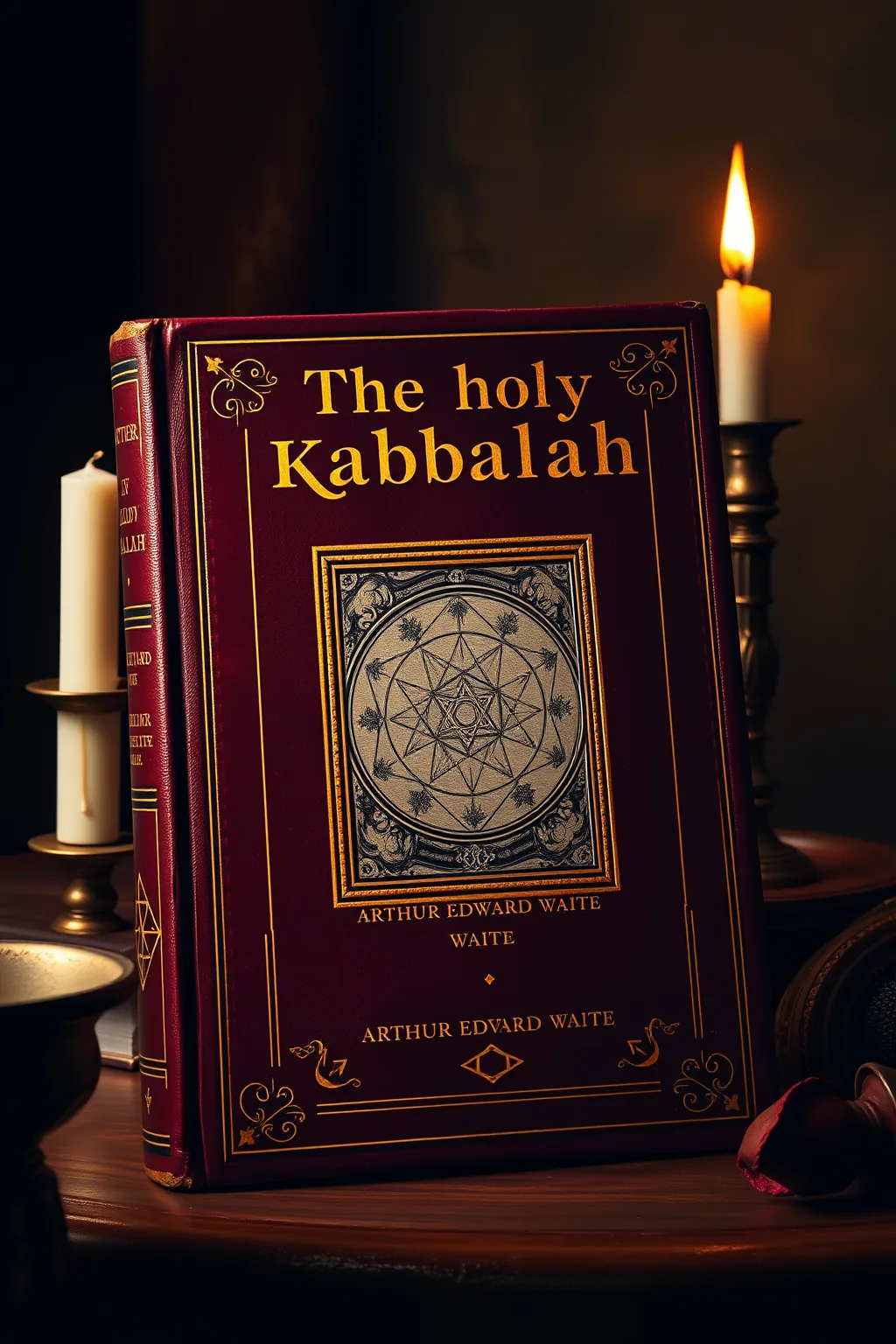
The holy kabbalah
 61
61

The holy kabbalah



Arthur Edward Waite's 'The Holy Kabbalah' stands as an indispensable pillar for any serious exploration of Jewish mystical traditions. Sophia Crane, Associate Editor, commends Waite's scholarly yet accessible approach, illuminating the complex symbolism and philosophical depth of Kabbalah. This comprehensive volume delves into the historical evolution and esoteric principles, offering profound insights into the Tree of Life and the divine emanations. It is a vital resource for scholars, practitioners, and spiritual seekers yearning to grasp the profound wisdom encoded within this ancient lineage. Waite's meticulous research and lucid explanations make this an enduring testament to the enduring power of Kabbalistic thought.
📝 Description
61
Arthur Edward Waite published 'The Holy Kabbalah' in 1929, detailing Jewish mysticism.
Arthur Edward Waite's 'The Holy Kabbalah,' first published in 1929, examines the core concepts of Kabbalistic thought. Waite outlines the Sephiroth and the Tree of Life, key structures within this mystical tradition. He also discusses the ancient texts that underpin Kabbalistic philosophy and symbolism. The book aims to illuminate divine emanations and the pursuit of gnosis central to Kabbalah. It is written for those interested in the spiritual dimensions of existence and the soul's inner workings. The work presents Kabbalah as a system for comprehending the universe through its spiritual insights.
Waite's prose seeks to evoke the atmosphere of ancient wisdom. The book challenges readers to engage intellectually with these spiritual concepts. It is intended for students of mysticism, philosophers, and those seeking deeper truths about reality. 'The Holy Kabbalah' acts as a guide to understanding the universe from a specific esoteric viewpoint.
This work situates itself within the study of Jewish mysticism, specifically Kabbalah. It approaches the subject from a scholarly perspective, aiming to clarify its complex doctrines and symbolic language for a wider audience. Waite's treatment connects Kabbalistic ideas to broader themes of cosmic architecture and spiritual knowledge. The book serves as an introduction to a tradition that influenced various Western esoteric movements, offering insights into a spiritual framework developed over centuries within Jewish thought.
💡 Why Read This Book?
For seekers of hidden knowledge and practitioners of esoteric arts, 'The Holy Kabbalah' is an essential read. Arthur Edward Waite provides an unparalleled deep dive into the foundational texts and principles of Kabbalah. It's ideal for scholars and students who wish to understand the historical and philosophical underpinnings of Jewish mysticism, offering a comprehensive guide to its intricate symbolism and spiritual quest.
⭐ Reader Reviews
Honest opinions from readers who have explored this book.
❓ Frequently Asked Questions
What is Kabbalah?
Kabbalah is an esoteric tradition within Judaism that explores the divine nature and the creation of the universe through symbolic interpretation of religious texts, primarily the Torah. It seeks to understand the hidden aspects of God and reality.
Who was Arthur Edward Waite?
Arthur Edward Waite (1857-1942) was a prominent occultist, scholar, and co-creator of the Rider-Waite Tarot deck. He was a prolific writer on mysticism, alchemy, and esoteric subjects.
What is the Tree of Life in Kabbalah?
The Tree of Life (Etz Chaim) is a central symbolic diagram in Kabbalah, depicting the ten Sephiroth (divine emanations) and the paths connecting them, representing the structure of creation and the path to spiritual enlightenment.
Is this book suitable for beginners?
While comprehensive, 'The Holy Kabbalah' is dense and best suited for those with some prior interest in mysticism or philosophy. Beginners may find it beneficial to approach it with patience or alongside more introductory texts.
What are the Sephiroth?
The Sephiroth are the ten divine attributes or emanations through which God reveals Himself and creates the universe. They are understood as stages in the divine outflow and are central to Kabbalistic cosmology.
🔮 Key Themes & Symbolism
The Tree of Life and Sephiroth
Central to Kabbalistic cosmology, the Tree of Life is a dynamic diagram illustrating the ten divine emanations (Sephiroth) through which the infinite Godhead manifests and creates the universe. Waite meticulously dissects each Sephirah, revealing its unique attributes, correspondences, and role in the divine plan. This structure serves as a map of consciousness, a blueprint for creation, and a pathway for spiritual ascent, offering clear insights into the interconnectedness of all existence and the subtle energies that govern reality.
Gnosis and Divine Revelation
The pursuit of Gnosis, or direct spiritual knowledge, is a central to Kabbalistic practice. 'The Holy Kabbalah' explores how practitioners aim to achieve an intimate understanding of the divine through contemplation, meditation, and the study of sacred texts. Waite illuminates the various methods and concepts used to facilitate this inner revelation, emphasizing the transformative power of divine illumination and the quest for union with the ultimate source of being. This theme highlights Kabbalah as a path to profound spiritual awakening and self-realization.
Symbolism and Esoteric Interpretation
Kabbalah is a system rich in symbolism, where every letter, word, and concept holds layers of hidden meaning. Waite masterfully deciphers these intricate symbols, from the Hebrew alphabet to the mystical names of God and angelic hierarchies. He demonstrates how these symbols are not mere decorations but vital keys to unlocking the deeper spiritual truths embedded within the Jewish tradition. Understanding this symbolic language is crucial for grasping the esoteric teachings and the profound philosophical underpinnings of Kabbalistic thought.
💬 Memorable Quotes
Direct passages from the work, attributed to the author.
“The Tree of Life is the ladder of ascent.”
— This highlights the practical, transformative aspect of Kabbalah, suggesting that the Tree of Life serves as a symbolic map and guide for the soul's journey toward spiritual enlightenment.
“Hidden within the letters is the divine name.”
— This points to the profound belief in the power of Hebrew letters and their arrangement to reveal divine secrets and the very essence of creation, a core tenet of Kabbalistic hermeneutics.
“The universe is a reflection of the divine.”
— This captures the pantheistic or panentheistic leanings within Kabbalah, emphasizing the intimate connection and correspondence between the macrocosm (universe) and the microcosm (individual soul).
“Seek the light that shines within.”
— This serves as an encouragement for introspection and the inner spiritual quest, suggesting that true understanding and divine connection are found through internal exploration rather than external means.
💡 Key Ideas
Editorial paraphrase of the work's core concepts — not direct quotes.
The Kabbalah is a sacred science.
This quote underscores the rigorous and systematic nature of Kabbalistic study, positioning it not as mere folklore but as a profound system of knowledge with its own laws and principles.
🌙 Esoteric Significance
Tradition
This work is a starting point for understanding Jewish Kabbalah, a mystical tradition that originated within Judaism and explores the nature of God, creation, and the soul. It studies the esoteric dimensions of Jewish scripture and thought, offering a framework for spiritual development and a deeper comprehension of divine mysteries. Waite's scholarship bridges the gap between historical study and the practical application of Kabbalistic principles for inner transformation.
Symbolism
The book is a deep dive into Kabbalistic symbolism, particularly the iconic Tree of Life with its ten Sephiroth and twenty-two paths. Waite meticulously explains the meaning behind divine names, angelic orders, Hebrew letters, and gematria (numerological interpretation). These symbols are presented not as mere decorative elements but as keys to understanding the structure of the cosmos, the divine emanations, and the human psyche's journey towards spiritual union.
Modern Relevance
Despite its historical roots, the esoteric teachings within 'The Holy Kabbalah' remain profoundly relevant. The exploration of consciousness, the interconnectedness of all things, and the pursuit of inner wisdom resonate with contemporary seekers. Kabbalistic concepts offer powerful metaphors for personal growth, psychological integration, and understanding the subtle energies that influence our lives, making it a valuable resource for modern spiritual practitioners and philosophers.
👥 Who Should Read This Book
Scholars and students of comparative religion and mysticism will find 'The Holy Kabbalah' an invaluable academic resource. Spiritual seekers and practitioners of esoteric arts will benefit from its detailed exposition of Kabbalistic principles and symbolism, offering a roadmap for inner exploration. Those interested in the history of occultism and the development of Western esotericism will appreciate Waite's comprehensive approach. Beginners with a serious interest in Jewish mysticism can approach this work for a foundational, albeit in-depth, understanding, though it is best complemented by introductory texts.
📜 Historical Context
Arthur Edward Waite's 'The Holy Kabbalah' emerged during a period of intense interest in occultism and esoteric traditions in the late 19th and early 20th centuries. This era saw a surge in scholarly and amateur investigation into ancient wisdom, mysticism, and forgotten spiritual paths. Waite, a prolific writer and a key figure in organizations like the Hermetic Order of the Golden Dawn, sought to synthesize and present complex esoteric systems in a comprehensive manner. His work on Kabbalah reflects this broader intellectual climate, aiming to make accessible the profound depth of Jewish mysticism to a Western audience, bridging the gap between academic study and spiritual practice.
📔 Journal Prompts
Reflect on the concept of divine emanations (Sephiroth) and how they might manifest in your own life or the world around you.
Consider the symbolism of the Hebrew alphabet as presented in Kabbalah. How might letters hold deeper meaning beyond their phonetic value?
Explore the idea of Gnosis. What does direct spiritual knowledge mean to you, and what practices might help you achieve it?
Meditate on the interconnectedness of all things as suggested by Kabbalistic cosmology. How does this perspective change your view of yourself and others?
Journal about the 'divine name.' What does the pursuit of understanding the ultimate nature of existence mean to your spiritual path?
🗂️ Glossary
Sephiroth
The ten divine emanations or attributes through which God reveals Himself and creates the universe. They form the structure of the Kabbalistic Tree of Life.
Ein Sof
The Kabbalistic term for the 'Infinite' or 'Without End,' representing the primordial, unknowable essence of God before creation or manifestation.
Gematria
A system of numerological interpretation in Kabbalah where Hebrew letters are assigned numerical values, used to find hidden meanings in sacred texts by comparing words with equal numerical values.
Tzimtzum
The Kabbalistic concept of 'contraction' or 'withdrawal,' referring to God's self-limitation to create a void for the existence of the created universe.
Keter
The first Sephirah on the Tree of Life, representing the Crown, the highest emanation, symbolizing divine will and the primal point of creation.
This book appears in 1 collection
🔮 Readers Also Liked
Browse all →








More by Arthur Edward Waite
All books →
From the “Kabbalah” Collection
View all →






More Free Kabbalah & Jewish Mysticism Books
View all →