The Zohar
 79
79

The Zohar
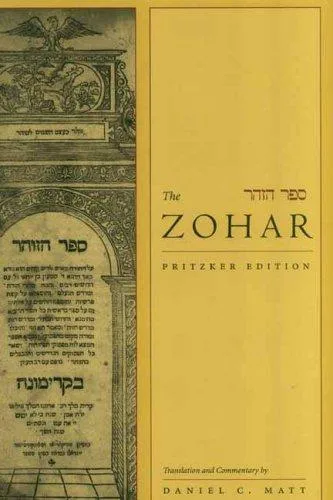
Daniel C. Matt's translation of The Zohar is a monumental undertaking, offering an English rendition of a text notoriously difficult to approach. Matt’s scholarly rigor is evident on every page, providing essential context and illuminating the dense Aramaic. The strength lies in its clarity and the author's deep familiarity with Kabbalistic thought, making complex passages more navigable than in previous translations. However, the sheer density of the Zohar itself remains a challenge; even with Matt's guidance, readers must come prepared for a demanding intellectual and spiritual exploration. A particularly striking passage involves the symbolic interpretation of the creation narrative, where divine attributes are intricately mapped onto cosmic processes. This edition is indispensable for serious students of Kabbalah.
📝 Description
79
The Zohar, a central text of Kabbalah, offers a mystical reading of the Torah.
This work is not a simple story but a collection of commentaries, conversations, and symbolic interpretations that reveal the hidden layers of Jewish scripture. Written mainly in Aramaic, tradition credits Rabbi Shimon bar Yochai from the 2nd century CE, though scholars now believe it was put together in 13th-century Spain. Daniel C. Matt's English edition seeks to make this complex and detailed work understandable for today's readers.
This translation is valuable for anyone studying Kabbalah, Jewish mysticism, or comparative religion. It is suitable for academics needing a trustworthy English version and for those interested in mystical readings of religious texts. Readers who enjoy detailed philosophical and theological writings and are drawn to symbolic and allegorical approaches to spirituality will find it engaging.
The Zohar emerged from the intellectual and spiritual environment of medieval Spain. Its appearance in the late 13th century, linked to Moses de León, was a significant moment, shaping later Kabbalistic ideas and showing connections to other mystical movements of the time. The text's layered nature and specialized language mirror a period of deep theological and philosophical thought within Judaism, often responding to prevailing philosophical and religious currents.
Emerging in 13th-century Spain, the Zohar became a cornerstone of Kabbalah, a Jewish mystical tradition. It presents a complex theological system, including the concept of the Ein Sof (the Infinite) and the ten Sefirot (divine emanations). The text uses symbolic readings of the Torah and Hebrew alphabet to explain divine will and the structure of reality. Its appearance marked a significant development in Jewish mystical thought, influencing subsequent Kabbalistic literature and thought.
💡 Why Read This Book?
• Gain access to the foundational texts of Kabbalah, specifically the Zohar's esoteric interpretations of the Torah, a core element of Jewish mysticism since its 13th-century compilation. • Understand the concept of the Sefirot, the ten divine emanations crucial to Kabbalistic cosmology, as detailed within the Zohar's complex symbolic framework. • Explore the Zohar's unique approach to scripture, treating the Torah as a living, mystical entity rather than solely a historical or legal document, a perspective developed in medieval Spain.
⭐ Reader Reviews
Honest opinions from readers who have explored this book.
❓ Frequently Asked Questions
What is the primary language of the Zohar?
The Zohar is primarily written in Aramaic, a Semitic language that was common in ancient Israel and Babylonia. This linguistic choice contributes to its mystical and ancient aura, making direct comprehension challenging for those unfamiliar with the language.
Who is credited with the authorship of the Zohar?
Traditionally, the Zohar is attributed to Rabbi Shimon bar Yochai, a 2nd-century sage. However, modern scholarship suggests it was compiled and expanded upon in 13th-century Spain, with Moses de León being a key figure in its dissemination.
What is the concept of 'Sefirot' in the Zohar?
The Sefirot are ten divine attributes or emanations through which the Infinite (Ein Sof) interacts with creation. They form a central part of Kabbalistic cosmology, outlining a divine structure that bridges the transcendent and immanent.
How does the Zohar interpret the Torah?
The Zohar views the Torah as a living, mystical body containing hidden layers of meaning. It employs allegorical and symbolic methods to reveal divine secrets, focusing on the spiritual significance of each letter, word, and narrative.
What is the significance of Daniel C. Matt's translation?
Daniel C. Matt's translation provides a scholarly and accessible English rendering of the Zohar. It includes extensive notes and commentary, aiming to clarify the text's complex ideas and make this foundational Kabbalistic work available to a wider audience.
When did the Zohar first gain prominence?
The Zohar began to circulate and gain significant influence in Jewish mystical circles in the late 13th century, shortly after its likely compilation in Spain. Its impact grew substantially over the following centuries.
🔮 Key Themes & Symbolism
The Ein Sof and Sefirot
The Zohar posits a dynamic cosmology originating from the Ein Sof, the unknowable Infinite. This divine essence manifests through the ten Sefirot, conceptualized as channels of divine energy and attributes. Each Sefirot—such as Keter (Crown), Chokhmah (Wisdom), Binah (Understanding), and Malkhut (Kingdom)—represents a stage in the unfolding of creation and a facet of the divine accessible to human contemplation. Understanding these emanations is key to grasping the Zohar's intricate map of the divine realms and their interaction with the material world.
Mystical Torah Interpretation
Unlike literal readings, the Zohar treats the Torah as a divine, living entity imbued with profound secrets. Its method involves gematria (numerical value of Hebrew letters), notarikon (acronyms), and temurah (letter permutations) to unlock hidden meanings. Every word, story, and commandment is seen as a symbolic key to understanding the divine nature, cosmic processes, and the path to spiritual illumination. This approach transforms scriptural study into a practice of divine communion.
Cosmic Interconnectedness and Tikkun
The Zohar emphasizes the profound interconnectedness of all existence, from the highest divine realms to the lowest material forms. Human actions, thoughts, and prayers are believed to have a direct impact on the celestial balance. The concept of Tikkun, or cosmic repair, highlights humanity's role in restoring harmony to creation through righteous living and spiritual ascent, thereby mending the fractures within the divine emanations and the universe.
The Divine Human Dialogue
Central to the Zohar's teachings is the dynamic relationship between the divine and the human. It explores how human beings, through contemplation, prayer, and ethical conduct, can ascend spiritually and influence the divine realms. The text often uses dialogues and allegorical narratives to illustrate this interplay, portraying the human soul's journey toward reunion with its divine source and the reciprocal communication between the earthly and celestial spheres.
💬 Memorable Quotes
Direct passages from the work, attributed to the author.
“The world is sustained by the breath of schoolchildren.”
— This concept highlights the Zohar's view of innocence and divine potential residing in the young. It suggests that the spiritual energy and uncorrupted prayers of children play a vital role in maintaining the cosmic order and the flow of divine grace.
“Torah is a Tree of Life.”
— This metaphor frames the Torah not just as a text, but as a living, sustaining force. It implies that engaging with its mystical teachings provides spiritual nourishment and guidance, leading seekers towards divine wisdom and eternal life.
“The Holy One, Blessed be He, longed to bestow goodness upon His creatures.”
— This expresses the Zohar's fundamental theological premise of divine benevolence. It explains the act of creation and the unfolding of the Sefirot as an outpouring of God's desire to share His goodness with existence.
“Where the Sefirot are mentioned, there is no mention of God.”
— This points to the Kabbalistic understanding of the Sefirot as divine attributes or vessels, distinct from the utterly transcendent Ein Sof. It suggests a hierarchical structure where emanations are perceived before the ultimate divine essence itself.
“When Israel merited it, the Torah was given.”
— This highlights the concept of divine timing and the spiritual readiness of the people Israel as a prerequisite for receiving the Torah. It frames the giving of the Torah not as a unilateral divine act, but as a response to human spiritual attainment.
🌙 Esoteric Significance
Tradition
The Zohar is the central text of Kabbalah, a major school of Jewish mysticism. It represents a significant evolution within this tradition, moving beyond earlier Merkabah mysticism and Sefer Yetzirah. While drawing on ancient Jewish esoteric practices and Neoplatonic philosophy, it synthesized these elements into a unique, comprehensive system of divine cosmology, angelic hierarchies, and spiritual interpretation of scripture.
Symbolism
Key symbols include the Tree of Life, representing the ten Sefirot as a map of divine emanations and cosmic structure. The Hebrew alphabet is another crucial motif; each letter is imbued with mystical power and serves as a building block for divine revelation and creation. Light and darkness are also pervasive, symbolizing divine presence, spiritual illumination, and the forces of unmanifestation or concealment.
Modern Relevance
Contemporary Kabbalistic study, neo-Hasidism, and various forms of Western esotericism continue to draw heavily from the Zohar. Thinkers like Gershom Scholem revitalized its academic study, while modern practitioners of meditation and spiritual psychology find its cosmological models and symbolic language applicable to inner exploration and understanding consciousness.
👥 Who Should Read This Book
• Students of Kabbalah seeking to understand its foundational text, offering exceptional access to the original concepts and terminology that define Jewish mystical thought. • Scholars of comparative religion and esoteric traditions, providing a deep dive into a major Western mystical system and its historical development from the 13th century onwards. • Spiritual seekers interested in scriptural mysticism, offering a rich, allegorical approach to religious texts that emphasizes hidden divine meanings and the interconnectedness of all existence.
📜 Historical Context
The Zohar emerged in the late 13th century, a period of intense intellectual and spiritual ferment in Christian and Islamic Spain. While Jewish philosophy was dominated by Aristotelianism, as exemplified by Moses Maimonides, a counter-current of mystical exploration gained momentum. The Zohar's appearance, largely attributed to Moses de León, offered a powerful alternative vision, rich with Neoplatonic influences and original Kabbalistic concepts. Its esoteric symbolism and complex cosmology captivated many, contrasting sharply with the rationalistic approaches of the time. The text's reception was initially mixed, with some embracing it wholeheartedly and others questioning its authenticity, a debate that continued for centuries. It profoundly shaped subsequent Kabbalistic thought and the broader range of Jewish mysticism.
📔 Journal Prompts
The interconnectedness of the Sefirot and its manifestation in the world.
The symbolic weight of specific Hebrew letters in Kabbalistic interpretation.
The concept of Tikkun and humanity's role in cosmic repair.
The Zohar's portrayal of the divine human dialogue.
Reflections on the 'breath of schoolchildren' sustaining the world.
🗂️ Glossary
Ein Sof
Literally 'Without End' or 'Infinite'. Refers to the unknowable, transcendent aspect of God, the ultimate divine reality beyond all conception or limitation.
Sefirot
The ten divine emanations or attributes through which God reveals Himself and interacts with creation. They form a dynamic structure, often depicted as the Tree of Life.
Tikkun
Meaning 'correction' or 'repair'. Refers to the cosmic process of restoring harmony and wholeness to creation, often involving the mending of divine vessels and the elevation of sparks of holiness.
Gematria
A system of Jewish numerology where Hebrew letters are assigned numerical values. It is used to find hidden connections and meanings within biblical texts by comparing words with the same numerical value.
Shekhinah
The feminine aspect of the Divine Presence, often associated with God's immanence and dwelling among creation. It represents God's closeness and accessibility.
Malkhut
The tenth Sefirah, often translated as 'Kingdom' or 'Sovereignty'. It represents the manifestation of the divine in the physical world and the receptacle for divine energy.
Baraita
An external teaching or tradition not included in the main compilation of the Mishnah. In the context of the Zohar, it refers to cited traditions that support its mystical interpretations.
🔮 Readers Also Liked
Browse all →








More by Daniel C. Matt
All books →


More Free Kabbalah & Jewish Mysticism Books
View all →