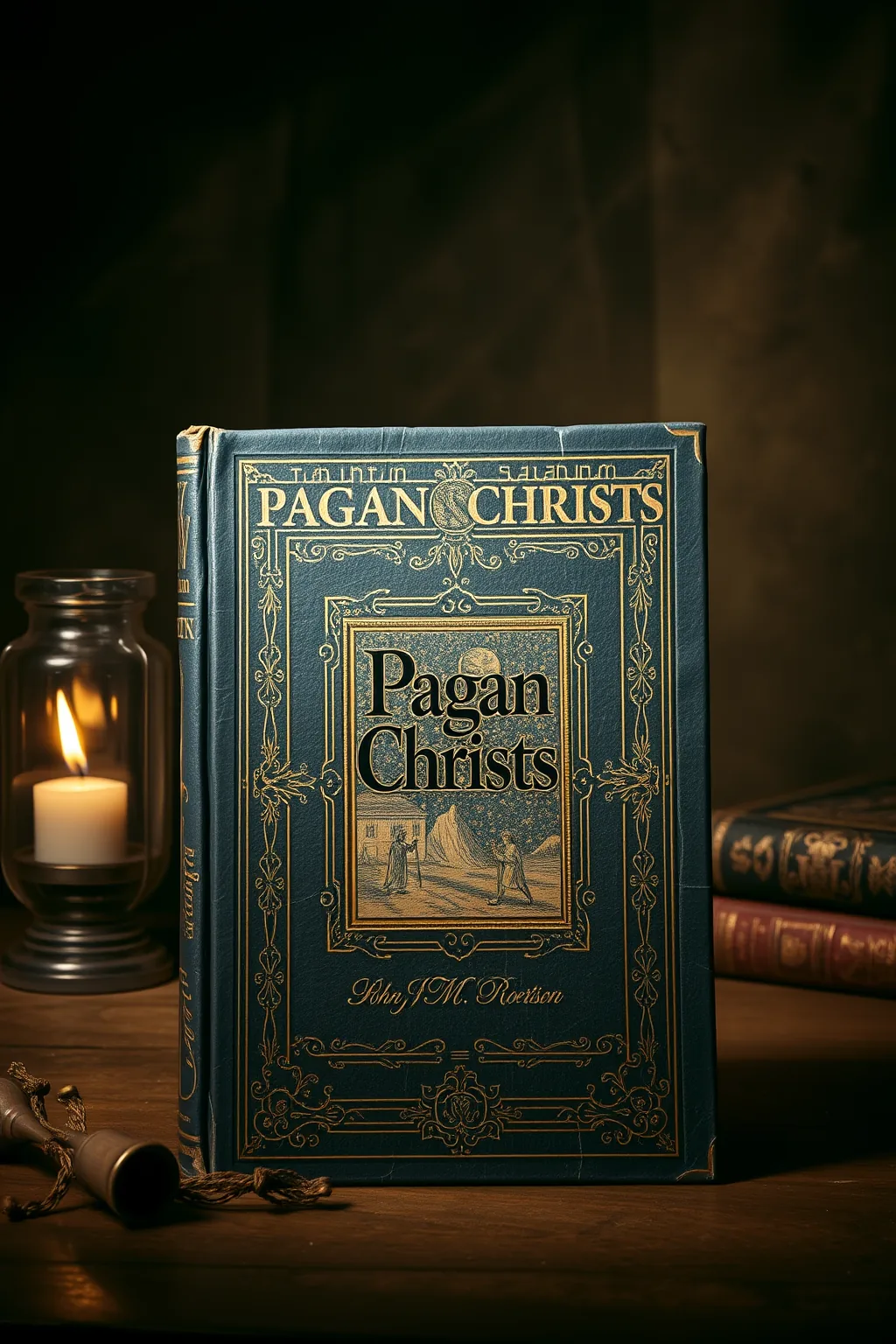
Pagan Christs
 78
78

Pagan Christs


Lorelei Sage (Contemplative Literature Editor) — 'Pagan Christs' by John M. Robertson is a monumental work that boldly interrogates the origins of Christian narrative through a comparative lens. Robertson's rigorous scholarship uncovers a rich tapestry of pre-Christian myths, demonstrating compelling parallels with key elements of the Christ story. This book is essential for anyone seeking to understand the deeply embedded archetypes and ancient wisdom traditions that underpin Western religious thought. It serves as a powerful reminder of humanity's shared spiritual heritage and the perennial nature of the divine quest. For scholars of religion, mythology enthusiasts, and those drawn to the esoteric underpinnings of belief, this is an indispensable, thought-provoking read.
📝 Description
78
John M. Robertson's 1903 book 'Pagan Christs' argues the Christ story has roots in older myths.
Published in 1903, John M. Robertson's 'Pagan Christs' examines the parallels between the narrative of Jesus and earlier pagan myths. Robertson, a noted rationalist, argues that many elements of the Christ story, such as virgin births, sacrificial deaths, and miraculous resurrections, were not unique to Christianity. Instead, he traces these themes to the mythologies of ancient Egypt, Greece, and Rome. He suggests these recurring motifs reflect universal human spiritual needs and ancient cosmological views that predate Christianity.
The book does not present a devotional approach but rather a comparative mythological analysis. Robertson sought to understand the common threads in human storytelling and religious expression across different cultures. He believed these shared narratives offered insight into the collective human psyche and the development of religious thought. 'Pagan Christs' offers a framework for viewing the origins of belief through the lens of cross cultural mythic structures.
In the early 20th century, 'Pagan Christs' fit within a growing movement that re-examined religious origins through comparative mythology and historical criticism. This era saw scholars and thinkers exploring potential connections between various religious traditions, often seeking common sources or universal psychological patterns. Robertson's work aligns with rationalist and freethought traditions that questioned orthodox religious claims by highlighting pre-Christian antecedents for Christian doctrines and narratives. It contributed to a broader intellectual current interested in the 'hidden' or less obvious influences shaping religious belief systems.
✍️ Author
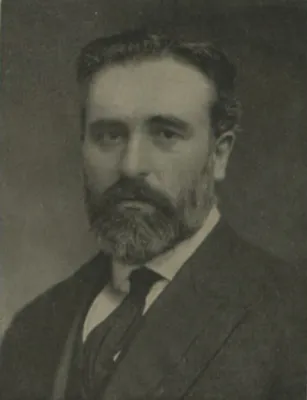
John M Robertson
William Jess Robertson (born April 22, 1972) is an American TV personality, businessman, author and news contributor. He is best known for his appearances on the reality TV series Duck Dynasty on A&E, and is the current CEO of the company Duck Commander.
💡 Why Read This Book?
Delve into the ancient origins of sacred stories and uncover the surprising parallels that connect diverse spiritual traditions. 'Pagan Christs' offers a profound re-examination of religious history, revealing the archetypal patterns that resonate across cultures. Ideal for seekers of hidden knowledge, comparative mythology scholars, and anyone curious about the deeper roots of spiritual narratives.
⭐ Reader Reviews
Honest opinions from readers who have explored this book.
❓ Frequently Asked Questions
What is the central argument of 'Pagan Christs'?
The central argument is that many elements of the Jesus Christ story, such as the virgin birth, death, and resurrection, have precedents in older pagan myths and legends from various ancient cultures.
Which ancient cultures does Robertson compare?
Robertson draws comparisons from a wide array of ancient cultures, including Egyptian, Greek, Roman, and others, highlighting common mythological themes and narratives.
Is this book a critique of Christianity?
While it offers a comparative analysis that challenges traditional interpretations, the book is primarily an academic exploration of religious history and comparative mythology, rather than a polemic critique.
Who would benefit most from reading 'Pagan Christs'?
Scholars of religion and mythology, students of comparative religion, and individuals interested in the historical and cultural evolution of spiritual beliefs will find this book highly valuable.
When was 'Pagan Christs' first published?
'Pagan Christs' was first published in 1903, making it a significant early work in the field of comparative mythology and religious studies.
🔮 Key Themes & Symbolism
The Universal Christ Archetype
Robertson meticulously dissects narratives from disparate ancient civilizations, arguing for a recurring 'Christos' archetype that predates Christianity. This theme explores the universal human need for divine figures embodying sacrifice, redemption, and rebirth, suggesting that the Christian narrative tapped into a deeply ingrained mythical substratum. The book reveals how similar symbolic figures, performing analogous roles within their respective cosmologies, existed long before the Christian era, pointing to a shared wellspring of spiritual expression across humanity.
Comparative Mythology as Spiritual Archaeology
This work treats comparative mythology not merely as an academic exercise but as a form of spiritual archaeology, excavating the buried layers of human belief. By juxtaposing myths, Robertson uncovers the common threads of human consciousness and its attempts to grapple with existential questions of life, death, and the divine. The book demonstrates how ancient cultures, through their stories, encoded profound cosmological and psychological truths that continue to resonate, offering a richer, more nuanced understanding of religious phenomena.
The Evolution of Sacred Narratives
Robertson traces the evolutionary trajectory of sacred narratives, positing that stories of divine figures and miraculous events are not static revelations but develop and adapt over time, absorbing elements from preceding traditions. This theme highlights how myths are fluid, dynamic entities that reflect the cultural and intellectual currents of their eras. By examining the historical layering of these narratives, the book offers insight into how religious ideas are transmitted, transformed, and ultimately synthesized into new forms, impacting collective consciousness.
💬 Memorable Quotes
Direct passages from the work, attributed to the author.
“The parallels are too striking to be accidental.”
— This concise statement captures Robertson's core thesis, emphasizing the deliberate and significant similarities he found between various ancient myths and the Christian narrative.
“We are all children of the ancient world's dreams.”
— This evocative phrase suggests that our modern spiritual and cultural frameworks are deeply rooted in the collective unconscious and symbolic imaginations of our ancestors.
“The dawn of Christianity did not occur in a vacuum.”
— This statement directly challenges the notion of Christian uniqueness, highlighting the rich pre-existing collection of religious ideas and stories from which it emerged.
“Truth often wears many faces across time.”
— This philosophical observation suggests that universal truths may be expressed through diverse cultural and historical narratives, encouraging an open-minded approach to spiritual inquiry.
💡 Key Ideas
Editorial paraphrase of the work's core concepts — not direct quotes.
Mythology is the language of the soul.
This quote underscores the profound psychological and spiritual significance of myths, presenting them as a universal means by which humanity expresses its deepest longings and understanding of existence.
🌙 Esoteric Significance
Tradition
This work is deeply resonant with the tradition of comparative religion and esoteric philosophy, particularly the hermetic principle of 'As Above, So Below.' It aligns with Gnostic thought by suggesting a deeper, often hidden, spiritual reality that informs surface-level religious expressions. Robertson's analysis points towards universal truths embedded within diverse mythologies, hinting at an underlying cosmic consciousness that manifests through archetypal figures and narratives, accessible through critical inquiry and symbolic interpretation.
Symbolism
Robertson's exploration examines potent symbols such as the dying and rising god, the virgin birth, and miraculous transformations, arguing they are not unique to Christianity but part of a global symbolic language. These symbols represent profound initiatory processes, the cycles of nature, the death of the ego, and the rebirth of the spirit. The book encourages readers to see these recurring motifs as keys to understanding universal spiritual journeys and the human psyche's quest for transcendence, revealing layers of meaning beyond literal interpretation.
Modern Relevance
In an era increasingly characterized by spiritual pluralism and a desire for deeper meaning, 'Pagan Christs' remains profoundly relevant. It offers a framework for understanding the shared roots of spiritual traditions, fostering interfaith dialogue and a more inclusive view of the divine. For modern seekers, it provides tools to critically examine religious claims, appreciate the enduring power of archetypes, and recognize the universal human quest for meaning and connection that transcends specific doctrines or historical periods.
👥 Who Should Read This Book
This key work is essential for academic scholars of religious studies and comparative mythology seeking to understand the historical and cultural influences on early Christianity. It is equally vital for spiritual seekers and practitioners of esoteric traditions who wish to explore the deeper, archetypal patterns underlying religious narratives and uncover the universal language of myth. Beginners in the study of religion will find it an informative, albeit challenging, introduction to critical analysis, while seasoned practitioners may discover new insights into the perennial philosophy and the interconnectedness of global spiritual heritage.
📜 Historical Context
Published in 1903, 'Pagan Christs' emerged during a period of intense intellectual ferment, marked by the rise of comparative mythology, anthropology, and critical biblical scholarship. The late 19th and early 20th centuries saw a surge of interest in ancient civilizations and their religious practices, challenging established doctrines and offering new perspectives on human history. Scholars were actively deconstructing traditional narratives, seeking rational explanations for the origins of belief systems. Robertson's work fits squarely within this milieu, contributing to a broader scholarly movement that sought to understand Christianity not as a singular divine revelation, but as a product of its historical and cultural environment, deeply interwoven with the body of pre-existing pagan traditions and universal human archetypes.
📔 Journal Prompts
Reflect on a personal story or myth that speaks to themes of sacrifice and rebirth. How do these themes manifest in your own life?
Consider the concept of a 'universal Christ archetype.' What qualities or roles do you see echoed in figures from different mythologies or even modern stories?
How has your understanding of religious narratives evolved after engaging with comparative mythology? What new perspectives have emerged?
Explore the idea of 'spiritual archaeology.' What 'buried layers' of meaning do you find in familiar stories or symbols?
In what ways do ancient myths continue to influence contemporary culture, even if unconsciously? Provide specific examples.
🗂️ Glossary
Archetype
A recurring symbolic image, character type, or narrative pattern that appears in myth, folklore, and literature, representing universal human experiences and unconscious psychological structures.
Comparative Mythology
The academic study of myths from different cultures and religions to identify common themes, structures, and origins, revealing shared human concerns and symbolic expressions.
Dying and Rising God
A recurring mythological motif where a deity undergoes a death and subsequent resurrection, symbolizing cyclical renewal, sacrifice, and the promise of new life.
Virgin Birth
A mythical or religious concept where a birth occurs without sexual intercourse, often signifying divine intervention, purity, or a special destiny for the individual.
Gnosticism
A diverse set of religious beliefs and systems from the early Christian era emphasizing personal spiritual knowledge (gnosis) for salvation, often viewing the material world as flawed or evil.
This book appears in 5 collections
🔮 Readers Also Liked
Browse all →





From the “Transcendental Meditation” Collection
View all →



![CIA Reading Room cia-rdp78t05439a000400230090-7: MENSURATION OF THE [ ]-BUKHARA CANAL, USSR](/img/thumb/cia-reading-room-cia-rdp78t05439a000400230090-7-mensuration-of-the-bukhara-canal-ussr-cia-reading-room.webp)

More Free Sacred Texts & Gnosticism Books
View all →