Hinduism
 71
71

Hinduism
Amulya and Bijaya Mohapatra's "Hinduism" provides a commendable overview, particularly for those new to the subject. Its strength lies in its systematic approach, breaking down a complex religious landscape into digestible sections. The authors succeed in presenting the vast array of Hindu practices and philosophies without oversimplification. However, the 1993 publication date means it doesn't engage with more recent scholarship or contemporary socio-religious movements within India. A passage discussing the concept of Brahman, for instance, clearly delineates its abstract nature as the ultimate reality, yet the explanation could benefit from more contemporary theological interpretations. The work is a solid, if somewhat dated, primer. It serves as a reliable reference for core tenets.
📝 Description
71
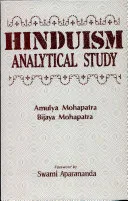
Amulya and Bijaya Mohapatra's 1993 book presents a comprehensive view of Hinduism's diverse traditions.
Published in 1993, Hinduism by Amulya and Bijaya Mohapatra addresses the multifaceted philosophical, ritualistic, and cultural elements of this ancient religion. The authors move past simple categorizations to show the wide range of beliefs and customs that make up Hinduism. They acknowledge its long development and the many regional differences within its practice.
The book is suitable for students of religion, philosophy scholars, and anyone seeking a clear introduction to Hindu thought. It helps readers grasp the central ideas, gods, and writings that inform the perspectives of millions. Those interested in how religious ideas developed historically, especially in the Indian subcontinent, will find its context useful. The work was written during a time of growing international interest in Eastern spirituality, offering a more complete picture than popular accounts that often focused only on specific practices.
This work examines Hinduism not just as a historical religion but as a living tradition with deep philosophical underpinnings. It situates concepts like Dharma, Karma, Samsara, and Moksha within a broader framework of spiritual liberation and cosmic order. The discussion of deities and sacred texts like the Vedas and Upanishads reflects an engagement with the symbolic language and metaphysical inquiries characteristic of esoteric traditions. The book acknowledges the evolution and regional variations, recognizing that the 'essence' of the tradition is expressed through diverse practices and interpretations.
💡 Why Read This Book?
• Gain clarity on foundational Hindu philosophical concepts like Dharma and Karma, understanding their interconnectedness as presented in the text's discussions. • Explore the symbolic significance of major Hindu deities, moving beyond mere names to grasp their representation of cosmic principles as detailed within the book. • Understand the historical placement of Hinduism, recognizing its 1993 publication context and how it frames the religion's evolution and scholarly perception.
⭐ Reader Reviews
Honest opinions from readers who have explored this book.
❓ Frequently Asked Questions
When was Hinduism by Amulya Mohapatra and Bijaya Mohapatra first published?
The book "Hinduism" by Amulya Mohapatra and Bijaya Mohapatra was first published on January 1, 1993. This date is important for understanding the scholarship and context it draws upon.
What are the core philosophical concepts discussed in this book on Hinduism?
The work explores fundamental concepts such as Dharma (righteous duty), Karma (action and consequence), Samsara (cycle of birth and rebirth), and Moksha (liberation). These are presented as pillars of Hindu thought.
Does the book cover Hindu mythology and deities?
Yes, "Hinduism" examines the diverse Hindu pantheon. It interprets the roles of various deities and their associated mythologies, presenting them as symbolic expressions of deeper philosophical ideas.
What is the significance of the Vedas and Upanishads according to this book?
The Mohapaptras highlight the Vedas and Upanishads as foundational scriptures. They explain their crucial role in shaping Hindu philosophy, rituals, and spiritual practices, providing essential context for understanding the religion.
Is this book suitable for beginners interested in religion?
Absolutely. "Hinduism" is structured to offer a foundational introduction, making it suitable for students of comparative religion and individuals seeking a clear, systematic overview of Hindu beliefs and practices.
Does the book discuss modern Hinduism or only ancient traditions?
While rooted in historical context and foundational texts, the book aims to present Hinduism as a living tradition. However, its 1993 publication means it focuses more on established doctrines than very recent developments.
🔮 Key Themes & Symbolism
The Triad of Dharma, Karma, and Samsara
This theme looks at the interconnected concepts that form the ethical and existential framework of Hinduism. Dharma, as righteous duty and cosmic order, guides individual actions. Karma, the law of cause and effect, dictates the consequences of these actions across lifetimes. Samsara, the cyclical existence driven by karma, highlights the continuous process of birth, death, and rebirth. The Mohapaptras illustrate how adherence to Dharma is believed to generate positive Karma, potentially leading to a more favorable rebirth within Samsara, and ultimately aiding the soul's journey towards liberation.
Brahman: The Ultimate Reality
A central tenet explored is Brahman, the supreme, unchanging, and infinite cosmic spirit that is the source and sustainer of all existence. The text elucidates Brahman as both immanent (present within all things) and transcendent (beyond all limitations). It discusses how various deities are often seen as manifestations or aspects of this singular, ultimate reality, providing a monistic undercurrent to the diverse polytheistic expressions found in Hindu practice. Understanding Brahman is presented as key to grasping the philosophical depth of Hinduism.
The Role of Sacred Texts
The work emphasizes the foundational importance of key Hindu scriptures, particularly the Vedas and the Upanishads. The Vedas are presented as ancient hymns, rituals, and philosophical insights, forming the bedrock of Hindu tradition. The Upanishads, often considered the culmination of Vedic thought, are highlighted for their profound philosophical explorations of Brahman, Atman (the soul), and the nature of reality. The book explains how these texts have shaped theological discourse and ritual practices for millennia.
Deities as Manifestations of the Divine
This section examines the Hindu pantheon not merely as a collection of gods and goddesses, but as diverse manifestations of the singular, ultimate reality, Brahman. Deities like Vishnu, Shiva, and Devi are discussed in terms of their distinct roles, symbolism, and associated mythologies. The text interprets these figures as archetypes representing different cosmic functions or aspects of the divine consciousness, offering pathways for devotees to connect with the ultimate through worship and contemplation.
💬 Memorable Quotes
Direct passages from the work, attributed to the author.
“Dharma provides the framework for righteous living and cosmic order.”
— This highlights Dharma not just as personal ethics, but as a universal principle governing existence, guiding actions towards balance and cosmic harmony.
“Karma dictates the ceaseless cycle of birth, death, and rebirth.”
— This succinctly captures the concept of Samsara, emphasizing how actions in one life inevitably shape the experiences of subsequent lives.
“Brahman is the singular, all-pervading essence of existence.”
— This points to the monistic core of Hinduism, identifying an ultimate, unified reality underlying the multiplicity of the manifest world.
“The Vedas contain ancient wisdom and ritualistic knowledge.”
— This emphasizes the foundational status of the Vedas as a primary source of spiritual and cultural heritage in Hinduism.
“Deities serve as focal points for devotion and understanding the divine.”
— This interprets the polytheistic aspect of Hinduism through a philosophical lens, viewing deities as accessible forms of the ultimate reality.
🌙 Esoteric Significance
Tradition
While not strictly within a Western esoteric lineage like Hermeticism or Kabbalah, this work engages with the philosophical underpinnings of Hinduism, which have influenced various esoteric traditions globally. Its exploration of Brahman, Atman, and the cyclical nature of existence (Samsara) touches upon concepts echoed in Neoplatonism and Gnosticism, albeit with distinct cultural and theological frameworks. The book presents these concepts in a manner accessible to those seeking deeper spiritual understanding beyond conventional religious dogma.
Symbolism
The text highlights key symbols such as the Om (Aum) mantra, representing the primordial sound of creation and the ultimate reality of Brahman. The lotus flower is often discussed as a symbol of purity, spiritual awakening, and divine beauty, emerging unstained from muddy waters. The concept of the Third Eye, associated with deities like Shiva, is explored as a symbol of inner wisdom, intuition, and transcendence of ordinary perception.
Modern Relevance
Contemporary thinkers and spiritual practitioners, particularly in the West, continue to draw upon Hindu philosophy for insights into consciousness, ethics, and the nature of reality. The concepts of Karma and Dharma, for instance, are frequently discussed in self-help and wellness circles. Modern yoga and meditation movements are deeply indebted to the philosophical traditions detailed in this book, making its foundational explanations relevant for understanding these popular practices.
👥 Who Should Read This Book
• Students of comparative religion and philosophy seeking a structured introduction to Hindu doctrines and practices. • Individuals interested in the origins and development of Eastern spiritual thought, particularly the philosophical underpinnings of concepts like Karma and Dharma. • General readers looking for a comprehensive overview of Hindu beliefs, deities, and scriptures beyond superficial portrayals.
📜 Historical Context
Published in 1993, Amulya and Bijaya Mohapatra's "Hinduism" entered a discourse already rich with scholarship on Indic religions. The late 20th century saw a surge in Western academic and popular interest in Eastern philosophies, influenced by figures like Swami Vivekananda, who introduced Vedanta to the West in the late 19th century. This book emerged in a period when comparative religion studies were gaining academic traction, moving beyond purely theological perspectives to embrace sociological and historical analyses. While works like Wendy Doniger's "The Implied Spider" (1998) were exploring psychoanalytic interpretations of Hindu myths, the Mohapaptras' volume offered a more traditional, comprehensive survey. It sought to provide an accessible yet scholarly overview, contrasting with more specialized academic studies or devotional literature prevalent at the time. The book's reception was likely within academic circles and among general readers seeking structured knowledge, rather than igniting public controversy or debate.
📔 Journal Prompts
The concept of Dharma as cosmic order and personal duty.
Reflections on the symbolic meanings of Hindu deities discussed.
How the principles of Karma and Samsara shape worldviews.
The philosophical significance of Brahman as ultimate reality.
Personal resonance with the foundational role of the Vedas and Upanishads.
🗂️ Glossary
Dharma
In Hinduism, Dharma refers to one's duty, righteousness, cosmic law, and the moral order that sustains the universe. It guides ethical conduct and social responsibilities.
Karma
The principle of cause and effect, where actions (karma) in this life determine one's future circumstances and rebirths in subsequent lives. It emphasizes moral accountability.
Samsara
The continuous cycle of birth, death, and rebirth. It is driven by karma and desire, and the ultimate goal is to escape this cycle.
Moksha
Liberation or release from the cycle of Samsara. It represents the ultimate spiritual goal in Hinduism, achieving union with the divine or ultimate reality.
Brahman
The supreme, unchanging, infinite, and absolute reality that is the source and sustainer of all existence. It is considered the ultimate truth.
Atman
The individual soul or self, which is considered eternal and, in many schools of Hindu thought, identical to Brahman.
Vedas
The oldest and most authoritative scriptures in Hinduism, containing hymns, rituals, and philosophical insights believed to be divinely revealed.