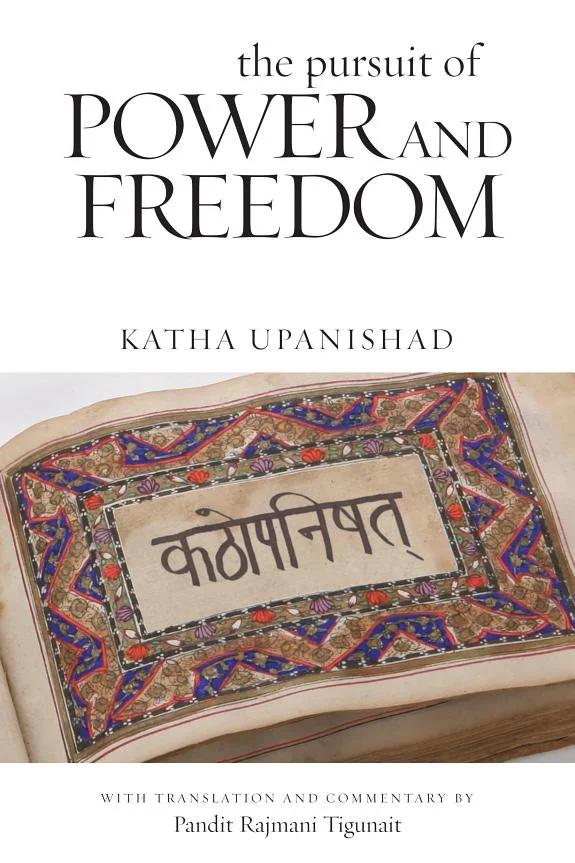
The Pursuit of Power and Freedom
 73
73

The Pursuit of Power and Freedom
The primary strength of The Pursuit of Power and Freedom lies in its clarity. The Unknown author’s rendering of the Katha Upanishad moves beyond mere academic translation, offering a commentary that feels genuinely engaged with the text’s spiritual import. The narrative of Nachiketa’s bold questioning of Yama is rendered with a directness that makes the ancient dialogue accessible to contemporary readers. However, the book's ambition to be both an understandable version and a scholarly exploration occasionally leads to a slight oversimplification of certain complex philosophical nuances. The section detailing Yama's three boons, for instance, while clear, might leave some seeking a deeper unpacking of the symbolic weight behind each request. Nevertheless, for those embarking on an inquiry into the nature of existence and the self, this edition provides a valuable and lucid entry point.
📝 Description
73
Published in 2008, this edition translates and explains the Katha Upanishad.
This 2008 edition offers a modern translation and commentary on the Katha Upanishad, an early Hindu philosophical text. The translator, identified only as Unknown, sought to make the Sanskrit original more accessible. The book focuses on the narrative of Nachiketa, a young boy who meets Yama, the god of death, and receives teachings on the nature of existence. It aims to clarify the dense philosophical arguments for a contemporary audience.
The work is suitable for those interested in Eastern philosophies, comparative religion, and deeper spiritual understanding. Beginners to Upanishadic thought will find the translation clear, while experienced practitioners might gain a new perspective on familiar ideas. The text offers substantial material for anyone contemplating consciousness, the self, and the afterlife.
The Katha Upanishad, composed between the 5th and 3rd centuries BCE, is one of the earlier Upanishads and a significant text in Hindu philosophy, particularly influencing Vedanta. Its dialogue between a mortal youth and the lord of death explores fundamental questions about life, death, and the ultimate nature of reality. This 2008 translation situates these ancient teachings within a modern context, aiming to make their insights on self-knowledge and detachment available to contemporary readers seeking spiritual understanding.
💡 Why Read This Book?
• Gain practical methods for self-inquiry by studying Yama's detailed explanations of discriminative knowledge, moving beyond mere intellectual assent to practical application. • Understand the symbolic journey of Nachiketa, a figure representing the sincere seeker, and how his persistent quest for truth mirrors the individual's path to enlightenment. • Explore the esoteric concept of the 'chariot analogy' from the Katha Upanishad, which provides a structured model for understanding the relationship between the senses, mind, intellect, and the true self.
⭐ Reader Reviews
Honest opinions from readers who have explored this book.
❓ Frequently Asked Questions
What is the origin of the Katha Upanishad translated in The Pursuit of Power and Freedom?
The Katha Upanishad is one of the principal Upanishads, likely composed between the 5th and 3rd centuries BCE in India. This 2008 translation aims to make its ancient wisdom accessible to a modern audience.
Who is the Unknown author of The Pursuit of Power and Freedom?
The author is listed as 'Unknown,' suggesting this edition is likely a translation and commentary by an individual or group who chose to remain anonymous, focusing on the text itself.
What is the central story or theme of this book?
The book centers on the dialogue between a young boy, Nachiketa, and Yama, the lord of death. Nachiketa compels Yama to reveal the secrets of the afterlife and the nature of true bliss.
Is this book suitable for beginners in esoteric philosophy?
Yes, the translation is noted for its understandability, making it ideal for those new to Upanishadic texts or seeking an introduction to concepts of inner growth and enlightenment.
What kind of spiritual growth does the book promise?
It promises inner growth and enlightenment by offering insights into the self, the nature of reality, and the path to liberation from the cycle of birth and death.
When was The Pursuit of Power and Freedom first published?
This specific translation and commentary was first published on April 28, 2008, making it a contemporary interpretation of an ancient text.
🔮 Key Themes & Symbolism
The Dialogue of Death
The core narrative revolves around the profound conversation between Nachiketa and Yama, the deity of death. This encounter is not merely a theological discussion but a pedagogical tool. Yama, bound by his word after Nachiketa's persistence, offers knowledge that transcends ordinary human understanding. The dialogue explores the ephemeral nature of worldly desires and the lasting value of spiritual wisdom, contrasting the 'pleasure' sought by the unenlightened with the 'bliss' of liberation. This exchange is central to understanding the book's exploration of mortality and the pursuit of ultimate truth.
Discrimination and Detachment
A central theme is the necessity of developing discriminative wisdom (viveka) to distinguish between the real and the unreal, the eternal and the transient. Yama teaches Nachiketa that true freedom is achieved not through the acquisition of power or possessions, but through detachment from them. The text emphasizes that the senses and the mind, if unchecked, can lead one astray. Cultivating an intellect that can discern the true nature of the Self (Atman) from the phenomenal world is presented as the path to inner strength and lasting peace.
The Nature of the Self
The book explores the concept of the Atman, the individual soul or true Self, and its relationship with Brahman, the Universal Consciousness. Through various analogies, including the famous chariot metaphor, the text illustrates that the Atman is distinct from the body, senses, and mind. Understanding this distinction is paramount for transcending the limitations of ego and achieving self-realization. The pursuit of power and freedom, therefore, is redefined as the realization of one's divine nature, free from ignorance and suffering.
Paths to Liberation
The Pursuit of Power and Freedom outlines the esoteric path towards moksha, or liberation. This is not presented as an afterlife reward but as a state attainable through inner transformation in this life. The methods discussed involve disciplined study, contemplation, and the practice of virtues like non-attachment and self-control. The text distinguishes between the path of action (karma) and the path of knowledge (jnana), ultimately advocating for the latter as the means to directly apprehend the ultimate reality and achieve freedom.
💬 Memorable Quotes
Direct passages from the work, attributed to the author.
“The world is not made by the fearful.”
— This statement underscores the idea that true spiritual progress and the attainment of higher knowledge require courage and a willingness to confront the unknown, rather than succumbing to fear or doubt.
“The Self is the lord of the chariot, the body is the chariot.”
— This is a key analogy illustrating the relationship between the conscious Self (Atman) and the physical form. It emphasizes that the true 'driver' is distinct from the vehicle, highlighting the potential for control and directed consciousness.
“Pleasure, however great, is transient.”
— This highlights a core tenet of Upanishadic philosophy: worldly joys, while appealing, are impermanent and cannot provide lasting fulfillment. True happiness lies beyond the field of sensory gratification.
“He who has understanding is the driver.”
— Continuing the chariot metaphor, this emphasizes the role of the intellect (buddhi) as the faculty that should guide the mind and senses, directing the individual towards spiritual realization.
“Ignorance is the greatest darkness.”
— This points to the root cause of suffering and bondage. The lack of self-knowledge and understanding of ultimate reality is presented as the primary obstacle to achieving freedom and true peace.
🌙 Esoteric Significance
Tradition
The Katha Upanishad is a foundational text within the Vedanta tradition of Hinduism, which forms a significant part of the broader Vedic spiritual lineage. While not strictly fitting into Western esoteric categories like Hermeticism or Gnosticism, its exploration of the inner Self (Atman), ultimate reality (Brahman), and the path to liberation (moksha) aligns with universal metaphysical principles found across many esoteric schools. Its emphasis on direct knowledge and inner realization rather than dogma places it within a lineage valuing experiential wisdom.
Symbolism
Key symbols include the chariot, representing the human constitution with the Self as the driver, the intellect as the reins, the mind as the horses, and the senses as the paths. Yama, the lord of death, symbolizes not just mortality but also the ultimate revealer of transcendental knowledge. Nachiketa embodies the persistent seeker of truth, willing to face the unknown for profound understanding. The three boons represent stages of spiritual inquiry, from worldly concerns to the ultimate knowledge of the Self.
Modern Relevance
Contemporary thinkers and practitioners in yoga, meditation, and mindfulness often draw upon the wisdom of the Upanishads, including the Katha. Modern Vedanta scholars and spiritual leaders continue to interpret and disseminate its teachings. Its concepts of self-awareness, detachment, and the pursuit of inner peace remain highly relevant for individuals reading through the stresses of modern life and seeking deeper meaning beyond materialism.
👥 Who Should Read This Book
['• Students of comparative religion and philosophy: To understand a key text that shaped major Indian spiritual traditions and its dialogue on life, death, and consciousness.', '• Seekers of spiritual enlightenment: For those pursuing inner growth, self-knowledge, and liberation from existential suffering, offering ancient techniques and perspectives.', '• Readers interested in Eastern metaphysics: To engage with core concepts like Atman, Brahman, karma, and moksha through an accessible translation and commentary.']
📜 Historical Context
The Katha Upanishad, the source text for The Pursuit of Power and Freedom, emerged from the intellectual ferment of ancient India, likely between the 5th and 3rd centuries BCE. This period saw the development of sophisticated philosophical systems that sought to understand the cosmos and humanity's place within it. The Upanishads, including the Katha, represent a significant shift from earlier Vedic ritualism towards contemplative inquiry into metaphysics and the nature of the soul. Its ideas profoundly influenced the development of Vedanta, particularly Advaita Vedanta, championed later by thinkers like Adi Shankaracharya. The Katha Upanishad's dialogue format and its exploration of karma, rebirth, and liberation placed it in dialogue with emerging ascetic and renunciatory traditions. While specific reception events for the ancient text are not recorded, its enduring influence across millennia speaks to its foundational importance in Indian spiritual thought, contrasting with the devotional emphasis found in later Puranic traditions.
📔 Journal Prompts
The chariot analogy: How do your 'horses' (senses) and 'reins' (mind) respond to your 'driver' (intellect)?
Nachiketa's persistence: Reflect on a truth you have persistently sought, even when faced with obstacles.
Yama's boons: If offered three boons, how would your choices reflect a pursuit of freedom beyond the transient?
The distinction between pleasure and bliss: Identify a recent experience of fleeting pleasure versus a moment of deeper contentment.
The nature of the Self: Consider how your understanding of 'you' extends beyond your physical body and immediate thoughts.
🗂️ Glossary
Atman
The individual soul or true Self. It is considered eternal, unchanging, and ultimately identical with Brahman, the Universal Consciousness.
Brahman
The ultimate reality, the supreme cosmic spirit, or Universal Consciousness that underlies all existence. It is the source and substance of the universe.
Moksha
Liberation or release from the cycle of birth, death, and rebirth (samsara). It represents the ultimate goal of spiritual practice, achieving union with Brahman.
Samsara
The continuous cycle of birth, death, and reincarnation, driven by karma (actions and their consequences). It is often viewed as a state of suffering from which liberation is sought.
Viveka
Discrimination or the faculty of discerning between the real (eternal) and the unreal (transient). It is a crucial tool for spiritual understanding and detachment.
Yama
The deity of death in Hindu mythology. In the Katha Upanishad, he acts as a teacher, imparting profound spiritual knowledge to Nachiketa.
Nachiketa
The young Brahmin boy in the Katha Upanishad who bravely confronts Yama, the god of death, seeking knowledge about the Self and the afterlife.
This book appears in 1 collection
🔮 Readers Also Liked
Browse all →









From the “Upanishads” Collection
View all →




More Free Occult Philosophy Books
View all →