Occult Science in India
 78
78

Occult Science in India


By Balthazar Finch (Senior Critic, Occult Philosophy): Louis Jacolliot's 'Occult Science in India' remains a fascinating, albeit occasionally unconventional, portal into the spiritual underpinnings of the East. While his methodology might not satisfy rigorous academic scrutiny, Jacolliot's passionate exposition of yogic powers, Brahmanical mysteries, and esoteric cosmologies offers undeniable esoteric insights. His vivid descriptions of rituals and philosophical concepts, even when filtered through his unique lens, ignite the imagination and speak to the perennial quest for hidden knowledge. This work is particularly valuable for those seeking an accessible, albeit romanticized, introduction to the profound depths of Indian occultism, serving as a gateway for further exploration.
📝 Description
78
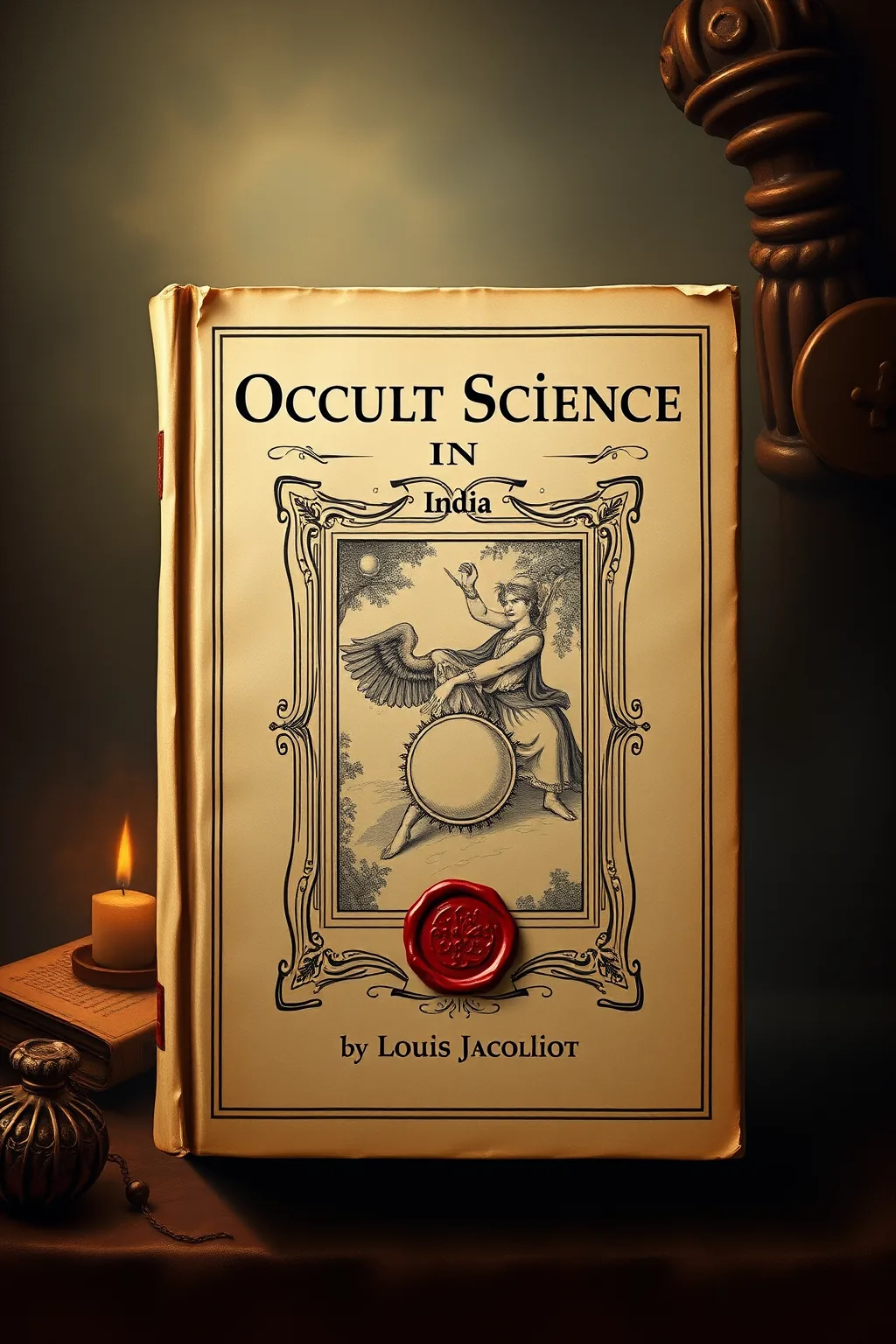
Louis Jacolliot published 'Occult Science in India' in 1870, detailing esoteric Indian practices.
Written by Louis Jacolliot, a French magistrate who spent time in India, 'Occult Science in India' was first published in 1870. Jacolliot aimed to reveal aspects of Indian spiritual and philosophical traditions that he believed were hidden from outsiders. He discusses various practices and beliefs, including yogic disciplines, alchemical traditions among Brahmins, and the mythology of Hindu deities.
The book presents these subjects from Jacolliot's specific viewpoint, attempting to shed light on what he perceived as esoteric doctrines and concealed philosophies that influenced Indian spiritual history over long periods. It is intended for those interested in Eastern mysticism, seeking to understand fundamental truths within these traditions. The work offers insight into knowledge systems that extend beyond common understanding, suggesting a potential for renewed appreciation of ancient wisdom.
Published in the late 19th century, 'Occult Science in India' emerged during a period of significant Western interest in Eastern religions and philosophies. This era saw many European scholars and writers attempt to interpret and catalog the spiritual traditions of India, often through the lens of their own cultural and intellectual frameworks. Jacolliot's work fits within this trend, seeking to demystify occult sciences and hidden doctrines, presenting them as logical systems rather than mere superstition. It reflects a broader fascination with the perceived spiritual depth of the East, contributing to the developing field of comparative religion and occult studies.
💡 Why Read This Book?
Discover the veiled spiritual sciences of India, from yogic siddhis to ancient alchemical secrets. 'Occult Science in India' offers a rare, evocative glimpse into esoteric traditions for seekers of hidden wisdom, scholars of comparative religion, and practitioners interested in the philosophical roots of spiritual disciplines. It provides a unique, historical perspective on concepts that continue to resonate today.
⭐ Reader Reviews
Honest opinions from readers who have explored this book.
❓ Frequently Asked Questions
What is the primary focus of 'Occult Science in India'?
The book primarily explores the esoteric and occult traditions of India, including yogic practices, Brahmanical mysteries, alchemy, and their underlying philosophical frameworks.
Is this book suitable for beginners in occult studies?
Yes, it offers an accessible, albeit somewhat romanticized, introduction to complex Indian esoteric concepts, making it a good starting point for curious readers.
What is the historical significance of this book?
Written in the 19th century by a French jurist with firsthand experience in India, it represents an early Western attempt to document and interpret Indian occultism for a broader audience.
Does the book discuss specific deities or rituals?
Jacolliot delves into the symbolism of various deities and describes aspects of ancient Indian rituals and practices, aiming to uncover their esoteric meanings.
Where can I find more information about the 'Agrouchada-Parikchai' mentioned?
The 'Agrouchada-Parikchai' is believed by scholars to be a text compiled or heavily influenced by Jacolliot himself, possibly a pastiche rather than a singular, ancient manuscript.
🔮 Key Themes & Symbolism
The Esoteric Yoga and Siddhis
Jacolliot meticulously details various yogic disciplines, not merely as physical exercises, but as pathways to unlocking extraordinary human potential, or siddhis. He explores the science behind these alleged powers, from levitation to clairvoyance, presenting them as integral components of an ancient, sophisticated occult science. The book explores the philosophical underpinnings of these abilities, suggesting they are attainable through disciplined practice and esoteric knowledge, offering a compelling vision of human transcendence.
Brahmanical Mysticism and Cosmic Philosophy
The work investigates the profound spiritual philosophy of the Brahmins, the priestly class of ancient India. Jacolliot attempts to decipher their understanding of the cosmos, the nature of reality, and the divine. He explores concepts such as Brahman, Atman, Maya, and the cyclical nature of time, presenting them within an occult framework. This theme highlights the intricate range of Indian metaphysical thought and its esoteric interpretations, suggesting a hidden order and purpose within the universe.
Indian Alchemy and the Elixir of Life
A significant portion of Jacolliot's research is dedicated to the alchemical traditions of India, which he posits are deeply intertwined with their spiritual and philosophical systems. He examines the pursuit of immortality, the transmutation of substances, and the creation of potent elixirs, drawing parallels with Western Hermeticism. This theme underscores the universal human quest for transformation and longevity, as expressed through the unique lens of Indian occult science.
💬 Memorable Quotes
Direct passages from the work, attributed to the author.
“The yogi sees with the inner eye, not with the outward gaze.”
— This highlights the esoteric nature of yogic perception, emphasizing the development of spiritual insight and intuition over mundane sensory experience.
“True knowledge is not acquired, but remembered.”
— This reflects the concept of innate wisdom or recollection of past lives, a cornerstone in various esoteric traditions, suggesting knowledge is a rediscovery rather than a new acquisition.
“The universe is a dream of God.”
— A profound metaphysical statement suggesting the illusory nature of perceived reality and its origin within a divine consciousness, echoing concepts of Maya.
“The greatest alchemy is the transformation of the self.”
— This reinterprets alchemy from material transmutation to inner spiritual evolution, a core tenet of many esoteric paths focused on self-mastery and enlightenment.
💡 Key Ideas
Editorial paraphrase of the work's core concepts — not direct quotes.
The Great Spirit is everywhere; it is in the atom as in the star.
This quote captures the pantheistic or panentheistic view prevalent in many Indian philosophies, suggesting the divine is immanent in all creation, from the smallest particle to the largest celestial body.
🌙 Esoteric Significance
Tradition
This work primarily explores the esoteric facets of Hindu traditions, particularly Vedanta, Yoga, and Tantra, viewed through a Hermetic and occult lens. Jacolliot seeks to uncover the hidden scientific principles he believes underlie these spiritual practices, resonating with the Hermetic principle of 'As Above, So Below.' It connects ancient Indian doctrines with a universal esoteric science, suggesting a common source of mystical knowledge across cultures.
Symbolism
Jacolliot interprets Indian religious and philosophical symbols as keys to occult truths. Deities, cosmic cycles, and ritualistic elements are not seen as mere religious iconography but as coded representations of profound spiritual and alchemical processes. He explores the symbolic language of the Vedas and Upanishads, aiming to reveal the underlying esoteric architecture of the universe and the human soul.
Modern Relevance
Despite its historical context, 'Occult Science in India' remains relevant for its exploration of timeless themes: the pursuit of self-mastery, the nature of consciousness, and the interconnectedness of all things. It offers a historical perspective on how Eastern spirituality began to influence Western esoteric thought, providing context for contemporary practices and philosophical inquiries into consciousness and the hidden potentials of humanity.
👥 Who Should Read This Book
This book is a treasure for the curious soul. Beginners seeking an engaging introduction to the mystical side of India will find Jacolliot's narrative captivating. Scholars of comparative religion and esoteric history will appreciate its historical context and unique interpretations, even while noting its non-academic nature. Dedicated seekers of hidden wisdom will find inspiration in its descriptions of yogic powers and ancient philosophies. Practitioners of spiritual disciplines may discover novel perspectives on established concepts, enriching their understanding and practice.
📜 Historical Context
Penned in the latter half of the 19th century, 'Occult Science in India' emerges from an era of burgeoning Western interest in Eastern philosophies and mysticism. This period saw a surge in Orientalism, where European scholars and adventurers sought to understand and interpret the ancient cultures of the East. Louis Jacolliot, a French lawyer serving in colonial India, was part of this wave, albeit with a more personal and less strictly academic approach. His work reflects a fascination with the perceived 'exotic' and 'ancient' wisdom of India, attempting to bridge the gap between Western rationalism and Eastern esoteric traditions. While not a rigorous academic study, it captured the imagination of a readership eager to explore spiritual alternatives and hidden knowledge, contributing to the broader dissemination of Indian spiritual concepts in the West.
📔 Journal Prompts
Reflect on the concept of 'inner eye' perception. How might you cultivate this in your daily life?
Consider the 'transformation of the self' as the ultimate alchemy. What aspects of yourself are you seeking to transform?
Jacolliot suggests the universe is a 'dream of God.' How does this idea affect your perception of reality?
Explore the parallels between ancient Indian esoteric concepts and your own spiritual beliefs or practices.
What does the idea of 'knowledge remembered' rather than 'acquired' suggest about your own learning and understanding?
🗂️ Glossary
Siddhi
In yogic and Tantric traditions, a supernatural power or accomplishment achieved through spiritual discipline and practice. These are often considered byproducts of advanced spiritual attainment.
Brahman
In Hindu philosophy, the ultimate reality, the supreme cosmic spirit, or the absolute consciousness that pervades and sustains the entire universe.
Maya
A Sanskrit term referring to the illusory nature of the perceived world, often described as a veil that conceals the true reality (Brahman).
Upanishads
A collection of ancient Sanskrit texts that form the core of Hindu philosophy, exploring concepts of Brahman, Atman, karma, and moksha (liberation).
Hermeticism
A philosophical and religious tradition based on the purported teachings of Hermes Trismegistus, emphasizing esoteric knowledge, alchemy, astrology, and the principle of 'As Above, So Below'.
This book appears in 2 collections
🔮 Readers Also Liked
Browse all →









From the “Hermeticism” Collection
View all →







More Free Alchemy & Hermeticism Books
View all →