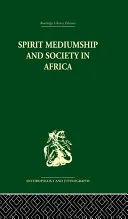
Spirit Mediumship and Society in Africa
 81
81

Spirit Mediumship and Society in Africa
The strength of "Spirit Mediumship and Society in Africa" lies in its encyclopedic scope, offering a comparative lens on practices that might otherwise be studied in isolation. Beattie and Middleton have curated a collection that systematically addresses how social variables intersect with spiritual roles. For instance, the detailed examination of how wealth and status influence access to or perception of mediumship in specific communities provides concrete analytical leverage. However, the sheer volume of data can at times feel overwhelming, with less emphasis on the subjective experience of the medium or the finer points of ritual practice. A limitation is its academic distance; while it excels at social correlation, the lived, visceral reality of possession is often presented through an analytical, rather than experiential, framework. Nonetheless, the work is indispensable for serious scholars seeking a broad, empirically grounded understanding of African spiritual systems and their societal functions.
📝 Description
81
Published in 2013, Spirit Mediumship and Society in Africa compiles ethnographic data on spirit mediums across diverse African cultures.
This academic collection examines the roles spirit mediums play within various African societies. It presents a comparative analysis of how mediumship functions in different social structures, scrutinizing the links between spiritual practices and factors like age, gender, marital status, social standing, and economic conditions. The work surveys both long-standing traditional cults and newer spiritual movements, offering a substantial body of information for understanding African spiritual practices.
Edited by John Beattie and John Middleton, the volume grew from a period of focused anthropological study on African belief systems. By uniting separate research, the editors sought to move beyond individual ethnographic accounts toward broader theoretical conclusions. The 2013 publication date signifies its compilation and reassessment of earlier fieldwork, making it a vital resource for tracing academic discussions on African spiritual phenomena from the mid-20th century onward. It offered an alternative to purely theological or psychological viewpoints by rooting spiritual occurrences in social contexts.
This book engages with traditions of understanding altered states and spiritual intermediaries as integral to social life, rather than solely as individual psychological experiences. It situates African mediumship within a global context of spiritualism and shamanism, emphasizing the social organization and cultural logic that shape these practices. The work contrasts with purely Western interpretations of religion or psychology, highlighting how spiritual phenomena are embedded in the fabric of everyday society and political structures in Africa.
💡 Why Read This Book?
• Gain a nuanced understanding of how social structures like age and wealth directly influence the roles and authority of spirit mediums, as detailed in the comparative studies presented from various African societies. • Explore the adaptive nature of traditional cults and modern spiritual movements, learning how these practices evolve in response to societal changes, a concept illustrated through case studies across the continent. • Grasp the anthropological perspective on possession, recognizing it not just as a spiritual event but as a social mechanism for power negotiation and conflict resolution, as analyzed throughout the text.
⭐ Reader Reviews
Honest opinions from readers who have explored this book.
❓ Frequently Asked Questions
What is the primary focus of "Spirit Mediumship and Society in Africa"?
The book's primary focus is the sociological and anthropological examination of spirit mediumship across various African societies, analyzing its correlation with social structures like age, sex, and wealth.
When was "Spirit Mediumship and Society in Africa" first published?
The work was first published on November 5, 2013, consolidating earlier ethnographic research and analysis.
Does the book cover both ancient and modern African spiritual practices?
Yes, it includes material on both traditional, long-standing cults and more contemporary, modern spiritual movements found within African societies.
Who are the editors of this compilation?
The compilation is edited by John Beattie and John Middleton, renowned anthropologists who brought together diverse studies on the subject.
What kind of insights can readers expect regarding social correlates of mediumship?
Readers can expect detailed insights into how factors such as marital status, social grading, and economic standing are linked to the roles and perceptions of spirit mediums in different African cultures.
Is "Spirit Mediumship and Society in Africa" suitable for beginners in anthropology?
While academically rigorous, it serves as an excellent introduction to the comparative study of spiritual practices and their social embeddedness for serious students and researchers.
🔮 Key Themes & Symbolism
Social Stratification and Mediumship
This theme investigates how an individual's position within the social hierarchy—defined by factors like age, sex, marital status, and wealth—directly impacts their role and perceived legitimacy as a spirit medium. The work presents comparative data showing how societies structure access to spiritual authority, often linking it to established social grades or economic influence. It moves beyond viewing mediumship as a purely spiritual calling, grounding it firmly in the practical realities of social organization and power dynamics within diverse African communities.
Traditional vs. Modern Cults
The compilation addresses the evolution and adaptation of spiritual practices by contrasting age-old traditional cults with newer, often syncretic, modern spiritual movements. It examines how mediums operate within both frameworks, highlighting continuities and divergences in their functions and social integration. This theme explores how mediums navigate societal changes, including colonial influences and modernization, demonstrating the resilience and fluidity of African spiritual landscapes and their capacity to absorb or resist external pressures.
Mediumship as Social Correlate
This theme centers on the analytical approach of viewing spirit mediumship not in isolation, but as a phenomenon deeply intertwined with broader societal structures. The editors and contributors meticulously map the correlations between spiritual roles and secular attributes, suggesting that the practice of mediumship often serves specific social functions. It explores how these correlations help maintain social order, mediate disputes, or even challenge existing power structures, offering a functionalist perspective on African religious life.
Comparative African Ethnography
The core of the book lies in its ambitious comparative approach, gathering material from a wide range of African societies to facilitate direct comparison. By presenting diverse case studies side-by-side, the work allows for the easy perception of both similarities and differences in mediumship practices. This ethnographic breadth is crucial for drawing wider theoretical conclusions about the universal and particular aspects of spirit possession and its social significance across the continent.
💬 Memorable Quotes
Direct passages from the work, attributed to the author.
“Similarities and differences [in mediumship] to be easily perceived and suggests social correlates of these.”
— This highlights the volume's methodological approach: presenting diverse ethnographic data to enable comparative analysis, specifically focusing on how spiritual roles align with social characteristics like age or wealth.
“Material from a wide range of African societies.”
— This points to the book's comprehensive nature, emphasizing its value as a broad survey rather than a deep dive into a single culture, making it ideal for comparative study.
“Includes material on both traditional and modern cults.”
— This indicates the temporal scope of the research, showing an awareness that spiritual practices are not static but evolve, incorporating both ancestral traditions and contemporary adaptations.
“Social correlates of these in terms of age, sex, marital status, social grading and wealth.”
— This specifies the exact social dimensions the editors and contributors investigate in relation to spirit mediumship, underscoring the book's sociological focus.
“Gathering together under a single cover.”
— This phrase underscores the editorial effort to consolidate disparate studies, creating a unified resource for scholars interested in the many-sided phenomenon of African spirit mediumship.
🌙 Esoteric Significance
Tradition
While not strictly within a single esoteric lineage like Hermeticism or Kabbalah, this work is crucial for understanding the practical application of spiritual phenomena within a non-Western, indigenous framework. It provides ethnographic grounding for concepts often explored metaphorically in Western esotericism, such as channeling, intermediary spirits, and the social embodiment of divine or ancestral forces. It offers a vital counterpoint to Eurocentric interpretations of spiritualism and mediumship, demonstrating universal patterns of human engagement with the unseen.
Symbolism
The symbolism explored is deeply embedded in African cosmology. For example, the specific spirits invoked by mediums often carry symbolic weight related to ancestors, nature, or historical events within a particular ethnic group. The act of possession itself can symbolize social transformation, the channeling of communal anxieties, or the assertion of marginalized voices. The book implicitly discusses motifs like the healer's regalia or ritual objects, which function as potent symbols of spiritual authority and connection to the spirit world.
Modern Relevance
Contemporary scholars of religion, transpersonal psychology, and comparative spirituality draw heavily on the empirical data and analytical frameworks presented in this volume. Thinkers exploring global Pentecostalism, neo-traditional healing practices, and the sociology of altered states of consciousness find its detailed case studies invaluable. The work's emphasis on the social embeddedness of spiritual experience continues to inform discussions on how belief systems shape and are shaped by social realities in a globalized world.
👥 Who Should Read This Book
• Anthropologists and sociologists studying African cultures or the comparative sociology of religion, who need rigorous ethnographic data and analytical frameworks for understanding spiritual practices. • Students of comparative religion and esotericism, seeking to broaden their understanding beyond Western traditions and explore the social dimensions of mediumship globally. • Researchers interested in altered states of consciousness, shamanism, and non-Western healing modalities, who require detailed case studies of how spiritual phenomena are integrated into daily life and social structures.
📜 Historical Context
Published in 2013, "Spirit Mediumship and Society in Africa" emerged from a rich tradition of anthropological inquiry into African belief systems, building upon foundational work from scholars like E.E. Evans-Pritchard and Meyer Fortes. The mid-20th century saw a surge in ethnographic studies exploring the social functions of religion, and this compilation represents a mature synthesis and comparative analysis of that era's research, alongside more contemporary observations. By bringing together studies from diverse regions, it aimed to counter generalizations and highlight the nuanced interplay between spiritual practice and social structure. The work implicitly engaged with functionalist and structural-functionalist approaches prevalent in British social anthropology, seeking to demonstrate how spirit possession and mediumship were integral to social cohesion and adaptation. Its 2013 publication date allowed for the inclusion of material reflecting changes spurred by modernization and political shifts across the continent, placing it in conversation with later anthropological debates on agency and resistance.
📔 Journal Prompts
The social correlates of spirit mediumship explored in the text.
How traditional cults adapt spiritual practices in modern contexts.
The role of social grading in accessing spiritual authority.
Comparing the functions of mediums in different African societies.
The symbolic weight of ancestral spirits invoked by mediums.
🗂️ Glossary
Spirit Mediumship
The practice where an individual is believed to be a conduit for spirits, allowing them to communicate with the living or act through the medium.
Traditional Cults
Established, indigenous religious or spiritual groups with long-standing histories and practices within a specific cultural context.
Modern Cults
Contemporary spiritual or religious movements that may incorporate elements of traditional beliefs with new adaptations or influences, often responding to modern societal changes.
Social Correlates
Factors within a society, such as age, gender, status, or wealth, that are observed to be associated with or related to a particular phenomenon, like spirit mediumship.
Social Grading
The hierarchical ranking or classification of individuals within a society based on factors like age, lineage, wealth, or achievement.
Ethnographic Data
Information collected through direct observation and interaction with people in their natural environment, used to describe and analyze cultural practices.
Possession
A state in which a spirit is believed to enter and control an individual's body, often manifesting in altered behavior or speech.