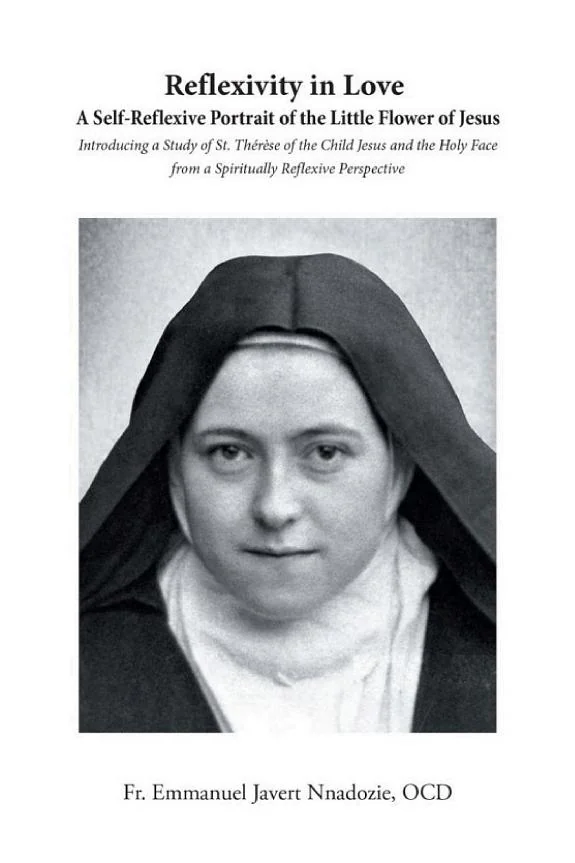
Reflexivity in Love A Self-Reflexive Portrait of the Little Flower of Jesus
 84
84

Reflexivity in Love A Self-Reflexive Portrait of the Little Flower of Jesus
Fr. Emmanuel Javert Nnadozie OCD's exploration of St. Thérèse's self-reflexivity offers a novel angle on a well-trodden spiritual path. The assertion that Thérèse's "spirit of critical listening" is key to her sanctity moves beyond hagiography to a more analytical appreciation of her inner life. Nnadozie skillfully unpacks how her capacity for wonder and questioning God's mysteries served as a crucible for her transformation. A particular strength lies in the detailed examination of her interrogative self-understanding, showing how her "call to sanctity" was not passively received but actively interrogated. However, the work occasionally leans towards dense theological language, which might create a barrier for readers less familiar with scholastic terminology. The analysis of the "Little Way" through this specific lens of self-reflection is its most compelling contribution. This study provides a valuable, if academically framed, perspective on Thérèse's enduring spiritual legacy.
📝 Description
84
Published in 2024, this book analyzes St. Thérèse of Lisieux's spiritual autobiography through the lens of self-reflexivity.
Fr. Emmanuel Javert Nnadozie OCD's 2024 work examines the spiritual autobiography of Saint Thérèse of Lisieux, focusing on self-reflexivity as a key element in her journey toward sanctity. The analysis considers how her introspection and theological questioning shaped her spiritual development and understanding of her vocation. The book details how her personal experiences and her profound engagement with divine mysteries informed her spiritual path. It highlights her unique approach to questioning both herself and God, presenting this not as doubt but as an active, loving connection with faith and divine will. Thérèse's capacity to critically assess her inner life and experiences is shown as crucial to her spiritual growth.
The book places this analysis within the context of Catholic spirituality in the late 19th century, a time of renewed interest in personal devotion. St. Thérèse, canonized in 1925, became a notable figure whose writings, especially "Story of a Soul," offered a more accessible model of sanctity compared to older, more austere traditions. The core concepts discussed include self-reflexivity as a spiritual practice, the merging of divine mystery with lived experience, and the "Little Way" understood as a practice of spiritual childhood. Readers interested in Christian mysticism, particularly the "Little Way," will find this study valuable. It also appeals to those seeking a deeper understanding of spiritual growth through self-examination and dialogue with the divine, as well as students of theology and ascetical writing.
This study situates Thérèse of Lisieux's "Little Way" within a tradition of Christian mysticism that emphasizes interiority and the direct experience of God. While not strictly 'esoteric' in the sense of hidden knowledge, it examines the deeply personal and self-aware nature of her spiritual path. The book connects her introspective methods to broader currents of Catholic spirituality in the late 19th century, a period that saw a resurgence of interest in contemplative practices and personal devotion, often drawing on earlier mystical writers. It highlights how Thérèse's self-examination, far from being mere psychological analysis, was a conscious engagement with divine grace and vocation.
💡 Why Read This Book?
• Gain insight into the spiritual practice of "critical listening" as exemplified by St. Thérèse of Lisieux in the late 19th century, understanding how it fuels divine transformation. • Explore the concept of "interrogative self-understanding" as a method for spiritual growth, learning how questioning one's vocation can deepen faith. • Appreciate the "Little Way" not just as a devotional practice but as a dynamic process of engaging with divine mysteries through personal reflection and experience.
⭐ Reader Reviews
Honest opinions from readers who have explored this book.
❓ Frequently Asked Questions
What is the "Little Way" as presented in this book?
The "Little Way" is interpreted as St. Thérèse of Lisieux's approach to sanctity, emphasizing spiritual childhood and trust in God's mercy. This book highlights its active, self-reflective dimension, where questioning and listening are integral to her spiritual journey.
When was Reflexivity in Love first published?
Reflexivity in Love: A Self-Reflexive Portrait of the Little Flower of Jesus was first published on September 19, 2024.
Who is the author of this book?
The author is Fr. Emmanuel Javert Nnadozie OCD, a member of the Discalced Carmelite Order.
What does "self-reflexivity" mean in the context of Christian spirituality?
In this context, self-reflexivity refers to the practice of turning inward to examine one's own thoughts, experiences, and spiritual state, particularly in relation to divine mysteries and one's calling.
Does the book use direct quotes from St. Thérèse?
The book analyzes St. Thérèse's writings and spiritual life, focusing on her documented thoughts and actions. While it may not contain lengthy verbatim quotes, it deeply engages with the concepts and expressions found in her works, especially 'Story of a Soul'.
Is this book suitable for non-Christian readers?
While rooted in Christian theology and the life of a Catholic saint, the exploration of self-reflexivity and spiritual growth through questioning may offer insights for readers from diverse philosophical or spiritual backgrounds interested in introspection.
🔮 Key Themes & Symbolism
Self-Reflexivity in Spiritual Growth
The book posits self-reflexivity not as mere introspection, but as a dynamic engagement with the divine. It examines how St. Thérèse's capacity to question herself and God's mysteries served as a catalyst for profound spiritual transformation. This theme explores the active role of the individual in their spiritual journey, viewing self-awareness as a pathway to deeper union with the divine.
The "Little Way" and Interrogation
Beyond its common understanding of simple trust, the "Little Way" is presented as a path involving critical listening and profound spiritual reflection. Nnadozie analyzes how Thérèse interrogated her experiences and her calling to sanctity, suggesting that this questioning was not a sign of doubt but of a vibrant, living faith actively seeking understanding within God's will.
Divine Mystery and Human Experience
This theme focuses on the integration of abstract theological concepts with lived, personal experience. The work details how St. Thérèse navigated the profound mysteries of God by relating them directly to her own life, her struggles, and her aspirations. Her spiritual growth is depicted as a process of harmonizing divine revelation with the concrete realities of her existence.
Sanctity as an Interrogative Vocation
The book reframes the pursuit of sanctity not as a passive reception of grace, but as an active, often questioning, endeavor. It highlights Thérèse's self-understanding of her call, emphasizing her continuous dialogue with herself and with God about the nature and demands of holiness. This perspective challenges conventional notions of spiritual attainment.
💬 Memorable Quotes
Direct passages from the work, attributed to the author.
“Her ability to wonder and question herself about the mysteries of God as they relate to her spiritual life and growth.”
— This highlights Thérèse's active, inquisitive approach to faith, viewing her questioning not as doubt but as a profound engagement with divine truths and her personal path.
“Spirit of critical listening and profound spiritual reflection on the things of her experience.”
— This points to Thérèse's method of discerning God's will through careful attention to her inner life and external circumstances, integrating lived experience with spiritual insight.
“Self-reflective and interrogative self-understanding of her call to sanctity of life.”
— This expresses the core argument: Thérèse's understanding of her vocation to holiness was shaped by an ongoing process of self-examination and questioning.
“The divine and human transformation in the Christian life.”
— This refers to the central theme of how spiritual development involves both God's action and the individual's conscious participation, particularly through self-awareness.
“The Little Flower of Jesus.”
— This is a well-known epithet for St. Thérèse of Lisieux, symbolizing her gentle, humble, and beloved approach to spiritual life.
🌙 Esoteric Significance
Tradition
While primarily situated within Catholic mysticism, the book's focus on self-reflexivity and the integration of divine and human experience touches upon broader esoteric themes. The emphasis on inner gnosis, personal inquiry into divine mysteries, and the transformative potential of self-awareness aligns with currents found in Hermeticism and certain Gnostic traditions that prioritize direct spiritual knowing.
Symbolism
The "Little Flower" epithet for St. Thérèse symbolizes humility, beauty emerging from simplicity, and divine grace operating subtly. The act of "questioning" itself can be seen as a symbol of the soul's active seeking and its courageous engagement with the unknown aspects of the divine, moving beyond passive acceptance.
Modern Relevance
Contemporary spiritual thinkers and practitioners interested in contemplative practices, mindfulness, and the psychology of religion can find resonance here. The book's exploration of self-reflection as a tool for spiritual transformation speaks to modern quests for meaning and authentic living, bridging traditional devotional practices with contemporary self-inquiry.
👥 Who Should Read This Book
• Students of Christian mysticism seeking a deeper analysis of St. Thérèse of Lisieux beyond devotional hagiography. • Scholars of comparative spirituality interested in the interplay between self-reflection, theological inquiry, and spiritual development across different traditions. • Individuals exploring the concept of "the Little Way" and its potential application in modern spiritual life, particularly those drawn to introspection and questioning.
📜 Historical Context
Published in 2024, *Reflexivity in Love* engages with the legacy of St. Thérèse of Lisieux, an important figure in late 19th and early 20th-century Catholic spirituality. Her "Little Way" offered an accessible path to sanctity that resonated widely, contrasting with more austere forms of devotion prevalent at the time. The period saw various theological currents, including the neo-scholastic revival and burgeoning interest in personal mystical experience. Thérèse's canonization in 1925 cemented her status. This work emerges in a contemporary milieu where psychological analysis of religious figures is common, yet Fr. Nnadozie focuses specifically on the theological implications of Thérèse's self-reflexivity, moving beyond purely psychological interpretations. While not directly engaging with a named contemporary critic of Thérèse's work, the book implicitly addresses the ongoing scholarly and devotional interest in her life and teachings.
📔 Journal Prompts
St. Thérèse's "spirit of critical listening" – how does it manifest in your own spiritual discernment?
The concept of "interrogative self-understanding" – what questions arise about your own vocation?
Reflect on the integration of "divine and human transformation" through your lived experiences.
The "Little Flower of Jesus" as a symbol – what simplicity or humility calls to you?
Contemplate the role of "wonder and questioning" in your relationship with spiritual mysteries.
🗂️ Glossary
Self-Reflexivity
The capacity to turn one's consciousness inward, examining one's own thoughts, feelings, experiences, and spiritual state in relation to external realities and divine will.
Little Way
The spiritual path espoused by St. Thérèse of Lisieux, characterized by simplicity, trust in God's mercy, and performing ordinary actions with extraordinary love.
Interrogative Self-Understanding
A mode of self-awareness where one actively questions and explores the nature of one's identity, purpose, and calling, particularly in a spiritual context.
Sanctity of Life
The state of being holy or consecrated to God; in this context, it refers to the pursuit and attainment of a life dedicated to God's will.
Divine Transformation
The process by which an individual is spiritually changed and made more like God through divine grace and cooperation with that grace.
Critical Listening
An attentive and discerning approach to spiritual input, whether from external sources or internal promptings, involving thoughtful evaluation and reflection.
OCD
Abbreviation for the Order of the Discalced Carmelites, a Catholic religious order founded by St. Teresa of Ávila and St. John of the Cross, known for its contemplative spirituality.
This book appears in 1 collection
🔮 Readers Also Liked
Browse all →








From the “Flower of Life” Collection
View all →









More Free Sacred Texts & Gnosticism Books
View all →