A Brief History of God
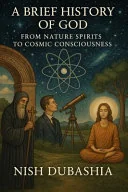
 71
71

A Brief History of God
Nish Dubashia's "A Brief History of God" tackles a vast subject with commendable clarity, tracing the conceptual journey of divinity from animistic roots to abstract cosmic principles. Its strength lies in its methodical progression, demonstrating how societal structures and philosophical shifts influence theological development. Dubashia highlights the fascinating transition from immanent nature spirits, as evidenced in early animistic practices, to the transcendent monotheistic God that dominated Western thought for centuries. A notable limitation, however, is the sheer breadth of the topic; while comprehensive, some transitions feel brisk, particularly when moving from the Axial Age to modern philosophical interpretations. The passage discussing the emergence of Gnostic ideas, with their emphasis on a distant, unknowable 'One,' offers a compelling glimpse into a significant departure from earlier conceptions. This work provides a solid, if occasionally condensed, overview of humanity's enduring theological evolution.
📝 Description
71
Nish Dubashia's 2025 book traces the evolution of divine concepts from animism to cosmic consciousness.
Nish Dubashia's "A Brief History of God" examines the long development of human spirituality. The book begins with early animistic beliefs, where spirits were seen as part of the natural world. It then follows how these ideas changed over time through different cultures and intellectual movements. Dubashia looks at how our ideas about gods, ourselves, and what is sacred have shifted across history.
The work is for readers interested in the background of religious and spiritual ideas. It speaks to those who question standard religious stories and want to understand more about humanity's search for meaning. The book is useful for students of religion, theology, and cultural studies. It also suits independent readers who are curious about how beliefs and consciousness grow.
Published in 2025, "A Brief History of God" appears during a time of renewed interest in diverse spiritual paths and a questioning of established religious structures. The book engages with contemporary discussions about spirituality, following in the tradition of scholars who have studied comparative religion and the historical roots of belief systems. It acknowledges the intellectual lineage of figures like Mircea Eliade, while also considering modern analyses of belief's psychological and social aspects.
💡 Why Read This Book?
• Understand the evolution of monotheism by tracing its roots from earlier polytheistic and animistic systems, a shift Dubashia details with specific examples from ancient Near Eastern cultures. • Gain insight into the concept of the 'immanent divine' versus the 'transcendent divine,' learning how early humans perceived spirits within nature before the rise of external deities. • Explore the philosophical underpinnings of Gnosticism as presented in the book, understanding its unique conception of a creator deity distinct from the ultimate Godhead.
⭐ Reader Reviews
Honest opinions from readers who have explored this book.
❓ Frequently Asked Questions
What are the earliest forms of spiritual belief discussed in A Brief History of God?
The book begins by examining animistic beliefs, where early humans perceived spirits inhabiting natural objects and phenomena. This includes concepts like nature spirits and ancestral veneration prevalent in tribal societies prior to the development of organized religions.
How does Nish Dubashia explain the transition from polytheism to monotheism?
Dubashia illustrates this transition by examining the societal and philosophical shifts that led to the elevation of a single deity. He discusses how concepts of a supreme god within a pantheon gradually evolved into the singular, all-powerful God of monotheistic traditions.
What is the significance of the Axial Age in Dubashia's historical overview?
The Axial Age (roughly 8th to 3rd centuries BCE) is presented as a pivotal period where many major religious and philosophical traditions emerged. Dubashia highlights its role in developing more abstract and universal concepts of divinity and ethics.
Does the book discuss modern spiritual concepts like cosmic consciousness?
Yes, A Brief History of God concludes by exploring contemporary spiritual thought, including the idea of cosmic consciousness. This examines how modern scientific and philosophical ideas have influenced humanity's ongoing search for connection and meaning.
Who is Nish Dubashia and what is his approach in this book?
Nish Dubashia is the author of A Brief History of God, first published in 2025. His approach is historical and philosophical, tracing the development of humanity's concept of God from ancient animism to modern spiritual ideas with clarity and depth.
What distinguishes the 'immanent divine' from the 'transcendent divine' as presented in the book?
The 'immanent divine' refers to a spiritual presence perceived as inherent within the natural world and all living things, characteristic of early animistic beliefs. The 'transcendent divine,' in contrast, describes a deity existing separately from and above the material universe, often associated with monotheistic religions.
🔮 Key Themes & Symbolism
From Nature Spirits to Abstract Divinity
The work meticulously details humanity's departure from animistic reverence for nature spirits. Dubashia illustrates how early cultures perceived the divine as immanent within the natural world—in trees, rivers, and ancestors. This section highlights the gradual shift towards abstract conceptions of the divine, culminating in the transcendent, singular God of monotheism and later, philosophical notions of cosmic consciousness.
The Shifting Concept of the Self
Integral to the evolution of the concept of God is the parallel transformation of humanity's understanding of the self. Dubashia explores how the collective, tribal identity gradually gave way to more individualized notions of consciousness. This internal evolution mirrors the external shift from localized, immanent deities to universal, transcendent ones, reflecting a deeper inquiry into existence and one's place within it.
The Search for Unity and Meaning
Across diverse historical periods, the book identifies a persistent human drive to find unity and meaning in existence. Whether through tribal cosmologies, organized religions, or philosophical inquiry, this fundamental search shapes our spiritual narratives. Dubashia demonstrates how evolving concepts of God serve as focal points for this quest, adapting to new cultural contexts and intellectual paradigms.
The Influence of Cultural Epochs
Dubashia emphasizes how major historical and cultural shifts, such as the Axial Age (c. 8th-3rd centuries BCE), significantly impacted theological development. The emergence of new philosophies and societal structures necessitated new ways of conceptualizing the divine, moving from anthropomorphic deities to more philosophical or abstract principles of existence.
💬 Memorable Quotes
Direct passages from the work, attributed to the author.
“Early beliefs saw spirits residing within natural phenomena.”
— This statement expresses the animistic worldview, where the sacred was not separate from the material world but an intrinsic part of it, influencing rituals and daily life.
“The concept of God evolved alongside human societal structures.”
— This highlights the book's thesis that our understanding of divinity is not static but a reflection of our own development, changing as our social organizations, philosophies, and technologies advance.
“From tribal protector to universal consciousness.”
— This phrase succinctly traces the arc of the divine concept, from a localized, functional deity for a specific community to an all-encompassing, abstract principle understood in a global context.
“Spirituality shifted from immanent to transcendent frameworks.”
— This points to a core theme: the move from experiencing the divine as present within the world to understanding it as existing apart from and beyond it, a fundamental change in human perception.
“The modern search for connection in a fragmented world.”
— This reflects the book's engagement with contemporary spiritual seeking, suggesting that despite technological advancement and secularization, the fundamental human need for belonging and meaning persists.
🌙 Esoteric Significance
Tradition
While "A Brief History of God" is primarily a work of intellectual history and comparative religion, its exploration of animism, Gnosticism, and concepts of cosmic consciousness touches upon traditions often considered esoteric. It provides a historical framework for understanding the roots of modern esoteric thought, which frequently reinterprets or rediscovers ancient spiritual ideas. The book implicitly bridges academic religious studies with the broader field of Western esotericism.
Symbolism
The book frequently discusses the symbolism inherent in early spiritual practices, particularly the 'immanent divine' found in nature. Symbols like the sacred tree, the great mother archetype, and elemental forces represent a direct, embodied connection to the divine. Later, as concepts shift towards the transcendent, the symbolism becomes more abstract, focusing on abstract principles, light, and the unknowable 'One' found in Gnostic cosmology.
Modern Relevance
Dubashia's work informs contemporary discussions within New Age spirituality, Neo-Paganism, and certain branches of Western esotericism. Thinkers and practitioners seeking to understand the historical roots of divine concepts, or to deconstruct patriarchal or anthropocentric notions of God, find value in its tracing of animistic and Gnostic traditions. The book's exploration of cosmic consciousness also speaks to modern spiritual philosophies seeking unity beyond traditional religious structures.
👥 Who Should Read This Book
['• Students of comparative religion: Gain a structured historical overview of how diverse spiritual concepts of God have developed across cultures and epochs.', '• Seekers of alternative spiritual histories: Discover the origins of spiritual thought beyond mainstream religious narratives, exploring animism and Gnostic ideas.', '• Philosophers and cultural theorists: Understand the interplay between societal evolution, human consciousness, and the changing conceptualization of the divine.']
📜 Historical Context
Nish Dubashia's "A Brief History of God," published in 2025, enters a scholarly landscape marked by extensive research into the history of religions, building upon the groundwork laid by figures like Mircea Eliade and Karen Armstrong. The book engages with the ongoing discourse surrounding the origins and evolution of monotheism, polytheism, and indigenous spiritualities. It arrives in an era where comparative religion studies are increasingly interdisciplinary, incorporating insights from anthropology, sociology, and psychology. While not facing overt censorship, works that challenge traditional theological narratives often encounter debate within religious communities. Dubashia's work, by tracing concepts from animism to cosmic consciousness, implicitly engages with alternative spiritual movements and philosophical critiques of organized religion that gained traction throughout the 20th century, particularly following the intellectual currents spurred by thinkers like Friedrich Nietzsche.
📔 Journal Prompts
The concept of the 'immanent divine' in early animistic beliefs.
The transition from tribal deities to universal consciousness.
How societal structures influenced the idea of God.
The role of the Axial Age in shaping spiritual thought.
Your personal understanding of the 'transcendent divine' versus 'immanent divine'.
🗂️ Glossary
Animism
The belief that spirits inhabit natural objects and phenomena, such as plants, animals, rocks, and rivers. It is characterized by the perception of the divine as immanent within the natural world.
Immanent Divine
The concept that the divine is present and active within the material world and all of creation, rather than existing entirely separate from it.
Transcendent Divine
The concept that God or the divine exists beyond the material universe, separate from and superior to the created world.
Axial Age
A historical period, roughly from the 8th to the 3rd century BCE, during which major philosophical and religious systems emerged across Eurasia, shaping subsequent human thought and spirituality.
Cosmic Consciousness
A philosophical or spiritual concept referring to a universal awareness or intelligence that pervades the entire cosmos, often seen as the ultimate reality.
Gnosticism
A diverse set of religious ideas and systems that emerged in the early centuries CE, characterized by a belief in salvation through secret knowledge (gnosis) and a dualistic worldview often positing a distant, supreme God separate from a flawed creator deity.
Monotheism
The belief in the existence of only one God, as opposed to polytheism (belief in multiple gods) or atheism (disbelief in gods).
This book appears in 1 collection
🔮 Readers Also Liked
Browse all →









From the “Nature Spirits” Collection
View all →








More Free Sacred Texts & Gnosticism Books
View all →