A Thirteenth-century Textbook of Mystical Theology at the University of Paris
 82
82

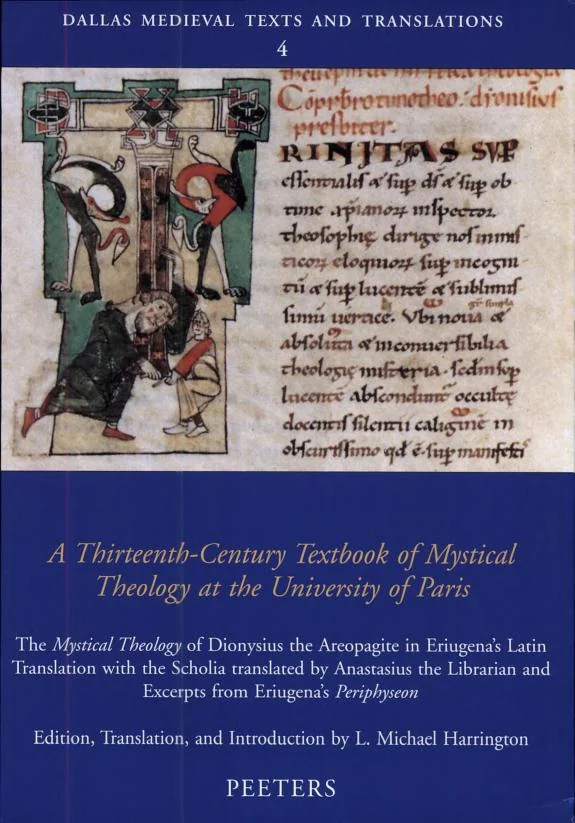
A Thirteenth-century Textbook of Mystical Theology at the University of Paris
The scholarly apparatus presented by Harrington in this edition of Anastasius's compilation is commendable. By placing the Latin text and facing-page English translation side-by-side, the work becomes significantly more approachable than previous iterations. The inclusion of excerpts from Eriugena's *Periphyseon* provides crucial context, illustrating how these Dionysian materials were actively engaged with and expanded upon by contemporary thinkers at Paris. One notable strength is the clarity of the translation, which renders complex metaphysical arguments accessible without oversimplification. A minor limitation, however, is that the dense nature of the source material itself, even with translation, requires a dedicated reader. The section discussing the celestial hierarchy, for instance, while foundational, demands careful attention to its intricate Neoplatonic framework. This edition is a valuable contribution for those seeking direct engagement with the roots of medieval mystical theology.
📝 Description
82
This 1990 edition presents a critical edition of a thirteenth-century mystical theology text from the University of Paris.
This volume offers a scholarly edition of a significant theological work from the thirteenth-century University of Paris, attributed to Anastasius the Librarian. It contains a new English translation alongside the original Latin text. The book is a composite, bringing together Eriugena's Latin translation of Dionysius the Areopagite, Anastasius's own Scholia on Dionysius, and selections from Eriugena's philosophical work, Periphyseon.
The text originates from the vibrant intellectual atmosphere of Paris in the thirteenth century, a time when Scholasticism was developing its systematic approaches. The translation of Dionysius from Greek to Latin by Eriugena in the ninth century marked a key moment in transmitting these ideas to the West. Anastasius the Librarian further clarified Dionysius for Latin readers with his appended Scholia. This compilation shows how the university engaged with earlier philosophical and patristic writings, integrating them into a structured theological system for academic study.
This edition aims to make these important mystical texts available to a contemporary academic and esoteric readership. Scholars of medieval theology, philosophy of religion, and Christian mysticism will find it a valuable resource. It is also suitable for students and practitioners of esoteric traditions interested in Neoplatonic influences on Western mysticism and the evolution of medieval theological thought. Readers focused on how Dionysian ideas spread through the medieval period will also benefit.
Emerging from the intellectual heart of medieval Paris, this text engages deeply with the Neoplatonic currents flowing through Dionysius the Areopagite. Anastasius's work, by incorporating Eriugena's translation and adding his own commentary, facilitated the assimilation of Dionysian thought into Western Christian mysticism. It demonstrates a tradition focused on understanding the divine through negation and intellectual ascent, shaping contemplative practices and theological speculation for centuries. This compilation highlights the medieval effort to synthesize Platonic philosophy with Christian doctrine, a core concern for esoteric traditions seeking direct experience of the divine.
💡 Why Read This Book?
• Gain direct access to the foundational Dionysian corpus as understood in the thirteenth-century University of Paris, facilitated by facing-page Latin and English translations. • Understand the intellectual synthesis of the period by examining how Anastasius the Librarian's Scholia and Eriugena's *Periphyseon* excerpts contextualize Dionysius's hierarchical cosmology. • Explore the historical transmission of Neoplatonic thought into Western Christian mysticism, tracing the influence of figures like Eriugena and Dionysius through a key medieval academic center.
⭐ Reader Reviews
Honest opinions from readers who have explored this book.
❓ Frequently Asked Questions
What is the significance of Dionysius the Areopagite's translation into Latin?
Eriugena's ninth-century translation of Dionysius from Greek to Latin, commissioned by Charles the Bald, was crucial. It introduced Neoplatonic mystical theology and hierarchical cosmology into Western European thought, profoundly influencing medieval philosophy and spirituality.
Who was Anastasius the Librarian and what is his contribution?
Anastasius the Librarian (fl. 9th century) was a papal bibliothecary and scholar. In this compilation, his contribution is the 'Scholia' – explanatory notes on Dionysius's work, which helped medieval scholars interpret the translated texts.
How does Eriugena's *Periphyseon* relate to the Dionysian texts?
Excerpts from Eriugena's *Periphyseon* are included to show how his own philosophical system, which also drew heavily on Neoplatonism, engaged with and expanded upon the concepts presented in Dionysius's works.
What was the intellectual environment of the University of Paris in the 13th century?
The University of Paris in the thirteenth century was a hub of Scholasticism, where theologians rigorously analyzed and synthesized classical philosophy (especially Aristotle and Plato/Neoplatonism) with Christian doctrine, as seen in this text.
What is 'mystical theology' as presented in this book?
Mystical theology here refers to the understanding of God through contemplation and indirect means, often employing apophatic theology (the via negativa) to describe God by what He is not, rather than what He is.
Is this book suitable for beginners in esoteric studies?
While the translation makes it accessible, the text is dense and academic. It's best suited for those with some background in medieval philosophy, theology, or esoteric traditions who are eager to engage with primary source material.
🔮 Key Themes & Symbolism
The Dionysian Hierarchy
The work meticulously details the celestial and ecclesiastical hierarchies as outlined by Dionysius the Areopagite. This structure, a central to medieval Neoplatonic thought, posits divine emanations and orders of spiritual beings through which God's essence is communicated. The text explores how these hierarchies facilitate understanding of the divine order and the soul's potential ascent towards God, reflecting a cosmological view prevalent in high medieval scholasticism.
Apophatic Theology (Via Negativa)
A central tenet explored is the concept of apophatic theology, or the 'way of negation'. The text emphasizes that God's transcendent nature is beyond human comprehension and language. Therefore, true theological understanding is achieved not by affirmative descriptions, but by systematically denying attributes that do not apply to the divine essence, leading to a more profound, albeit abstract, apprehension of the Godhead.
Eriugena's Philosophical Synthesis
The inclusion of excerpts from John Scotus Eriugena's *Periphyseon* highlights a significant philosophical development. Eriugena's work, itself deeply influenced by Neoplatonism, provides a framework for understanding creation, divine providence, and the nature of reality as a manifestation of God. This synthesis bridges the gap between Dionysian mystical speculation and the more systematic philosophical inquiry characteristic of the University of Paris.
Transmission of Greek Thought
This compilation serves as a evidence of the crucial role of translation in preserving and disseminating classical and patristic thought. Eriugena's ninth-century translation of Dionysius from Greek to Latin was instrumental in bringing these complex Neoplatonic ideas to the Latin West, shaping subsequent theological and mystical traditions for centuries.
💬 Memorable Quotes
Direct passages from the work, attributed to the author.
“The hierarchies are divine manifestations, ordering all things towards God.”
— This interpretation highlights the function of the celestial and ecclesiastical hierarchies as presented by Dionysius. They are not merely static structures but dynamic conduits through which the divine light and order flow, guiding creation back to its source.
“The intellect ascends through the negation of sensible and intelligible forms.”
— This concept describes the spiritual practice of mystical ascent. By stripping away attachments to the material world and even conceptual understanding, the mind is purified, enabling a more direct, intuitive apprehension of the divine.
“The translation of Dionysius by Eriugena formed a central to medieval theology.”
— This interpretation emphasizes the historical impact of Eriugena's ninth-century translation. It signifies the central role this Greek text played in shaping the intellectual range of Western Europe during the Middle Ages.
💡 Key Ideas
Editorial paraphrase of the work's core concepts — not direct quotes.
The divine essence is beyond all affirmation and negation.
This paraphrased concept captures the core of apophatic theology, asserting that the ultimate reality of God transcends any humanly devised attributes or descriptions, pushing the intellect towards a more profound, albeit wordless, understanding.
Understanding the divine requires both intellect and a contemplative disposition.
This paraphrased idea suggests that theological knowledge is not solely an academic pursuit. It necessitates a cultivated inner disposition, a readiness for contemplation that complements rational inquiry, especially when approaching the ineffable nature of God.
🌙 Esoteric Significance
Tradition
This work is central to the Neoplatonic-Christian esoteric tradition, bridging the gap between late antique philosophy and medieval mystical theology. It represents the formalization of Dionysian thought within an academic setting, demonstrating how esoteric concepts of divine emanation, hierarchy, and apophaticism were integrated into mainstream theological discourse.
Symbolism
Key symbols include the 'celestial hierarchy' (angels and divine beings ordered by proximity to God) and the 'ecclesiastical hierarchy' (earthly religious structures mirroring the divine). The 'divine darkness' or 'cloud of unknowing' symbolizes the apophatic approach, representing the supra-essential nature of God beyond human conceptualization.
Modern Relevance
Contemporary esotericists, particularly those within Western Hermeticism and Christian contemplation traditions, draw on this work to understand the roots of hierarchical cosmology and apophatic practice. Thinkers and groups interested in the philosophical underpinnings of mysticism often return to Dionysius as mediated through medieval scholars like Eriugena and Anastasius.
👥 Who Should Read This Book
['• Students of Medieval Theology: Gain direct exposure to a key thirteenth-century theological text and understand how Dionysian thought shaped academic inquiry at the University of Paris.', '• Esoteric Scholars: Explore the transmission and adaptation of Neoplatonic and mystical concepts within a Christian framework, tracing the lineage of hierarchical and apophatic traditions.', '• Comparative Mysticism Researchers: Analyze the integration of Greek philosophical concepts into Western religious thought, understanding the specific contributions of Eriugena and Anastasius.']
📜 Historical Context
The University of Paris in the thirteenth century was a crucible of intellectual synthesis, where Scholasticism sought to reconcile Christian doctrine with classical philosophy. The foundational texts here, particularly the works of Dionysius the Areopagite, were already centuries old by this point. Eriugena's ninth-century translation of Dionysius, commissioned by Charles the Bald, had introduced a sophisticated Neoplatonic framework into Latin Christendom. Anastasius the Librarian's Scholia further clarified these complex ideas for medieval readers. This compilation reflects the Parisian masters' engagement with these influential sources, integrating them into a curriculum designed to rigorously analyze and understand divine revelation through philosophical reasoning. The work implicitly engaged with the growing Aristotelian corpus entering Western thought, offering a Platonic/Neoplatonic counterpoint or complement to emerging Scholastic methods.
📔 Journal Prompts
The concept of divine hierarchies as intermediaries between God and creation: how does this structure inform your understanding of spiritual order?
Reflecting on apophatic theology: what are the limitations of language in describing ultimate reality?
Eriugena's synthesis of Dionysian thought and his own philosophy: identify a point of convergence or divergence.
The role of translation in transmitting esoteric knowledge: consider the impact of Eriugena's ninth-century work.
Contemplating the 'divine darkness': what does this metaphor suggest about the nature of direct spiritual experience?
🗂️ Glossary
Dionysius the Areopagite
A pseudonymous author from the late 5th or early 6th century whose works, written in Greek, introduced Neoplatonic philosophy into Christian thought, profoundly influencing medieval mysticism and theology.
Eriugena (John Scotus)
An Irish theologian and philosopher (9th century) known for translating Dionysius into Latin and for his own complex philosophical work, *Periphyseon*, which synthesized Neoplatonism and Christian doctrine.
Anastasius the Librarian
A 9th-century papal bibliothecary and scholar who translated Greek texts into Latin, including the Scholia on Dionysius, which provided commentary and interpretation for medieval readers.
Scholia
Explanatory notes or comments written in the margin or between the lines of a manuscript, intended to clarify difficult passages or provide context.
Periphyseon
The major work of Eriugena, a philosophical treatise exploring the nature of reality, creation, and divine providence, deeply rooted in Neoplatonic thought.
Apophatic Theology
A theological approach that seeks to understand God by emphasizing what God is not (via negativa), rather than what God is, acknowledging the ineffable and transcendent nature of the divine.
Hierarchy
In this context, a system of sacred orders or ranks, particularly the celestial hierarchy of angels and the ecclesiastical hierarchy of the church, believed to reflect divine order.
This book appears in 1 collection
🔮 Readers Also Liked
Browse all →







From the “Mystical Theology” Collection
View all →

More Free Mysticism & Contemplation Books
View all →