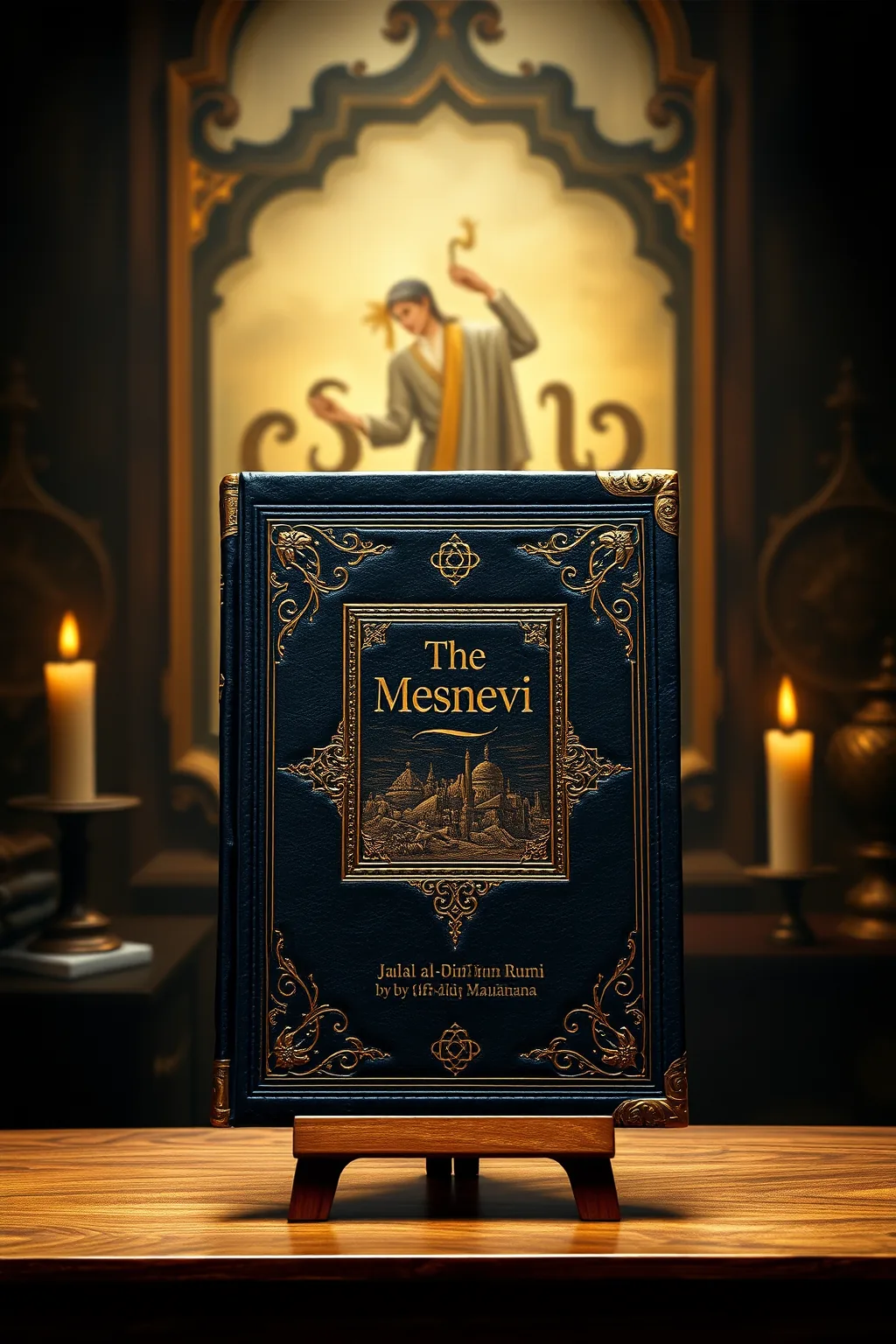
The Mesnevi
 70
70

The Mesnevi



The Mesnevi by Jalal al-Din Rumi is a timeless masterpiece that continues to resonate with modern esoteric seekers. Rumi's poetic verses are a testament to his profound spiritual insights and his ability to articulate the complexities of the human soul. For those interested in Sufi mysticism and contemplative practices, The Mesnevi offers a deep and enriching experience. The text's esoteric themes and mystical language provide a unique perspective on the spiritual journey, making it an invaluable resource for anyone seeking to deepen their understanding of Sufi philosophy. The Mesnevi's enduring appeal lies in its universal messages of love, self-discovery, and spiritual enlightenment. Rumi's words transcend cultural and temporal boundaries, speaking to the deepest aspects of the human experience. Whether you are a seasoned mystic or a curious seeker, The Mesnevi offers a wealth of spiritual wisdom and contemplative insights that can enrich your journey towards self-discovery and enlightenment.
📝 Description
70
Jalal al-Din Rumi began composing The Mesnevi around 1257 CE.
The Mesnevi is a vast collection of Persian poetry by the 13th-century Sufi mystic Jalal al-Din Rumi. Composed over many years, it elaborates on spiritual themes through stories, parables, and allegories. Rumi uses everyday language and familiar imagery to convey complex mystical ideas.
The work addresses a wide audience, from ordinary people seeking spiritual understanding to scholars of Sufism. It aims to guide the reader toward self-knowledge and a deeper connection with the divine. The verses often present dialogues, philosophical discussions, and moral instruction, all woven into a narrative structure. Rumi's approach is direct yet layered, encouraging contemplation on the nature of existence, love, and the human condition.
As a central text of Sufism, The Mesnevi functions within the broader Islamic mystical tradition. It draws upon Quranic verses and Hadith, interpreting them through a lens of direct spiritual experience and inner purification. The work is concerned with the annihilation of the ego (nafs) and the attainment of union with God (tawhid). It uses allegorical narratives to illustrate stages of the soul's return to its divine source, emphasizing the importance of a spiritual guide and constant remembrance of God.
✍️ Author
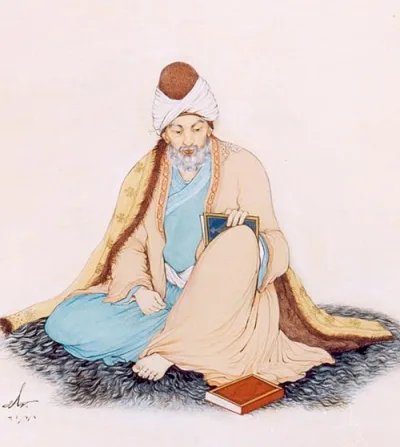
Jalal al-Din Rumi, Maulana
Jalāl al-Dīn Muḥammad Rūmī, commonly known as Rumi (30 September 1207 – 17 December 1273), was a Sufi mystic, poet, and founder of the Islamic brotherhood known as the Mevlevi Order. His family hailed from Balkh.
💡 Why Read This Book?
Reading The Mesnevi today offers a unique opportunity to connect with the timeless wisdom of Sufi mysticism. This esoteric masterpiece provides profound insights into the spiritual journey, helping readers navigate the complexities of self-discovery and contemplation. By delving into Rumi's poetic verses, readers can gain a deeper understanding of Sufi philosophy and its relevance to modern spiritual seekers. The Mesnevi's universal messages of love and enlightenment make it an essential read for anyone interested in esoteric and occult studies.
⭐ Reader Reviews
Honest opinions from readers who have explored this book.
❓ Frequently Asked Questions
What is the significance of The Mesnevi in Sufi literature?
The Mesnevi is considered one of the most important works in Sufi literature, offering deep insights into mysticism and contemplation. It is a guide to spiritual enlightenment and a testament to Rumi's profound spiritual insights.
Who should read The Mesnevi?
The Mesnevi is ideal for readers interested in esoteric and occult studies, Sufi mysticism, and spiritual contemplation. It is valuable for both seasoned mystics and curious seekers.
What themes are explored in The Mesnevi?
The Mesnevi explores themes such as the pursuit of spiritual knowledge, the nature of love, and the journey towards self-discovery. It delves into the complexities of the human soul and its connection to the divine.
🔮 Key Themes & Symbolism
The Journey of the Soul
The Mesnevi explores the spiritual journey of the soul towards divine union, using detailed symbolism and allegories to illuminate the path. Rumi's verses guide readers through the stages of spiritual awakening and the quest for hidden knowledge.
Divine Love
Divine love is a central theme in The Mesnevi, representing the ultimate goal of the soul's journey. Rumi's poetic verses look at the nature of this love, its transformative power, and its role in the mystical union with the divine.
Spiritual Awakening
The Mesnevi offers useful insights into the process of spiritual awakening, encouraging readers to shed their mundane attachments and embrace the divine within. Rumi's work is a call to spiritual enlightenment and the pursuit of esoteric wisdom.
💬 Memorable Quotes
Direct passages from the work, attributed to the author.
“Out beyond ideas of wrongdoing and rightdoing, there is a field. I'll meet you there.”
— Rumi invites readers to a place of pure existence beyond moral judgments.
“The guest is inside you, and also inside me; you know the sprig of vines.”
— Rumi suggests that the divine presence is within each individual, awaiting recognition.
💡 Key Ideas
Editorial paraphrase of the work's core concepts — not direct quotes.
The wound is the place where the Light enters you.
This quote highlights the transformative power of suffering in the spiritual journey.
What you seek is seeking you.
This line emphasizes the interconnectedness of the seeker and the sought, a key concept in Sufi mysticism.
Sell your cleverness and buy bewilderment; cleverness is mere opinion, bewilderment is intuition.
This quote advocates for the surrender of rational thought in favor of intuitive, spiritual understanding.
🌙 Esoteric Significance
Tradition
The Mesnevi belongs to the Sufi tradition, a mystical branch of Islam that emphasizes the direct experience of the divine. It is deeply rooted in the Mevleviyeh order, known for its spiritual practices and poetic expressions of divine love.
Symbolism
Key symbols in The Mesnevi include the wine and the cupbearer, representing divine ecstasy and the spiritual guide. The nightingale and the rose symbolize the soul's longing for union with the divine, while the reed flute signifies the human heart's yearning for its true home.
Modern Relevance
The Mesnevi remains relevant today for its timeless exploration of the human condition and the spiritual journey. Modern practitioners and scholars continue to study and apply its teachings, finding resonance in its universal themes of love, longing, and divine union.
👥 Who Should Read This Book
Beginners may find The Mesnevi challenging due to its dense symbolism and philosophical depth, but it is an invaluable resource for those with some familiarity with Sufi teachings. Scholars of mystical literature will appreciate its historical significance and esoteric insights. Spiritual seekers and practitioners of Sufi spirituality will find it a profound guide on their journey towards divine union.
📜 Historical Context
The Mesnevi was written in the 13th century by Jalal al-Din Rumi, a prominent Sufi mystic and poet. During this time, the Islamic world was experiencing a period of intellectual and spiritual flourishing, with Sufism playing a significant role in the development of mystical thought. The Mesnevi became an important text for the Mevleviyeh order, also known as the Whirling Dervishes, and has had a lasting influence on Sufi literature and spiritual practices.
📔 Journal Prompts
Reflect on a moment of spiritual awakening in your life. How did it change your perspective?
Consider the concept of divine love as described in The Mesnevi. How does it differ from romantic or familial love?
Explore the idea of the soul's journey towards divine union. What obstacles might you encounter along the way?
Think about the symbolism of the reed flute in The Mesnevi. What does it mean for the human heart to yearn for its true home?
Reflect on the transformative power of suffering. How has pain or difficulty led to spiritual growth in your life?
🗂️ Glossary
Mevleviyeh
A Sufi order founded by Jalal al-Din Rumi, known for its spiritual practices and poetic expressions of divine love.
Mathnawi
A collection of poetic verses, often used in Sufi literature to convey mystical and spiritual teachings.
Divine Union
The ultimate goal of the soul's journey in Sufi mysticism, representing a state of complete unity with the divine.
Spiritual Awakening
The process of becoming aware of one's true spiritual nature and the divine presence within.
Esoteric Wisdom
Hidden knowledge or insights that are revealed through spiritual practices and contemplation.
This book appears in 2 collections
🔮 Readers Also Liked
Browse all →


More by Jalal al-Din Rumi, Maulana
All books →
From the “Christian Mysticism” Collection
View all →




![Kabbalah Dictionary [Hebrew To English].pdf (PDFy mirror)](/img/thumb/kabbalah-dictionary-hebrew-to-english-pdf-pdfy-mirror.webp)

More Free Mysticism & Contemplation Books
View all →