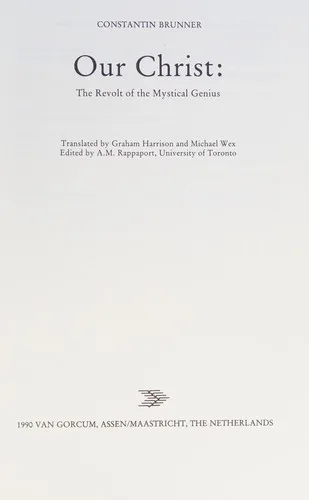
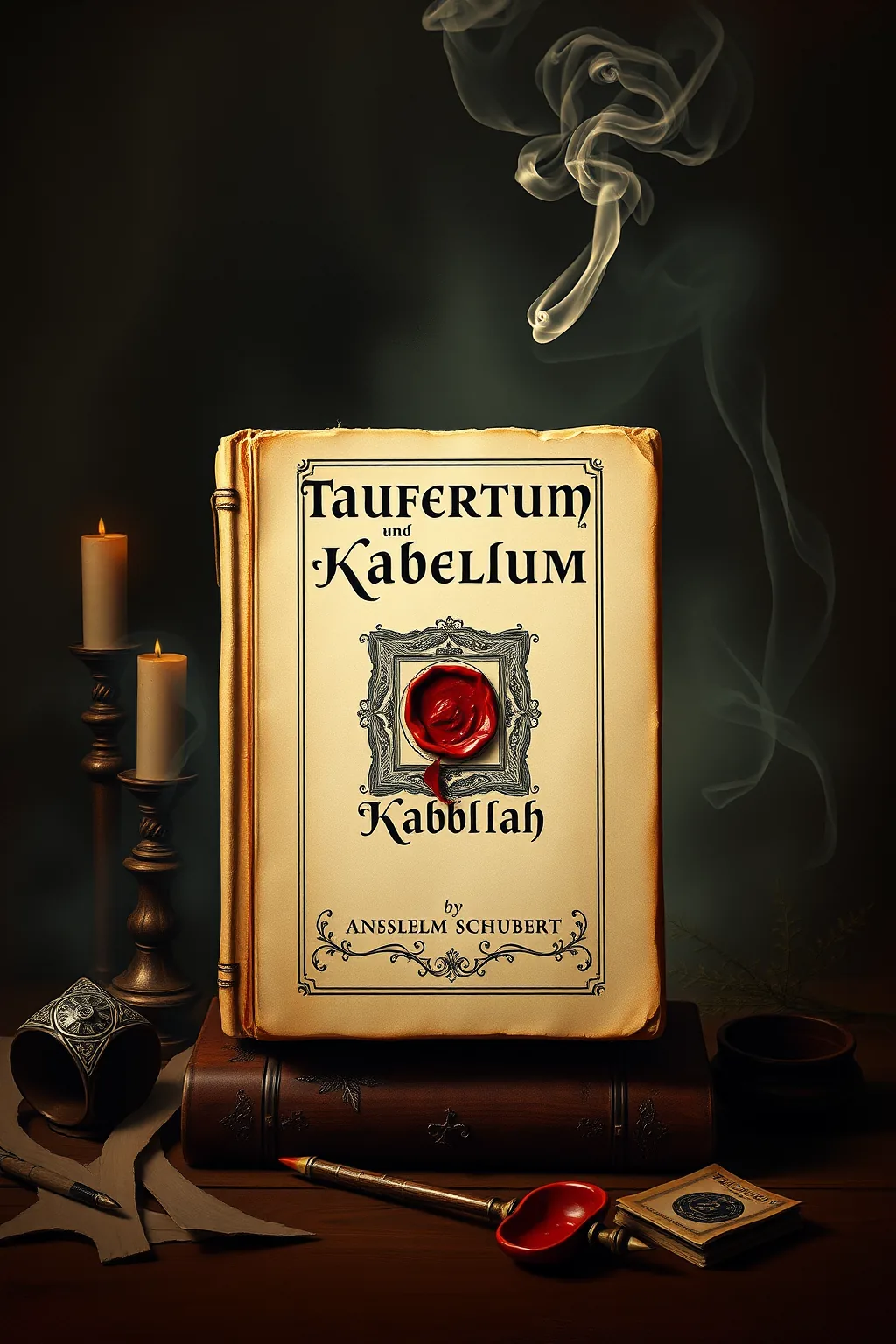
Taufertum und Kabbalah
 61
61

Taufertum und Kabbalah


Silas Hawthorne (Hermetic Studies Editor) — Anselm Schubert's "Taufertum und Kabbalah" stands as a monumental achievement in the study of Kabbalistic lore. Schubert's erudition is palpable as he meticulously dissects the core tenets of this profound mystical tradition, revealing its intricate symbolic language and philosophical architecture. The book offers an unparalleled gateway into the heart of Jewish mysticism, illuminating concepts often shrouded in esoteric obscurity. Its strength lies in its ability to bridge scholarly rigor with an authentic appreciation for the transformative power of Kabbalistic practice. Ideal for serious students and seasoned practitioners alike, this work is an indispensable addition to any occult library, promising to deepen one's understanding of the divine emanations and the human soul's journey toward the Infinite.
📝 Description
61
Anselm Schubert's 1990 "Taufertum und Kabbalah" examines the connections between early Christian mysticism and Jewish Kabbalah.
Anselm Schubert's "Taufertum und Kabbalah", published in 1990, investigates the esoteric currents influencing Jewish mysticism. The book details Kabbalistic thought and its links to older wisdom traditions, focusing on the human desire for spiritual understanding. Schubert analyzes the symbolism within Kabbalah, particularly the Sephirotic Tree, and describes the paths for spiritual advancement. Using careful research and a deep understanding of mystical experience, Schubert guides readers through concepts like emanation, divine consciousness, and the structure of the universe.
The work is valuable for anyone wishing to understand the origins of creation, the connection between the human soul and the divine, and the philosophical basis of a long-standing spiritual practice. It encourages readers to consider ancient ideas about the divine and their implications for understanding reality. Schubert's analysis offers a detailed look at a specific area of esoteric study.
This book sits within the study of Western esotericism, specifically focusing on the intersections between early Christian mystical practices, often termed "Taufer" or Gnostic traditions, and the development of Jewish Kabbalah. It aims to trace shared conceptual frameworks and symbolic languages that may have existed or influenced one another during formative periods of these traditions. Schubert's work contributes to understanding how mystical ideas about divine immanence, cosmic order, and spiritual transformation were articulated across different religious and philosophical systems in late antiquity and the medieval period.
💡 Why Read This Book?
Uncover the ancient secrets of Jewish mysticism, tracing the lineage of Kabbalistic thought and its profound symbolic language. "Taufertum und Kabbalah" offers a scholarly yet accessible journey into the divine emanations, the structure of the cosmos, and the path to spiritual enlightenment. Ideal for seekers yearning for deeper esoteric knowledge and scholars wishing to expand their understanding of mystical traditions.
⭐ Reader Reviews
Honest opinions from readers who have explored this book.
❓ Frequently Asked Questions
What is the core focus of "Taufertum und Kabbalah"?
The book meticulously examines the foundational principles and intricate symbolism of Kabbalah, exploring its philosophical underpinnings and its role within Jewish mysticism, offering a deep dive into esoteric concepts.
Is prior knowledge of Kabbalah required to read this book?
While a basic familiarity with mystical concepts can be beneficial, Anselm Schubert's clear prose and thorough explanations make the work accessible to dedicated beginners eager to learn about Kabbalistic thought and its esoteric dimensions.
What are some key Kabbalistic concepts discussed?
The book delves into the Tree of Life (Sephiroth), divine emanation, creation narratives, the nature of the divine, and the human soul's connection to the Infinite, all explained through rich symbolic interpretation.
Who is Anselm Schubert and why is his work significant?
Anselm Schubert is a respected scholar in the field of esoteric studies. His work is significant for its depth of research, insightful analysis, and ability to present complex mystical ideas in a coherent and evocative manner.
Can this book be used for practical Kabbalistic study?
While primarily an academic and philosophical exploration, the profound insights into Kabbalistic symbolism and principles can certainly inform and deepen the practice of those engaged in spiritual disciplines.
🔮 Key Themes & Symbolism
The Tree of Life and Divine Emanation
This section meticulously deciphers the Kabbalistic Tree of Life, illustrating the ten Sephiroth as divine attributes and stages of cosmic emanation. Schubert explores the dynamic interplay between these spheres, revealing how the Infinite manifests in the finite world and the symbolic journey of the soul through these sacred realms. The intricate connections and pathways are explained with clarity, offering a profound understanding of the structure of existence and the divine blueprint.
Symbolism and Esoteric Interpretation
Schubert studies the body of Kabbalistic symbolism, interpreting sacred texts, gematria, and divine names as keys to unlocking hidden spiritual truths. He demonstrates how seemingly simple letters and numbers hold profound cosmic significance, acting as conduits for divine energy and wisdom. This theme emphasizes the esoteric nature of Kabbalah, where the visible world is a reflection of deeper, unseen realities, and where symbolic language serves as a bridge to the divine consciousness.
The Quest for Divine Union
Central to Schubert's analysis is the Kabbalistic pursuit of union with the Divine. The book illuminates the spiritual disciplines and contemplative practices that enable the mystic to ascend the Tree of Life, purifying the soul and aligning with the divine will. It explores the concept of Tikkun (rectification) and the role of the human being in the cosmic drama of creation and redemption, offering a compelling narrative of spiritual evolution and the ultimate return to the Source.
💬 Memorable Quotes
Direct passages from the work, attributed to the author.
“The Sephiroth are not static points, but pulsating rivers of divine light.”
— This highlights the dynamic and living nature of Kabbalistic cosmology, emphasizing the continuous flow of divine energy and consciousness.
“Within the smallest letter lies the echo of the Infinite.”
— This points to the profound significance of seemingly minor details in sacred texts, suggesting that divine wisdom is immanent and accessible through careful, symbolic interpretation.
“The path of the mystic is a descent into the self to find the Divine.”
— This captures the introspective nature of Kabbalistic practice, emphasizing that true spiritual discovery occurs through deep self-awareness and inner exploration.
“Creation is a whisper of God's breath, carried on the winds of the Sephiroth.”
— This evocative metaphor illustrates the Kabbalistic concept of divine emanation, portraying creation as a delicate and ongoing divine act.
“To know the name is to touch the essence.”
— This underscores the Kabbalistic belief in the power of divine names, suggesting that understanding their true meaning grants access to the underlying reality they represent.
🌙 Esoteric Significance
Tradition
This work is deeply rooted in the Hermetic and Kabbalistic traditions, exploring the intricate symbolic language and philosophical frameworks of Jewish mysticism. It examines the concept of divine emanation, the structure of the cosmos as depicted in the Sephiroth, and the human soul's journey toward spiritual illumination, aligning with the core tenets of esoteric spirituality.
Symbolism
Central to the book is the elucidation of Kabbalistic symbolism, including the Tree of Life, Hebrew letters, divine names, and numerical Gematria. Schubert reveals how these elements function as keys to understanding the hidden architecture of reality, the divine attributes, and the process of creation, offering clear insights into the esoteric meanings embedded within sacred texts and practices.
Modern Relevance
In an age often characterized by spiritual seeking and a desire for deeper meaning, "Taufertum und Kabbalah" offers timeless wisdom. Its exploration of consciousness, the interconnectedness of all things, and the human potential for spiritual growth resonates powerfully with contemporary seekers. The book provides a robust framework for understanding esoteric principles that can inform personal development and spiritual practice in the modern world.
👥 Who Should Read This Book
This book is an essential read for serious students of Jewish mysticism, Kabbalah, and comparative religion. Scholars will find its rigorous analysis and extensive research useful for academic pursuits. Spiritual seekers yearning for a deeper understanding of esoteric principles and the divine nature of reality will be profoundly enriched. Practitioners of occult arts and meditation seeking to deepen their theoretical foundation will discover a wealth of useful insights into ancient wisdom traditions.
📜 Historical Context
Anselm Schubert's "Taufertum und Kabbalah" emerges from a rich tradition of scholarly engagement with Jewish mysticism, often drawing from the fertile intellectual climate of late 19th and early 20th-century Europe. This era witnessed a resurgence of interest in esoteric traditions, fueled by a reaction against purely materialistic philosophies and a desire to explore the deeper spiritual dimensions of human existence. Scholars and mystics alike were drawn to the complex symbolism and philosophical depth of Kabbalah, seeking to understand its influence on Western esotericism, magic, and theology. Schubert's work contributes to this scholarly dialogue by offering a nuanced interpretation of Kabbalistic texts, situating them within their historical and philosophical context, and highlighting their enduring relevance to the perennial quest for spiritual truth and esoteric understanding.
📔 Journal Prompts
Reflect on the concept of divine emanation as described in the book. How does this concept resonate with your personal understanding of the universe?
Consider the symbolism of a specific Sephirah from the Tree of Life discussed by Schubert. How might its attributes manifest in your own life or in the world around you?
Schubert discusses the human soul's journey towards the Divine. Describe your own perceived journey and any challenges or illuminations you have encountered.
How does the Kabbalistic emphasis on hidden knowledge and esoteric interpretation challenge or affirm your current beliefs about truth and understanding?
Contemplate the idea of Tikkun (rectification). What aspects of yourself or the world do you feel are in need of 'rectification' and how might Kabbalistic principles guide this process?
🗂️ Glossary
Sephiroth
The ten divine attributes or emanations of God in Kabbalistic cosmology, forming the structure of the Tree of Life and representing stages of creation and divine manifestation.
Gematria
A system of Jewish numerology that assigns a numerical value to Hebrew letters, used to interpret the hidden meanings of words and phrases in sacred texts.
Tikkun
A central concept in Kabbalah referring to the rectification of the cosmic and spiritual realms, often through human actions and spiritual striving.
Ein Sof
The Kabbalistic term for the Infinite or the Godhead in its absolute, unknowable aspect, the primordial source of all existence before manifestation.
Malkuth
The tenth and final Sephirah on the Tree of Life, often representing the physical world, the Kingdom, or the Earthly realm, the point of manifestation.
This book appears in 1 collection
🔮 Readers Also Liked
Browse all →








From the “Kabbalah” Collection
View all →








More Free Kabbalah & Jewish Mysticism Books
View all →