Quest of the Holy Grail
 79
79

Quest of the Holy Grail
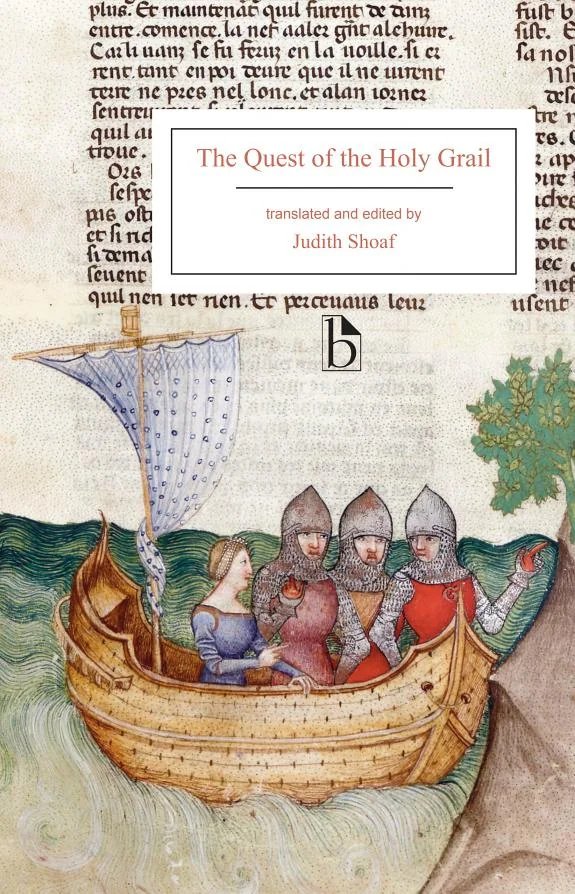
The "Quest of the Holy Grail" presents a familiar narrative through a lens sharpened by scholarly attention. This edition’s strength lies in its meticulous annotation, which demystifies the often-opaque allegorical layers of the original Old French text. For instance, the detailed explanation of the symbolism surrounding the Grail procession in Chapter 17 offers a concrete anchor for understanding its spiritual significance beyond mere artifact. However, the very academic rigor that makes it valuable can also be its limitation; the prose, while clear, occasionally feels more like a scholarly apparatus than a narrative. The translation itself is serviceable, though it lacks the lyrical resonance found in some older versions. The inclusion of supplementary material, particularly the excerpts from Chrétien de Troyes, provides essential comparative context. The work succeeds in making a complex medieval text accessible, though it might sacrifice some of the original's immediate evocative power for clarity. It is a text best approached with a studious mind.
📝 Description
79
This 2018 translation presents the "Quest of the Holy Grail" from the Old French Vulgate Cycle.
The "Quest of the Holy Grail" is a section of the Old French Vulgate Cycle, also known as the Lancelot-Graal. This 2018 edition offers a modern translation of the Arthurian romance, placing King Arthur and his knights within both British history and Christian spiritual history. The translation is designed for academic study, particularly for courses on medieval literature and romance. It includes extensive notes and guiding materials to help readers engage with the text, its social context, and its literary background. Appendices feature translated excerpts from related works, such as those by Chrétien de Troyes, to further contextualize the narrative.
This edition is intended for students and scholars of medieval literature, comparative religion, and Arthurian studies. Its structured notes and historical context are useful for those new to the Grail quest or seeking a deeper academic understanding. Readers interested in the blend of chivalric romance and Christian allegory will find much to analyze. It also appeals to those studying the historical development of Christian narratives, especially concerning relics and pilgrimage, within the framework of medieval European history.
The "Quest of the Holy Grail" emerged in the early 13th century, a time of significant religious fervor and the development of chivalric ideals. While rooted in Christian tradition, its narrative also engages with mystical elements and symbolic interpretations of the Grail. This text reflects a medieval spiritual outlook that sought divine meaning within earthly quests, blending courtly love and adventure with profound religious symbolism and the pursuit of spiritual perfection.
💡 Why Read This Book?
• Gain a structured understanding of the Grail legend's Christian allegorical framework, as exemplified by the spiritual trials faced by Sir Galahad in his pursuit of the Grail vessel. • Appreciate the historical placement of the text within 13th-century French literature and its role in shaping the Arthurian canon, referencing its inclusion in the Lancelot-Graal cycle. • Analyze the symbolic weight of key figures like Joseph of Arimathea and the specific spiritual virtues required for the quest, as detailed in the narrative's progression.
⭐ Reader Reviews
Honest opinions from readers who have explored this book.
❓ Frequently Asked Questions
What is the historical period of the "Quest of the Holy Grail"?
The original Old French "Quest of the Holy Grail" was likely composed in the early 13th century, around the 1210s or 1220s, placing it within the High Middle Ages.
Who were the primary authors associated with the Lancelot-Graal cycle?
While the "Quest of the Holy Grail" is part of the Lancelot-Graal (Vulgate Cycle), its specific authorship is anonymous. However, the cycle as a whole is sometimes attributed to figures like Walter Map, though this is debated.
What is the significance of the Grail in medieval literature?
The Grail transitioned from a mysterious vessel in earlier romances to a central Christian relic, symbolizing divine grace, spiritual purity, and ultimate salvation, particularly in the context of the knights' quest for it.
How does this text differ from Chrétien de Troyes' "Perceval"?
While Chrétien's "Perceval, le Conte du Graal" introduced the Grail, the "Quest of the Holy Grail" (part of the Vulgate Cycle) expands the narrative significantly, focusing on the spiritual attainments of Galahad and introducing a more overtly Christian and allegorical dimension.
What does the term 'Vulgate Cycle' refer to?
The Vulgate Cycle, also known as the Lancelot-Graal, is a series of Old French prose romances written in the first half of the 13th century that retell and expand upon Arthurian legends, including the "Quest of the Holy Grail."
Is this book in the public domain?
This specific edition, published in 2018, is a modern translation and likely protected by copyright. The original Old French text, however, is in the public domain.
🔮 Key Themes & Symbolism
The Soul's Pilgrimage
The narrative frames the knights' quest for the Holy Grail as an allegorical journey of the soul toward divine union. This path is not merely one of physical travel but of spiritual purification, demanding chastity, faith, and humility. Knights like Lancelot, despite their prowess, are hindered by earthly sins, illustrating that worldly achievement does not equate to spiritual attainment. The successful knights, particularly Galahad, embody the ideal of a soul wholly dedicated to God, capable of perceiving divine mysteries unavailable to the uninitiated or impure. This reflects a core tenet in mystical traditions concerning the rigorous self-discipline required for spiritual ascent.
Divine Revelation and Grace
The Grail itself serves as a conduit for divine revelation, appearing only to those deemed worthy through spiritual merit. Its presence signifies God's grace made manifest, offering sustenance and spiritual insight. The text emphasizes that access to this grace is not earned through martial skill or earthly nobility alone, but through a profound inner purity and devotion. This concept aligns with Gnostic and certain Neoplatonic ideas where direct, albeit rare, contact with the divine is possible for the spiritually elect, mediated by specific conditions or states of being.
The Paradox of Chivalry
The work explores the tension between earthly chivalry, embodied by the Knights of the Round Table, and spiritual chivalry, required for the Grail quest. While knights like Gawain and Lancelot excel in martial feats and courtly conduct, their worldly attachments and past transgressions impede their spiritual progress. The text posits that true knighthood, in its highest form, must transcend the secular and embrace a divine purpose. This challenges the reader to consider the limitations of conventional societal ideals when faced with ultimate spiritual aspirations, a recurring theme in esoteric literature that seeks a higher order.
Symbolism of the Grail
The Grail transcends its physical form to become a potent symbol of the ineffable. It represents the ultimate spiritual prize, the direct experience of the divine, or the hidden knowledge sought by mystics. Its elusive nature and the varied interpretations of its appearance underscore the difficulty of grasping ultimate truths through purely rational means. The vessel is associated with Christ's sacrifice and the Last Supper, imbuing it with eucharistic significance and connecting the quest to the foundational mysteries of Christianity, a common symbolic language in Western esoteric traditions.
💬 Memorable Quotes
Direct passages from the work, attributed to the author.
“Not all knights are called to see the Grail.”
— This statement underscores the theme of divine election and spiritual qualification. It suggests that certain spiritual experiences are reserved for those who possess specific inner virtues, rather than being universally accessible.
“Earthly deeds weigh heavily on the soul's ascent.”
— This interpretation conveys the idea that attachment to worldly matters and past sins can obstruct spiritual progress, a central challenge for knights like Lancelot who struggle to reconcile their chivalric lives with the demands of the Grail quest.
“The Grail's light reveals hidden truths.”
— This captures the notion that the Grail functions as a catalyst for spiritual insight, clear the inner state of the knights and revealing divine mysteries to those who are pure of heart.
💡 Key Ideas
Editorial paraphrase of the work's core concepts — not direct quotes.
The highest adventure is the quest for the Grail.
This paraphrased concept highlights the narrative's core assertion: that the pursuit of spiritual enlightenment or divine connection surpasses all other worldly endeavors, including martial glory or earthly love.
Purity of heart is the key to the sacred mystery.
This paraphrased concept emphasizes the paramount importance of inner virtue over external actions or status in achieving spiritual connection and understanding the ultimate secrets represented by the Grail.
🌙 Esoteric Significance
Tradition
The "Quest of the Holy Grail" fits within the Western Esoteric tradition, particularly drawing from Christian mysticism and Neoplatonic thought. It reinterprets the Arthurian legend through an explicitly Gnostic and allegorical framework, focusing on the soul's journey toward divine union. While not strictly Hermetic or Kabbalistic, it shares with these traditions the concept of hidden knowledge accessible only through spiritual purification and inner revelation, placing emphasis on a direct, albeit rare, experience of the divine.
Symbolism
The Grail itself is the primary symbol, representing divine grace, spiritual perfection, and the ultimate unattainable (or rarely attained) truth. The White Hart signifies purity and the elusive nature of spiritual revelation. The Castle of Corbenic, where the Grail resides, symbolizes a sacred space or the divine realm itself, accessible only to the spiritually worthy. The Lance, often seen dripping blood, represents sacrifice and the Passion of Christ, linking the quest directly to Christian salvific mysteries.
Modern Relevance
Contemporary esoteric practitioners and scholars continue to draw upon the "Quest of the Holy Grail" for its strong symbolism and exploration of the spiritual path. Its themes of inner purification, divine aspiration, and the limitations of worldly achievement resonate with modern seekers in various contemplative and mystical practices. Thinkers in Jungian psychology, for instance, have analyzed the archetypal significance of the Grail quest, while various Neo-Arthurian and Grail-focused groups use the narrative as a source for spiritual allegory and personal development.
👥 Who Should Read This Book
• Students of medieval literature and Arthurian legend seeking a definitive, annotated version of the Grail narrative within its broader cycle. • Comparative religion scholars interested in the integration of Christian mysticism and chivalric romance in 13th-century Europe. • Seekers of esoteric wisdom exploring the allegorical dimensions of Western mystical traditions and the symbolic language of the Grail.
📜 Historical Context
Composed in Old French prose in the early 13th century, the "Quest of the Holy Grail" emerged during a period of intense religious fervor and evolving chivalric ideals. It forms a crucial part of the Lancelot-Graal (or Vulgate Cycle), a vast compilation of Arthurian romances that aimed to synthesize and expand upon existing legends. This era saw the flourishing of courtly love traditions alongside a deep engagement with Christian mysticism and hagiography. The text's profound Christianization of the Arthurian world reflects a broader cultural movement seeking spiritual meaning within secular narratives. While Chrétien de Troyes had introduced the Grail in the late 12th century, the Vulgate authors significantly developed its theological and allegorical dimensions. The work's reception was widespread, influencing subsequent Arthurian literature across Europe, though specific contemporary reviews or scholarly citations from the 13th century are scarce due to medieval publishing practices.
📔 Journal Prompts
The distinction between earthly and spiritual chivalry, as seen in Lancelot's struggles.
Galahad's purity as a prerequisite for perceiving the Grail.
The symbolic meaning of the Grail vessel itself.
The trials faced by knights like Gawain on their spiritual journey.
The contrast between those who achieve the quest and those who fail.
🗂️ Glossary
Grail
A mysterious and sacred object, often depicted as a cup or chalice, central to Arthurian legend, symbolizing divine grace and spiritual perfection.
Lancelot-Graal (Vulgate Cycle)
A monumental collection of Old French prose romances from the 13th century that expands upon Arthurian legends, including the "Quest of the Holy Grail."
Chivalry
The medieval knightly code of conduct, encompassing bravery, loyalty, courtesy, and piety, which is reinterpreted and challenged by the spiritual demands of the Grail quest.
Allegory
A literary device where characters, events, and settings represent abstract ideas or spiritual truths, central to understanding the "Quest of the Holy Grail."
Galahad
The purest knight of the Round Table, destined to achieve the Grail due to his exceptional virtue and chastity.
Round Table
The legendary fellowship of knights established by King Arthur, symbolizing unity and equality, whose members undertake the Grail quest.
Joseph of Arimathea
A biblical figure credited in Grail legends with bringing the Grail to Britain, linking the romance to early Christian history.
This book appears in 1 collection
🔮 Readers Also Liked
Browse all →









From the “Holy Grail” Collection
View all →






More Free Occult Philosophy Books
View all →