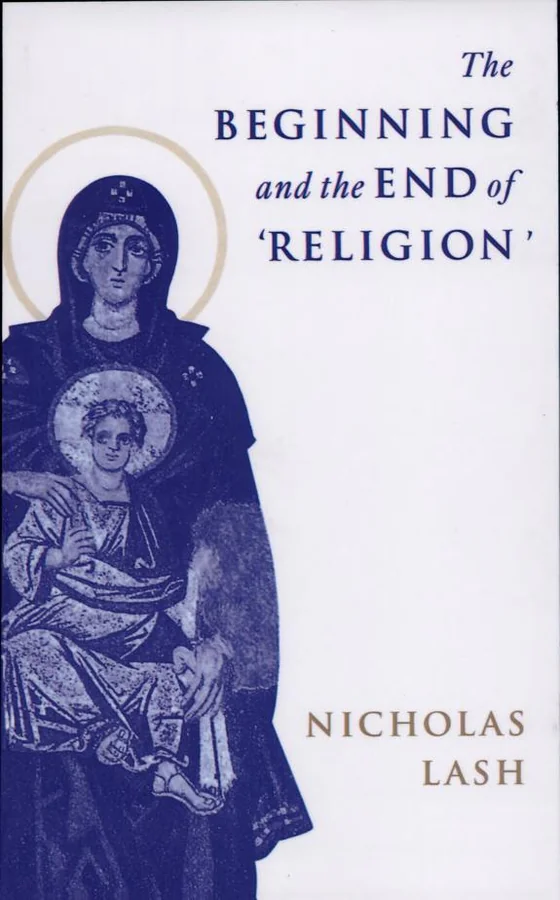
The Beginning and the End of 'Religion'
 73
73

The Beginning and the End of 'Religion'
Nicholas Lash’s 1996 collection, *The Beginning and the End of 'Religion'*, is a sharp dissection of the modern Western tendency to isolate ‘religion’ from the broader fabric of human endeavor. Lash argues, with considerable force, that this separation is a historical anomaly, not an eternal truth. He correctly identifies that the very notion of religion as a distinct, private sphere is a product of modernity, one that is now perhaps dissolving. The book’s strength lies in its intellectual rigor, systematically dismantling the scaffolding of this modern division. However, the essays, while interconnected, can feel somewhat dense, requiring sustained attention to follow the intricate philosophical arguments. Lash’s examination of the dialogue between theology and science, particularly his interpretation of how modern scientism itself functions as a quasi-religious dogma, remains a potent observation. The verdict: a vital, if demanding, critique for anyone questioning the contemporary categories of belief and disbelief.
📝 Description
73
Nicholas Lash's 1996 essays challenge the modern idea of religion as a separate category.
In 'The Beginning and the End of 'Religion'', Nicholas Lash argues against the modern Western tendency to isolate religion as a distinct category from politics, art, science, law, and economics. He contends that this compartmentalization is a recent historical development. Lash suggests that our current era marks a turning point, signaling the decline of modern Western thought and opening possibilities for rediscovering older wisdom traditions that have been obscured. The book examines how theology interacts with scientific inquiry and other fields, showing connections between areas often perceived as separate.
This work is for readers interested in the philosophical foundations of belief systems and how they have been historically shaped. It will appeal to those who question contemporary divisions in society and wish to grasp the evolution of the concept of 'religion'. Scholars of theology, philosophy of religion, cultural history, and intellectual history will find Lash's arguments especially pertinent. It is suited for individuals who sense a transformation in Western consciousness and are curious about the forms of wisdom that may arise from this shift.
While not explicitly occult, Lash's work engages with traditions that question the boundaries of rationalism and secularism. His critique of modern Western thought echoes post-structuralist deconstructions that often inform esoteric philosophy. By challenging established dichotomies, particularly between sacred and secular, he opens conceptual space for alternative understandings of reality and belief that resonate with esoteric inquiries into hidden connections and broader spiritual frameworks.
💡 Why Read This Book?
• Understand how the modern concept of 'religion' is a recent Western construct, a departure from earlier, more integrated views of wisdom, as argued in the book’s initial essays. • Gain insight into the historical dialogue between theology and science, moving beyond simplistic oppositions to see their complex relationship, a key focus in Lash’s 1996 publication. • Explore the idea that the perceived end of modernity might herald a resurgence of ancient, holistic wisdom, challenging contemporary assumptions about progress and secularization.
⭐ Reader Reviews
Honest opinions from readers who have explored this book.
❓ Frequently Asked Questions
When was Nicholas Lash's 'The Beginning and the End of 'Religion'' first published?
Nicholas Lash's 'The Beginning and the End of 'Religion'' was first published on June 28, 1996. This date places its intellectual context within the late 20th-century discourse on postmodernism and the critique of established categories.
What is the central argument regarding the separation of religion from other fields?
The central argument is that the common view of religion as separate from politics, art, science, law, and economics is a peculiar feature of modern Western culture, not a universal or timeless truth.
What does Lash suggest about the current state of Western culture?
Lash suggests that the modern Western world is ending and that we are entering a period where new forms of ancient wisdom, previously obscured, can be rediscovered and understood.
Which specific dialogues does the book explore?
The book's essays explore various directions, notably examining the dialogue between theology and science, and questioning the artificial boundaries imposed by modern thought.
Is 'The Beginning and the End of 'Religion'' suitable for beginners in philosophy?
While rigorous, the book's direct challenge to foundational Western assumptions makes it accessible to determined beginners interested in philosophy and theology, provided they are willing to engage with complex arguments.
What historical period does Lash critique as the origin of the 'religion' category?
Lash critiques the modern Western period, specifically highlighting how the Enlightenment and subsequent intellectual movements led to the conceptual separation of religion from other domains of life.
🔮 Key Themes & Symbolism
The Constructed Nature of 'Religion'
Lash contends that 'religion' as a distinct entity is not an inherent human constant but a product of specific historical and cultural developments within modern Western society. This construct emerged as a way to categorize and separate certain beliefs and practices from politics, science, and art. By deconstructing this category, Lash opens the door to understanding how earlier societies integrated spiritual and metaphysical dimensions into all aspects of life, suggesting that this fragmentation is a relatively recent phenomenon, not an enduring truth.
The End of Modernity and Rediscovery of Wisdom
The book posits that the current era signifies a transition away from modern Western consciousness. This 'end' is not merely a decline but an opportunity. Lash suggests that as the frameworks of modernity dissolve, previously obscured ancient wisdom traditions, which offered more holistic understandings of existence, can be rediscovered. This theme invites readers to look beyond contemporary paradigms and re-engage with older forms of knowledge that integrated spiritual, intellectual, and practical life.
Theology and Science Dialogue
A significant portion of the work examines the perceived conflict between theology and science. Lash argues that this antagonism is largely a consequence of the modern separation of domains. He explores how these fields can engage in a more fruitful dialogue when not constrained by artificial boundaries. By questioning the fundamental premises that create division, the book suggests that theology and science can inform each other, revealing deeper truths about reality that neither can grasp in isolation.
Critique of Western Secularism
Lash's work serves as a profound critique of the secularizing tendencies and assumptions inherent in modern Western thought. He challenges the notion that the decline of overt religious practice equates to the end of spiritual or metaphysical inquiry. Instead, he proposes that the very definition of 'religion' used to measure this decline is flawed. The book encourages a re-evaluation of secularism itself, questioning whether it has truly liberated humanity or merely replaced one set of dogmas with another.
💬 Memorable Quotes
Direct passages from the work, attributed to the author.
“The common view that 'religion' is something quite separate from politics, art, science, law and economics is one that is peculiar to modern Western culture.”
— This statement captures Lash's core argument: the idea of religion as an isolated domain is a historical construct, not an essential truth, specific to recent Western thought.
“the modern world is ending and we are now in a position to discover new forms of ancient wisdom, which have been obscured from view.”
— Lash posits a transitional moment in history, suggesting that the decline of modern paradigms creates an opening to access and understand older, more integrated forms of knowledge previously overlooked.
“These essays explore this idea in a number of directions, examining the dialogue between theology and science.”
— This highlights the book's methodological approach, using the interaction between theology and science as a key example to demonstrate how artificial separations in modern thought obscure deeper connections.
“We should begin to question seriously that viewpoint.”
— This is a direct call to action, urging readers to critically examine the deeply ingrained modern assumption of religion's separation from other fields of human activity.
“The common view... is peculiar to modern Western culture.”
— An interpretation of this phrase emphasizes that what appears 'common' or 'natural' in our current context is, in fact, a contingent historical development specific to a particular cultural lineage.
🌙 Esoteric Significance
Tradition
Lash’s work, while grounded in Christian theology, engages with a lineage of thought that questions reductive materialism and seeks integrated understandings of reality. It shares a spirit with traditions like Hermeticism and Neoplatonism in its emphasis on discerning deeper, hidden correspondences and challenging surface-level dichotomies. Though not explicitly aligning with a specific esoteric school, it speaks to Gnostic critiques of dualism and the pursuit of lost wisdom, suggesting that contemporary frameworks obscure more than they reveal.
Symbolism
While the book itself is primarily analytical, its underlying theme of 'obscured wisdom' evokes esoteric symbolism. The 'veil' or 'obscurity' can be seen as a metaphor for the illusory nature of mundane reality, a concept central to many mystical traditions. The 'end of the modern world' can be interpreted as a symbolic dissolution of egoic or materialist structures, paving the way for a more direct apprehension of truth, akin to the alchemical process of breaking down and reconstructing.
Modern Relevance
Lash's critique of the modern compartmentalization of knowledge is highly relevant today. Contemporary thinkers in fields ranging from theology and philosophy of religion to cultural studies and even certain branches of psychology are revisiting the idea of integrated wisdom. His work anticipates modern discussions on the limitations of scientism and the resurgence of interest in holistic worldviews, influencing those who seek to bridge the perceived gap between faith, reason, and experience in the 21st century.
👥 Who Should Read This Book
• Scholars of theology and philosophy of religion seeking to deconstruct foundational assumptions about 'religion' and its historical contingency. • Cultural historians interested in the intellectual shifts of the late 20th century and the critique of modernity. • Critical thinkers questioning the separation of intellectual and spiritual life, looking for arguments that challenge contemporary divisions between science, art, and belief.
📜 Historical Context
Published in 1996, *The Beginning and the End of 'Religion'* arrived at a time when postmodern critiques of grand narratives and foundational categories were influential. Nicholas Lash’s work engaged with intellectual currents that questioned the Enlightenment project and the perceived triumph of secular reason. His challenge to the distinctness of 'religion' echoed broader post-structuralist moves to deconstruct dichotomies, much like Michel Foucault’s analyses of historical power/knowledge formations. The book implicitly addressed the secularization thesis, a dominant sociological concept of the late 20th century that predicted religion's decline. Lash’s reframing suggested that the very definition of religion used to support this thesis was flawed, a product of modernity itself. While not directly engaging in public debate with a specific contemporary scholar in the accessible parts of the text, his arguments positioned him in dialogue with thinkers like Charles Taylor, who were also grappling with the nature of secular modernity and the persistence of the sacred. The work mattered by offering a theological and philosophical counterpoint to purely sociological or historical accounts of religion’s perceived obsolescence.
📔 Journal Prompts
The concept of 'religion' as a modern Western construct.
The perceived 'end of the modern world' and its implications for wisdom.
The dialogue between theology and science as presented by Lash.
The artificial separation of politics, art, science, law, and economics.
Rediscovering ancient wisdom obscured by modern thought.
🗂️ Glossary
Modern Western Culture
Refers to the dominant intellectual, social, and cultural paradigms that emerged in Europe and North America from the Enlightenment onwards, characterized by emphasis on reason, individualism, and the separation of domains like religion, science, and politics.
Ancient Wisdom
Refers to knowledge systems, philosophical traditions, and spiritual insights that predate or exist outside of modern Western frameworks, often characterized by a holistic view of reality and integrated approaches to life.
Dialogue between Theology and Science
The interaction, mutual influence, or perceived conflict between religious doctrine and scientific inquiry, examined here not as inherent opposition but as a product of historical framing.
Secularization Thesis
The sociological theory positing a decline in religious belief and practice in modern societies, a concept Lash implicitly critiques by questioning the definition of 'religion' used in such analyses.
Compartmentalization
The act of dividing knowledge, experience, or life into separate sections or categories, which Lash argues is a defining characteristic of modern Western thought regarding religion.
Obscured from View
A phrase indicating that certain forms of knowledge or wisdom have been hidden or made difficult to perceive due to the dominance of contemporary intellectual frameworks and assumptions.
Intellectual History
The study of the history of ideas and how they have developed and influenced human thought and culture, a discipline relevant to Lash's analysis of the concept of religion.
This book appears in 1 collection
🔮 Readers Also Liked
Browse all →
![The Byrhtferth's Manuscript (MS 17) † Saint John’s College † Oxford † [1111]](/img/thumb/the-byrhtferth-s-manuscript-ms-17-saint-john-s-college-oxford-1111-the-monk-byrhtferth.webp)





From the “Hinduism” Collection
View all →



More Free Sacred Texts & Gnosticism Books
View all →