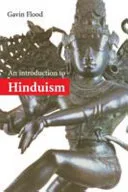
An Introduction to Hinduism
 80
80

An Introduction to Hinduism
Gavin D. Flood's An Introduction to Hinduism offers a solid, if somewhat dry, academic survey of a vast religious tradition. Its strength lies in its comprehensive historical sweep, beginning with the Indus Valley Civilization and tracing the complex evolution through the Vedic period, the rise of major deities, and the emergence of tantric and modern forms. Flood’s dedication to detailing the often-overlooked tantric traditions is commendable, providing a necessary counterpoint to more common devotional studies. However, the book occasionally struggles to convey the lived experience of Hinduism, sometimes feeling like an enumeration of doctrines and historical movements rather than an exploration of spiritual devotion. The discussion of Hinduism as nationalism, while important, could benefit from more nuanced examples. Despite this, it remains a valuable resource for its structured approach and factual depth.
📝 Description
80
Gavin D. Flood's 1996 book traces Hindu traditions from Vedic roots to contemporary expressions.
Gavin D. Flood's An Introduction to Hinduism offers a structured overview of this ancient religion, beginning with its Vedic origins and moving through its diverse historical developments. The book examines the major deities—Vishnu, Shiva, and the Goddess—and their evolving significance within Hindu practice. It considers Hinduism not only as a belief system but also as a cultural and nationalistic force, especially in India. Flood emphasizes understanding the religion through its specific practices and philosophical schools.
This work is suitable for students and general readers new to Hinduism, providing a clear path from its historical beginnings to modern forms. Scholars of religion will find its focus on tantric traditions and thematic organization valuable for comparative studies. Anyone interested in how religion intersects with nationalism or the varied spiritual expressions in India will find this book's scope comprehensive.
While this book focuses on Hinduism broadly, its inclusion of tantric practices places it within a lineage of esoteric traditions that seek direct experience of the divine through ritual and meditation. Tantra, in its various forms, represents a significant strand within Hinduism and Buddhism that emphasizes the body and energy as vehicles for spiritual transformation, often diverging from more orthodox or purely philosophical paths. Flood's attention to these specific traditions allows readers to see how certain esoteric methods are integrated into larger religious frameworks.
💡 Why Read This Book?
• Gain a foundational understanding of Hindu cosmology, including concepts like Brahman and dharma, as presented through Flood's historical tracing from ancient origins. • Explore the often-underrepresented tantric traditions of Hinduism, understanding their specific practices and cosmological significance as detailed in the text. • Grasp the development of major Hindu deities like Vishnu, Shiva, and the Goddess over millennia, seeing how their worship and iconography evolved.
⭐ Reader Reviews
Honest opinions from readers who have explored this book.
❓ Frequently Asked Questions
When was Gavin D. Flood's An Introduction to Hinduism first published?
An Introduction to Hinduism by Gavin D. Flood was first published on July 13, 1996. This edition serves as a foundational text for understanding the religion's historical and thematic development.
What are the main deities discussed in Flood's An Introduction to Hinduism?
The book primarily discusses the major deities of Vishnu, Shiva, and the Goddess (Devi). Flood traces their origins, development, and significance within Hindu traditions from ancient times to the modern era.
Does the book cover tantric traditions within Hinduism?
Yes, An Introduction to Hinduism places significant emphasis on tantric traditions, recognizing their profound influence on various Hindu practices and philosophies. It explores their esoteric aspects and historical impact.
How does Flood present Hinduism in relation to Indian nationalism?
The work examines Hinduism not only as a global religion but also as a form of nationalism. It discusses how religious identity and national identity have become intertwined, particularly within the context of India.
What historical periods does Flood cover in his introduction to Hinduism?
Flood traces Hindu traditions from their ancient origins, through the classical period with major deities, and up to the modern world. This encompasses thousands of years of religious and cultural evolution.
Is this book suitable for beginners to Hinduism?
Absolutely. An Introduction to Hinduism is designed as a thematic and historical overview, making it highly suitable for beginners seeking a structured and comprehensive entry point into the subject.
🔮 Key Themes & Symbolism
Deity Evolution and Worship
The book meticulously details the historical trajectory of key Hindu deities, including Vishnu, Shiva, and the Goddess (Devi). Flood explains how their roles, iconography, and associated mythologies developed over centuries, from early Vedic conceptions to the complex devotional practices seen in the modern era. This theme explores the polycentric nature of Hindu worship and the theological frameworks that allow for the veneration of multiple divine forms as expressions of ultimate reality.
Tantric Traditions and Influence
A significant focus is placed on tantric traditions, often perceived as esoteric or hidden within mainstream Hinduism. Flood highlights their foundational importance, exploring their unique cosmological views, ritual practices, and philosophical underpinnings. This section illuminates how Tantra, with its emphasis on harnessing energy and transcending dualities, has profoundly influenced various Hindu sects, including Shaivism and Shaktism, and its impact on both ascetic and householder spiritual paths.
Hinduism as Cultural Nationalism
Flood examines the intricate relationship between Hinduism and Indian nationalism, presenting the religion as both a global spiritual system and a significant component of national identity. The work discusses how concepts of Hindu identity have been shaped by historical events, colonial encounters, and post-independence political discourse. This theme addresses the complexities of religious practice intertwined with political and cultural belonging in modern India.
Ritual and Practice
The fundamental role of ritual (puja) in Hindu life is underscored throughout the book. Flood emphasizes that for many adherents, religious life is deeply embedded in prescribed actions, ceremonies, and observances rather than solely in abstract belief. This theme explores how rituals serve to connect the mundane and the divine, maintain cosmic order, and facilitate personal spiritual development, reflecting the practical and performative dimensions of Hindu devotion.
💬 Memorable Quotes
Direct passages from the work, attributed to the author.
“Hinduism is discussed as both a global religion and a form of nationalism.”
— This statement captures the dual nature of Hinduism presented in the book: its universal spiritual aspirations and its deep entanglement with the cultural and political identity of India.
“Emphasis is given to the tantric traditions, which have been so influential.”
— This highlights the book's commitment to exploring often-overlooked esoteric lineages within Hinduism, recognizing their significant, pervasive impact on its development and practice.
“Flood traces the development of Hindu traditions from their ancient origins.”
— This points to the book's historical methodology, emphasizing a chronological approach that builds understanding from the earliest discernible roots of Hindu civilization.
“Hindu ritual, which is more fundamental to the life of adherents.”
— This interpretation underscores the book's view of Hindu practice, suggesting that ritualistic observance plays a central, defining role in the lived religious experience of many Hindus.
“The major deities of Visnu, Siva and the Goddess are central to the narrative.”
— This indicates the book's focus on the primary devotional traditions within Hinduism, examining the evolution and significance of these principal figures in Hindu theology and worship.
🌙 Esoteric Significance
Tradition
While not strictly aligned with a single Western esoteric lineage like Hermeticism or Theosophy, Flood's work engages with traditions that have deeply influenced esoteric thought globally. His detailed exploration of Tantra, with its emphasis on subtle body practices, cosmology, and the divine feminine, speaks to currents found in Western magical and mystical traditions that seek direct experience of the divine through embodied practices and altered states.
Symbolism
The book frequently touches upon potent symbols central to Hindu esoteric traditions. For instance, the concept of Kundalini, the coiled serpent energy at the base of the spine, represents dormant spiritual potential, a motif echoed in various yogic and tantric paths. The mandala, a geometric diagram representing the cosmos, serves as a visual tool for meditation and understanding divine order. The divine feminine, embodied by goddesses like Kali or Durga, symbolizes transformative power and the creative force of the universe, often explored in Shaktism.
Modern Relevance
Contemporary thinkers and practitioners interested in embodied spirituality, non-dual philosophies, and the integration of psychology with spiritual practice often draw upon the foundations laid by works like Flood's. Modern yoga and meditation movements, as well as New Age interpretations of Eastern spirituality, frequently reference or are implicitly influenced by the tantric and devotional aspects of Hinduism that Flood elucidates, seeking authentic connections to ancient wisdom traditions.
👥 Who Should Read This Book
• Beginning students of comparative religion seeking a comprehensive, historically grounded introduction to Hinduism's diverse traditions. • Scholars of South Asian studies interested in the interplay between religion, culture, and nationalism in India, particularly post-1996. • Practitioners of yoga and meditation looking to understand the philosophical and historical roots of practices often derived from Hindu tantric and devotional lineages.
📜 Historical Context
Published in 1996, Gavin D. Flood's An Introduction to Hinduism emerged during a period of increasing global interest in Eastern religions, yet also amidst a complex geopolitical landscape where Hinduism was often discussed through the lens of Indian politics and identity. The intellectual currents favored comparative religious studies, moving beyond purely theological examinations to incorporate sociological and historical analyses. Flood's work contributed to this by offering a structured, thematic overview that avoided simplistic portrayals. At the time, scholars like Diana Eck were also producing influential works on Hinduism in its Indian and diasporic contexts, providing a broader scholarly conversation. Flood's emphasis on tantric traditions was particularly notable, as these aspects were frequently marginalized in earlier Western scholarship, which often focused on Vedanta or Bhakti movements. The book's reception was generally positive within academic circles for its comprehensiveness and balanced approach.
📔 Journal Prompts
The concept of Brahman as ultimate reality, explored through its various manifestations.
The historical development of devotion to Vishnu, Shiva, and the Goddess.
The influence and unique characteristics of tantric traditions within Hinduism.
The relationship between Hindu religious identity and Indian nationalism.
The fundamental role of Hindu ritual (puja) in daily life.
🗂️ Glossary
Brahman
The ultimate, unchanging reality or absolute consciousness in Hinduism. It is the source and substance of all existence, often described as formless, infinite, and eternal.
Dharma
A many-sided concept encompassing duty, righteousness, law, ethics, and the natural order of the universe. It guides an individual's actions and responsibilities within their social and cosmic context.
Karma
The principle of cause and effect, where actions (karma) generate consequences that influence an individual's present and future lives. It is a fundamental concept driving the cycle of rebirth (samsara).
Moksha
Liberation or release from the cycle of birth, death, and rebirth (samsara). It is considered the ultimate goal of spiritual practice in Hinduism, leading to union with the divine or ultimate reality.
Tantra
A complex set of esoteric traditions emphasizing ritual, meditation, yoga, and the use of mantras and visualizations to achieve spiritual realization, often involving the veneration of the divine feminine.
Puja
Hindu ritual worship, typically involving offerings, prayers, and recitations performed in a home shrine or temple to honor deities and seek their blessings.
Samsara
The continuous cycle of birth, death, and reincarnation, driven by karma. Liberation from this cycle (moksha) is a primary spiritual objective.