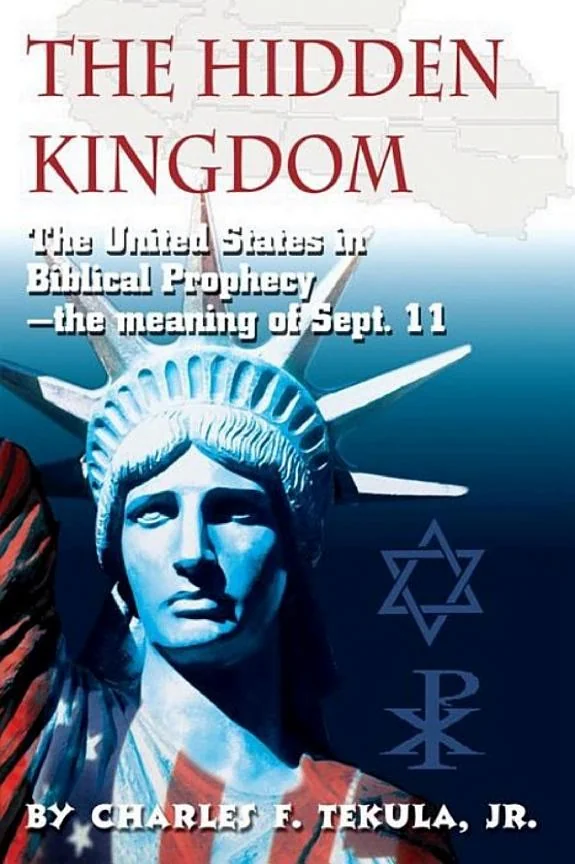
The Hidden Kingdom
 75
75

The Hidden Kingdom
Charles F. Tekula Jr.'s *The Hidden Kingdom* offers a bold, if unconventional, reading of biblical prophecy, particularly concerning Abraham's lineage and its modern implications. The author's personal journey from atheism lends a certain gravitas to his detailed exposition of Old Testament prophetic texts. His focus on the "company of nations" and the inheritance of Abraham's descendants is meticulously argued, drawing connections that are both surprising and, for some, potentially persuasive. The work shines when it dissects the specific promises made to Abraham and traces their prophetic trajectory. However, the book's singular focus on identifying a specific modern nation with these prophecies can feel exclusive, potentially overlooking the broader spiritual or universal applications of the texts. The strength lies in its deep dive into textual interpretation, but its limitation is the definitive pronouncements made on a subject inherently open to diverse theological understanding. Tekula's analysis of Joseph's inheritance stands as a significant point of discussion within the text.
📝 Description
75
Charles F. Tekula Jr.'s 2002 book reinterprets biblical narratives concerning Abraham's lineage.
Published in 2002, The Hidden Kingdom offers a unique exegesis of biblical accounts, with a particular focus on the descendants of Abraham. Charles F. Tekula Jr., who identifies as a former atheist, approaches the Old Testament with a perspective that departs from conventional Christian interpretations. The work reexamines prophetic passages, especially those discussing a "company of nations" and their promised inheritance.
This book is intended for readers interested in theological interpretations that differ from mainstream Christian readings of scripture. Individuals engaged with comparative religion, biblical prophecy, or alternative scriptural analyses will find Tekula's arguments noteworthy. It is especially relevant for those seeking to understand the historical and prophetic significance assigned to specific geopolitical entities within biblical frameworks.
Tekula's work aligns with a strain of biblical scholarship that seeks to identify modern populations with ancient Israelite tribes or prophetic promises. This interpretive method gained currency in various spiritual and historical circles during the 20th century, often connected to eschatological thought. The early 2000s saw continued interest in such readings, which bridged academic biblical studies with non-traditional theological perspectives.
💡 Why Read This Book?
• Gain a unique perspective on biblical prophecy by examining Tekula's exegesis of the "company of nations" prophecy, directly challenging conventional interpretations of Abraham's legacy. • Understand the specific prophetic lineage traced from Abraham through Jacob's son Joseph, as detailed in the book's analysis of Old Testament prophets. • Explore the author's personal journey from atheism to his present theological viewpoint, offering a distinct lens through which to analyze scripture and its perceived historical unfolding.
⭐ Reader Reviews
Honest opinions from readers who have explored this book.
❓ Frequently Asked Questions
What is the core argument of Charles F. Tekula Jr.'s 'The Hidden Kingdom' regarding biblical prophecy?
The book argues that specific Old Testament prophecies, particularly those concerning Abraham's lineage and a "company of nations," point to a designated modern nation, which the author identifies as the United States, as the inheritor of these blessings.
Who is Charles F. Tekula Jr. and what is his background?
Charles F. Tekula Jr. is the author of 'The Hidden Kingdom.' He identifies himself as a former atheist who developed a deep engagement with biblical studies, bringing a unique perspective to his interpretations of prophetic texts.
What biblical figures and narratives are central to 'The Hidden Kingdom'?
The book centers on the biblical figures of Abraham, Jacob, and his favorite son Joseph. It extensively explores the prophetic legacy passed down through these patriarchs and the Old Testament prophets.
What does the term 'company of nations' refer to in the context of this book?
In 'The Hidden Kingdom,' the 'company of nations' refers to a group of peoples blessed by God, whose inheritance is prophesied in the Old Testament. Tekula specifically links this prophecy to the descendants of Joseph.
When was 'The Hidden Kingdom' first published?
'The Hidden Kingdom' by Charles F. Tekula Jr. was first published on April 9, 2002.
Does the book offer a new interpretation of Joseph's inheritance?
Yes, Tekula's work offers a specific interpretation of Joseph's inheritance, positing that it is directly linked to the prophetic promises made to Abraham and passed down through Jacob and Joseph, identifying a particular modern nation.
🔮 Key Themes & Symbolism
Abrahamic Covenant and Inheritance
This theme examines the foundational promises made to Abraham and their subsequent transmission through his descendants. Tekula traces the covenant from Abraham to Isaac, then to Jacob, and specifically focuses on Jacob's favorite son, Joseph. The work examines how these promises of blessing, land, and a 'company of nations' are interpreted as a direct inheritance, culminating in a specific modern geopolitical entity.
Prophetic Legacy and Future Nations
The book engages with the pronouncements of Old Testament prophets, seeking to decode their visions of future blessings and national destinies. Tekula's interpretation centers on identifying the recipients of these prophecies, particularly the 'company of nations' and the descendants of Joseph. This theme explores how prophetic language is applied to understand the historical and divine role of specific peoples in later ages.
Reinterpretation of Scripture
Tekula's approach represents a significant reinterpretation of biblical texts, informed by his background as a former atheist. The work challenges conventional readings by positing a literal, identifiable fulfillment of ancient prophecies in contemporary times. It highlights a method of biblical exegesis that seeks to uncover hidden meanings and direct applications of scripture to modern contexts.
The Role of Joseph's Descendants
A central pillar of the book is the elevated status attributed to Joseph and his descendants. Tekula argues that Joseph, as the favorite son, received a distinct and paramount inheritance. This theme explores the biblical narratives surrounding Joseph, focusing on how his lineage is presented as uniquely favored and destined to lead the prophesied 'company of nations'.
💬 Memorable Quotes
Direct passages from the work, attributed to the author.
“The Old Testament prophets pointed to a 'company of nations' richly blessed in every way as the last days abode of the descendants of Joseph.”
— This statement captures the book's core thesis, identifying a specific group of people descended from Joseph who are prophesied to receive immense blessings in the end times. It sets the stage for Tekula's argument about the identification of this group.
“Jacob, grandson and chosen heir to Abraham, passed down a prophetic legacy from father to son.”
— This highlights the theme of lineage and inheritance within the biblical narrative. It emphasizes the continuity of divine promises and the importance of genealogical succession in the unfolding of God's plan as presented by Tekula.
“Tekula follows the story of Abraham and his prophetic legacy handed down from father to son.”
— This describes the narrative structure of the book, focusing on the genealogical and spiritual continuity of Abraham's covenant. It indicates a systematic tracing of divine promises through patriarchal lines.
💡 Key Ideas
Editorial paraphrase of the work's core concepts — not direct quotes.
The author has uncovered for us the eminently prominent place the United States occupies in the...
This paraphrased excerpt points to Tekula's specific identification of a modern nation, the United States, as holding a significant role in biblical prophecy. It suggests the book provides evidence or reasoning for this assertion.
The Hidden Kingdom is an insightfully rich Biblical exploration by ex-atheist Charles F. Tekula, Jr.
This quote introduces the author and the nature of his work, emphasizing the depth of his biblical exploration and the unique perspective he brings due to his personal history with atheism.
🌙 Esoteric Significance
Tradition
While not strictly adhering to a defined esoteric lineage like Kabbalah or Hermeticism, *The Hidden Kingdom* draws heavily on interpretive traditions that seek hidden, literal meanings within sacred texts. It aligns with forms of Christian Identity or dispensationalist thought that emphasize a direct, providential hand of God in the formation and destiny of specific nations, particularly those of Western European descent.
Symbolism
The primary symbolic motif is the 'company of nations,' representing a divinely appointed collective destined for blessing and prominence. The lineage from Abraham, through Jacob and Joseph, functions symbolically as a conduit for divine promises and authority. The 'kingdom' itself, as a hidden entity in prophecy, symbolizes a future state of divinely ordained power and prosperity awaiting its rightful inheritors.
Modern Relevance
Contemporary readers interested in alternative interpretations of prophecy, national destiny, and the intersection of faith and geopolitics may find resonance in Tekula's work. It appeals to those seeking to connect ancient biblical narratives with modern world events and the perceived roles of specific nations, particularly within circles that explore theological interpretations of history and eschatology.
👥 Who Should Read This Book
• Students of comparative prophecy: Readers interested in how biblical prophecies have been interpreted across different eras and by various groups seeking to identify literal fulfillments. • Theological history enthusiasts: Individuals who enjoy exploring the development of specific theological viewpoints and the historical contexts that shaped them. • Critical biblical interpreters: Those who wish to examine detailed arguments for alternative readings of scripture and engage with texts that challenge conventional exegesis.
📜 Historical Context
Published in 2002, Charles F. Tekula Jr.'s *The Hidden Kingdom* emerged during a period where interest in biblical prophecy and its potential modern applications remained strong, particularly within certain evangelical and independent study circles. This era saw a continuation of movements that sought to identify biblical peoples with contemporary nations, a tradition that has roots stretching back to the 19th century and figures like John Wilson, who wrote extensively on the descendants of Abraham. Tekula’s work can be seen as part of this ongoing discourse, offering a specific interpretation that diverges from mainstream historical-critical biblical scholarship. While not directly engaging with academic debates in the manner of scholars like N.T. Wright, who was active in the same period discussing the historical context of the New Testament, Tekula's book spoke to a readership interested in eschatological fulfillment and the perceived historical significance of nations like the United States within a divine plan.
📔 Journal Prompts
The 'company of nations' as described by Tekula: What modern parallels do you perceive, if any?
Jacob's legacy to Joseph: Reflect on the significance of this specific inheritance within the broader biblical narrative.
The ex-atheist perspective: How might a journey from atheism inform an interpretation of religious texts?
Abraham's prophetic legacy: Trace the transmission of promises through the patriarchal line as presented in the book.
The identification of the United States: Analyze the evidence presented for this specific interpretation of biblical prophecy.
🗂️ Glossary
Company of Nations
A term used in biblical prophecy, interpreted by Tekula to refer to a specific group of peoples, descendants of Joseph, destined for divine blessing and prominence in the latter days.
Abrahamic Legacy
The divine promises, covenants, and blessings originally bestowed upon Abraham and subsequently passed down through his chosen lineage, particularly Isaac and Jacob.
Prophetic Succession
The concept of divine messages, mandates, and destinies being passed from one generation to the next within a chosen family or people, as seen in the lineage from Abraham.
Joseph's Inheritance
The specific portion and blessing attributed to Joseph, Jacob's favorite son, which Tekula argues holds particular prophetic significance for a future 'company of nations'.
Exegesis
Critical explanation or interpretation of a text, especially of scripture. Tekula's work provides a specific form of biblical exegesis.
Old Testament Prophets
Biblical figures who conveyed divine messages, often including prophecies about future events, national destinies, and the coming of a Messiah.
Chosen Heir
An individual designated to receive significant inheritance, blessings, or authority, often within a spiritual or familial lineage, as exemplified by Jacob's relationship to Abraham.
This book appears in 1 collection
🔮 Readers Also Liked
Browse all →








From the “Biblical Prophecy” Collection
View all →






More Free Sacred Texts & Gnosticism Books
View all →