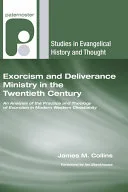
Exorcism and Deliverance Ministry in the Twentieth Century
 71
71

Exorcism and Deliverance Ministry in the Twentieth Century
Collins’s "Exorcism and Deliverance Ministry in the Twentieth Century" offers a refreshingly academic perspective on a subject often relegated to sensationalism. The book’s strength lies in its meticulous charting of the 20th-century lifecycle of these ministries, particularly within the Charismatic and Evangelical Fundamentalist settings. Collins’s application of John Knox’s theories of Christian enthusiasm provides a robust analytical framework, moving beyond mere description to explore the underlying spiritual dynamics. One particularly insightful section details the creeping routinisation of these practices by the century’s end, illustrating how fervent spiritual movements tend towards institutionalization. While the work is thoroughly researched, its dense academic prose might prove challenging for readers seeking a more accessible overview. Nevertheless, it stands as a significant contribution to the study of religious practice in the modern era.
📝 Description
71
James M. Collins's 2017 book examines exorcism and deliverance ministries in the 20th century.
James M. Collins's study, "Exorcism and Deliverance Ministry in the Twentieth Century," investigates the development and nature of these spiritual practices. Collins argues that exorcism and deliverance are fundamentally enthusiastic activities, drawing parallels to John Knox's work on Christian enthusiasm. The book frames the 20th century as a crucial period, charting the path of these ministries from their early stages through their peak in the 1970s and 80s, to their eventual institutionalization by the century's end.
The work focuses on two religious settings where these practices were prominent: the Charismatic movement and Evangelical Fundamentalism. Collins analyzes how the theological beliefs and community structures within these groups influenced the performance and acceptance of exorcism and deliverance rituals. He traces the growth of these ministries within these specific communities, noting the theological and social factors that spurred their expansion and eventual routinization.
Collins views the 20th century as a complete lifecycle for modern exorcism and deliverance ministries. From experimental beginnings, characterized by intense spiritual experiences, to more structured forms later in the century, the book maps this progression. The study considers how societal changes and theological shifts affected these practices, showing a clear movement from fervent spiritual expressions to more formalized institutional approaches by the close of the period.
This book fits within the esoteric tradition by examining practices often on the fringes of mainstream religious discourse. While focusing on specific Christian denominations, it probes the psychological and spiritual phenomena associated with belief in possession and spiritual warfare. The study's application of historical concepts like 'enthusiasm' to understand these phenomena connects it to broader discussions within the history of religion and consciousness, areas often explored in esoteric scholarship.
💡 Why Read This Book?
• Gain an understanding of the 20th-century lifecycle of exorcism and deliverance ministries, tracing their development from infancy to routinisation, as detailed in the book's chronological analysis. • Explore the concept of Christian 'enthusiasm' as applied by John Knox, offering a unique analytical lens to understand the fervent spiritual practices examined by Collins. • Analyze the specific impact of Charismatic and Evangelical Fundamentalist settings on the evolution of these ministries, providing concrete examples of how religious communities shape spiritual rites.
⭐ Reader Reviews
Honest opinions from readers who have explored this book.
❓ Frequently Asked Questions
What is the primary argument of James M. Collins's book?
The book argues that exorcism and deliverance ministries are inherently enthusiastic practices, tracing their lifecycle throughout the 20th century within specific religious movements like the Charismatic and Evangelical Fundamentalist traditions.
Which historical period does the book focus on?
The book specifically examines the 20th century, viewing it as a complete lifecycle for modern exorcism and deliverance ministries, from their early decades to their routinisation by the century's end.
What theoretical framework does Collins use?
Collins employs John Knox's classic study of Christian enthusiasm as an analytical framework to understand the nature and evolution of exorcism and deliverance ministries.
What are the two main religious settings discussed?
The study focuses on two enthusiastic settings: the Charismatic movement and Evangelical Fundamentalist circles, analyzing how these contexts shaped the practice of exorcism and deliverance.
When was this book first published?
"Exorcism and Deliverance Ministry in the Twentieth Century" by James M. Collins was first published on November 10, 2009.
What does 'creeping routinisation' refer to in the book?
It refers to the process by which fervent, enthusiastic spiritual practices like exorcism and deliverance become more formalized, institutionalized, and less spontaneous towards the end of the 20th century.
🔮 Key Themes & Symbolism
The Lifecycle of Ritual
The work meticulously traces the 'complete lifecycle' of exorcism and deliverance ministries throughout the 20th century. Collins details their emergence in the early decades, their peak influence during the 1970s and 80s, and the subsequent 'creeping routinisation' that characterized their later years. This arc demonstrates how spiritual fervor, initially spontaneous, often evolves into more structured and institutionalized forms of practice over time.
Christian Enthusiasm
Central to Collins's analysis is John Knox’s concept of Christian enthusiasm. The book posits that exorcism and deliverance are inherently enthusiastic practices, driven by intense spiritual experiences and fervor. By applying this framework, Collins examines the underlying motivations and communal dynamics that fuel these ministries, distinguishing them from more quiescent forms of religious expression.
Contextualizing Practice
The study emphasizes the critical role of specific religious settings in shaping these ministries. Collins focuses on the Charismatic and Evangelical Fundamentalist movements as key arenas where exorcism and deliverance flourished. This contextualization highlights how theological doctrines, community structures, and prevailing spiritual climates influence the performance and interpretation of these rites.
From Fervor to Form
A key theme is the transition from intense, often unmediated spiritual experiences to more organized and routinised forms of ministry. The book illustrates how the raw energy of early deliverance efforts gradually gave way to established procedures and institutional frameworks by the close of the 20th century, reflecting broader trends in religious institutionalization.
💬 Memorable Quotes
Direct passages from the work, attributed to the author.
“Exorcism/deliverance ministry is an innately enthusiastic practice”
— This foundational statement suggests that the core of these ministries lies not just in ritual, but in a fervent, spiritually charged experience and expression that defines their character.
“The twentieth century provides an ideal arena for such a study”
— Collins highlights the 20th century as a unique historical period allowing for a comprehensive examination of the rise, peak, and institutionalization of modern exorcism and deliverance practices.
“from its infancy during the early decades, through its heyday in the 1970s and 80s, on to creeping routinisation by the end of the century”
— This phrase captures the book's central thesis regarding the developmental arc of these ministries over a hundred-year span, marking distinct phases of growth and eventual formalization.
“Two enthusiastic settings, Charismatic and Evangelical Fundamentalist, are identified”
— This indicates the specific religious milieux Collins analyzes, pinpointing the key movements where the phenomenon of 20th-century exorcism and deliverance ministry was most prominent and observable.
“utilizing John Knox's classic study of Christian enthusiasm”
— This points to the core analytical tool Collins employs, framing his study within a historical and theological discourse on fervent religious experiences and movements.
🌙 Esoteric Significance
Tradition
While not strictly esoteric in the Hermetic or Kabbalistic sense, the work engages with practices that touch upon the fringes of mainstream religion and often intersect with folk magic and spiritual warfare traditions. It examines how organized religious structures adapt and incorporate what can be considered 'enthusiastic' or ecstatic elements, which often carry esoteric undertones of direct spiritual intervention and supernatural engagement.
Symbolism
The concept of 'enthusiasm' itself functions as a symbolic representation of direct, unmediated divine or spiritual power breaking into the material world. The act of exorcism and deliverance can be seen as symbolic rituals of purification and reclamation, where the practitioner acts as an agent to restore divine order against perceived spiritual corruption or possession.
Modern Relevance
Contemporary interest in spiritual warfare, deliverance ministries within various Pentecostal and Charismatic denominations, and even certain sub-genres of occult literature dealing with psychic cleansing or spiritual protection, can trace roots or parallels to the phenomena Collins examines. Thinkers and practitioners focusing on the sociology of religion and the psychology of belief continue to find value in his analysis of institutionalized fervor.
👥 Who Should Read This Book
• Students of religious history and sociology: To understand the institutional development and social dynamics of 20th-century spiritual ministries. • Researchers of Pentecostalism and Charismatic movements: To analyze the specific role of exorcism and deliverance within these influential religious traditions. • Scholars of John Knox: To see a modern application of his theories on Christian enthusiasm to contemporary religious practices.
📜 Historical Context
Published in 2009, James M. Collins's work arrived during a period of renewed academic and popular interest in religious phenomena, including spiritual warfare and deliverance ministries, which had seen a resurgence in the late 20th century. The intellectual currents of the time included sociological studies of religious movements and theological analyses of lived religious experience. Collins's study engaged with the broader discourse on religious revivalism and the sociology of charismatic movements, situating his work within traditions that explored ecstatic religious states. While not directly engaging in polemics, his academic framing offered a counterpoint to purely sensationalist accounts. He draws heavily on John Knox's work, implicitly placing his study in dialogue with historical analyses of religious fervor that predate the 20th century. The specific reception of Collins's work within academic circles would likely involve comparisons to earlier sociological studies of Pentecostalism and Charismatic Christianity.
📔 Journal Prompts
The 'creeping routinisation' of enthusiastic ministries by the end of the 20th century.
John Knox's concept of Christian enthusiasm as applied to exorcism.
The lifecycle of exorcism and deliverance ministries in the 20th century.
Distinctive features of Charismatic versus Evangelical Fundamentalist deliverance practices.
The relationship between fervent spiritual experience and institutionalization.
🗂️ Glossary
Exorcism
A religious or spiritual practice aimed at expelling or banishing demonic spirits or other malevolent supernatural entities from a person or place.
Deliverance Ministry
A broader term encompassing practices intended to free individuals from spiritual bondage, demonic influence, or other forms of supernatural oppression, often involving prayer, counseling, and spiritual authority.
Christian Enthusiasm
A concept, notably studied by John Knox, referring to fervent, zealous, and sometimes ecstatic religious experiences and expressions within Christianity, often associated with revival movements.
Charismatic Movement
A movement within Protestant Christianity emphasizing the experience of the Holy Spirit, often including spiritual gifts such as speaking in tongues, prophecy, and divine healing.
Evangelical Fundamentalism
A conservative Protestant movement emphasizing the literal interpretation of the Bible, the necessity of personal conversion, and evangelism, often with a strong stance against theological modernism.
Routinisation
In sociology, the process by which charismatic or spontaneous forms of action and organization become more formalized, institutionalized, and governed by rules and procedures.
Lifecycle
The distinct stages of development and change that a phenomenon, such as a religious ministry, undergoes from its inception to its eventual decline or transformation.