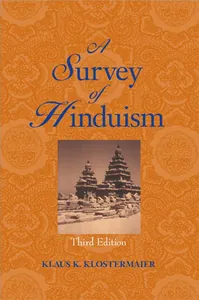
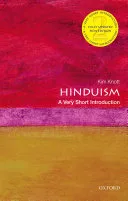
Hinduism: A Very Short Introduction
 71
71

Hinduism: A Very Short Introduction
Kim Knott’s "Hinduism: A Very Short Introduction" succeeds admirably in its stated aim: to provide a succinct and authoritative overview. Unlike many superficial treatments, Knott avoids sensationalism, instead presenting a grounded analysis of the religion's core preoccupations. The section detailing the centrality of the Veda as religious texts, for instance, offers a much-needed clarification for those unfamiliar with Hindu scripture. However, the book’s brevity, while a strength for accessibility, sometimes feels like a limitation; the nuances of regional variations in Hindu practice are necessarily condensed. One particularly insightful passage discusses the transmission of divine truths through gurus and storytellers, highlighting a vital aspect of Hindu pedagogy. The work is a valuable primer, though readers seeking deep theological exploration might need to look further.
📝 Description
71
Kim Knott's 2000 book offers a concise overview of Hinduism for a general audience.
Kim Knott's "Hinduism: A Very Short Introduction" aims to clarify the core tenets of a religion practiced by over a billion people. It acknowledges the vast diversity within Hinduism, recognizing that no single narrative can fully capture its scope. The book seeks to provide clarity on fundamental structures and beliefs for readers new to the subject, whether they are students or simply curious individuals. It is also useful for travelers preparing for visits to India or scholars needing a quick reference.
Knott places Hinduism within its historical development, tracing its origins and evolution. The work notes the influence of ancient Vedic traditions and the later formation of diverse schools of thought. It touches upon the historical role of social structures and religious authorities in shaping Hindu identity. The book introduces key concepts like dharma, karma, samsara, and moksha. It discusses the significance of deities, the role of scriptures such as the Vedas and Upanishads, and the various paths to spiritual realization. The analysis also considers how these traditions engage with modernity.
While this book is an introduction to Hinduism, it touches upon concepts often explored in esoteric traditions, such as the cycle of rebirth (samsara) and the pursuit of liberation (moksha). It also references ancient scriptures like the Vedas and Upanishads, which are foundational texts for many spiritual paths. By detailing the diverse schools of thought and practices within Hinduism, it indirectly highlights the varied approaches to understanding the divine and human consciousness that resonate with esoteric interests.
💡 Why Read This Book?
• Gain a foundational understanding of dharma and karma, concepts central to Hindu philosophy, as presented in Chapter 3, allowing you to grasp the ethical framework guiding millions. • Understand the historical significance of the Vedas and Upanishads, as discussed in Chapter 2, providing context for the origins and evolution of Hindu scripture. • Explore the challenges Hinduism faces in the twenty-first century, a key focus of Chapter 5, offering insights into how ancient traditions adapt to contemporary global contexts.
⭐ Reader Reviews
Honest opinions from readers who have explored this book.
❓ Frequently Asked Questions
What are the primary scriptures of Hinduism discussed in "Hinduism: A Very Short Introduction"?
The book highlights the Vedas as central religious texts, along with the Upanishads, which explore philosophical concepts. It acknowledges the vast body of scripture and oral traditions that inform Hindu practice.
How does Kim Knott explain the concept of karma in Hinduism?
Knott explains karma as the principle of action and consequence, where one's deeds influence their present and future lives within the cycle of samsara. This is a core concept for understanding Hindu ethics and rebirth.
What role do gurus play in Hinduism according to the book?
The book discusses gurus as spiritual teachers who play a vital role in transmitting divine truths and guiding disciples. Their authority and influence are presented as significant in the dissemination of Hindu traditions.
When was "Hinduism: A Very Short Introduction" by Kim Knott first published?
The first edition of "Hinduism: A Very Short Introduction" by Kim Knott was published on February 25, 2016.
Does the book cover Hinduism outside of India?
Yes, the book notes that Hinduism is practiced by seventy million people outside India, indicating a global reach and diaspora communities that maintain its traditions.
What are some of the challenges facing Hinduism in the 21st century as analyzed by Knott?
Knott analyzes challenges such as adapting to modernity, globalization, and maintaining tradition amidst social change. The book touches on how these factors impact the practice and understanding of Hinduism today.
🔮 Key Themes & Symbolism
Vedic Tradition and Authority
The work meticulously details the foundational role of the Vedas in Hinduism, presenting them not merely as ancient texts but as a living source of spiritual authority. Knott examines how the Veda's hymns and rituals, transmitted through generations, continue to shape theological discourse and practice. This exploration looks at the concept of Shruti (that which is heard) and its enduring significance, offering a clear perspective on the hierarchical structure of Hindu scripture and its influence on Brahminical traditions.
Paths to Liberation (Moksha)
Knott outlines the diverse philosophical pathways Hindus pursue to achieve moksha, the ultimate spiritual liberation. This includes the paths of knowledge (Jnana Yoga), devotion (Bhakti Yoga), action (Karma Yoga), and meditation (Raja Yoga). The book clarifies how these distinct yet often interwoven disciplines provide frameworks for individuals to transcend the cycle of samsara and attain union with the divine, reflecting the complex nature of Hindu soteriology.
Hinduism in the Modern World
A significant portion of the book addresses the dynamic interplay between traditional Hindu practices and the forces of modernity. Knott analyzes how globalization, secularism, and interfaith dialogue present both challenges and opportunities for contemporary Hinduism. The work critically examines the evolution of Hindu identity and the ways in which diaspora communities and reform movements are reshaping its expression in the 21st century.
Transmission of Knowledge
The book emphasizes the crucial role of oral traditions, gurus, and storytellers in the preservation and dissemination of Hindu teachings. It illustrates how divine truths are conveyed through narrative, myth, and direct spiritual guidance, moving beyond a purely textual understanding. This highlights the performative and relational aspects of Hindu pedagogy, where wisdom is often imparted through lived experience and community engagement.
💬 Memorable Quotes
Direct passages from the work, attributed to the author.
“The centrality of the Veda as religious texts”
— This phrase underscores the foundational position of the Vedas within the Hindu religious framework, indicating their role as the ultimate source of doctrine and ritual for many traditions.
“The role of Brahmins, gurus, and storytellers”
— This highlights the key figures and methods through which Hindu spiritual knowledge and traditions have been historically transmitted and maintained across generations.
“Hinduism is practised by nearly eighty per cent of India's population”
— This statistic provides a clear demographic context for the religion's scale and its deep integration into the cultural fabric of its primary homeland.
“Seventy million people outside India”
— This figure illustrates the significant global reach of Hinduism, demonstrating its presence and practice within diaspora communities worldwide.
“Analyses the challenges facing it in the twenty-first century”
— This points to the book's forward-looking perspective, acknowledging that Hinduism, like any major tradition, must engage with contemporary issues and adapt to evolving societal landscapes.
🌙 Esoteric Significance
Tradition
While "Hinduism: A Very Short Introduction" is primarily an academic overview rather than an esoteric text, it serves as a crucial gateway for those approaching Hinduism from Western esoteric lineages (Hermeticism, Theosophy, etc.). It provides the foundational knowledge of concepts like karma, dharma, and moksha, which often find parallels or reinterpretations within these traditions. The book grounds esoteric students in the source material, distinguishing between scholarly understanding and devotional or speculative interpretations.
Symbolism
The book touches upon significant Hindu symbolism, such as the concept of Brahman (the ultimate reality) and Atman (the individual soul), often explored through the lens of the Upanishads. The cyclical nature of samsara, represented by the Wheel of Samsara, is also implicitly discussed. These concepts, while presented factually, carry deep symbolic weight for esoteric practitioners seeking understanding of cosmic order and individual spiritual progression.
Modern Relevance
Contemporary thinkers and practitioners within yoga studies, mindfulness, and comparative spirituality frequently draw upon the foundational principles outlined in works like Knott's. The book's accessible explanation of karma and dharma informs modern ethical frameworks and personal development practices. It provides a scholarly reference point for understanding the roots of concepts that have become popularized in Western wellness and spiritual movements.
👥 Who Should Read This Book
• Beginning students of comparative religion seeking a reliable, concise introduction to one of the world's major faiths, to build a solid academic foundation. • Individuals interested in the philosophical underpinnings of practices like yoga and meditation, wanting to understand their historical and textual origins within Hinduism. • Travelers or expatriates planning to visit or reside in India, needing a cultural and religious primer to work through the societal landscape with greater awareness.
📜 Historical Context
Kim Knott's "Hinduism: A Very Short Introduction," first published in 2016, arrived at a time when global religious studies were increasingly focused on nuanced, accessible overviews. The work emerged within the Oxford University Press 'Very Short Introductions' series, known for its concise yet authoritative treatments of complex subjects. This series often engages with established academic discourse while aiming for a broad readership, distinct from more esoteric or theological publications. Knott's approach situates Hinduism within its vast historical trajectory, acknowledging the scholarly debates surrounding its origins and development, particularly concerning the Aryan migration theory and the dating of Vedic texts. While not directly engaging with, for instance, the writings of prominent Indologists like Wendy Doniger or the historical reception of Swami Vivekananda's teachings in the West during the late 19th century, Knott’s work implicitly builds upon decades of academic scholarship. The book's reception within the series suggests an academic validation of its clarity and accuracy for introductory purposes.
📔 Journal Prompts
The Vedas as foundational religious texts: Initial impressions and perceived authority.
Dharma and Karma: How might these concepts influence daily decision-making?
The role of gurus and storytellers in knowledge transmission.
Hinduism's adaptation to the 21st century: Areas of perceived strength and vulnerability.
The concept of Samsara: Personal reflections on cyclical existence.
🗂️ Glossary
Veda
The oldest and most authoritative scriptures in Hinduism, considered to be divinely revealed (Shruti). They contain hymns, rituals, and philosophical insights.
Brahmin
Traditionally, a member of the priestly varna (social class) in Hinduism, often associated with Vedic scholarship, ritual, and teaching.
Guru
A spiritual teacher or master in Hinduism, respected for their wisdom and guidance in leading disciples toward spiritual realization.
Dharma
A complex concept encompassing duty, righteousness, law, ethics, and the natural order of the universe. It guides individual conduct and societal structure.
Karma
The principle of cause and effect, where actions (karma) lead to consequences that shape an individual's present and future lives within the cycle of rebirth.
Samsara
The continuous cycle of birth, death, and rebirth, driven by karma. Liberation (moksha) from this cycle is a primary goal in Hinduism.
Moksha
Liberation or release from the cycle of samsara. It represents the ultimate spiritual goal in many Hindu traditions, signifying union with the divine or ultimate reality.