A Still, Small Voice
 84
84

A Still, Small Voice
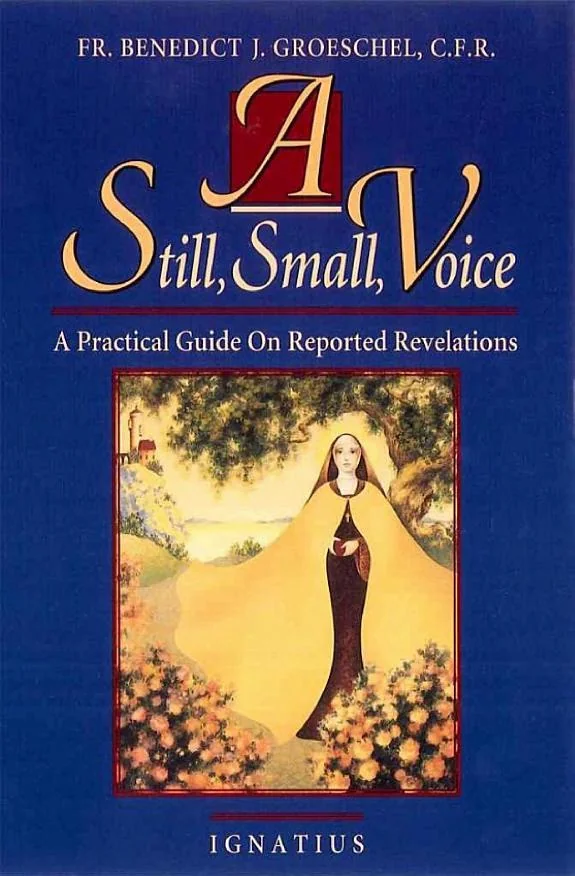
Father Groeschel’s 1993 examination of private revelations, *A Still, Small Voice*, is a commendably sober treatment of a subject often rife with credulity and sensationalism. He brings a psychologist’s eye to the fervent reports of visions and divine communications that capture public imagination. His strength lies in grounding the discussion in practical discernment, urging readers toward theological fidelity and psychological self-awareness rather than immediate acceptance of extraordinary claims. A notable passage details the potential for spiritual discernment to be clouded by personal desires or group dynamics, a point Groeschel makes with clinical precision. However, the book occasionally leans into a more institutional perspective, which may feel restrictive to those exploring less orthodox spiritualities. Despite this, Groeschel offers a vital, reasoned voice for anyone attempting to navigate the complex terrain of religious experience and claimed supernatural encounters.
📝 Description
84
Benedict J. Groeschel's 1993 book A Still, Small Voice examines private revelations and religious phenomena.
Published in 1993, A Still, Small Voice by Benedict J. Groeschel offers a practical method for understanding private revelations and extraordinary religious phenomena. The book serves as a guide for individuals who encounter or investigate claims of visions, apparitions, and other purported supernatural experiences in a religious setting. It addresses a wide audience, including those studying religious phenomena, people trying to discern the authenticity of spiritual experiences, and theological scholars. It also speaks to the public's interest in events like those reported from Medjugorje and broader New Age spiritualities.
Groeschel's work appeared during a time of significant public interest in alleged miracles and private revelations, with Medjugorje reports being a notable example. This period also saw the growth of New Age movements that often incorporated or reinterpreted aspects of traditional religious experience. Groeschel's text supplied a needed framework for critical assessment, aiming to separate genuine spiritual insight from psychological or cultural projections. This discussion echoes earlier philosophical work on mystical experience, such as that by Jacques Maritain.
This book engages with the Christian tradition's long history of mysticism and contemplative experience. It addresses the phenomenon of private revelation, a concept explored within various religious traditions, but specifically within Catholicism in Groeschel's context. The work navigates the challenge of distinguishing genuine divine communication from psychological states or historical interpretations, a perennial concern for mystics and theologians. It situates such experiences within established theological frameworks, seeking to provide a balanced approach to understanding extraordinary spiritual encounters.
💡 Why Read This Book?
• Gain practical criteria for discerning authentic spiritual experiences from psychological phenomena, drawing directly from Groeschel's framework for evaluating private revelations, a concept explored extensively in the book. • Understand the historical and psychological factors that contribute to reported visions and apparitions, providing context beyond the specific events of the 1990s, such as those from Medjugorje. • Develop a balanced perspective on religious phenomena, learning to integrate personal spiritual encounters with established theological principles, as advocated in Groeschel's balanced approach to discernment.
⭐ Reader Reviews
Honest opinions from readers who have explored this book.
❓ Frequently Asked Questions
What is the primary focus of Benedict J. Groeschel's 'A Still, Small Voice'?
The book's primary focus is on providing a practical guide for understanding and discerning private revelations, visions, and other extraordinary religious phenomena that were prevalent in the early 1990s.
Who is Benedict J. Groeschel?
Benedict J. Groeschel was a respected author, psychologist, spiritual director, and leader in religious renewal, known for his practical approach to spiritual life and psychological integration.
When was 'A Still, Small Voice' first published?
The book was first published in 1993, a period marked by significant public interest in reported miracles and apparitions.
What kind of phenomena does the book discuss?
It discusses phenomena such as reported visions, apparitions, locutions (inner voices), and other extraordinary religious experiences that individuals claim to have encountered.
Is this book for people who have experienced visions?
Yes, it is designed for anyone interested in private revelations, whether they are experiencing such phenomena themselves, investigating them, or studying them from a theological or psychological standpoint.
What distinguishes Groeschel's approach in this book?
Groeschel's approach is distinguished by its blend of psychological insight and theological grounding, offering a balanced and practical method for discernment, moving beyond mere sensationalism.
🔮 Key Themes & Symbolism
Discernment of Private Revelations
The core of Groeschel's work lies in establishing principles for discerning the authenticity of private revelations. He moves beyond simplistic acceptance or rejection, advocating for a rigorous examination based on theological soundness, psychological integration, and observable fruits in the recipient's life. This theme addresses the widespread interest in phenomena like those from Medjugorje, providing a framework to evaluate such claims critically and responsibly.
Psychology of Religious Experience
Groeschel, a psychologist, emphasizes the interplay between psychological states and religious experiences. He explores how internal factors—desires, anxieties, cultural conditioning—can shape or even manifest as perceived supernatural events. This perspective is crucial for differentiating genuine spiritual input from subjective psychological phenomena, offering a balanced view that respects both the spiritual and the human dimensions.
Extraordinary Religious Phenomena
The book systematically categorizes and analyzes various forms of extraordinary religious phenomena, including visions, locutions, and mystical ecstasies. It contextualizes these within the broader history of religious experience, acknowledging their occurrence across different traditions and eras. By providing historical precedents and analytical tools, Groeschel aims to explain these experiences and subject them to reasoned inquiry.
Spiritual Maturity and Balance
A recurring theme is the importance of spiritual maturity and balance in interpreting extraordinary experiences. Groeschel cautions against an overemphasis on the sensational or unusual, stressing that true spiritual growth is characterized by humility, charity, and adherence to established doctrine. This theme serves as a safeguard against spiritual pride and delusion.
💬 Memorable Quotes
Direct passages from the work, attributed to the author.
“The Catholic Church has always been cautious about private revelations.”
— This highlights the institutional stance on extraordinary claims, emphasizing a historical tendency toward careful scrutiny rather than immediate endorsement of reported divine messages or visions.
“We must ask if the person is in good psychological health.”
— Groeschel underscores the vital role of psychological well-being in the accurate reception and interpretation of spiritual phenomena, suggesting that mental health is a prerequisite for authentic spiritual discernment.
“Discernment requires both spiritual sensitivity and intellectual rigor.”
— This emphasizes that evaluating supernatural claims is not purely an emotional or faith-based act, but requires a dual approach combining intuitive spiritual perception with critical, rational analysis.
“The New Age movement often blurs the lines between different spiritualities.”
— Groeschel identifies a contemporary spiritual trend that synthesizes diverse traditions, implicitly warning against syncretism that may dilute or distort core religious teachings and discernment practices.
💡 Key Ideas
Editorial paraphrase of the work's core concepts — not direct quotes.
The fruits of the spirit are peace, joy, and love.
This paraphrased concept points to the observable positive outcomes in a person's life as a key indicator of genuine spiritual experience, contrasting with potentially disruptive or negative manifestations.
🌙 Esoteric Significance
Tradition
While rooted in Catholic theology, Groeschel's work touches upon broader esoteric principles of spiritual discernment. It aligns with Hermetic ideals of understanding the subtle realms and the importance of inner guidance, albeit within a specific dogmatic framework. The emphasis on internal states and the validation of external phenomena places it within traditions that seek to bridge the inner and outer spiritual landscapes, differentiating it from purely devotional or purely rationalist approaches.
Symbolism
The 'still, small voice' itself serves as a potent symbol, representing the subtle, inner divine communication often sought in mystical traditions, distinct from louder, external phenomena. Groeschel’s focus on discernment carries the alchemical concept of separating the pure from the impure, applying it to spiritual impressions. The implied contrast between this inner voice and overwhelming external visions speaks to the esoteric value placed on inner wisdom and direct Gnosis over mediated or sensational experiences.
Modern Relevance
Groeschel's emphasis on psychological integration and critical discernment remains highly relevant in contemporary spiritual discourse, particularly within circles influenced by Catholic mysticism and contemplative traditions. Thinkers and practitioners interested in the intersection of psychology and spirituality, or those seeking to ground emergent spiritual experiences within a stable framework, find value in his balanced approach. His work informs discussions on authenticity in digital-age spirituality and the evaluation of online 'prophetic' voices.
👥 Who Should Read This Book
• Individuals exploring Catholic mysticism and contemplative prayer seeking to understand the nature of divine communication and spiritual guidance. • Students of comparative religion and psychology interested in the intersection of subjective religious experience and objective analysis of phenomena. • Anyone grappling with claims of visions, apparitions, or private revelations and seeking a reasoned, balanced approach to discernment beyond sensationalism.
📜 Historical Context
Published in 1993, *A Still, Small Voice* emerged in a cultural landscape increasingly saturated with New Age spirituality and burgeoning interest in phenomena like the reported apparitions at Medjugorje. Father Benedict J. Groeschel, a recognized figure in Catholic renewal and psychology, offered a much-needed critical framework. The era was characterized by a wide spectrum of spiritual exploration, with some embracing emergent phenomena uncritically, while traditional institutions maintained a posture of caution. Groeschel’s work positioned itself as a rational, psychologically informed guide, seeking to provide discernment tools rooted in Catholic tradition but applicable to the broader discourse on religious experience. This contrasted with more purely philosophical or theological treatises, aiming for practical application. His approach resonated with a need to work through the often-conflicting currents of personal mystical experience and established religious authority, a tension present in spiritual discourse for centuries but amplified by media attention.
📔 Journal Prompts
The concept of the 'still, small voice' and its contrast with external phenomena.
Assessing the psychological factors influencing reported visions.
Evaluating the 'fruits' of extraordinary religious experiences.
The historical caution of the Church regarding private revelations.
Integrating inner spiritual guidance with theological principles.
🗂️ Glossary
Private Revelation
Communications believed to be divinely inspired, often experienced by individuals, that are distinct from public revelation (Scripture and Tradition) and require careful discernment.
Extraordinary Religious Phenomena
Experiences beyond the ordinary course of nature, such as visions, locutions (inner voices), ecstasies, or miracles, often interpreted as having a spiritual origin.
Discernment
The process of carefully evaluating spiritual experiences, messages, or phenomena to determine their origin and authenticity, often involving prayer, reason, and guidance.
Locutions
Perceived inner voices or messages believed to be of supernatural origin, heard internally by an individual.
Apparitions
Visual manifestations of a divine or supernatural being, spirit, or entity, often experienced by one or more individuals.
New Age
A broad spiritual movement encompassing diverse beliefs and practices, often characterized by syncretism, self-spirituality, and interest in alternative healing and consciousness expansion.
Theological Soundness
Alignment with the established doctrines, teachings, and principles of a particular religious tradition, particularly Christianity in this context.
This book appears in 1 collection
🔮 Readers Also Liked
Browse all →








From the “Visions” Collection
View all →


More Free Sacred Texts & Gnosticism Books
View all →