Schabbat
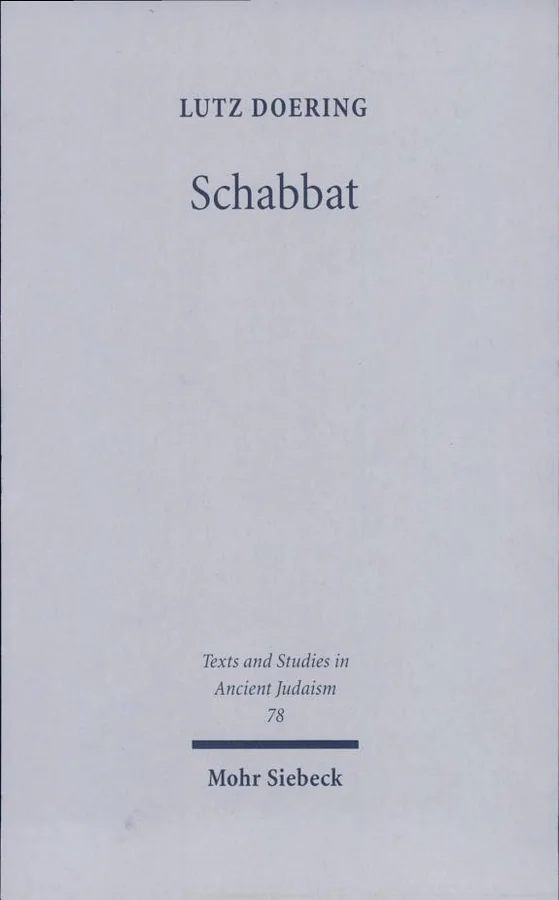
 82
82

Schabbat
Lutz Doering's "Schabbat" is a meticulously researched exploration of a foundational concept in Jewish life. The author's strength lies in his comprehensive engagement with primary sources, from the earliest Elephantine papyri to the emerging Christian texts. He effectively dismantles any notion of a monolithic Sabbath observance, revealing instead a spectrum of practices and interpretations that shifted over centuries. A particularly illuminating section details the differing emphases between Diaspora communities and those in Judea. While the dense academic prose may present a challenge for casual readers, the sheer depth of scholarship is undeniable. The limitation, perhaps, is that the focus remains intensely on legal and historical analysis, with less emphasis on the lived, spiritual experience of the Sabbath. Nevertheless, "Schabbat" stands as an essential scholarly contribution to understanding Jewish identity formation in antiquity.
📝 Description
82
Lutz Doering's "Schabbat" begins its analysis with 5th century BCE Elephantine ostraca.
Lutz Doering's "Schabbat" meticulously traces the Sabbath's role in Jewish identity over nearly two millennia. The study starts with the Elephantine ostraca, ancient Aramaic inscriptions from a Jewish military colony in Egypt, and continues its examination through the period of the Second Jewish Revolt.
Doering places the Sabbath within the religious and political context of Second Temple Judaism and the early Christian movement. This era, from the 5th century BCE to the 2nd century CE, saw varied interpretations of Jewish law and significant interaction with Hellenistic and Roman cultures. The book analyzes biblical texts, apocryphal writings, rabbinic literature, and early Christian documents. Doering's comparative method highlights both shared traditions and divergences in how Sabbath law and practice were understood by different Jewish groups and early Christians.
This volume is intended for scholars of Second Temple Judaism, early Christian studies, and comparative religious law. It will also interest students of Jewish history and those curious about the development of religious observance and identity markers in ancient Near Eastern contexts. Readers seeking a detailed, source-based analysis of ancient halakhic development will find substantial material.
While "Schabbat" focuses on historical and legal dimensions of the Sabbath, its examination of Jewish identity and religious law places it within a broader scholarly tradition that engages with the historical development of esoteric practices and beliefs. The study's deep dive into textual sources and comparative analysis of different groups' interpretations of religious observance touches upon how ritual and law can embody and transmit traditions across generations, a common concern in the study of esoteric lineages.
💡 Why Read This Book?
• Gain a nuanced understanding of Sabbath observance in Second Temple Judaism, moving beyond simplistic interpretations by examining specific legal debates documented from the Elephantine ostraca to the 2nd century CE. • Appreciate the Sabbath as a critical Jewish identity marker, as Doering analyzes how its practice differentiated Jewish communities from their Hellenistic and Roman neighbors. • Trace the evolution of Sabbath law through comparative analysis of diverse sources, including apocryphal texts and early Christian writings, revealing divergent halakhic developments.
⭐ Reader Reviews
Honest opinions from readers who have explored this book.
❓ Frequently Asked Questions
What is the earliest evidence for Sabbath observance discussed in Lutz Doering's 'Schabbat'?
The work begins its investigation with the Elephantine ostraca, which date back to the 5th century BCE, offering early insights into Jewish practices in a military colony.
How does 'Schabbat' connect Sabbath observance to Jewish identity?
Doering demonstrates that the Sabbath served as a crucial 'identity marker,' distinguishing Jewish communities through shared observance and legal interpretation during periods of significant cultural interaction.
What historical periods does Lutz Doering's 'Schabbat' cover?
The book spans from the Elephantine ostraca (5th century BCE) through the era of the Second Jewish Revolt (2nd century CE), analyzing a broad spectrum of Second Temple Judaism and early Christianity.
What types of sources does 'Schabbat' analyze?
Doering examines a wide range of materials, including biblical texts, apocryphal writings, rabbinic literature, ostraca, and early Christian documents pertinent to Sabbath law and practice.
Does 'Schabbat' present a unified view of Sabbath law?
No, the work emphasizes a 'multiform picture,' highlighting common traditions alongside divergent halakhic developments and varied practices across different Jewish groups and early Christians.
Who is the primary audience for 'Schabbat'?
The book is geared towards scholars and advanced students of Second Temple Judaism, early Christianity, and comparative religious law, offering a detailed, source-critical analysis.
🔮 Key Themes & Symbolism
Sabbath as Identity Marker
Doering investigates how the observance of the Sabbath functioned as a primary 'identity marker' for Jewish communities throughout the Second Temple period and into early Christianity. By analyzing the legal stipulations and practical applications of Sabbath rest, the work demonstrates its a central role in maintaining distinctiveness amidst surrounding Hellenistic and Roman cultures. The comparative study of various textual traditions reveals how adherence to, or deviation from, Sabbath norms signaled group affiliation and theological positions.
Halakhic Diversity and Development
The book meticulously maps the evolution of Sabbath law (halakha), showcasing a 'multiform picture' rather than a monolithic tradition. Doering compares and contrasts interpretations found in sources ranging from the Elephantine ostraca to later rabbinic and Christian texts. This analysis reveals not only common threads and lines of development but also significant divergences in legal reasoning and practice among different Jewish sects and early Christian communities.
Source Analysis: Elephantine to Early Christianity
Central to Doering's methodology is the rigorous analysis of a wide spectrum of primary sources. Beginning with the 5th century BCE Elephantine ostraca, the work extends through the Second Jewish Revolt (2nd century CE). This chronological and geographical breadth allows for a comprehensive examination of the Sabbath's legal and social dimensions across diverse historical contexts and textual genres.
Comparative Religious Law
"Schabbat" offers a case study in comparative religious law, particularly concerning the intersection of Jewish law and the nascent Christian movement. By juxtaposing Jewish Sabbath traditions with early Christian understandings and practices, Doering illuminates areas of continuity, adaptation, and polemic. The work provides crucial data for understanding the complex relationship between Judaism and Christianity in their formative periods.
💬 Memorable Quotes
Direct passages from the work, attributed to the author.
“The sabbath is important as a Jewish 'identity marker'.”
— This core assertion highlights the socio-religious function of Sabbath observance. It was not merely a ritual but a defining characteristic that set Jewish people apart, fostering community cohesion and distinctiveness in antiquity.
“What emerges is a multiform picture of sabbath law and practice.”
— This statement counters any assumption of uniformity. It emphasizes the significant diversity in how the Sabbath was understood and enacted across different Jewish groups and historical moments during the Second Temple period.
“Not only common traditions and lines of development but also divergent halakhic vi”
— This phrase underscores the book's focus on complexity. It signals that Doering's analysis will reveal both shared historical trajectories and significant points of legal disagreement or innovation within Jewish tradition concerning the Sabbath.
“All available sources and traditions for that period pertinent to the issue are analyzed and compared with one another.”
— This reflects the exhaustive and comparative methodology employed by Doering. It assures the reader of a thorough scholarly investigation that triangulates evidence from a wide array of ancient texts and artifacts.
“From the Elephantine ostraca until the second Jewish revolt.”
— This geographical and chronological scope defines the boundaries of Doering's study. It indicates a focus on a specific, crucial era in Jewish history, from early Persian-period Egypt to the aftermath of a major Jewish uprising.
🌙 Esoteric Significance
Tradition
While "Schabbat" is primarily a work of historical and legal scholarship, its deep dive into the foundational laws of Judaism positions it tangentially within traditions that explore Jewish mysticism and esotericism. Kabbalistic thought, for instance, imbues the Sabbath with profound cosmic and spiritual significance. Doering's meticulous reconstruction of the Sabbath's historical development provides the essential groundwork for understanding these later esoteric interpretations, showing how the practical observance evolved from its ancient roots.
Symbolism
The Sabbath itself, as a day of rest and cessation from labor, carries potent symbolism within Jewish tradition, often representing divine creation, redemption, and a foretaste of the Messianic era. Doering's analysis implicitly touches upon these symbolic layers by examining the legal boundaries and communal expectations surrounding the day. The very act of defining what constitutes permissible or prohibited activity on the Sabbath reflects a worldview concerned with order, holiness, and the separation of the sacred from the profane.
Modern Relevance
Modern Jewish thinkers and practitioners, particularly those interested in the historical foundations of their faith, engage with works like Doering's "Schabbat." Scholars of comparative religion and early Christianity also find value in understanding the Sabbath's role as a distinguishing practice. Furthermore, contemporary movements that seek to understand the historical development of Jewish law, from Orthodox halakha to Reconstructionist interpretations, can draw upon Doering's meticulous source analysis to inform their perspectives.
👥 Who Should Read This Book
• Scholars of Second Temple Judaism and early Christianity seeking a comprehensive analysis of Sabbath observance and its role in identity formation. • Researchers in comparative religious law interested in the development and diversity of ancient legal traditions. • Students of Jewish history and theology looking for a rigorous, source-based examination of a foundational religious practice.
📜 Historical Context
Lutz Doering's "Schabbat" engages with the vibrant and often contentious religious field of Second Temple Judaism and the emergence of Christianity, a period spanning from the 5th century BCE to the 2nd century CE. This era was marked by diverse interpretations of Torah, intense engagement with Hellenistic philosophy and Roman governance, and internal debates within Judaism itself. Doering's work provides a critical lens through which to view these developments, particularly concerning the Sabbath's role. The period saw the rise of Pharisaic traditions, Sadducean practices, and Essene communal rules, each potentially offering different perspectives on Sabbath observance. The book's detailed analysis of sources like the Elephantine ostraca offers a glimpse into early Jewish practices outside Judea, while its extension to the post-Second Jewish Revolt era places Sabbath observance within the context of Jewish resilience and adaptation. Contemporaries like E.P. Sanders were also exploring the legal and historical dimensions of this period, though Doering's specific focus on the Sabbath offers a unique contribution.
📔 Journal Prompts
The Sabbath as an 'identity marker': How did specific Sabbath practices differentiate Jewish communities?
Divergent halakhic developments concerning the Sabbath: Identify one point of legal contention explored in the text.
Comparing Sabbath traditions: Analyze the similarities and differences between two distinct sources mentioned in the book.
The Elephantine ostraca's contribution: What unique insights do these early sources offer regarding Sabbath observance?
The multiform picture of Sabbath law: Reflect on how this concept challenges monolithic views of ancient religious practice.
🗂️ Glossary
Second Temple Judaism
The period of Jewish history extending from the rebuilding of the Second Temple in Jerusalem (c. 516 BCE) until its destruction by the Romans in 70 CE. It was a time of diverse religious movements and evolving legal traditions.
Elephantine Ostraca
Ancient Egyptian inscriptions, primarily in Aramaic, found on the island of Elephantine. They date from the 5th century BCE and provide valuable information about a Jewish military colony in Egypt.
Second Jewish Revolt
Also known as the Bar Kokhba revolt (132-136 CE), this was a major uprising of Jews against the Roman Empire, occurring after the First Jewish-Roman War (66-73 CE).
Halakha
The collective body of Jewish religious laws derived from the Written and Oral Torah. It encompasses all aspects of religious observance and practice.
Identity Marker
A characteristic or practice that serves to distinguish one group or individual from another, often playing a central role in defining collective identity.
Hellenistic Period
The period of Mediterranean history between the death of Alexander the Great (323 BCE) and the emergence of the Roman Empire (c. 31 BCE). It is characterized by the spread of Greek culture and language.
Comparative Religious Law
The academic study that examines and contrasts the legal systems and principles of different religions, seeking commonalities, differences, and historical influences.
This book appears in 1 collection
🔮 Readers Also Liked
Browse all →







From the “Dead Sea Scrolls” Collection
View all →







More Free Esoteric History & Biography Books
View all →