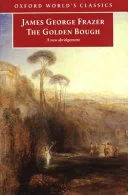
The Golden Bough
 84
84

The Golden Bough
Frazer's *The Golden Bough* remains a formidable if unwieldy edifice of comparative study. Its strength lies in the sheer breadth of its erudition, connecting disparate myths and rituals across continents with an astonishing, almost encyclopedic, detail. The exploration of the concept of the 'sacred king' and the associated rituals of succession is particularly compelling, offering a vivid glimpse into ancient societal structures. However, the work's primary limitation is its inherent speculative nature and its reliance on often unverified or misinterpreted ethnographic accounts from the colonial era. Frazer's grand narrative of religious evolution, while influential, suffers from an outdated evolutionary framework and a tendency to impose Western rationalism onto diverse cultural expressions. The 1922 abridgment, which omitted certain controversial passages, is less revealing than this complete edition, which restores Frazer's bolder theories. Ultimately, *The Golden Bough* is an indispensable, albeit problematic, resource for understanding the intellectual landscape of late 19th-century anthropology and the enduring human fascination with ritual.
📝 Description
84
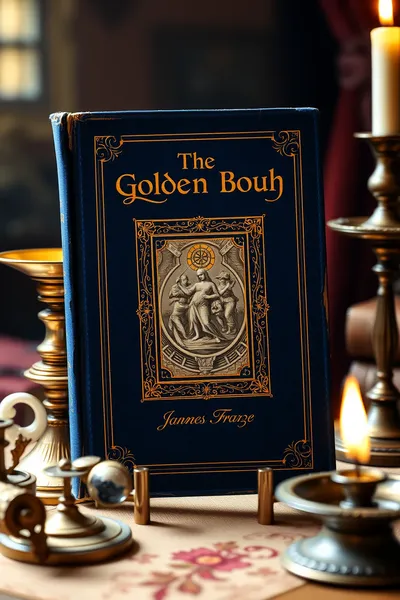
James George Frazer's *The Golden Bough*, first published in 1890, traces human belief from magic to science.
Published in 1890, James George Frazer's *The Golden Bough* is a massive study in comparative mythology and folklore. Frazer compiled a vast amount of ethnographic data to chart the development of human belief systems, moving from early magical practices and rituals towards the beginnings of rational thought. The book's ambitious scope and synthesis of information made it a significant work in the study of religion and anthropology.
Emerging from the late Victorian interest in cataloging global cultures, Frazer sought a broad theory of religious development. He used numerous reports, many from colonial contexts, to support his ideas. The initial publication and subsequent expanded editions generated much discussion. While influential, Frazer's reliance on secondary accounts and speculative connections later drew criticism.
While not strictly an esoteric text in the sense of occult practices, *The Golden Bough* engaged with the period's fascination with ancient rituals and their supposed hidden meanings. Frazer's work on magic and religion, drawing from a wide range of global customs, intersected with a broader intellectual current that sought to understand the roots of human belief beyond conventional religious dogma. Its comparative approach and focus on suppressed or 'primitive' forms of thought resonated with certain esoteric interests in uncovering primal truths.
💡 Why Read This Book?
• Gain a comprehensive understanding of sympathetic magic and its pervasive influence on ancient belief systems, as detailed in Frazer's extensive examples from global folklore. • Trace the proposed evolutionary path from magic to religion to science, a foundational concept Frazer meticulously outlines through comparative analysis of rituals and myths. • Explore the concept of the dying-and-reviving god motif, a recurring symbol Frazer identifies across various cultures, offering insights into early eschatological thought.
⭐ Reader Reviews
Honest opinions from readers who have explored this book.
❓ Frequently Asked Questions
When was the first edition of James George Frazer's *The Golden Bough* published?
The first edition of James George Frazer's *The Golden Bough* was published in 1890. It was a significant work in the fields of anthropology and comparative mythology, laying the groundwork for much subsequent scholarship.
What is the central argument of *The Golden Bough*?
The central argument posits a developmental trajectory of human thought from magic to religion, and finally to science. Frazer examines rituals and myths to illustrate how early societies attempted to control natural forces through sympathetic magic.
Which authors were significantly influenced by *The Golden Bough*?
Influential writers such as T.S. Eliot, D.H. Lawrence, and Wyndham Lewis drew inspiration from Frazer's work. Eliot, for instance, incorporated themes and imagery from *The Golden Bough* into his seminal poem 'The Waste Land'.
What makes this edition of *The Golden Bough* notable?
This edition is notable for restoring passages that were expurgated from the 1922 edition. These restored sections often elaborate on Frazer's more controversial theories regarding magic, religion, and the evolution of human belief.
What is 'sympathetic magic' as discussed by Frazer?
Sympathetic magic, as discussed by Frazer, is based on the principle that like produces like and that things once in contact continue to act on each other at a distance. It formed a core part of his theory of early belief systems.
Is *The Golden Bough* still considered a valid anthropological text today?
While historically significant and influential, *The Golden Bough* is now often viewed critically by modern anthropologists. Its methodology relied heavily on secondary sources and speculative connections, and its evolutionary framework is considered outdated.
🔮 Key Themes & Symbolism
Sympathetic Magic
Frazer's central concept is sympathetic magic, encompassing the homeopathic principle (like produces like) and the contageous principle (things once in contact remain connected). He argues that this form of reasoning underpins much of early human ritual and belief, influencing practices from healing to warfare and agricultural fertility rites. The book meticulously catalogues examples from diverse cultures, illustrating how these principles were applied to manipulate the natural world and human destiny before the advent of scientific explanation.
The Dying-and-Reviving God
A prominent recurring motif in *The Golden Bough* is the figure of the dying-and-reviving god. Frazer identifies this archetype in numerous myths and religious cults, from Attis and Osiris to various nature deities. He interprets these narratives as symbolic representations of seasonal cycles and agricultural renewal, suggesting that the worship of such deities was linked to ensuring the fertility of the land and the continuity of life through ritual sacrifice and symbolic death and rebirth.
Evolution of Belief
Frazer proposes a linear progression in human intellectual development, moving from magic, which he sees as an attempt to directly control nature, to religion, where humans appeal to supernatural beings, and finally to science, which seeks to understand and predict natural phenomena through rational inquiry. This evolutionary framework, though now debated, was highly influential in late 19th and early 20th-century thought, shaping how scholars viewed the history of human belief and culture.
Sacred Kingship and Ritual
The institution of the sacred king, often bound by strict taboos and subject to ritualistic death or abdication to ensure the land's prosperity, is another key area of Frazer's analysis. He connects the concept of the divine king to the broader themes of magic and fertility, suggesting that the king's well-being was intrinsically linked to the welfare of his kingdom. This aspect of the work explores the complex interplay between political power, religious belief, and social order in ancient societies.
💬 Memorable Quotes
Direct passages from the work, attributed to the author.
“It is only by the study of the past that we can understand the present.”
— This statement reflects Frazer's conviction that historical and comparative research is crucial for comprehending contemporary human societies and their beliefs. It underscores his methodology of looking at ancient myths and rituals to illuminate the foundations of modern culture and thought.
“The evolution of religion from magic.”
— This is a core thesis of Frazer's work, suggesting a developmental sequence where magic, based on perceived natural laws, precedes religion, which involves appeals to supernatural agents. This idea frames much of his comparative analysis of myths and rituals.
💡 Key Ideas
Editorial paraphrase of the work's core concepts — not direct quotes.
The aim of magic is to serve man's need.
This paraphrased concept highlights Frazer's view of magic as a practical, goal-oriented system. It suggests that early peoples developed magical practices not out of abstract curiosity, but as direct attempts to solve problems, ensure survival, and exert control over their environment and fate.
The sacred king must die for the land to live.
This paraphrased concept captures Frazer's theory regarding the ritual death of kings. He connects this practice to agricultural cycles and the need for renewal, suggesting that the king's sacrifice was seen as essential for ensuring the fertility and continued prosperity of his domain.
The world is governed by laws, whether natural or supernatural.
This quote represents Frazer's attempt to find underlying order in human belief systems. It suggests that whether through magic, religion, or science, humanity consistently seeks to understand and operate within perceived universal laws governing existence.
🌙 Esoteric Significance
Tradition
While not strictly within a single defined esoteric lineage like Kabbalah or Gnosticism, *The Golden Bough* deeply influenced the development of modern esoteric thought, particularly Theosophy and its successors. Its comparative approach to myth and ritual provided a vast lexicon of symbols and practices that occultists could reinterpret through their own traditions. Frazer's ideas on magic, the sacred king, and the cyclical nature of life and death offered a framework for understanding perennial philosophical and mystical themes that resonated with esotericists seeking universal truths.
Symbolism
The 'golden bough' itself, a reference to the mistletoe that Aeneas uses to descend into the underworld in Virgil's *Aeneid*, symbolizes passage, sacrifice, and a key to hidden knowledge. The widespread motif of the dying-and-reviving god represents the eternal cycle of death and rebirth, a fundamental concept in many mystical traditions concerning spiritual transformation and the overcoming of mortality. The sacred king figure symbolizes the macrocosm (divine order) reflected in the microcosm (human society), whose well-being is inextricably linked to cosmic forces.
Modern Relevance
Contemporary practitioners of Western esoteric traditions, including ceremonial magicians and modern pagan movements, continue to draw upon *The Golden Bough*. Its detailed cataloging of rituals, myths, and folk beliefs provides a rich source of inspiration and comparative material. Thinkers in fields like Jungian psychology, who explore archetypes and the collective unconscious, also find resonance in Frazer's work. Furthermore, its influence persists in literature and art, where its themes of myth, ritual, and the human condition are continually re-examined and reinterpreted.
👥 Who Should Read This Book
• Students of comparative mythology and folklore seeking to understand the foundational texts that shaped the discipline. • Scholars of religion and anthropology interested in the evolution of belief systems and ritual practices across cultures. • Literary critics and writers exploring the influence of myth and ancient ritual on modernist literature and beyond.
📜 Historical Context
Published in 1890, *The Golden Bough* emerged during a period of intense intellectual ferment in Britain, marked by Darwinism's influence and a burgeoning interest in anthropology and comparative religion. Frazer, alongside contemporaries like E.B. Tylor (whose *Primitive Culture* appeared in 1871), sought to establish a scientific basis for understanding human societies. Frazer's work was particularly ambitious in its scope, drawing on a vast, if sometimes uncritically accepted, collection of ethnographic data from around the globe. The book's reception was significant; it was widely read and debated, influencing not only academic circles but also literary figures like T.S. Eliot. However, its evolutionary model and reliance on secondary accounts later drew criticism from anthropologists who advocated for more direct fieldwork and less speculative theorizing, such as Bronisław Malinowski.
📔 Journal Prompts
The pervasive concept of sympathetic magic and its manifestations.
The archetype of the dying-and-reviving god across cultures.
Frazer's proposed evolutionary sequence from magic to religion to science.
The role and ritualistic fate of the sacred king.
The symbolic meaning of the golden bough itself.
🗂️ Glossary
Sympathetic Magic
A system of belief and practice based on the principle that like affects like (homeopathic magic) and that things once in contact continue to influence each other at a distance (contagious magic). Frazer saw this as a fundamental mode of early human reasoning.
Golden Bough
The mythical branch of mistletoe, used by Aeneas to journey to the underworld in Virgil's epic. Frazer adopted it as a symbol for his study of magic, religion, and kingship, linking it to sacrifice and passage.
Dying-and-Reviving God
A recurring mythological figure, identified by Frazer in various cultures, who undergoes death and resurrection. Often associated with agricultural cycles and the renewal of nature.
Sacred King
A ruler whose person is considered divine or intrinsically linked to the well-being of his kingdom and its fertility. Frazer discusses the elaborate taboos and often ritualistic demise associated with such figures.
Taboo
A prohibition imposed by social custom or religious belief. Frazer examines taboos, particularly those surrounding sacred kings and certain animals or places, as remnants of magical thinking.
Totemism
A system of belief in which humans are thought to have a spiritual connection or kinship with particular natural objects or beings, often animals or plants (totems). Frazer explored its role in social organization and religious practice.
Expiation
The act of making amends or atonement for guilt or wrongdoing. Frazer discusses expiatory sacrifices as a means of appeasing deities or purifying the community.
This book appears in 1 collection
🔮 Readers Also Liked
Browse all →









From the “Superstition” Collection
View all →


More Free Occult Philosophy Books
View all →