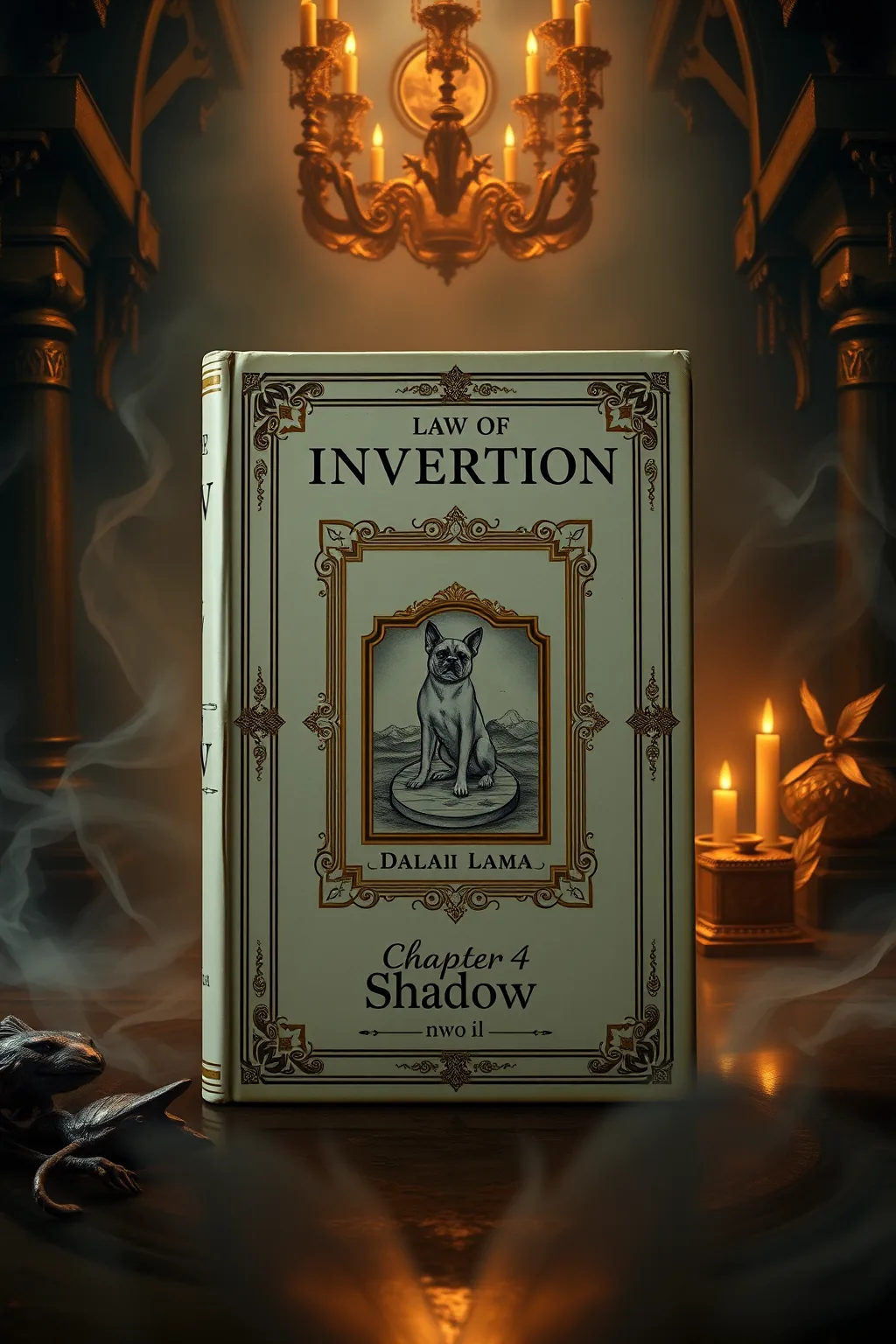
The Law Of Inversion Chapter 4 Shadow Dalai Lama Dog eats vomit nwo illuminati freemasons buddhism
 74
74

The Law Of Inversion Chapter 4 Shadow Dalai Lama Dog eats vomit nwo illuminati freemasons buddhism


The Law Of Inversion: Chapter 4 Shadow Dalai Lama is a bold and provocative exploration of esoteric and occult doctrines. The author delves deep into the controversial idea that to achieve good, one must sometimes do bad, a principle that is central to many kabbalistic and Vajrayana Buddhist practices. The book challenges readers to reconsider their moral frameworks and explore the hidden motivations behind secret societies like the Freemasons and the Illuminati. For modern esoteric seekers, this text offers a unique and eye-opening perspective on the inversion of moral values. The writing is engaging and thought-provoking, making it a valuable addition to any esoteric library. The book's exploration of taboo practices and their transformation within spiritual contexts is particularly enlightening.
📝 Description
74
Chapter 4 of 'The Law of Inversion' discusses the Shadow Dalai Lama and the concept of dog eating vomit.
This text examines the concept of inversion, drawing parallels between Kabbalistic and Buddhist thought. It presents inversion as a method for transforming negative energies into positive ones. The writing encourages introspection and spiritual questioning.
The book addresses the philosophical implications of inversion, particularly its effects on moral and ethical frameworks. It uses rich symbolism and esoteric ideas to illuminate obscure aspects of human experience. The work is intended for those interested in hidden knowledge and secret societies.
This work engages with esoteric traditions, particularly Kabbalah and Buddhism, in its exploration of the Law of Inversion. This principle suggests a transformative process where negative forces are transmuted into positive ones. The text also touches upon themes related to secret societies like the Illuminati and Freemasons, and contemporary concepts such as the 'new world order,' linking them to symbolic interpretations of inversion and hidden spiritual dynamics.
💡 Why Read This Book?
Read The Law Of Inversion today to gain a deeper understanding of esoteric and occult beliefs. This book challenges conventional morality and offers insights into the hidden practices of secret societies. You will explore the controversial doctrine of inversion and its application in various spiritual traditions. This text is essential for anyone interested in the darker aspects of spirituality and the motivations behind secret societies.
⭐ Reader Reviews
Honest opinions from readers who have explored this book.
❓ Frequently Asked Questions
What is the main theme of The Law Of Inversion?
The main theme is the kabbalistic doctrine of inversion, which suggests that to achieve good, one must sometimes do bad. This is explored through various esoteric and occult beliefs.
How does the book relate to Buddhism?
The book discusses how Vajrayana Buddhism activates and transforms taboo practices, challenging conventional Buddhist ethical standards.
Is this book suitable for beginners in esoteric studies?
While the book is engaging, it is best suited for readers with some prior knowledge of esoteric and occult beliefs.
🔮 Key Themes & Symbolism
The Law of Inversion
The Law of Inversion posits that to achieve good, one must sometimes engage in actions deemed bad, reflecting the idea that the ends justify the means. This theme is explored through Kabbalistic and Buddhist teachings, where the transformation of negative energies into positive ones is a central tenet.
Buddhist Transformation
In Vajrayana Buddhism, practitioners cultivate and transform taboo passions into positive energies. This theme is central to the book, illustrating the deeper mystical significance of the Law of Inversion.
Secret Societies and Hidden Knowledge
The book studies the influence of secret societies like the Illuminati and Freemasons, and their connection to the Law of Inversion. This theme adds a layer of intrigue and mystery, making the text a fascinating read for those interested in the occult.
💬 Memorable Quotes
Direct passages from the work, attributed to the author.
“"The ends justify the means."”
— A principle that underscores the Law of Inversion, emphasizing the importance of ultimate goals over immediate actions.
💡 Key Ideas
Editorial paraphrase of the work's core concepts — not direct quotes.
"To do good we must do bad."
This quote expresses the Law of Inversion, suggesting that sometimes, negative actions are necessary to achieve positive outcomes.
"Do as thou wilt."
This quote reflects the idea that individual will and desire are powerful forces that can transform negative energies into positive ones.
"Every type of passion... is activated and nurtured in Vajrayana."
This quote highlights the Buddhist practice of transforming taboo passions into positive energies, a central theme in the book.
"The Buddhist monks... cultivate such ‘breaches of taboo’ without regret."
This quote illustrates the deeper mystical significance of the Law of Inversion within Buddhist teachings.
🌙 Esoteric Significance
Tradition
This book belongs to the Kabbalistic and Buddhist traditions, focusing on the Law of Inversion and the transformation of negative energies into positive ones. It explores the esoteric doctrines that challenge conventional morality and ethics.
Symbolism
Key symbols include the inversion of good and evil, the transformation of passions, and the influence of secret societies. These symbols represent the deeper mystical significance of the Law of Inversion.
Modern Relevance
This text remains relevant today as it offers insights into the esoteric doctrines of inversion, which are still explored by modern practitioners and scholars of the occult. It provides a unique perspective on the hidden knowledge that lies beneath the surface of conventional wisdom.
👥 Who Should Read This Book
Beginners interested in the occult and mystical doctrines will find this text enlightening. Scholars of esoteric studies will appreciate the useful insights into the Law of Inversion and its connections to secret societies. Spiritual seekers looking to explore the shadowy domains of human experience will find this book a fascinating read. Practitioners of Kabbalistic and Buddhist teachings will benefit from the unique perspective on the transformation of negative energies into positive ones.
📜 Historical Context
The Law Of Inversion: Chapter 4 Shadow was written in an era where interest in the occult and secret societies was on the rise. This book was important as it provided a unique perspective on the mystical doctrines of inversion, combining Kabbalistic and Buddhist teachings. Its influence can be seen in the works of authors like Antony Sutton and Bill Cooper, who studied the hidden knowledge of secret societies.
📔 Journal Prompts
How does the Law of Inversion challenge your understanding of morality and ethics?
In what ways do secret societies influence the esoteric doctrines explored in this book?
How does the transformation of negative energies into positive ones relate to your spiritual practice?
What insights can you gain from the Buddhist teachings on the cultivation of taboo passions?
How does the idea of 'doing bad to do good' resonate with your personal beliefs and experiences?
🗂️ Glossary
Law of Inversion
A mystical doctrine suggesting that to achieve good, one must sometimes do bad, reflecting the idea that the ends justify the means.
Vajrayana Buddhism
A branch of Buddhism that emphasizes the transformation of negative energies into positive ones through the cultivation of taboo passions.
Secret Societies
Organizations like the Illuminati and Freemasons that are believed to hold hidden knowledge and influence esoteric doctrines.
Kabbalistic Traditions
Jewish mystical teachings that explore the deeper meanings of religious texts and esoteric doctrines.
Mystical Doctrines
Spiritual teachings that explore the hidden knowledge and esoteric aspects of human experience.
This book appears in 2 collections
🔮 Readers Also Liked
Browse all →






From the “Secret Societies” Collection
View all →



More Free Freemasonry & Secret Societies Books
View all →![Proofs Of A Conspiracy [Against All The Religions And Governments Of Europe, Carried On In The Secret Meetings Of Freemasons, Illuminati And Reading Societies].pdf (PDFy mirror)](/img/thumb/proofs-of-a-conspiracy-against-all-the-religions-and-governments-of-europe-carried-on-in-the-secret-meetings-of-freemasons-illuminati-and-reading-societies-pdf-pdfy-mirror.webp)




![The Freemasons' quarterly (magazine and) review [afterw.] The Freemasons ...](/img/thumb/the-freemasons-quarterly-magazine-and-review-afterw-the-freemasons-freemasons-magazine.webp)