Charms, spells, and formulas for the making and use of gris-gris, herb candles, doll magick, incenses, oils, and powders-- to gain love, protection, prosperity, luck, and prophetic dreams

 76
76

Charms, spells, and formulas for the making and use of gris-gris, herb candles, doll magick, incenses, oils, and powders-- to gain love, protection, prosperity, luck, and prophetic dreams
Ray T. Malbrough's "Charms, spells, and formulas" offers a direct, no-nonsense guide to a specific vein of folk magick. Unlike more theoretical grimoires, Malbrough's 1986 publication prioritizes actionable recipes. The strength lies in its sheer breadth of practical applications, covering everything from love charms to prophetic dream work with a consistent, accessible methodology. For instance, the detailed instructions for constructing gris-gris bags, specifying the required ingredients and their purpose, are particularly instructive. However, the work occasionally feels underexplored, with concepts like "prophetic dreams" presented more as a given outcome rather than a process with nuanced guidance. The lack of extensive theoretical underpinning might leave some practitioners seeking deeper philosophical context wanting. Nevertheless, for those seeking a functional toolkit of American folk magick, Malbrough delivers a solid, unpretentious resource.
📝 Description
76
Ray T. Malbrough's 1986 book details gris-gris bags, herb candles, and doll magick.
This volume details the making and use of gris-gris, herb candles, doll magick, incenses, oils, and powders. Malbrough explains how to craft these items and apply them to attract love, ensure protection, generate prosperity, invite good luck, and achieve prophetic dreams. The book is for individuals interested in hands-on folk magickal practices. It suits those who prefer working with tangible ingredients and established traditions. Readers looking for direct methods to influence personal circumstances will find its contents applicable.
The approach centers on sympathetic magick, where a physical representation or focus influences a desired outcome. This involves selecting materials like herbs, colors, oils, and symbolic objects, each with specific correspondences. Personal items, such as hair or clothing fragments, can strengthen the connection between the charm and its target. The effectiveness of these tools relies on the practitioner's intent, faith, and proper execution of the formulas.
Published in 1986, this work appeared during a period of increased interest in esoteric subjects following the counterculture movements. It reflects a diversification in occult publishing, moving beyond academic or ceremonial traditions to embrace practical, vernacular magic. The book draws on a lineage of American folk magick, differing from earlier European ceremonial practices. It emphasizes sympathetic magick, using tangible materials and personal intent to achieve desired outcomes.
💡 Why Read This Book?
• Learn specific methods for crafting gris-gris bags, understanding the traditional correspondences for herbs and personal items, as detailed in the book's early sections. • Discover techniques for preparing and using herb candles for targeted outcomes, exploring the symbolic colors and oils recommended by Malbrough for specific intentions like protection or prosperity. • Gain practical knowledge on creating and employing doll magick, including the preparation of effigies and the formulas for imbuing them with specific influences, as outlined in the text.
⭐ Reader Reviews
Honest opinions from readers who have explored this book.
❓ Frequently Asked Questions
What is a gris-gris according to Ray T. Malbrough's book?
In Ray T. Malbrough's "Charms, spells, and formulas," a gris-gris is presented as a type of magical charm or amulet, often made in a small bag. It's typically filled with specific herbs, powders, and sometimes personal items, intended to bring about a desired effect such as love, protection, or luck.
When was Ray T. Malbrough's "Charms, spells, and formulas" first published?
Ray T. Malbrough's "Charms, spells, and formulas" was first published in 1986. This places its emergence within a broader wave of esoteric literature that gained traction in the late 20th century.
What types of magical items are covered in the book?
The book covers a range of traditional magical items including gris-gris, herb candles, doll magick (effigies), incenses, oils, and powders. Each category is presented with specific instructions for their creation and use.
What are the primary goals of the spells and formulas in this book?
The primary goals are to gain love, ensure protection, achieve prosperity, attract luck, and facilitate prophetic dreams. The book provides formulas and methods specifically designed to influence these areas of a practitioner's life.
Is this book suitable for beginners in magick?
Yes, the book is generally considered suitable for beginners due to its straightforward, practical approach and clear instructions for making and using various magical tools like gris-gris and herb candles.
Does the book discuss the theoretical underpinnings of folk magick?
While the book focuses heavily on practical application, it implicitly draws upon principles of sympathetic magick and the use of correspondences. It offers less theoretical discussion and more direct, how-to guidance.
🔮 Key Themes & Symbolism
Sympathetic Magick Crafting
The core of Malbrough's work revolves around the practical application of sympathetic magick. This involves creating physical foci, such as gris-gris bags or doll effigies, that bear a connection to the desired outcome or person. The book details the selection of specific herbs, oils, colors, and personal items (like hair or cloth) to establish this link. For example, constructing a doll to influence a relationship requires specific symbolic additions that mirror the desired connection or outcome, emphasizing the practitioner's intent and the material's perceived energetic properties.
Folk Magick Tools
This volume serves as a manual for common folk magickal tools, distinct from more complex ceremonial systems. It provides step-by-step instructions for making and using items like herb candles, incenses, and powders. Each item is presented not just as a component but as a vehicle for specific intentions. The emphasis is on accessible materials and straightforward procedures, making these practices attainable for a wider audience interested in tangible results through traditional methods.
Intentional Manifestation
The book consistently highlights the role of the practitioner's intent and faith in the efficacy of the spells and formulas. Whether seeking love, protection, or prosperity, the success of a gris-gris or a spell is presented as contingent upon the focused will of the user. This principle underscores the active role of the magician in shaping their reality through deliberate action and belief, transforming everyday materials into potent tools for personal change.
Objective-Driven Spellcraft
Malbrough categorizes the applications of his formulas by desired outcome: love, protection, prosperity, luck, and prophetic dreams. The book is structured to guide the reader toward selecting the appropriate charms and spells for their specific needs. For instance, if one seeks financial gain, the text would direct them to specific incense blends or powder formulas designed to attract wealth, illustrating a goal-oriented approach to magickal practice.
💬 Memorable Quotes
Direct passages from the work, attributed to the author.
“To gain love, protection, prosperity, luck, and prophetic dreams”
— This phrase, appearing in the subtitle, expresses the entire practical scope of the book. It clearly states the desired outcomes for which the reader is provided with tools and methods, serving as a direct promise of the book's utility.
“Formulas for the making and use of gris-gris, herb candles, doll magick, incenses, oils, and powders”
— This lists the specific categories of magical tools and techniques the book elaborates on. It highlights the hands-on, craft-oriented nature of the practices discussed, emphasizing tangible creation and application.
“The efficacy of these items relies on the user's focused intent and faith.”
— This interpretation of a core concept emphasizes the practitioner's active role. It suggests that the power of the charms and spells is not inherent in the objects alone but is activated and directed by the belief and concentration of the individual using them.
💡 Key Ideas
Editorial paraphrase of the work's core concepts — not direct quotes.
Specific herbs, oils, and colors are chosen for their traditional correspondences.
This paraphrase points to the underlying system of symbolic association. It indicates that the selection of ingredients in the formulas is not arbitrary but based on established beliefs about what each element represents and influences.
The book provides practical, actionable steps for folk magickal work.
This summarizes the book's approach, contrasting it with more theoretical or ritualistic texts. It suggests that readers will find clear, direct instructions suitable for immediate application in their practice.
🌙 Esoteric Significance
Tradition
This work is rooted in American folk magick traditions, particularly those prevalent in the Southern United States. It draws heavily on practices often associated with Hoodoo and conjure, which blend elements from West African spiritual beliefs, Catholicism, and Native American traditions. While not strictly aligning with formalized systems like Hermeticism or Kabbalah, it represents a practical, experiential form of magic focused on tangible results and personal empowerment, often operating outside established esoteric lineages.
Symbolism
Key symbols in the book include the gris-gris bag itself, which acts as a portable repository of intention and sympathetic magic, often containing personal items and specific herbs chosen for their correspondences. Doll magick, or effigy work, uses the doll as a symbolic stand-in for a person, allowing for focused influence through direct manipulation. Colors also play a significant symbolic role, with different hues associated with specific outcomes like red for passion or protection, and green for prosperity, guiding the practitioner in material selection.
Modern Relevance
Malbrough's book continues to be relevant for practitioners interested in accessible, hands-on folk magick. Contemporary practitioners of Hoodoo, conjure, and eclectic witchcraft often refer to such foundational texts for practical techniques. Its emphasis on creating one's own magical tools using readily available materials appeals to modern desires for self-sufficiency and personalized spiritual practice, making it a valuable resource for those seeking to engage with traditional American magical arts.
👥 Who Should Read This Book
• Aspiring practitioners of American folk magick seeking foundational knowledge in creating and using gris-gris bags, herb candles, and doll magick. • Individuals interested in practical spellcraft for specific goals like attracting love, enhancing protection, or manifesting prosperity, who prefer tangible, ingredient-focused methods. • Students of comparative religion and esoteric traditions looking to understand the practical application of sympathetic magic within vernacular spiritual practices.
📜 Historical Context
Ray T. Malbrough's "Charms, spells, and formulas," published in 1986, emerged in an American esoteric landscape increasingly open to practical, vernacular magick. Following the occult revival spurred by figures like Gerald Gardner and the broader counterculture interest in spirituality, the late 20th century saw a proliferation of books offering accessible, hands-on magical techniques. Malbrough's work taps into a rich vein of Southern American folk magic, often influenced by West African spiritual traditions and Hoodoo practices, which had been largely uncodified in print compared to European ceremonial magick or Wicca. While contemporary authors like Scott Cunningham were popularizing a gentler, nature-based approach to witchcraft, Malbrough's book offered a more direct, utilitarian style of spellcraft focused on specific material creations like gris-gris and doll magick. Its reception was likely within circles already familiar with or seeking these particular folk traditions, providing a rare printed guide for practices often passed down orally.
📔 Journal Prompts
Your personal definition of a gris-gris bag based on its function.
Reflections on the symbolic significance of colors in spellcraft.
The role of personal items in establishing magical connections.
A devised formula for prophetic dreams using book principles.
Assessing the balance between intent and material in folk magick.
🗂️ Glossary
Gris-gris
A magical charm or amulet, often contained within a small bag, typically made with herbs, powders, and sometimes personal items, intended to bring about a specific outcome such as luck, love, or protection.
Herb Candles
Candles prepared or anointed with specific herbs, oils, and colors, designed to channel magical intent for a particular purpose during their burning.
Doll Magick
The practice of using dolls or effigies as focal points in spellwork, where the doll represents a person or entity to be influenced, blessed, or otherwise affected.
Incenses
Aromatic substances, often made from resins, herbs, and oils, burned to purify spaces, raise spiritual vibrations, or invoke specific energies during magical rituals.
Oils
Magical oils are typically infused with herbs, resins, or minerals, and used for anointing candles, objects, or the body to attract or repel energies associated with specific desires or purposes.
Powders
Finely ground mixtures of herbs, minerals, or other magical substances, used in spellcraft for dusting objects, creating magical circles, or adding potency to other working.
Prophetic Dreams
Dreams believed to contain omens, warnings, or insights into future events, which the book suggests can be influenced or better recalled through specific magical practices.
🔮 Readers Also Liked
Browse all →









More by Ray T. Malbrough
All books →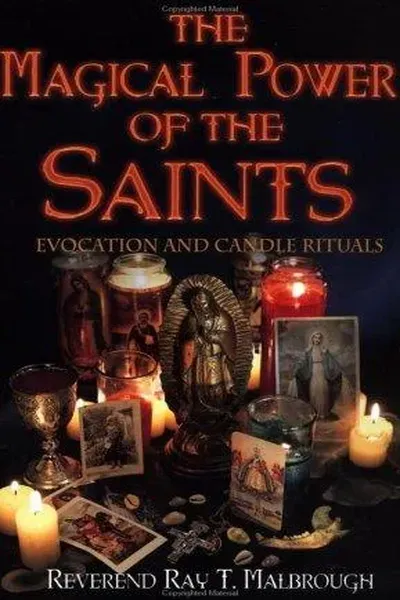



More Free Occult Philosophy Books
View all →