The Tibetan book of the great liberation
 71
71

The Tibetan book of the great liberation
Evans-Wentz's 1991 edition of The Tibetan Book of the Great Liberation offers a crucial, albeit dense, entry point into the advanced doctrines of Tibetan Buddhism. Its strength lies in its meticulous presentation of the Bardo Thödol, providing detailed interpretations of the transitional states experienced after death. The inclusion of Evans-Wentz's own extensive notes, drawn from his extensive research and interviews with Tibetan lamas, adds layers of context that are invaluable for Western readers. However, the sheer density of the philosophical concepts, coupled with the archaic language of early 20th-century scholarship, can present a significant barrier to entry. A particularly illuminating passage is the description of the 'Chikhai Bardo,' the moment of death, and the initial experiences of the Clear Light. While challenging, the work serves as a foundational text for understanding Tibetan concepts of consciousness and rebirth. It is an indispensable, if demanding, resource for serious students of esoteric philosophy.
📝 Description
71
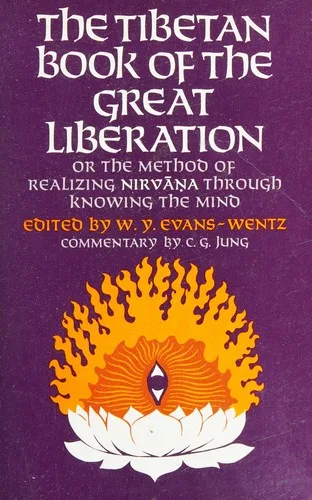
W. Y. Evans-Wentz published The Tibetan Book of the Great Liberation in 1991, translating key Bardo Thödol teachings.
This book presents a translation and commentary on the Bardo Thödol, known in the West as the Tibetan Book of the Dead. Evans-Wentz aimed to make these Tibetan Buddhist teachings accessible to a Western audience. The text focuses on the intermediate states, or bardos, experienced between death and rebirth, offering a guide for understanding these transitional periods. It is not a narrative but a didactic work intended to illuminate the nature of consciousness and the path to liberation.
Its content is suited for serious students of comparative religion and Tibetan Buddhism. Readers should expect to engage with metaphysical concepts concerning the mind and its passage through death. This is a text for dedicated study, requiring sustained focus on complex philosophical ideas. It addresses fundamental questions about existence, consciousness, and spiritual freedom.
Evans-Wentz began his work on Tibetan texts in the early 20th century, a time of growing Western interest in Eastern spiritual traditions. His translations were significant in introducing concepts like karma and reincarnation to Western readers. These works often met with academic skepticism but also fueled popular fascination and influenced early esoteric movements.
This work arrived during a period of increased Western engagement with Eastern philosophies, partly through organizations like the Theosophical Society. Evans-Wentz's translations served to bridge Eastern mystical traditions with Western esoteric interests. The book introduces concepts like karma, reincarnation, and the nature of consciousness, which were largely new to a Western readership unfamiliar with Tibetan Buddhism. Its publication contributed to the growing interest in Eastern spiritual ideas among Western esoteric movements.
💡 Why Read This Book?
• Understand the intricate stages of consciousness between death and rebirth as detailed in the Chikhai Bardo, offering a unique perspective on mortality not found in Western philosophical traditions. • Gain insight into the concept of 'Great Liberation' through the recognition of the mind's true nature, a central tenet explored extensively in the Dharmata Bardo sections. • Explore the historical significance of W. Y. Evans-Wentz's translation efforts from the early 20th century, providing context for how Tibetan Buddhist thought first entered Western esoteric circles.
⭐ Reader Reviews
Honest opinions from readers who have explored this book.
❓ Frequently Asked Questions
What is the primary purpose of The Tibetan Book of the Great Liberation?
Its primary purpose is to serve as a guide for the deceased, detailing the intermediate states (bardos) between death and rebirth to facilitate a favorable rebirth or achieve liberation from the cycle of existence.
Who was W. Y. Evans-Wentz and what was his role?
W. Y. Evans-Wentz was an American occultist and author who spent many years in Tibet. He is renowned for translating and popularizing key Tibetan Buddhist texts, including this one, for a Western audience starting in the early 20th century.
What are the 'bardos' mentioned in the book?
Bardos are transitional states. The book specifically details six: the natural bardo of this life, the dream bardo, the meditative bardo, the moment of death bardo, the bardo of ultimate reality (Dharmata), and the bardo of becoming (rebirth).
Is The Tibetan Book of the Great Liberation the same as the Tibetan Book of the Dead?
While often used interchangeably, 'The Tibetan Book of the Great Liberation' is a broader work that includes extensive commentary and teachings from Evans-Wentz, often incorporating or referencing the Bardo Thödol, which is the core text more specifically known as the Tibetan Book of the Dead.
When was the original publication date of Evans-Wentz's work on this text?
While this specific edition is from 1991, W. Y. Evans-Wentz first published his significant work on The Tibetan Book of the Great Liberation in 1928, making it available to the West much earlier.
What philosophical tradition does this book primarily represent?
The book primarily represents the Vajrayana tradition of Tibetan Buddhism, focusing on advanced philosophical concepts related to consciousness, death, and liberation from cyclic existence (samsara).
🔮 Key Themes & Symbolism
The Six Bardos
The central theme is the detailed exposition of the six transitional states, or bardos, experienced by consciousness. These range from the bardo of this life to the bardo of becoming. Understanding these states is presented as paramount for working through the process of death and rebirth consciously, thereby preventing entrapment in samsara and paving the way for liberation. Each bardo presents unique challenges and opportunities for spiritual realization.
The Nature of Mind
Central to achieving the 'Great Liberation' is the direct recognition of the mind's true nature. The text emphasizes that the perceived realities of existence, including the experiences in the bardos, are projections of mind. By understanding the mind's inherent luminosity and emptiness, one can transcend dualistic thinking and attachment, which are the root causes of suffering and repeated rebirth.
Path to Liberation
The book outlines the ultimate goal: liberation from the cycle of suffering and rebirth (samsara). This is not merely an afterlife concept but a present-moment realization achievable by perceiving the illusory nature of all phenomena. The teachings provide practical guidance on how to recognize the 'Clear Light' of consciousness, especially during the bardo of the moment of death, as the key to ultimate freedom.
W. Y. Evans-Wentz's Commentary
Beyond the translation of the Bardo Thödol, the work includes extensive commentary and explanatory notes by Evans-Wentz himself. These annotations, drawn from his extensive research and interactions with Tibetan lamas, serve to interpret the intricate concepts for a Western audience, contextualizing the teachings within broader esoteric and philosophical frameworks and highlighting their significance.
💬 Memorable Quotes
Direct passages from the work, attributed to the author.
“The Great Liberation is the seeing of the nature of one's own mind.”
— This concise statement expresses the book's core message: true spiritual freedom is not found in external rituals or beliefs, but in the direct, intuitive understanding of the mind's fundamental essence and its role in shaping reality.
“The bardo of the moment of death is the gateway to the bardo of the Dharmata.”
— This highlights the critical juncture of death. It suggests that the experience of dying is not an end but a transition, a crucial portal where the nature of reality (Dharmata) can be directly perceived if one is prepared.
“All phenomena are the play of mind.”
— This concept underscores the Buddhist understanding of subjective experience. It posits that the external world and all perceived realities are, in essence, manifestations or projections of consciousness itself.
“Recognize the Clear Light, the fundamental nature of your mind.”
— This is presented as a primary instruction for working through the post-death states. The 'Clear Light' refers to the pure, unconditioned awareness that underlies all experience, the recognition of which is key to liberation.
“The mind is like a mirror, reflecting all things without attachment.”
— This metaphor illustrates the ideal state of consciousness described in the text. A mirror reflects everything impartially, without distortion or personal bias, symbolizing pure, unbiased awareness.
🌙 Esoteric Significance
Tradition
This work is deeply rooted in the Vajrayana tradition of Tibetan Buddhism, a branch known for its esoteric practices and profound philosophical systems. It specifically explores teachings on consciousness, death, and liberation that are considered advanced within the Buddhist context. Evans-Wentz's interpretation bridges this tradition with Western esoteric thought, particularly Theosophy, framing the teachings as universal spiritual knowledge applicable beyond a purely Buddhist sectarian view.
Symbolism
The text is rich with symbolic imagery, often manifesting as divine or demonic figures encountered in the bardos. These are not literal entities but symbolic representations of aspects of the mind, karmic imprints, and the forces of attachment and aversion. The 'Clear Light' itself is a potent symbol of pure, unconditioned consciousness, the ultimate ground of being, while the various deities represent the full spectrum of awakened or deluded mental states.
Modern Relevance
Contemporary thinkers and practitioners in fields ranging from transpersonal psychology to consciousness studies often reference Evans-Wentz's translations. Schools of Tibetan Buddhism, both in the West and globally, continue to utilize these texts, albeit with modern scholarly interpretations. Furthermore, concepts of the bardo states and the nature of mind have influenced modern meditation practices and explorations into near-death experiences and the philosophy of death.
👥 Who Should Read This Book
• Students of comparative religion and Buddhist philosophy seeking an in-depth look at Tibetan teachings on consciousness and the afterlife, beyond introductory material. • Esoteric practitioners interested in understanding advanced yogic and contemplative techniques for navigating psychological and spiritual transitions, particularly related to death. • Researchers and scholars of early 20th-century Western engagement with Eastern mysticism, examining how texts like this shaped esoteric movements and cross-cultural spiritual exchange.
📜 Historical Context
W. Y. Evans-Wentz's engagement with Tibetan texts, culminating in the 1928 publication of works like The Tibetan Book of the Great Liberation, occurred during a period of intense Western fascination with Eastern spirituality. The early 20th century saw movements like Theosophy popularizing concepts of karma, reincarnation, and hidden wisdom from the East. Evans-Wentz, an American occultist who studied under Tibetan lamas, played a key role in introducing these complex doctrines, including the Bardo Thödol, to a European and American audience. His work appeared alongside figures like Aleister Crowley and Helena Blavatsky, though Evans-Wentz maintained a more scholarly and less overtly ceremonial approach. While met with interest, these translations also faced scrutiny from both academic circles, which often questioned the authenticity and interpretation of the texts, and religious authorities. Nevertheless, his efforts laid crucial groundwork for the later proliferation of Tibetan Buddhism in the West.
📔 Journal Prompts
The nature of the mind as a mirror, reflecting all phenomena.
The challenges and opportunities presented by the bardo of the moment of death.
Recognizing the 'Clear Light' within your own awareness.
The concept of the 'Great Liberation' as a realization of the mind's true nature.
Interpreting the symbolic representations of deities and demons in the bardos.
🗂️ Glossary
Bardo
An intermediate state, particularly the states experienced between death and rebirth in Tibetan Buddhism. The text details six such states.
Dharmata
The ultimate nature of reality; the essential truth or reality of all phenomena as they are, beyond conceptualization or illusion.
Clear Light
The primordial, luminous, unconditioned nature of consciousness, considered the fundamental reality and the key to liberation.
Samsara
The cycle of birth, death, and rebirth, characterized by suffering and impermanence, from which liberation is sought.
Liberation (Moksha/Nirvana)
The ultimate goal of spiritual practice: freedom from the cycle of samsara and the attainment of enlightenment or ultimate peace.
Karma
The law of cause and effect; volitional actions and their consequences that shape an individual's experiences and future rebirths.
Vajrayana
A major branch of Buddhism originating in India and prominent in Tibet, characterized by its esoteric teachings, tantric practices, and emphasis on rapid attainment of Buddhahood.
🔮 Readers Also Liked
Browse all →








More by W. Y. Evans-Wentz
All books →




More Free Occult Philosophy Books
View all →