An Introduction to Zen Buddhism

 74
74

An Introduction to Zen Buddhism
Daisetsu Teitaro Suzuki's An Introduction to Zen Buddhism offers a lucid, if somewhat dated, entry point into the practice. Suzuki's strength lies in his ability to translate the often elusive concepts of Zen into language accessible to a Western audience. He adeptly frames Zen not as a passive philosophy but as a dynamic, experiential discipline. However, the book occasionally leans into a style that, while clear, can feel slightly didactic, sometimes glossing over the profound difficulty inherent in Zen practice. A notable passage that exemplifies this clarity is Suzuki's explanation of *satori*, which he presents as a sudden, intuitive grasp of reality, distinct from rational comprehension. While this offers a valuable conceptualization, it might understate the arduous path many practitioners undertake to achieve such states. The work's historical context, rooted in mid-20th century Western engagement with Buddhism, is palpable. Despite its occasional pedagogical directness, the book remains a significant historical document and a useful primer for those new to Zen’s unique approach to self-discovery.
📝 Description
74
Daisetsu Teitaro Suzuki's An Introduction to Zen Buddhism, published in 1964, explains Zen to Westerners.
First released in 1964, Daisetsu Teitaro Suzuki's An Introduction to Zen Buddhism aimed to make a major school of Mahayana Buddhism understandable to Western readers. Suzuki, who was instrumental in bringing Eastern philosophies to the West, described Zen not as an abstract philosophy but as a direct path to enlightenment. The book covers Zen's core ideas, its practices, and its history, showing how it differs from other Buddhist paths. Suzuki sought to clarify concepts that often seemed confusing, providing a straightforward way to approach Zen's practice and thought.
This book suits people interested in Eastern spirituality, philosophy, or psychology who want a clear but meaningful overview of Zen. It is useful for students of religion, those practicing meditation or mindfulness, and anyone looking for different ways to think about consciousness. Readers who like clear explanations of difficult subjects and are open to a viewpoint that values direct experience over rigid beliefs will find this introduction helpful.
Suzuki's work on Zen Buddhism appeared in the mid-20th century, a time when Eastern thought was gaining significant attention globally. His writings contributed to Zen's introduction to Western intellectual and spiritual circles, coinciding with a broader interest in meditation and Eastern philosophies. This book draws on Suzuki's deep knowledge, aiming to bridge the gap between Eastern contemplative traditions and Western understanding, presenting Zen as a path of direct experience.
💡 Why Read This Book?
• You will learn to distinguish Zen from other Buddhist schools, understanding its unique emphasis on direct experience, as detailed in Suzuki's discussions on *satori* and the role of *koans*. • You will gain insight into the historical transmission of Zen Buddhism from India through China to Japan, appreciating the cultural adaptations that shaped its practice, a narrative central to the book's initial publication in 1964. • You will encounter the concept of 'non-being' (sunyata) as explored through Zen's lens, understanding how it informs a path of liberation from conceptual attachment, a core theme in Suzuki's exposition.
⭐ Reader Reviews
Honest opinions from readers who have explored this book.
❓ Frequently Asked Questions
When was An Introduction to Zen Buddhism first published?
An Introduction to Zen Buddhism by Daisetsu Teitaro Suzuki was first published in 1964, making it a significant text from the mid-20th century's wave of introducing Eastern philosophies to the West.
Who was D.T. Suzuki and why is he important for Zen?
Daisetsu Teitaro Suzuki (1870-1966) was a Japanese scholar and author who played a crucial role in popularizing Zen Buddhism and other aspects of Japanese culture in the West through his prolific writings and lectures.
What is the core message of Zen Buddhism as presented by Suzuki?
Suzuki presents Zen Buddhism as a direct, intuitive path to awakening (*satori*) that emphasizes personal experience and practice over dogma and intellectualism, aiming to transcend ordinary dualistic thinking.
Does the book explain Zen meditation techniques?
While the book focuses more on the philosophy and experiential aspects of Zen, it touches upon the meditative practices that are central to its realization, particularly in the context of training and achieving *satori*.
Is An Introduction to Zen Buddhism suitable for absolute beginners?
Yes, the book is specifically designed as an introduction. Suzuki’s aim was to make Zen concepts accessible to Western readers unfamiliar with Buddhist terminology and philosophy, serving as a foundational text.
What historical period does the book cover regarding Zen's development?
The book traces Zen's lineage from its Indian Buddhist origins, through its development in China as Ch'an, and its subsequent flourishing in Japan, contextualizing its historical and philosophical evolution.
🔮 Key Themes & Symbolism
The Experiential Nature of Satori
This work emphasizes *satori*, or enlightenment, not as a theoretical concept but as a direct, intuitive realization of ultimate reality. Suzuki posits that Zen's primary aim is this sudden awakening, which transcends rational thought and linguistic description. The book details how practices like zazen (sitting meditation) and the contemplation of *koans* are designed to break down intellectual barriers, facilitating this direct, personal experience of insight. This experiential focus distinguishes Zen from more scholastic or devotional Buddhist traditions, positioning it as a path of immediate self-discovery.
Zen's Lineage and Cultural Adaptation
Suzuki meticulously outlines the historical trajectory of Zen Buddhism, tracing its roots from Indian Buddhism through its transmission to China, where it developed into Ch'an, and its subsequent establishment in Japan. The book highlights how Zen adapted to different cultural contexts, integrating with indigenous philosophies and artistic sensibilities. This historical perspective, especially relevant for its 1964 publication, underscores Zen's ability to remain vital by adapting its expression while preserving its core essence of direct realization.
The Role of Koans and Paradox
Central to Zen training, as described by Suzuki, is the use of *koans*. These are paradoxical riddles or questions, often presented by a master to a student, designed to exhaust the rational mind and provoke a breakthrough in understanding. The book explains that *koans* are not meant to be solved logically but to be experienced directly, serving as a catalyst for *satori*. This unique pedagogical tool exemplifies Zen's commitment to experiential wisdom over discursive knowledge, challenging conventional modes of thinking.
Transcendence of Dualistic Thinking
A recurring theme is Zen's aim to overcome dualistic perceptions of reality—such as self/other, subject/object, good/evil. Suzuki explains that by cutting through these conceptual divisions, practitioners can apprehend a more unified, non-dualistic reality. This is achieved through practices that cultivate mindfulness and direct awareness, leading to a state of equanimity and freedom from the limitations imposed by ordinary, fragmented cognition. The book thus presents Zen as a path to liberation from the constraints of the ego.
💬 Memorable Quotes
Direct passages from the work, attributed to the author.
“Zen is a way of life, not a system of belief.”
— This statement captures Suzuki's core message: Zen is fundamentally about practice and direct experience, rather than adhering to a set of doctrines or philosophical propositions. It underscores the active, lived nature of Zen realization.
“Satori is an intuitive comprehension that is beyond words.”
— This highlights the ineffable quality of Zen awakening. Suzuki suggests that the clear insights of *satori* cannot be adequately captured by language or intellectual analysis, pointing to its nature as a direct, non-conceptual experience.
“The koan is a tool to break the intellect.”
— This interpretation points to the function of the *koan* in Zen training. It's presented not as a puzzle to be solved logically, but as a method to exhaust the rational mind, thereby paving the way for intuitive understanding.
“Zen practice is a continuous process of self-discovery.”
— This concept emphasizes that Zen is not a destination but an ongoing journey. It suggests that the path to awakening is iterative, involving continuous engagement with practice and the unfolding of one's own nature.
💡 Key Ideas
Editorial paraphrase of the work's core concepts — not direct quotes.
To see things as they are, without the interference of the ego.
This paraphrase reflects the goal of Zen practice: to perceive reality directly, stripped of the subjective filters and biases of the ego. It signifies a state of pure, unadulterated awareness.
🌙 Esoteric Significance
Tradition
While Zen Buddhism is a major school of Mahayana Buddhism, its emphasis on direct, unmediated experience and the transcendence of dualistic thought aligns with certain esoteric currents. Its focus on inner transformation and the realization of a non-dual reality positions it within the broader spectrum of contemplative and mystical traditions that seek direct communion with the Absolute. Unlike Western Hermeticism or Kabbalah, Zen's lineage is distinctly Buddhist, yet its methods for altering consciousness and perception can be seen as parallel in their ultimate aims to esoteric paths focused on gnosis or spiritual awakening.
Symbolism
Key symbolic elements within Zen, as explored by Suzuki, include the *Buddha-nature* inherent in all beings, representing ultimate potential and reality. The *empty circle* (ensō) often drawn by Zen masters symbolizes enlightenment, void, and the unity of all things, appearing as a potent visual representation of non-duality. The *master-disciple transmission* itself functions symbolically, representing the lineage and the passing of experiential wisdom beyond mere doctrine, akin to initiatory traditions.
Modern Relevance
Suzuki's work continues to profoundly influence contemporary mindfulness-based therapies, secularized meditation practices, and transpersonal psychology. Thinkers and practitioners in fields ranging from cognitive science to organizational leadership draw upon his interpretations of Zen's principles of awareness, non-attachment, and intuitive decision-making. Modern Zen teachers and writers often engage with or respond to Suzuki's foundational texts, ensuring his interpretations remain a touchstone in discussions about Zen's relevance in the 21st century.
👥 Who Should Read This Book
• Aspiring practitioners of meditation and mindfulness seeking a philosophical grounding for their practice, understanding how Zen's emphasis on direct experience informs techniques like zazen. • Students of comparative religion and philosophy interested in the unique trajectory of Mahayana Buddhism, learning about the historical development and core tenets of Zen across cultures. • Individuals exploring non-dualistic philosophies and contemplative traditions, gaining insight into a path that prioritizes intuitive realization over intellectual dogma.
📜 Historical Context
Daisetsu Teitaro Suzuki's *An Introduction to Zen Buddhism*, first published in 1964, arrived at a key moment in the West's engagement with Eastern spirituality. Following World War II, there was a surge of interest in non-Western philosophies, particularly Zen, fueled by figures like Alan Watts and the Beat Generation's fascination with its perceived anti-establishment ethos. Suzuki himself was instrumental in this, having spent decades lecturing and writing in the United States and Europe. This book built upon his earlier influential works, such as *Essays in Zen Buddhism* (published in three series between 1927 and 1934). It presented Zen in a way that resonated with Western intellectual currents, including existentialism and depth psychology, offering an alternative to prevalent Western religious and philosophical frameworks. The mid-20th century was also a period where comparative religion studies were gaining academic traction, and Suzuki's scholarship provided a key reference point, though it also faced critiques regarding the accuracy of his representations of Zen practice within Japanese monastic traditions.
📔 Journal Prompts
The practice of *zazen* as a means to confront the 'self'.
The function of *koans* in dismantling rational thought.
Suzuki's description of *satori* versus ordinary understanding.
Zen's historical adaptation in China and Japan.
The concept of transcending dualistic perception.
🗂️ Glossary
Zen
A school of Mahayana Buddhism originating in China as Ch'an, emphasizing meditation, direct experience, and intuitive understanding over scripture or dogma.
Satori
A Japanese Buddhist term for awakening or enlightenment, characterized by a sudden, intuitive comprehension of ultimate reality, distinct from rational knowledge.
Koan
A paradoxical anecdote or riddle used in Zen Buddhism to provoke doubt and test a student's progress, intended to disrupt logical reasoning.
Zazen
A seated meditation practice central to Zen Buddhism, involving mindful awareness and posture, aimed at cultivating insight and realizing one's true nature.
Ch'an
The Chinese name for the school of Buddhism that became known as Zen in Japan, emphasizing meditation and direct experience.
Buddha-nature
The inherent potential for Buddhahood within all sentient beings, a fundamental concept in Mahayana Buddhism that Zen seeks to realize directly.
Sunyata
A central Mahayana Buddhist concept often translated as emptiness or voidness, referring to the lack of inherent existence of phenomena, which Zen explores through direct realization.
🔮 Readers Also Liked
Browse all →









More by Daisetsu Teitaro Suzuki
All books →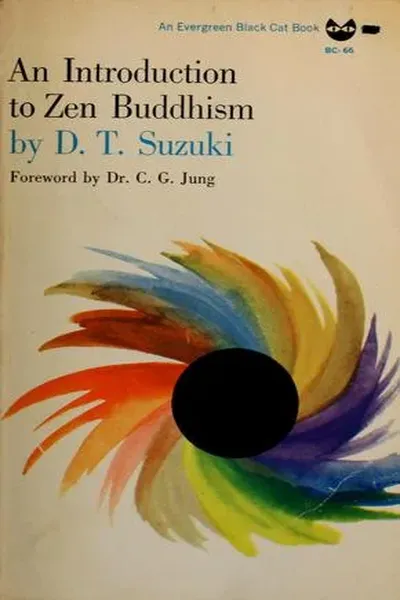





More Free Occult Philosophy Books
View all →