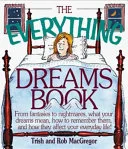
Everything Dreams Book
 83
83

Everything Dreams Book
Trish MacGregor’s 1997 work, "Everything Dreams Book," attempts a broad survey of dream phenomena, aiming to demystify sleep's nocturnal theater. Its strength lies in its accessibility; MacGregor avoids overly academic jargon, presenting complex ideas about dream interpretation and lucid dreaming in a manner suitable for the general reader. The practical advice on dream recall and journaling is particularly useful for those beginning their exploration. However, the book’s comprehensiveness sometimes leads to a lack of depth. While it touches upon various dream types, including out-of-body experiences, the treatment can feel superficial, lacking the rigorous analysis found in more specialized texts. A notable passage discusses the interpretation of falling dreams, offering a common psychological perspective while also hinting at deeper energetic interpretations. Ultimately, the book serves as a solid introductory manual, though seasoned dream workers may find it lacking in novel insights.
📝 Description
83
Trish MacGregor's "Everything Dreams Book" (1997) teaches practical methods for dream recall and symbolism interpretation.
Published in 1997, Trish MacGregor's "Everything Dreams Book" examines the nature of sleep and the mechanics of dreaming. The work moves beyond basic description to give readers practical methods for improving dream recall and understanding dream symbolism. It systematically covers various dream themes and their potential interpretations, functioning as a guide to the subconscious's personal language. The book addresses both common dream experiences and less frequent ones, such as out-of-body experiences and lucid dreaming.
This volume is for individuals seeking a deeper understanding of their dreams, from beginners to those with some experience in dream interpretation. It appeals to anyone curious about the psychological and spiritual dimensions of sleep. Students of esoteric philosophy, psychology, and personal development will find useful frameworks for self-inquiry. Those interested in exploring altered states of consciousness, including lucid dreaming and astral projection, will find relevant discussions and advice. It also serves as a resource for those experiencing distressing dreams, offering insights into causes and coping mechanisms.
The book taps into a long tradition of dream study, stretching from classical antiquity's oracular dreams to the psychoanalytic work of Freud and Jung. Published in 1997, it emerged during a period of renewed popular interest in Jungian psychology and consciousness exploration. It connects with the lineage of thought concerning altered states of consciousness, influenced by figures like Stanislav Grof and the ongoing discourse in New Age literature.
💡 Why Read This Book?
• Learn concrete techniques for enhancing dream recall and journaling, as detailed in the book's practical exercises, enabling you to capture more of your subconscious messages. • Understand the differing interpretations of common dream themes, such as nightmares and flying dreams, as presented in the book's thematic analysis, to gain personal clarity. • Explore the foundational principles of lucid dreaming as outlined by MacGregor, providing actionable steps to achieve greater conscious awareness within your dream states.
⭐ Reader Reviews
Honest opinions from readers who have explored this book.
❓ Frequently Asked Questions
When was Trish MacGregor's 'Everything Dreams Book' first published?
Trish MacGregor's 'Everything Dreams Book' was first published in 1997, positioning it within a late 20th-century surge of interest in personal growth and esoteric studies.
What are some common dream themes discussed in the book?
The book discusses common dream themes like falling, flying, being chased, and teeth falling out, offering potential interpretations for each within the context of personal psychology and symbolism.
Does the book offer guidance on remembering dreams?
Yes, 'Everything Dreams Book' provides practical advice on improving dream recall, emphasizing techniques like maintaining a dream journal and setting an intention to remember upon waking.
What is lucid dreaming according to this book?
According to 'Everything Dreams Book,' lucid dreaming is the state of becoming aware that you are dreaming while the dream is still in progress, allowing for potential control or observation.
Is 'Everything Dreams Book' suitable for beginners in dream interpretation?
Absolutely. The book is structured to guide beginners through the basics of sleep, dream recall, and interpretation, making it an accessible entry point into the subject.
What kind of glossary is included in the book?
The book includes a glossary defining key terms related to dreams, sleep, and esoteric concepts discussed within its pages, aiding readers in understanding specialized vocabulary.
🔮 Key Themes & Symbolism
Dream Recall Enhancement
MacGregor emphasizes that consistent practice is key to remembering dreams. The book details methods such as setting a clear intention before sleep, keeping a dream journal immediately upon waking, and reviewing dream entries to identify recurring patterns and symbols. This focus on practical techniques aims to make the dream world more accessible, transforming fragmented nocturnal experiences into a cohesive source of self-knowledge.
Symbolic Interpretation Frameworks
The work provides a structured approach to understanding dream symbolism, acknowledging both universal archetypes and highly personal associations. It guides readers to consider the emotional context of a dream and the dreamer's life circumstances when deciphering symbols. By offering a lexicon of common dream imagery alongside prompts for personal reflection, the book empowers individuals to decode the metaphorical language of their subconscious.
Exploring Altered Dream States
Beyond ordinary dreaming, 'Everything Dreams Book' investigates extraordinary experiences like lucid dreaming and out-of-body phenomena. It presents lucid dreaming not just as a curiosity but as a potential tool for psychological exploration and personal growth, offering techniques to induce and maintain this state of conscious awareness within the dream. The discussion provides a framework for understanding these less common but significant aspects of consciousness.
The Nature of Sleep and Dreaming
The book begins by establishing a foundational understanding of the sleep cycle and the physiological and psychological processes involved in dreaming. It differentiates between various stages of sleep and their relation to dream content. This scientific grounding serves to contextualize the more esoteric interpretations, presenting dreams as a natural, albeit mysterious, function of the human mind during rest.
💬 Memorable Quotes
Direct passages from the work, attributed to the author.
“Dreams are a natural function of the mind, offering insight into our waking lives.”
— This concept underscores the book's central thesis: dreams are not random occurrences but meaningful messages from the psyche, directly relevant to our conscious experience and personal development.
“The key to remembering dreams lies in consistent practice and intention.”
— This highlights MacGregor's emphasis on practical application. It suggests that dream recall is a skill that can be cultivated through dedicated effort, rather than an innate ability one either possesses or lacks.
“Interpreting dream symbols requires considering both universal meanings and personal associations.”
— This points to a balanced approach to dream analysis, acknowledging that while some symbols may carry archetypal weight, their specific meaning is deeply rooted in the individual dreamer's unique experiences and context.
“Lucid dreaming offers an opportunity for conscious exploration within the dream state.”
— This frames lucid dreaming as more than just an interesting phenomenon; it is presented as a valuable tool for self-discovery, allowing the dreamer to interact with their subconscious on a more aware level.
“Nightmares can often be understood as unprocessed emotions or anxieties from waking life.”
— This offers a constructive perspective on disturbing dreams, suggesting they serve a purpose in highlighting areas of inner conflict or fear that require attention and integration.
🌙 Esoteric Significance
Tradition
While not strictly adhering to a single esoteric lineage, MacGregor's work draws implicitly from Jungian psychology's exploration of archetypes and the collective unconscious, and from various traditions that view dreams as prophetic or divinatory. It aligns with the broader Hermetic principle of 'As Above, So Below,' suggesting that the inner world of dreams mirrors and influences the outer world of waking experience.
Symbolism
Key symbols explored include the act of falling, often interpreted as a loss of control or grounding in waking life, and flying, which can represent freedom, perspective, or escapism. The book also examines common motifs like teeth falling out, frequently linked to anxieties about power, communication, or loss, providing frameworks for understanding these potent dream images.
Modern Relevance
Contemporary practices in mindfulness, lucid dreaming communities, and therapeutic approaches that utilize dream work continue to find relevance in MacGregor's foundational principles. Thinkers and practitioners focused on consciousness studies and the integration of psychological and spiritual insights often reference such accessible guides for understanding the dream state.
👥 Who Should Read This Book
• Aspiring dream interpreters: Individuals new to dream analysis who seek a structured, practical guide to understanding dream symbols and improving recall. • Explorers of consciousness: Those interested in altered states of awareness, particularly lucid dreaming, who want actionable techniques and theoretical background. • Personal growth practitioners: Individuals engaged in self-discovery who wish to utilize their dreams as a tool for insight into their subconscious patterns and emotional landscape.
📜 Historical Context
Published in 1997, "Everything Dreams Book" emerged during a period of significant public engagement with psychology and self-exploration, influenced by the enduring legacy of Carl Jung and the burgeoning New Age movement. This era saw a widespread interest in understanding the subconscious, with dream analysis becoming a popular tool for personal growth. MacGregor's work tapped into this cultural current, offering accessible guidance that contrasted with more clinically focused psychoanalytic texts. While figures like Jung had explored dream symbolism decades earlier, MacGregor's approach was geared towards a broader audience seeking practical application. The book's publication coincided with a growing market for self-help literature that empowered individuals to access inner wisdom, positioning it as a contemporary guide for those exploring the field of the mind.
📔 Journal Prompts
Your personal interpretation of the 'falling dream' symbol, considering its context.
Recurring dream symbols you've noticed and their potential waking-life connections.
The practice of setting an intention for dream recall and its effect on your dream journal entries.
Experiences with lucid dreaming or attempts to achieve it, noting any unique insights gained.
The relationship between your emotional state upon waking and the clarity of your dream memories.
🗂️ Glossary
Lucid Dreaming
A state of consciousness during a dream in which the dreamer becomes aware that they are dreaming and may be able to exert some control over the dream's narrative or environment.
Dream Journal
A record kept by an individual, typically written upon waking, detailing the content, emotions, and symbols experienced during dreams, used for analysis and recall enhancement.
Archetype
In the context of dream interpretation, a universal, archaic pattern or image derived from the collective unconscious, manifesting in dreams and myths across cultures.
Nightmare
A dream characterized by intense feelings of fear, anxiety, or distress, often waking the dreamer and leaving a strong emotional residue.
Out-of-Body Experience (OBE)
A subjective experience where an individual feels their consciousness has detached from their physical body and is observing it from a different vantage point.
Dream Theme
A recurring subject, scenario, or pattern of imagery that appears across multiple dreams, often indicating underlying psychological concerns or preoccupations.
Subconscious Mind
The part of the mind of which we are not directly aware but that influences our actions, feelings, and judgments; often considered the source of dream content.