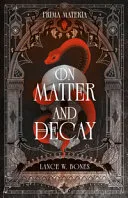
Prima Materia. On Matter and Decay
 79
79

Prima Materia. On Matter and Decay
Lance W. Bones's *Prima Materia. On Matter and Decay* approaches its subject with a refreshing intellectual rigor, eschewing the more mystical embellishments that often cloud discussions of the primal substance. The book’s strength lies in its systematic deconstruction of the prima materia concept, tracing its philosophical lineage from antiquity through the alchemical tradition. Bones’s analysis of the cyclical nature of decay and regeneration, particularly his interpretation of putrefaction not as an end but as a necessary precursor to new forms, is a compelling argument for a more nuanced understanding of material processes. However, the text occasionally suffers from an overly academic tone, which, while precise, can make dense passages feel somewhat inaccessible to those less steeped in philosophical terminology. The section on the symbolic representation of prima materia in the works of Nicolas Flamel, though brief, offers a concrete example of the abstract ideas discussed, highlighting the book's potential for practical alchemical interpretation. This is a valuable, albeit demanding, exploration for dedicated students of the Great Work.
📝 Description
79
Lance W. Bones's Prima Materia. On Matter and Decay examines the alchemical concept of the irreducible primal substance.
This book investigates the alchemical idea of prima materia, the fundamental substance from which all existence is thought to emerge and to which it eventually returns. Lance W. Bones details this concept not just as a physical element but as a philosophical and spiritual foundation. The work breaks down the dual nature of matter, its capacity for creation, and its eventual dissolution.
Prima Materia is aimed at dedicated practitioners and scholars of esoteric traditions, particularly alchemy, Hermeticism, and Gnosticism. It is for those seeking a rigorous grasp of core metaphysical principles. Readers will need a background in philosophical thought or spiritual practices, as the text requires engagement with abstract ideas and symbolic language. It does not offer superficial occult information.
The concept of prima materia has roots in ancient Greek philosophy and was central to the development of Western alchemy. Figures such as Zosimos of Panopolis in the 3rd century CE and Renaissance alchemists like Paracelsus studied its nature. Bones's book acknowledges the ongoing debates about whether prima materia is a literal substance, a spiritual force, or a psychological construct. The text engages with materialistic interpretations that arose during the Scientific Revolution, arguing for the continued relevance of alchemical cosmology.
The study of prima materia has a long history, reaching back to ancient Greek thinkers and forming a core element in the evolution of Western alchemy. Figures like 3rd-century CE alchemist Zosimos of Panopolis and later Renaissance figures such as Paracelsus all grappled with its meaning. Bones's work situates itself within this lineage, addressing centuries of discussion about whether prima materia is a literal substance, a spiritual principle, or a psychological archetype. The book implicitly confronts materialistic views that gained prominence during the Scientific Revolution, maintaining the significance of alchemical cosmology.
💡 Why Read This Book?
• Gain a precise understanding of the alchemical prima materia, moving beyond vague notions to its philosophical underpinnings as presented in Chapter 1, "The Unformed Essence." • Grasp the integral role of decay and putrefaction in the alchemical process, as detailed in Chapter 3, "The Cycle of Dissolution and Rebirth." • Learn how the Magnum Opus is conceptualized through the transformation of prima materia, offering a framework for understanding spiritual development as outlined in the text's concluding sections.
⭐ Reader Reviews
Honest opinions from readers who have explored this book.
❓ Frequently Asked Questions
What is the primary philosophical concept explored in Prima Materia. On Matter and Decay?
The book's primary concept is prima materia, the irreducible, fundamental substance from which all existence is believed to arise. It's explored as both a physical and metaphysical principle underpinning creation and dissolution.
Who was Lance W. Bones and when was this work first published?
Lance W. Bones is the author of Prima Materia. On Matter and Decay, which was first published in 2025. Little public biographical detail is available regarding the author's specific background.
How does the book discuss the concept of decay?
The work examines decay not as a negative endpoint but as an essential stage in a cyclical process of transformation. It is presented as a necessary precursor for regeneration and the emergence of new forms.
Is Prima Materia. On Matter and Decay a practical guide to alchemy?
While it provides a deep theoretical and philosophical foundation for alchemical concepts, it is not a step-by-step practical manual. Its focus is on understanding the underlying principles of matter and transformation.
What historical alchemical traditions does the book engage with?
The text engages with the historical lineage of alchemical thought, referencing concepts and figures from ancient Greek philosophy and Renaissance alchemy, such as Paracelsus, to contextualize the idea of prima materia.
What is the relationship between prima materia and the Great Work?
The book posits that the Great Work (Magnum Opus) is fundamentally the process of refining and transforming the prima materia. It's seen as the alchemical path to unlocking the potential inherent in the primal substance.
🔮 Key Themes & Symbolism
The Nature of Prima Materia
This theme dissects the alchemical concept of prima materia as the undifferentiated, primordial substance underlying all creation. Bones argues for its status as the ultimate source of potential, a concept that transcends simple materiality. The exploration moves beyond a purely physical interpretation to encompass its role as a philosophical and spiritual substratum, essential for understanding the origins and transformations of the cosmos. The text emphasizes its dual nature – capable of both immense creative power and ultimate dissolution.
The Cycle of Decay and Regeneration
Central to the book is the understanding of decay (putrefaction) not as an end but as a vital phase within a continuous cycle of transformation. Bones illustrates how the dissolution of existing forms is a necessary precursor for the emergence of new ones, mirroring natural processes. This perspective reframes the alchemical understanding of matter, highlighting its inherent dynamism and the interconnectedness of apparent opposites, crucial for the Great Work's progression.
Matter as Potentiality
The work posits matter, in its primal form, as pure potentiality. This section explores the philosophical implications of an unmanifested state from which all forms arise. It challenges static views of matter, proposing instead a fluid, dynamic substance that holds within it the seeds of all possible manifestations. This concept is fundamental to grasping the alchemical endeavor as a process of unlocking and directing inherent potentials.
The Alchemical Great Work
Prima Materia is presented as the foundational element upon which the Alchemical Great Work (Major work) is built. The text outlines how the entire process of alchemical transformation—from purification to perfection—is intrinsically linked to the manipulation and refinement of this primal substance. It offers a conceptual framework for understanding the spiritual and material objectives of alchemy as a unified pursuit of cosmic order and essence.
💬 Memorable Quotes
Direct passages from the work, attributed to the author.
“Prima materia is the fertile void from which all forms emerge, and to which they ultimately return.”
— This statement expresses the book's core argument: the primal substance is not a static entity but a dynamic principle of continuous creation and dissolution, embodying the fundamental cyclical nature of existence.
“Decay is not an ending, but the essential precursor to renewal.”
— This highlights the book's reinterpretation of putrefaction in alchemy, presenting it as a vital, transformative stage rather than a destructive force, crucial for the emergence of higher forms.
“Matter's mutability is not a flaw, but the very engine of cosmic evolution.”
— This suggests that the inherent changeability of matter, often seen negatively, is in fact the driving force behind all development and transformation in the universe, a key alchemical insight.
💡 Key Ideas
Editorial paraphrase of the work's core concepts — not direct quotes.
The alchemist's task is to perceive and work with the inherent potentiality within the unformed.
This paraphrase emphasizes the active role of the practitioner in the alchemical process, focusing on the recognition and manipulation of latent possibilities within the prima materia.
The Great Work begins with understanding the undifferentiated source.
This quote underscores the foundational importance of grasping the nature of prima materia before starting the complex stages of the alchemical major work, linking the source to the ultimate goal.
🌙 Esoteric Significance
Tradition
Prima Materia. On Matter and Decay is firmly rooted in the Western Hermetic and Alchemical traditions. It aligns with the Gnostic emphasis on a primal, undifferentiated source and the Hermetic principle of "As Above, So Below," applying it to the transformation of matter. The work departs from purely mystical interpretations by providing a rigorous philosophical analysis, positioning itself as a bridge between ancient alchemical theory and modern metaphysical inquiry.
Symbolism
Key symbols explored include the Ouroboros, representing the cyclical nature of creation and destruction inherent in prima materia, and the concept of the Philosopher's Stone, not just as a substance of transmutation but as the perfected state of this primal matter. The blackness associated with putrefaction (nigredo) is also central, symbolizing the necessary dissolution and chaos from which new order emerges.
Modern Relevance
Contemporary thinkers in fields like depth psychology and process philosophy draw upon the alchemical understanding of matter and transformation. Modern practitioners of Hermeticism and ceremonial magic often reference the concepts of prima materia and the Great Work as frameworks for personal and spiritual development, viewing Bones's work as a valuable elucidation of these foundational principles.
👥 Who Should Read This Book
• Students of Western Esotericism: Those seeking a deep, philosophical exploration of core alchemical concepts beyond introductory texts. • Scholars of Ancient Philosophy and Religion: Researchers interested in the continuity of ideas about primal substance and cosmic cycles from antiquity to the modern era. • Aspiring Alchemists and Metaphysical Practitioners: Individuals looking for a theoretical grounding in the principles of matter, transformation, and the Great Work.
📜 Historical Context
The study of prima materia has been a constant thread in Western esoteric traditions since antiquity, notably explored by figures like Zosimos of Panopolis in the 3rd century CE. During the Renaissance, alchemists such as Paracelsus further developed theories surrounding this fundamental substance, situating it within a complex cosmological framework that contrasted sharply with the emerging mechanistic philosophies of the era. Lance W. Bones's 2025 work revisits these ancient debates, acknowledging the historical tension between alchemical metaphysics and the materialistic worldview that gained dominance following the Scientific Revolution. While specific contemporary reception of Bones's work is nascent, its engagement with foundational alchemical texts places it within a lineage that has historically faced both intense scrutiny and periods of profound influence, often debated by scholars of Hermeticism and comparative religion.
📔 Journal Prompts
The concept of prima materia as the undifferentiated source.
Reflect on the role of decay within the cycle of renewal.
The potentiality inherent in unformed substance.
How the Great Work relates to the transformation of prima materia.
The dual nature of matter: creation and dissolution.
🗂️ Glossary
Prima Materia
The fundamental, irreducible substance from which all matter and phenomena are believed to originate in alchemical philosophy. It represents undifferentiated potentiality.
Major work
The Great Work of alchemy, encompassing the processes of transmutation, spiritual purification, and the creation of the Philosopher's Stone.
Putrefaction (Nigredo)
In alchemy, the initial stage of decomposition and dissolution of the prima materia, often symbolized by blackness, representing the necessary breakdown of existing forms.
Regeneration
The process of renewal and rebirth that follows decay in the alchemical cycle, leading to the formation of new, often more refined, substances or states of being.
Potentiality
The state of latent possibility or undeveloped capacity inherent in the prima materia, from which all manifest forms can arise.
Substratum
An underlying layer or foundation; in this context, the fundamental reality or substance upon which all observable phenomena are based.
Mutability
The inherent quality of being subject to change or alteration; applied to matter, it signifies its capacity to transform and take on different forms.