Key to Tarot
 76
76

Key to Tarot
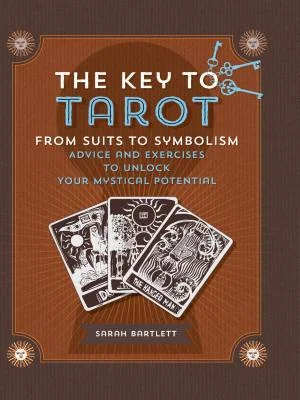
Sarah Bartlett's *Key to Tarot* presents the Tarot not as a mystical oracle, but as a sophisticated psychological tool. The book’s strength lies in its accessible approach to complex symbolism, particularly its exploration of the Major Arcana as a roadmap of the soul’s journey. Bartlett effectively deconstructs the Rider-Waite-Smith imagery, offering clear interpretations that avoid excessive jargon. A notable limitation, however, is the book's reliance on established interpretations, which, while thorough, offers little novel insight for seasoned practitioners. The section on the Fool’s journey, for instance, clearly articulates the archetypal progression but could benefit from more varied perspectives beyond standard occult literature. For the uninitiated, however, it serves as a solid, if conventional, entry point.
📝 Description
76
### What It Is Sarah Bartlett's *Key to Tarot*, first published in 2015, offers a comprehensive introduction to the practice and symbolism of Tarot cards. It functions as a guide for individuals seeking to harness their intuition and gain self-awareness through the ancient art of cartomancy. The book demystifies the Tarot, presenting it not as a rigid prophetic tool, but as a dynamic system of archetypal images that reflects inner states and potential futures.
### Who It's For This work is designed for the curious novice, the student of esoteric arts, or anyone looking to deepen their understanding of self and the symbolic language of the Tarot. It caters to those who are drawn to introspection and personal development, providing practical methods for interpreting the cards for guidance and decision-making. Readers interested in psychology, mythology, and symbolic systems will also find value here.
### Historical Context While the precise origins of Tarot cards are debated, their development in 15th-century Italy as a game evolved into their use as a divinatory tool by the late 18th century. Influential figures like Antoine Court de Gébelin connected them to ancient Egyptian mysteries, a lineage that continues to inform modern interpretations. Bartlett's book engages with this rich historical current, bridging centuries of esoteric thought and practice.
### Key Concepts At its core, *Key to Tarot* explores the concept of the Tarot as a symbolic mirror. It emphasizes the Major Arcana's archetypal journey and the Minor Arcana's representation of daily life and challenges. The book also delves into the importance of intuition in reading the cards, the relationship between the 78 cards and the querent's inner landscape, and the potential for self-discovery through understanding these symbolic narratives.
💡 Why Read This Book?
• Learn to interpret the archetypal journey of the Major Arcana, understanding its connection to personal growth as detailed in the book's chapter on the Fool's progression. • Gain practical skills for using the 78-card deck as a mirror for self-reflection, moving beyond simple fortune-telling to deeper self-understanding as presented in the interpretive sections. • Understand the historical roots of Tarot, tracing its evolution from 15th-century Italian games to its modern esoteric use, providing context for the symbolism Bartlett explains.
⭐ Reader Reviews
Honest opinions from readers who have explored this book.
❓ Frequently Asked Questions
When was Sarah Bartlett's *Key to Tarot* first published?
Sarah Bartlett's *Key to Tarot* was first published on October 15, 2015, offering a modern approach to the ancient art of Tarot interpretation.
What is the primary focus of *Key to Tarot*?
The book focuses on using Tarot cards as a tool for self-understanding, personal development, and decision-making, emphasizing their symbolic language and archetypal imagery.
Does *Key to Tarot* explain the meaning of all 78 cards?
Yes, the book provides interpretations for both the Major and Minor Arcana, detailing the symbolism and potential meanings of each of the 78 cards within the Tarot deck.
Is *Key to Tarot* suitable for complete beginners?
Absolutely. The book is structured to guide novices through the basics of Tarot, making it an ideal starting point for those new to cartomancy and esoteric studies.
What historical theories about Tarot does the book touch upon?
It references theories connecting Tarot to ancient Egyptian mysteries and its development in 15th-century Italy, providing a historical backdrop to its esoteric use.
How does Bartlett suggest using Tarot for decision-making?
Bartlett presents Tarot as a symbolic mirror that helps clarify desires and potential outcomes, aiding in making crucial decisions by revealing inner states and opportunities.
🔮 Key Themes & Symbolism
The Tarot as a Symbolic Mirror
Bartlett positions the Tarot not as a deterministic oracle, but as a reflective surface for the user's psyche. The 78 cards, with their rich imagery, are presented as a universal symbolic language that can externalize internal states, desires, and potential pathways. This perspective encourages introspection, allowing readers to engage with the cards as a dialogue partner for self-discovery and problem-solving, rather than a passive fortune-telling device.
Archetypal Journeys of the Major Arcana
A significant portion of the book is dedicated to the Major Arcana, framing them as stages in a universal human journey, often referred to as the Fool's Journey. Each card, from The Fool to The World, represents a distinct archetype or life lesson. Understanding this sequence, as detailed by Bartlett, offers a framework for navigating personal challenges and recognizing the developmental stages inherent in life experiences.
Intuition and Personal Interpretation
While providing established meanings, Bartlett emphasizes the crucial role of intuition in Tarot reading. The book encourages readers to develop their own connection with the card imagery, fostering a personal relationship with the deck. This approach empowers individuals to move beyond rote memorization, enabling them to access unique insights tailored to their specific circumstances and inner knowing.
Historical and Esoteric Lineage
Bartlett acknowledges the historical evolution of the Tarot, from its 15th-century origins as a card game in Italy to its later adoption within esoteric traditions. The book touches upon theories linking Tarot to ancient wisdom, such as those popularized by figures like Antoine Court de Gébelin, situating the practice within a broader context of mystical and divinatory arts.
💬 Memorable Quotes
Direct passages from the work, attributed to the author.
“The tarot's imagery is a symbolic universal language.”
— This highlights the core premise that the Tarot transcends cultural and linguistic barriers, communicating through archetypal symbols that resonate with the collective human psyche.
“The tarot was once thought to have been a set of sacred tablets of mystical wisdom saved from the ruins of an ancient Egyptian burning temple.”
— This reflects a popular, albeit debated, historical theory that imbues the Tarot with an ancient, near-mythical origin, linking it to lost knowledge and profound spiritual traditions.
“It is now considered to be a symbolic mirror of opportunity that can help you to make crucial decisions, confirm your true desires for the future, and enhance self-understanding.”
— This modern interpretation reframes the Tarot's purpose from simple prediction to a tool for psychological insight, personal empowerment, and informed life choices.
“Unlock your own innate psychic potential with the art of Tarot.”
— This opening statement sets the tone, suggesting that the practice of Tarot reading is not about external magic, but about accessing and developing inherent intuitive and psychic abilities within oneself.
“The tarot's imagery is a symbolic universal language which you can learn to speak.”
— This emphasizes the learnable nature of Tarot symbolism, portraying it as a coherent system of communication that, with study and practice, becomes accessible to the individual.
🌙 Esoteric Significance
Tradition
Bartlett's work is situated within the Western Esoteric Tradition, specifically drawing from the lineage that views Tarot as a tool for spiritual development and psychological insight. It aligns with interpretations that emerged following the 18th-century occult revival, particularly those influenced by Hermeticism and Neoplatonism, which see symbolic systems as keys to understanding divine principles and the human soul's journey.
Symbolism
Key symbols explored include The Fool, representing new beginnings and leaps of faith, and The High Priestess, embodying intuition, mystery, and the subconscious. The Minor Arcana's suits—Wands, Cups, Swords, and Pentacles—are presented as corresponding to elements and life domains, offering a framework for interpreting everyday events and challenges within a larger symbolic context.
Modern Relevance
This approach to Tarot as a psychological and self-discovery tool resonates strongly with contemporary practices in mindfulness, personal coaching, and therapeutic divination. Modern thinkers and practitioners in fields like archetypal psychology and Jungian analysis often find value in Bartlett's work for its accessible exploration of universal symbols that mirror the human psyche's complexities.
👥 Who Should Read This Book
• Aspiring Tarot readers seeking a foundational understanding of the 78-card system and its symbolic language, particularly those drawn to the Rider-Waite-Smith tradition. • Individuals interested in psychological introspection and self-development who wish to explore Tarot as a mirror for their inner world and decision-making processes. • Students of esoteric history curious about the evolution of Tarot interpretation, from its 15th-century origins to its modern occult and divinatory applications.
📜 Historical Context
Published in 2015, Sarah Bartlett's *Key to Tarot* emerged in an era where esoteric practices, including Tarot, experienced a resurgence in popularity, often intersecting with New Age spirituality and psychological self-help. This period saw a proliferation of Tarot literature, with authors like Rachel Pollack and Mary K. Greer already established for their deep dives into Tarot symbolism and history. Bartlett's work engages with the tradition initiated by figures like Antoine Court de Gébelin in the late 18th century, who controversially linked Tarot cards to ancient Egyptian wisdom, a narrative that profoundly shaped subsequent occult interpretations. While competing schools of thought existed, focusing on Kabbalistic or astrological associations, Bartlett's approach leans towards a more accessible, psychologically-oriented interpretation, drawing from the widely influential Rider-Waite-Smith imagery first published in 1909.
📔 Journal Prompts
Reflect on the Fool’s Journey archetype and its current stage in your life.
Consider the symbolism of the number of cups in a relevant Minor Arcana card.
Analyze the interplay between The Magician and The High Priestess in a personal reading.
How does the element associated with the suit of Wands manifest in your daily actions?
Explore the concept of 'opportunity' as presented through the lens of a Court Card.
🗂️ Glossary
Major Arcana
The 22 trump cards in a Tarot deck, representing significant life events, spiritual lessons, and archetypal energies that guide the soul's journey.
Minor Arcana
The 56 cards divided into four suits (Wands, Cups, Swords, Pentacles), typically representing everyday situations, challenges, and influences in a person's life.
Archetype
A universal, primordial pattern or image that recurs across cultures and time, representing fundamental human experiences and psychological structures, such as The Fool or The Hermit.
Cartomancy
The practice of divination or fortune-telling using a deck of cards, most commonly referring to the use of Tarot cards.
Symbolic Mirror
A concept suggesting that Tarot cards reflect the querent's inner state, subconscious thoughts, and potential future paths, serving as a tool for self-reflection rather than external prediction.
Rider-Waite-Smith Deck
A highly influential Tarot deck first published in 1909, known for its detailed illustrations and full-bleed imagery on the Minor Arcana, widely used as a standard for interpretation.
Querent
The person for whom a Tarot reading is performed; the individual seeking insight or guidance from the cards.
This book appears in 1 collection
🔮 Readers Also Liked
Browse all →


From the “Tarot” Collection
View all →
More Free Occult Philosophy Books
View all →