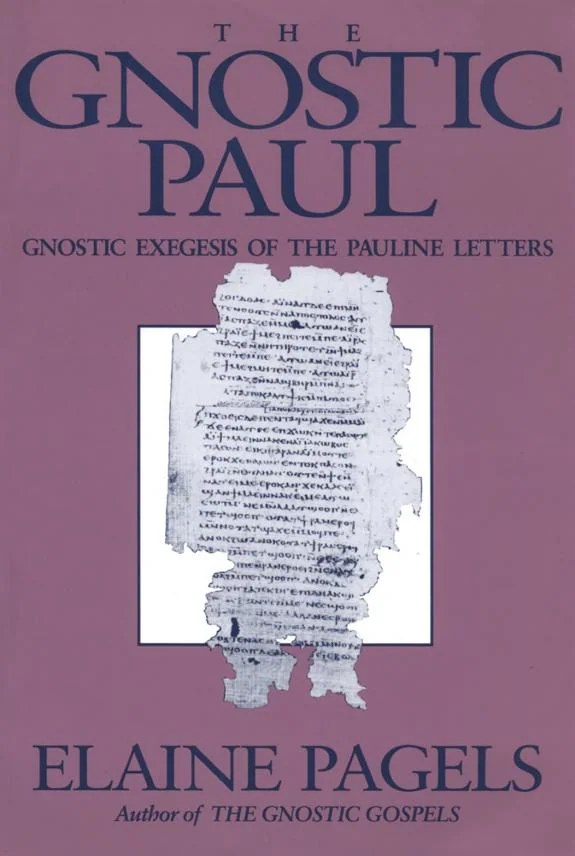
The Gnostic Paul
 81
81

The Gnostic Paul
Pagels' "The Gnostic Paul" offers a compelling revisionist reading of the Apostle's relationship with early esoteric traditions. By centering Gnostic interpretations of Paul's letters, particularly from the Nag Hammadi corpus, she persuasively argues against the long-held view of Paul as solely an opponent of "secret wisdom." The strength of the book lies in its meticulous engagement with primary sources, demonstrating how figures like the Valentinians saw Pauline authority differently than later orthodox accounts suggest. A notable limitation, however, is the inherent difficulty in definitively establishing the precise chronology and direct influence between Paul and the Gnostic schools Pagels examines; the evidence remains suggestive rather than conclusive. The analysis of Paul's Epistle to the Ephesians, exploring its potential Gnostic reception, is particularly illuminating. Pagels' work provides a vital counterpoint to monolithic interpretations of early Christianity.
📝 Description
81
In 1992, Elaine Pagels challenged the traditional view of Paul's relationship to early Gnosticism.
Elaine Pagels' "The Gnostic Paul" examines the complex relationship between the Apostle Paul and emerging Gnostic groups. Published in 1992, the book contests the widely held academic idea that Paul's letters were mainly written to counter Gnostic ideas. Pagels re-evaluates Pauline texts alongside newly discovered Gnostic scriptures, particularly those from the Nag Hammadi collection.
The work argues that certain Gnostic communities interpreted Paul's writings not as opposition but as a fellow traveler or even a primary figure for their own spiritual path. This perspective is supported by Pagels' analysis of Pauline letters like 1 & 2 Corinthians and Galatians, read through the framework of Gnostic interpretation. The book emerged during a period of scholarly reassessment of Gnosticism, greatly influenced by the 1945 discovery of the Nag Hammadi texts. Before this, knowledge of Gnostic writings came mostly from critiques by early Church Fathers. Pagels places her research within this historical context, proposing a different view of Paul's interaction with spiritual traditions later identified as Gnostic.
This book engages directly with the Gnostic tradition, a diverse set of early religious movements that emphasized personal spiritual knowledge (gnosis) for salvation. Pagels' work is situated within the scholarly reassessment of Gnosticism that followed the 1945 discovery of the Nag Hammadi library. These texts provided direct access to Gnostic writings, moving beyond interpretations found in the critiques of their opponents. "The Gnostic Paul" explores how these newly available scriptures offered a different lens through which to understand the Apostle Paul, suggesting a more sympathetic or foundational connection than previously assumed.
💡 Why Read This Book?
• Gain a revised perspective on the Apostle Paul's relationship with early esoteric movements, challenging the notion that he solely opposed those seeking 'secret wisdom,' as explored through the Gnostic exegesis of his letters. • Understand the impact of the Nag Hammadi discoveries on New Testament scholarship, specifically how these texts offer alternative interpretations of Pauline epistles like Galatians, first published in 1992. • Develop a critical lens for examining the construction of early Christian orthodoxy by exploring how Gnostic interpreters engaged with and re-contextualized key passages from Paul's writings.
⭐ Reader Reviews
Honest opinions from readers who have explored this book.
❓ Frequently Asked Questions
What is the main argument of Elaine Pagels' "The Gnostic Paul"?
The book challenges the assumption that Paul wrote his letters solely to combat Gnostic opponents. Pagels suggests that Gnostic exegetes interpreted Paul's writings, particularly letters like 1 & 2 Corinthians, as foundational for their own esoteric traditions.
What are the Nag Hammadi texts, and why are they important for this book?
The Nag Hammadi texts are a collection of Gnostic writings discovered in Egypt in 1945. They are crucial for "The Gnostic Paul" as they provide evidence of how Gnostic groups interpreted Pauline epistles, offering an alternative to traditional orthodox readings.
Which Pauline letters does "The Gnostic Paul" focus on?
The book specifically examines Paul's letters to 1 & 2 Corinthians, Galatians, Ephesians, Philippians, and Colossians, analyzing how Gnostic interpreters engaged with these texts.
When was "The Gnostic Paul" first published?
Elaine Pagels' "The Gnostic Paul" was first published on March 1, 1992.
Does this book suggest Paul was a Gnostic?
No, the book does not claim Paul was a Gnostic. Instead, it argues that Gnostics later interpreted Paul's writings and saw him as a significant figure within their spiritual lineage, rather than solely an adversary.
What is 'Gnostic exegesis' as discussed in the book?
Gnostic exegesis refers to the method by which Gnostic interpreters read and understood religious texts, including those of Paul. It involves finding esoteric meanings and applying them to Gnostic cosmology and soteriology.
🔮 Key Themes & Symbolism
Gnostic Interpretation of Paul
This theme explores how early Gnostic groups, particularly those evidenced in the Nag Hammadi library, engaged with and interpreted the epistles of the Apostle Paul. Rather than viewing Paul as a strict opponent, Pagels demonstrates how certain Gnostics saw him as a key figure whose writings contained esoteric truths relevant to their own spiritual path. The work re-evaluates passages from letters like Galatians and Ephesians through this Gnostic hermeneutical lens, suggesting a more complex and intertwined relationship between Pauline Christianity and Gnostic thought than previously assumed.
Challenging Orthodox Narratives
Pagels' research directly confronts the traditional narrative of early Christianity, which often portrays Gnosticism as a heterodox deviation that emerged in opposition to apostolic authority. By presenting evidence of Gnostic exegesis of Paul, she suggests that the lines between orthodox and Gnostic interpretations were more fluid in the 2nd century. This challenges the monolithic construction of early Christian history and highlights the diversity of spiritual and intellectual currents present at its inception.
The Nag Hammadi Library's Impact
The discovery and translation of the Nag Hammadi texts in the mid-20th century revolutionized the study of Gnosticism and early Christianity. "The Gnostic Paul" is a prime example of scholarship leveraging these discoveries. Pagels utilizes these primary Gnostic sources to offer a counter-narrative to the information previously available solely through the writings of Church Fathers like Irenaeus, thereby providing a more nuanced understanding of Gnostic beliefs and their interaction with other contemporary religious movements.
Secret Wisdom vs. Revealed Truth
The concept of 'secret wisdom' (gnosis) is central to understanding Gnosticism. Pagels examines how Gnostic interpreters perceived Paul's writings as containing elements of this hidden knowledge. This contrasts with the orthodox view of divine truth being openly revealed. The book probes the Gnostic understanding of spiritual insight as a salvific force, often found in coded messages or deeper meanings within scriptural texts, including those attributed to Paul.
💬 Memorable Quotes
Direct passages from the work, attributed to the author.
“Gnostic exegetes cite and interpret key passages in the letters they consider Pauline”
— This highlights the core of Pagels' argument: Gnostics actively engaged with Paul's writings, not just to reject them, but to incorporate and reinterpret them within their own mystical framework, suggesting a complex dialogue.
“challenge the assumption that Paul writes his letters to combat 'gnostic opponents'”
— This directly confronts the traditional scholarly view, proposing that Paul's relationship with early esoteric traditions might have been more collaborative or syncretic than adversarial, opening new avenues for understanding his ministry.
“evidence from gnostic sources may challenge the assumption”
— This points to the foundational role of Gnostic texts, particularly those from Nag Hammadi, in reshaping our understanding of early Christian history and the diverse spiritual range of the time.
“Pauline-1 & 2 Corinthians, Galatians, Ephesians, Philippians, Colossians”
— These specific letters are central to the analysis, indicating the textual basis for Pagels' exploration of Gnostic interpretations and their potential implications for understanding Paul's message and its reception.
“their claims to secret wisdom”
— This refers to the Gnostic pursuit of 'gnosis' – direct, intuitive knowledge of the divine. Pagels explores how Paul's writings were seen by some Gnostics as containing or alluding to this profound, salvific knowledge.
🌙 Esoteric Significance
Tradition
This work is deeply rooted in the Gnostic tradition, specifically exploring its relationship with early Pauline Christianity. It departs from traditional Christian interpretations by highlighting the esoteric dimensions perceived within Paul's writings by Gnostic adherents. Pagels analyzes how Gnostics viewed Paul not as an opponent, but as a transmitter of hidden knowledge, aligning with the Gnostic emphasis on inner illumination and direct spiritual experience as the path to salvation.
Symbolism
While not overtly focused on symbolic interpretation in a ritualistic sense, the book implicitly engages with Gnostic symbolism by examining how concepts like 'secret wisdom' (gnosis) and the interpretation of Pauline passages function symbolically within Gnostic thought. The letters themselves, particularly Ephesians and Colossians, are treated as texts potentially laden with veiled meanings accessible to those initiated into Gnostic understanding, representing a spiritual cosmology.
Modern Relevance
Contemporary scholars of Gnosticism and early Christianity continue to draw upon Pagels' foundational work. Her re-evaluation of Pauline texts influences modern discussions on the diversity of early Christian thought, gender roles in antiquity, and the nature of esoteric knowledge transmission. Thinkers and practitioners interested in the historical roots of Western esotericism, comparative religion, and the philosophical underpinnings of mystical traditions find her analysis essential for understanding the complex interplay of ideas in the formative centuries of Christianity.
👥 Who Should Read This Book
• Scholars of Early Christianity and Gnosticism: To engage with a significant reinterpretation of the Apostle Paul's relationship with Gnostic movements, informed by the Nag Hammadi discoveries. • Students of Comparative Religion: To understand the complex interactions between different spiritual currents in the 1st and 2nd centuries CE and how texts were interpreted diversely. • Esoteric History Enthusiasts: To explore the historical roots of esoteric traditions and how early Christian scriptures were perceived and utilized within non-orthodox spiritual frameworks.
📜 Historical Context
Published in 1992, "The Gnostic Paul" emerged from the intellectual ferment surrounding the mid-20th century discovery of the Nag Hammadi library. This collection of Gnostic texts fundamentally altered scholarly perceptions of early Christianity, moving beyond the often hostile accounts provided by Church Fathers like Irenaeus. Pagels' work positioned itself against the prevailing consensus that viewed Gnosticism primarily as a late, heretical offshoot of Christianity. She engaged with contemporary scholars like Bart Ehrman, who were also re-examining the complexities of early Christian diversity. The reception of Gnostic materials was still evolving, and Pagels' contribution offered a vital, evidence-based challenge to traditional interpretations, emphasizing the intricate dialogue between nascent Pauline Christianity and diverse esoteric movements of the 2nd century.
📔 Journal Prompts
The Gnostic exegesis of Pauline letters: how does this concept reshape your understanding of early Christian dialogue?
Paul's letters to 1 & 2 Corinthians: consider how a Gnostic interpreter might find hidden meanings beyond their surface level.
The challenge to the assumption of Paul combating 'gnostic opponents': what alternative interactions does this suggest?
The role of 'secret wisdom' in Gnostic interpretation: reflect on its significance for salvation compared to orthodox views.
The Nag Hammadi texts: how do these discoveries provide a crucial lens for understanding diverse early Christian beliefs?
🗂️ Glossary
Gnosticism
A diverse set of religious and philosophical movements prominent in the 1st to 4th centuries CE, characterized by the belief that salvation is achieved through esoteric knowledge (gnosis) of the divine, often involving a complex cosmology and dualistic worldview.
Gnostic Exegesis
The method of interpreting religious texts, particularly scripture, from a Gnostic perspective. This involves seeking hidden, spiritual meanings and relating them to Gnostic cosmology, soteriology, and the pursuit of gnosis.
Nag Hammadi Library
A collection of thirteen Coptic Gnostic texts discovered near the town of Nag Hammadi in Upper Egypt in 1945. These texts provide invaluable primary source material for understanding Gnosticism.
Apostle Paul
A central figure in early Christianity, whose letters (epistles) form a significant part of the New Testament. His theological teachings have profoundly influenced Christian doctrine.
Secret Wisdom (Gnosis)
In Gnosticism, gnosis refers to a special, intuitive knowledge of the divine that leads to salvation or liberation from the material world. It is often considered an experiential and mystical insight.
Orthodox Christianity
The mainstream or 'correct' belief system of Christianity, as defined by early Church councils and traditions. It generally contrasts with what was considered heretical, such as Gnosticism.
Epistles
Letters, particularly those written by the Apostle Paul and included in the New Testament. These are foundational texts for Christian theology and practice.
This book appears in 1 collection
🔮 Readers Also Liked
Browse all →









From the “Gnostic Gospels” Collection
View all →







More Free Sacred Texts & Gnosticism Books
View all →