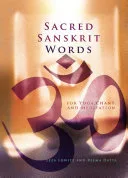
Sacred Sanskrit Words
 84
84

Sacred Sanskrit Words
Lowitz and Datta’s "Sacred Sanskrit Words" attempts a noble task: to demystify the often-intimidating Sanskrit vocabulary central to yoga and spiritual inquiry. The strength of the book lies in its clear, concise definitions and its thoughtful organization, which groups related terms thematically. For instance, the explanation of 'Shakti' as divine feminine energy, directly linked to 'Brahman' (ultimate reality), offers a tangible connection for Western readers. However, the work occasionally falters in its depth, sometimes presenting definitions that, while accurate, lack the full philosophical weight or esoteric nuance that a seasoned practitioner might seek. A potential limitation is its tendency to remain on the surface, offering a primer rather than an exhaustive exploration. Nevertheless, for beginners seeking an accessible entry point into the language of ancient Indian philosophy, it provides a solid and valuable foundation.
📝 Description
84
Published in 2009, Sacred Sanskrit Words deciphers core terms in yoga, meditation, and Vedanta.
Leza Lowitz and Reema Datta's Sacred Sanskrit Words acts as a guide to the Sanskrit vocabulary central to Eastern philosophical and spiritual practices. The book explains key terms found in yoga, meditation, and Vedanta, aiming to clarify their meanings beyond simple pronunciation. It offers context for these words, enhancing a practitioner's grasp of the concepts they embody.
This resource is designed for Western students and practitioners of yoga and Eastern philosophies who want a clearer understanding of the original language. It is useful for anyone who has encountered Sanskrit terms in classes, readings, or meditation and seeks to know their exact meanings and cultural weight. It also interests scholars of comparative religion and those curious about the linguistic origins of spiritual traditions.
The work was released in 2009, a time of growing global interest in Eastern spirituality. As yoga and meditation gained popularity in the West, so did the desire for authentic knowledge about their roots. The book responds to this by presenting a structured glossary. It differs from strictly academic linguistic studies by concentrating on the practical and spiritual significance of each word, connecting ancient Indian languages with modern spiritual seekers.
This book enters the tradition of spiritual lexicography, bridging the gap between classical Sanskrit and contemporary practitioners. By detailing terms from yoga, Vedanta, and Indic philosophies, it aids in understanding concepts like dharma, karma, and liberation. It provides the linguistic keys for those seeking deeper engagement with traditions that originated in ancient India. The work addresses a need for accessible explanations of terms that carry significant philosophical and spiritual weight.
💡 Why Read This Book?
• Gain clarity on 'Dharma' and 'Karma': Understand the foundational principles of cosmic order and action-consequence that underpin many Eastern philosophical systems, as detailed in the book's thematic sections. • Grasp the essence of 'Asana' and 'Pranayama': Learn the precise meaning and significance of yoga postures and breath control techniques beyond their physical execution, as explored in the text's practical application chapters. • Unlock the meaning of 'Moksha': Discover the ultimate goal of liberation within Indian spiritual traditions, exploring the concept's etymology and philosophical implications as presented in the glossary.
⭐ Reader Reviews
Honest opinions from readers who have explored this book.
❓ Frequently Asked Questions
What is the primary goal of "Sacred Sanskrit Words"?
The book's main objective is to provide a clear and accessible guide to the essential Sanskrit words that are fundamental to understanding yoga and other branches of Eastern wisdom, thereby enriching the reader's spiritual practice and philosophical comprehension.
Who are the authors of "Sacred Sanskrit Words"?
The authors are Leza Lowitz and Reema Datta. Leza Lowitz is an award-winning poet and author, while Reema Datta is a yoga teacher and scholar.
When was "Sacred Sanskrit Words" first published?
The book was first published on May 1, 2009, making it a relatively contemporary resource for understanding ancient terminology.
Does the book explain Sanskrit grammar or just vocabulary?
The book primarily focuses on vocabulary, explaining the meaning and significance of individual Sanskrit words and short phrases within their spiritual and philosophical contexts, rather than delving into complex grammar.
Is "Sacred Sanskrit Words" suitable for absolute beginners in yoga?
Yes, it is highly suitable for beginners. The book is designed to be accessible, breaking down complex terms into understandable definitions and providing the foundational knowledge needed to appreciate the language of yoga.
What kind of concepts does the book cover?
It covers a wide range of concepts, including philosophical terms like 'Brahman' and 'Atman', ethical principles like 'Ahimsa', and practical terms related to yoga such as 'asana' and 'pranayama'.
🔮 Key Themes & Symbolism
Foundational Philosophy
The book meticulously unpacks core philosophical tenets such as 'Brahman' (ultimate reality) and 'Atman' (the self), illustrating how these concepts interrelate within the Advaita Vedanta school of thought. It provides accessible definitions for terms like 'Maya' (illusion) and 'Samsara' (cycle of rebirth), offering a foundational understanding for readers new to these intricate metaphysical ideas prevalent in Indian spirituality.
Ethical and Spiritual Principles
Central to the work is the exploration of ethical frameworks, notably 'Ahimsa' (non-violence) and 'Satya' (truthfulness), which are presented not merely as abstract ideals but as practical applications within spiritual disciplines. The book also elucidates concepts like 'Sannyasa' (renunciation) and 'Bhakti' (devotion), highlighting their roles in the path towards spiritual realization and liberation.
The Practice of Yoga
A significant portion of the lexicon is dedicated to the terminology associated with the yogic path. Terms like 'Asana' (posture), 'Pranayama' (breath control), and 'Dhyana' (meditation) are defined with attention to their deeper meanings and their interconnectedness within the eight limbs of yoga as outlined by Patanjali. The book clarifies the purpose behind these practices, framing them as tools for self-discovery and spiritual growth.
States of Consciousness
The work looks at the descriptions of various states of consciousness and being, including 'Turiya' (the fourth state beyond waking, dreaming, and deep sleep) and 'Samadhi' (enlightenment or profound meditative absorption). By defining these terms, the book offers a linguistic map for understanding the ultimate goals of spiritual practice and the subtle shifts in awareness that practitioners aim to achieve.
💬 Memorable Quotes
Direct passages from the work, attributed to the author.
“'Dharma' refers to one's duty, the order of the universe, and the path of righteousness.”
— This definition highlights the complex nature of 'dharma', extending beyond a simple translation to encompass cosmic law and ethical responsibility, a key concept for understanding one's place and purpose.
“'Karma' is the principle of cause and effect, where every action generates a consequence.”
— This concise explanation underscores the law of karma, emphasizing that actions are not isolated events but create ripples that shape future experiences, a fundamental tenet in Indian spiritual thought.
“'Asana' is the physical posture in yoga, intended to create stability and ease.”
— This points to the practical application of 'asana', framing yoga postures not just as physical exercises but as tools designed to cultivate a stable and comfortable state of being, conducive to meditation.
“'Pranayama' involves the regulation of vital energy through breath control.”
— This interpretation clarifies that 'pranayama' is more than just breathing exercises; it is a sophisticated technique for managing life force ('prana') with wide implications for physical and mental well-being.
“'Moksha' signifies liberation from the cycle of birth and death.”
— This definition captures the ultimate spiritual aspiration in many Indian traditions, presenting 'moksha' as the profound release from worldly limitations and the attainment of ultimate freedom.
🌙 Esoteric Significance
Tradition
This work firmly sits within the lineage of Neo-Vedanta and modern Yoga philosophy, making esoteric concepts accessible to a Western audience. It draws heavily from the Upanishads and the Yoga Sutras of Patanjali, translating their profound metaphysical and practical teachings into digestible terms. While not strictly a text of esoteric practices like Tantra or Hermeticism, it provides the linguistic foundation necessary for understanding the higher philosophical aims of these traditions, focusing on the realization of Brahman and the nature of consciousness.
Symbolism
Key symbols unpacked include 'Om' (AUM), representing the primordial sound and the totality of existence, encompassing the three states of consciousness and the transcendent. 'Shakti' is explored as the divine feminine energy, the creative force of the universe, often juxtaposed with 'Shiva' as pure consciousness. The concept of 'Chakra' is also explained, presented as energetic centers within the subtle body, crucial for understanding Tantric and yogic energy systems.
Modern Relevance
Contemporary yoga instructors, mindfulness coaches, and spiritual seekers widely reference "Sacred Sanskrit Words" for its clarity. Thinkers and practitioners in the burgeoning field of contemplative science often draw upon its definitions to articulate the subtle states of mind and consciousness explored in meditation. Furthermore, online spiritual communities and educational platforms frequently utilize the book's lexicon to ensure consistent and accurate terminology in discussions about Eastern philosophies and practices.
👥 Who Should Read This Book
• Yoga practitioners seeking to deepen their understanding beyond physical postures: Those who hear Sanskrit terms in classes and wish to grasp the philosophical and spiritual context of words like 'Dharma' or 'Bhakti'. • Students of comparative religion and philosophy: Individuals researching Eastern spiritual traditions who need a reliable, accessible glossary of key concepts originating from Sanskrit. • Aspiring meditation teachers and wellness professionals: Those looking to gain foundational linguistic knowledge to teach and discuss Eastern philosophies with greater accuracy and depth.
📜 Historical Context
The initial publication of "Sacred Sanskrit Words" in 2009 coincided with a global surge in the popularity of yoga and mindfulness practices. Western audiences, increasingly engaged with these traditions, sought more than superficial instruction; they desired a deeper understanding of the philosophical and linguistic roots. This book emerged as a response to that need, providing a structured and accessible lexicon that distinguished itself from dense academic Sanskrit grammars or purely spiritual treatises. At the time, figures like( )Deepak Chopra were popularizing Eastern concepts, yet a clear, user-friendly glossary for core terms remained valuable. The work’s focus on spiritual concepts, rather than historical linguistic evolution, positioned it as a practical tool for practitioners rather than a scholarly text for Indologists. It contributed to a broader cultural movement seeking authentic engagement with Eastern philosophies, bridging the gap between ancient wisdom and contemporary seekers.
📔 Journal Prompts
The concept of 'Karma' as presented in the book, how does it inform your understanding of daily choices?
Reflect on 'Ahimsa' and its practical application in your interactions.
Consider the meaning of 'Brahman' and its relation to your personal sense of self.
How does the definition of 'Asana' in the book influence your approach to physical practice?
Explore the significance of 'Moksha' as a goal within your spiritual framework.
🗂️ Glossary
Atman
The eternal self or soul, often understood as the individual consciousness that is ultimately identical with Brahman.
Bhakti
Devotion or love towards the divine, a path to spiritual realization through dedicated worship and surrender.
Brahman
The ultimate, unchanging reality or absolute consciousness that underlies all existence in Hindu philosophy.
Chakra
Literally 'wheel,' these are considered psycho-energetic centers within the subtle body, associated with different psychological states and functions.
Dharma
One's duty, righteousness, cosmic law, or the intrinsic nature of things; the principle that upholds the universe.
Maya
Illusion or cosmic deception, the power that conceals the true nature of reality and creates the phenomenal world.
Samadhi
A state of profound meditative absorption, deep concentration, or spiritual enlightenment; the culmination of yogic practice.