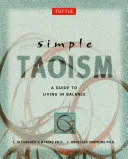
Simple Taoism
 75
75

Simple Taoism
The Simpkins’ Simple Taoism succeeds admirably in its stated goal: to make a profound philosophical system accessible. Its strength lies in the clear division of content, moving from explanation to practice. The section detailing exercises like meditation and chi kung offers concrete, actionable steps for readers eager to experience Taoist principles firsthand, rather than just intellectually. A potential limitation, however, is that in its effort for simplicity, some of the richer, more nuanced debates within Taoist philosophy might feel somewhat glossed over. For instance, the discussion on *wu-wei* is practical but could benefit from further exploration of its historical philosophical context beyond its immediate application. Nevertheless, the book provides a solid, grounded introduction. It is a useful primer for the uninitiated seeking practical wisdom.
📝 Description
75
Published in 2015, Simple Taoism by C. Alexander Simpkins and Annellen M. Simpkins offers a practical introduction to Taoist philosophy.
This book presents Taoism as a set of actionable principles for modern life. It divides its content into three parts, moving from basic knowledge to practical exercises and then to a closer look at core ideas. The authors aim to make Taoist philosophy accessible to those new to the subject.
Simple Taoism is designed for individuals curious about Taoism but perhaps daunted by its philosophical complexity. It is suitable for anyone wishing to incorporate Eastern practices into their daily lives, whether for stress relief, personal growth, or achieving a better sense of balance. Readers interested in straightforward methods for finding inner peace and grasping fundamental energetic concepts will find this book useful. It serves as a good starting point for understanding Taoist thought.
Taoism, originating with figures like Lao Tzu and texts such as the Tao Te Ching, offers a distinct path within Eastern philosophy. This particular work, published in 2015, emerged during a time of widespread interest in mindfulness and holistic practices. It aims to provide a clear entry point to Taoist thought, differing from more academic or complex interpretations that may require prior study. The book situates itself within contemporary efforts to make ancient spiritual traditions accessible to a wider audience.
💡 Why Read This Book?
• Learn to apply *wu-wei* (nonaction) by understanding its practical implications for daily decision-making, as detailed in the book's exploration of key Taoist concepts. • Discover simple, guided exercises for meditation, breathing, and chi kung, directly from the instructions provided, to foster a more balanced and energetic life. • Grasp the fundamental interplay of *yin and yang*, as explained by the Simpkins, to better interpret and harmonize the dualistic nature of experiences you encounter.
⭐ Reader Reviews
Honest opinions from readers who have explored this book.
❓ Frequently Asked Questions
What is the primary goal of Simple Taoism by C. Alexander Simpkins and Annellen M. Simpkins?
The book aims to help readers understand Taoism and apply its core principles to everyday living, offering clear explanations and practical exercises for a more balanced life.
When was Simple Taoism first published?
Simple Taoism was first published on December 8, 2015, by C. Alexander Simpkins, Ph.D., and Annellen M. Simpkins, Ph.D.
What are some of the key Taoist concepts discussed in the book?
The book covers essential concepts such as *wu-wei* (nonaction), *yin and yang* (complementary opposites), and *Te* (power or virtue).
Does Simple Taoism include practical exercises?
Yes, the book provides simple instructions for exercises including meditation, breathing techniques, chi kung, and tai chi chuan to promote a fuller life.
Who are the authors of Simple Taoism?
The authors are C. Alexander Simpkins, Ph.D., and Annellen M. Simpkins, Ph.D., who collaborated to present Taoist philosophy accessibly.
What is the structure of Simple Taoism?
The book is divided into three parts: explaining Taoism and its application, providing instructions for exercises, and discussing key Taoist concepts in detail.
🔮 Key Themes & Symbolism
Wu-Wei: Effortless Action
The concept of *wu-wei*, or nonaction, is presented not as idleness but as acting in harmony with the natural flow of the Tao. The Simpkins explain how to achieve results by avoiding unnecessary struggle and aligning one's actions with the inherent patterns of existence. This principle is crucial for reducing stress and increasing effectiveness, allowing one to achieve more by doing less, a central tenet for practical Taoist living.
Yin and Yang: Dynamic Balance
This book explores *yin and yang* as fundamental forces of complementary opposition that shape the universe. It illustrates how understanding this duality—such as light and dark, active and passive—can provide insight into personal relationships, emotional states, and external events. The Simpkins emphasize that true harmony comes not from eliminating one force, but from balancing their interplay, a concept applicable to navigating daily challenges.
Te: Cultivating Inner Virtue
*Te*, translated as virtue or power, is examined as the inherent quality or potential that arises from living in accordance with the Tao. The book suggests that cultivating *Te* involves developing one's authentic nature and vital energy (*chi*). This theme encourages readers to focus on personal integrity and the natural expression of their being, leading to a more grounded and potent way of interacting with the world around them.
Practical Application of Taoist Principles
A core focus of Simple Taoism is its practical utility. The authors provide accessible methods for integrating philosophical concepts into daily life. This includes guided exercises in meditation, breathing techniques, chi kung, and tai chi chuan, all designed to help readers cultivate energy, improve well-being, and foster a deeper connection with the Tao. The book bridges ancient wisdom and modern needs.
💬 Memorable Quotes
Direct passages from the work, attributed to the author.
“Taoism is designed to help the reader understand what Taoism is about and to help apply its best aspects to everyday living.”
— This statement captures the book's pragmatic approach, signaling its intent to bridge theoretical philosophy with tangible daily practice for the modern individual.
“Simple instructions for exercises to lead a fuller life--meditation, breathing, chi kung, and tai chi chuan.”
— This highlights the book's practical component, offering concrete methods for personal cultivation and well-being directly linked to Taoist energetic practices.
“An informative discussion of key Taoist concepts, including wu-wei (nonaction), yin and yang, and Te (power virtue, life).”
— This points to the foundational philosophical content, emphasizing the exploration of core Taoist ideas that underpin the entire system of thought and practice.
“A clear explanation of Taoism and how to apply its best aspects to your daily life.”
— This emphasizes the book's role as an introductory guide, promising clarity and actionable advice for integrating Taoist wisdom into contemporary existence.
“The book outlines: A clear explanation of Taoism and how to apply its best aspects to your daily life.”
— This direct statement from the original blurb clearly defines the book's dual purpose: to educate on Taoist philosophy and to provide practical methods for its integration.
🌙 Esoteric Significance
Tradition
While not strictly an esoteric text in the vein of Hermeticism or Kabbalah, Simple Taoism draws from the philosophical and energetic underpinnings of Taoism, a tradition deeply intertwined with esoteric practices for millennia. It bridges the gap between philosophical Taoism and its more practical, energetic applications, touching upon concepts fundamental to internal alchemy and cultivation arts that have historically been considered esoteric.
Symbolism
Key symbols like *yin and yang* are central, representing the fundamental duality and dynamic balance of all existence. The concept of the *Tao* itself, often symbolized by water or an empty vessel, represents the ineffable, fundamental principle of reality. *Chi* (or Qi), the vital life force, is another crucial element, symbolized by the energy cultivated through practices like Chi Kung, essential for health and spiritual development.
Modern Relevance
Contemporary practices in mindfulness, yoga, and somatic therapies often echo Taoist principles of flow, balance, and energetic cultivation. Thinkers and practitioners in fields ranging from holistic health and psychology to martial arts and even systems thinking continue to draw upon the foundational concepts of *wu-wei* and *yin/yang* for understanding complex systems and promoting well-being, making the Simpkins' accessible presentation highly relevant today.
👥 Who Should Read This Book
• Individuals new to Eastern philosophy seeking a clear, non-intimidating introduction to Taoist thought and its practical applications. • Practitioners of meditation, yoga, or Tai Chi looking to deepen their understanding of the underlying principles and energetic concepts. • Those interested in self-improvement and stress reduction who wish to learn actionable techniques for achieving greater balance and harmony in daily life.
📜 Historical Context
Simple Taoism, published in 2015, emerged in an era characterized by a global resurgence of interest in Eastern philosophies and contemplative practices. While Taoism itself has ancient origins, attributed to figures like Lao Tzu around the 4th century BCE, this book arrived decades after the initial Western academic and counter-cultural introductions to the subject. It followed the popularization of practices like Tai Chi and Qi Gong, which had gained traction through figures like Dr. Paul C. Ch’en in the mid-20th century. Unlike denser philosophical treatises or specialized texts on alchemy or internal arts, Simple Taoism aimed for an accessible, secular audience, positioning itself as a guide to practical well-being rather than a deep dive into esoteric lineages. Its publication date places it firmly within the contemporary self-help and mindfulness movement, distinct from the more revolutionary spiritual explorations of the 1960s and 70s.
📔 Journal Prompts
Reflect on a time when embracing *wu-wei* could have led to a more effective outcome than direct action.
How does the interplay of *yin and yang* manifest in your daily routines and relationships?
Consider the practice of *Te* as cultivating your authentic self; what does this mean for your current path?
Describe a simple breathing exercise you can incorporate into your day, inspired by the book's guidance.
How can the concept of *chi* inform your understanding of your own vitality and energy levels?
🗂️ Glossary
Tao
The fundamental, ineffable principle of the universe in Taoism; the natural order or way of things. It is often described as the source and sustainer of all existence.
Wu-wei
Literally 'nonaction' or 'effortless action'. It refers to acting in accordance with the natural flow of the Tao, without forcing or struggling, achieving results through alignment rather than exertion.
Yin and Yang
Two complementary, interdependent forces or principles that shape the universe. Yin is typically associated with passive, feminine, dark, and cool aspects, while Yang is active, masculine, light, and warm.
Te
Often translated as virtue, power, or inherent nature. It refers to the manifestation of the Tao within an individual or thing; one's authentic power and character derived from living in harmony with the Tao.
Chi (Qi)
The vital life force or energy that flows through all things. Practices like Chi Kung aim to cultivate and balance this energy for health and well-being.
Chi Kung (Qi Gong)
A system of coordinated body posture, movement, breathing, and meditation used for health, spirituality, and martial arts training. It aims to cultivate and balance *chi*.
Tai Chi Chuan
A form of Chinese martial art and moving meditation practiced for health benefits, self-defense, and spiritual development, emphasizing slow, flowing movements and internal energy cultivation.