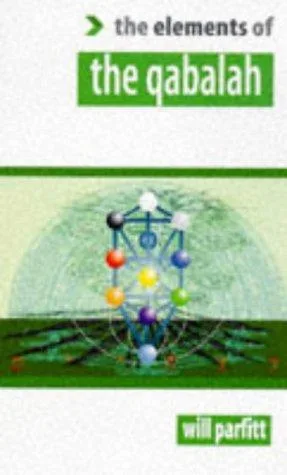
The Elements of the Qabalah (Elements of)
 61
61

The Elements of the Qabalah (Elements of)


By Silas Hawthorne, Hermetic Studies Editor: Will Parfitt's 'The Elements of the Qabalah' is a beacon of clarity in the often-dense landscape of Kabbalistic study. Parfitt possesses a rare gift for demystifying complex esoteric concepts without sacrificing their profound depth. He skillfully guides the reader through the intricate symbolism of the Tree of Life, revealing its practical applications for spiritual growth and self-understanding. This text is exceptionally well-suited for both neophytes embarking on their Qabalistic journey and seasoned practitioners seeking a refined perspective. Its strength lies in its balanced approach, bridging theoretical knowledge with actionable wisdom, making it an indispensable addition to any serious student's library.
📝 Description
61
Will Parfitt's 1998 book, 'The Elements of the Qabalah,' explains the Tree of Life through its seventy-two names.
This book breaks down the Qabalah into its core components, focusing on the Tree of Life as its central structure. Parfitt maps the ten Sephiroth and the twenty-two paths connecting them, explaining the symbolism and meaning associated with each. The text aims to make the complex system understandable, detailing how it relates to both the spiritual cosmos and the individual.
It discusses the divine architecture and the interconnectedness of macrocosm and microcosm. The author also touches on the divine spark within each person and the process of spiritual growth. The book balances philosophical ideas with practical ways to engage with Qabalistic concepts.
The Qabalah is a system of Jewish mysticism that developed in the Middle Ages. It uses symbolism, particularly the Tree of Life, to describe the divine nature and the creation of the universe. Different schools and authors have interpreted and applied Qabalistic principles in various ways, from meditative practices to understanding occult philosophy. Parfitt's work fits within this tradition by offering a structured approach to understanding its foundational elements.
💡 Why Read This Book?
Embark on a transformative journey into the heart of Western esotericism. 'The Elements of the Qabalah' offers an unparalleled opportunity to grasp the foundational principles of Kabbalistic thought, unveiling the intricate map of consciousness and the divine. Ideal for spiritual seekers, students of comparative religion, and practitioners of occult arts who desire a clear, profound, and deeply insightful exploration of this ancient wisdom tradition.
⭐ Reader Reviews
Honest opinions from readers who have explored this book.
❓ Frequently Asked Questions
What is the Qabalah?
The Qabalah is an esoteric tradition within Judaism, focused on understanding the divine nature and the creation of the universe through mystical interpretation of the Torah and its associated texts. It is characterized by its symbolic language and the use of the Tree of Life as a central diagram.
Who was Will Parfitt?
Will Parfitt was a respected author and teacher in the field of esoteric studies, particularly known for his accessible and insightful works on Kabbalah and Hermeticism. He aimed to make complex spiritual concepts understandable to a wide audience.
What is the Tree of Life?
The Tree of Life is a central symbolic diagram in Kabbalah, representing the structure of the cosmos and the pathway of creation and emanation from God. It consists of ten Sephiroth (divine attributes or emanations) connected by 22 paths.
Is this book suitable for beginners?
Yes, 'The Elements of the Qabalah' is highly recommended for beginners. Parfitt's clear explanations and structured approach make it an excellent starting point for understanding the fundamental concepts of Kabbalah without feeling overwhelmed.
What are the practical applications of Qabalah?
Qabalah offers practical applications in areas such as self-understanding, spiritual development, meditation, divination, and understanding the interconnectedness of all things. It provides a framework for personal growth and aligning oneself with divine principles.
🔮 Key Themes & Symbolism
The Tree of Life as a Cosmic Blueprint
This theme explores the Tree of Life not merely as a diagram, but as the fundamental structure of all existence, from the divine realms to the material world. It details how each of the ten Sephiroth represents a distinct stage of emanation and consciousness, and how the 22 paths connecting them symbolize the journeys of the soul and the flow of divine energy. Parfitt emphasizes its role as a map for understanding the universe and one's place within it, fostering a sense of interconnectedness and divine order.
Symbolism and Esoteric Interpretation
The book delves deeply into the body of Qabalistic symbolism, explaining how each Hebrew letter, number, and archetypal image carries profound mystical meaning. Parfitt illuminates the allegorical and hidden layers of meaning within Qabalistic texts and concepts, revealing how these symbols serve as keys to unlock deeper spiritual truths. The focus is on cultivating an intuitive understanding of these symbols, moving beyond mere intellectual comprehension to a direct experience of their energetic and spiritual significance.
The Path of Spiritual Evolution
A core theme is the Qabalah as a pathway for personal and spiritual transformation. Parfitt outlines how understanding the Tree of Life provides a framework for self-discovery, identifying one's strengths and challenges, and working through the inner landscape. The book guides the reader on a journey of spiritual ascent, from the material realm towards divine consciousness, emphasizing the importance of integrating the lessons of each Sephiroth and path to achieve wholeness and spiritual liberation.
💬 Memorable Quotes
Direct passages from the work, attributed to the author.
“Each Sephirah is a doorway to a deeper understanding.”
— This suggests that by studying and contemplating each sphere on the Tree of Life, one can progressively unlock new levels of wisdom and spiritual insight, moving closer to divine apprehension.
“The paths are the journeys we take.”
— This metaphorical statement underscores the dynamic aspect of the Qabalah, emphasizing that the connections between the Sephiroth represent the experiential and transformative processes of spiritual development.
“To know the self is to know the divine.”
— This captures a fundamental esoteric principle: that through introspection and understanding one's own inner nature, one can gain direct insight into the universal consciousness and the nature of God.
💡 Key Ideas
Editorial paraphrase of the work's core concepts — not direct quotes.
The Tree of Life is the blueprint of the soul.
This quote highlights the Qabalistic concept that the Tree of Life is not just a cosmic map, but also a representation of the human psyche and its potential for spiritual growth and divine connection.
Symbolism is the language of the divine.
This quote points to the belief that hidden truths and spiritual realities are communicated through symbolic representation, making the study of Qabalistic symbols crucial for spiritual comprehension.
🌙 Esoteric Significance
Tradition
This book is a foundational text for understanding the Western Esoteric tradition, specifically its Qabalistic branch. It illuminates the Kabbalah's role as a mystical interpretation of Jewish scripture and its profound influence on Hermeticism, Rosicrucianism, and ceremonial magic. Parfitt presents Kabbalah not just as a religious philosophy, but as a practical system for spiritual development and cosmic understanding, integral to the broader field of Western esoteric thought.
Symbolism
The core of the book's esoteric significance lies in its detailed exploration of Qabalistic symbolism, primarily the Tree of Life. Each of the ten Sephiroth, the twenty-two paths, and associated Hebrew letters are presented as potent archetypes and energetic forces. Parfitt explains how these symbols are not merely abstract concepts but represent stages of consciousness, divine attributes, and pathways of transformation, offering a symbolic language to map the divine, the human psyche, and the process of creation.
Modern Relevance
In an age of information overload and existential questioning, 'The Elements of the Qabalah' offers a timeless framework for understanding oneself and the universe. Its emphasis on interconnectedness, inner work, and the pursuit of higher consciousness resonates deeply with modern seekers. The book provides practical tools for personal growth, mental clarity, and spiritual grounding, making ancient wisdom accessible and applicable to the challenges and opportunities of contemporary life.
👥 Who Should Read This Book
This book is a treasure for a diverse array of seekers. For **beginners**, it serves as an accessible and informative introduction to the complex world of Kabbalah, clarifying its core concepts. **Scholars** of comparative religion and esoteric studies will find Parfitt's clear exposition and synthesis important for understanding the Qabalah's place within Western mysticism. **Spiritual seekers** yearning for a deeper understanding of the divine and their place in the cosmos will discover a rich map for their inner journey. **Practitioners** of occult arts and meditation will find the book offers clear insights and practical applications for their spiritual disciplines.
📜 Historical Context
Written during a period of renewed interest in esoteric traditions, 'The Elements of the Qabalah' emerged from a body of occult revivalism and scholarly inquiry into ancient wisdom. The late 20th and early 21st centuries saw a resurgence of individuals seeking deeper spiritual meaning beyond conventional religious or material paradigms. Will Parfitt's work tapped into this zeitgeist, offering a clear and structured entry point into the complex world of Kabbalah, which had previously been accessible primarily through dense, specialized texts. His approach resonated with a generation eager to explore the philosophical and mystical underpinnings of Western esotericism, bridging the gap between historical doctrine and contemporary spiritual seeking.
📔 Journal Prompts
Reflect on the Sephirah that most appeals to your current life experience. What lessons might it be offering you?
Consider one of the paths on the Tree of Life. How can you consciously integrate its energies or lessons into your daily life?
What does the concept of 'divine emanation' mean to you personally? How does it affect your perception of yourself and the world?
Explore a symbol from the Qabalah that you find particularly intriguing. What intuitive meanings or associations arise for you?
How can understanding the interconnectedness of the Tree of Life influence your relationships and interactions with others?
🗂️ Glossary
Sephirah (plural: Sephiroth)
The ten divine emanations or attributes described in Kabbalah, forming the structure of the Tree of Life. They represent stages of divine manifestation and aspects of consciousness.
Tree of Life
A central diagram in Kabbalah, consisting of ten Sephiroth connected by 22 paths. It symbolizes the universe, the divine creation, and the human soul's journey.
Kether
The first Sephirah on the Tree of Life, representing the supreme crown or divine will. It is the source of all existence, the ultimate unity beyond comprehension.
Chokmah
The second Sephirah, representing wisdom or divine inspiration. It is the masculine, active principle that sparks creation and emanates from Kether.
Binah
The third Sephirah, representing understanding or divine intelligence. It is the feminine, passive principle that shapes and manifests the inspiration received from Chokmah.
This book appears in 1 collection
🔮 Readers Also Liked
Browse all →






More by Will Parfitt
All books →





From the “Kabbalah” Collection
View all →




![EBOOK COLLECTION ( PART 8) [ CSI][h 33t]](/img/thumb/ebook-collection-part-8-csi-h-33t.webp)


More Free Kabbalah & Jewish Mysticism Books
View all →