Three types of ancient Jewish mysticism
 61
61

Three types of ancient Jewish mysticism



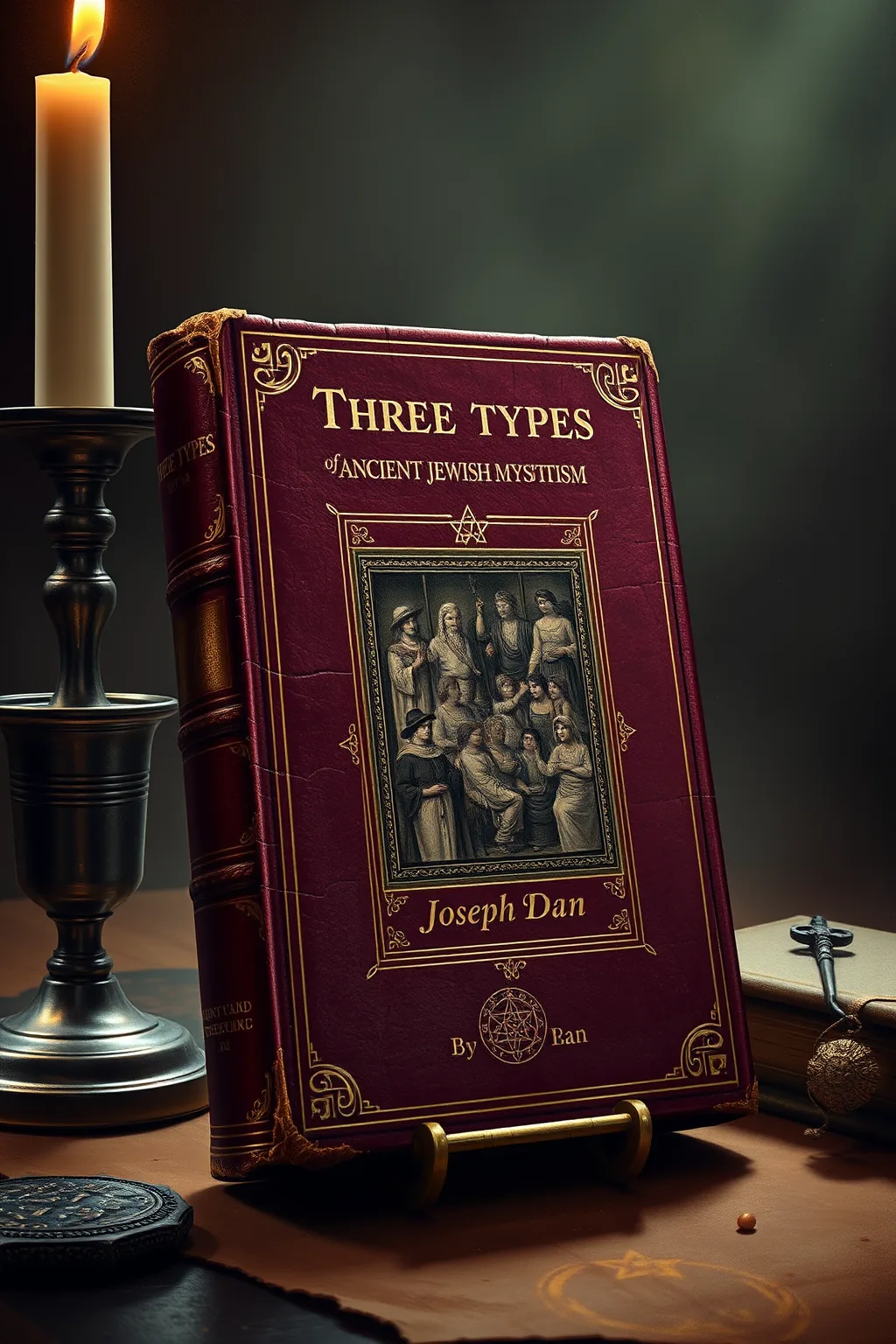
Joseph Dan's 'Three Types of Ancient Jewish Mysticism' is an indispensable guide for anyone seeking to penetrate the veil of traditional Jewish spirituality. Isolde Whitaker, Sacred Texts Editor, commends Dan's unparalleled ability to elucidate complex Kabbalistic concepts with clarity and scholarly rigor. He skillfully dissects distinct mystical streams, revealing their unique approaches to divine immanence and transcendence. This work is a treasure trove of esoteric insights, offering a deep dive into the symbolic language and meditative practices that have shaped Jewish mysticism for centuries. It is essential reading for students of comparative religion, philosophy, and the occult arts, providing a solid foundation for further exploration.
📝 Description
61
Joseph Dan's 1998 book identifies three distinct categories within ancient Jewish mysticism.
In 'Three Types of Ancient Jewish Mysticism,' Joseph Dan categorizes the diverse currents of Jewish mystical thought. He differentiates between ecstatic Kabbalah, which seeks direct divine experience, theosophical Kabbalah, focused on understanding the divine structure, and meditative practices that often involve visualization and textual interpretation. Dan examines the historical development and core tenets of each type, demonstrating how they shaped Jewish spiritual life and belief over centuries.
The book details the symbolic language and conceptual frameworks used by mystics. It considers how concepts like divine emanations, the structure of the cosmos, and the soul's journey were understood and expressed. Dan's work aims to clarify the often-confusing landscape of Jewish mysticism, presenting a structured approach to its study for both newcomers and those already familiar with the subject.
This work situates itself within the study of Jewish mysticism, a tradition with roots stretching back to antiquity and flourishing in the medieval period with Kabbalah. It addresses the historical and conceptual development of mystical practices and beliefs that sought direct experience of the divine, understanding of God's hidden nature, and the structure of reality. Dan’s categorization helps delineate the varied expressions of this esoteric tradition, from its early Merkabah mysticism precursors to later Hasidic movements.
💡 Why Read This Book?
Uncover the hidden layers of Jewish spiritual tradition and explore the profound depths of Kabbalistic thought. 'Three Types of Ancient Jewish Mysticism' is essential for seekers yearning for deeper spiritual understanding, scholars desiring rigorous analysis, and practitioners seeking to enrich their contemplative practices. This book offers rare insights into esoteric knowledge, symbolic interpretation, and the transformative power of mystical engagement.
⭐ Reader Reviews
Honest opinions from readers who have explored this book.
❓ Frequently Asked Questions
What are the three main types of ancient Jewish mysticism discussed?
Joseph Dan meticulously details three distinct, yet interconnected, streams of ancient Jewish mysticism: Merkabah mysticism, Hekhalot literature, and early Kabbalah, each with its unique focus on divine ascent, celestial palaces, and the esoteric interpretation of Torah.
Is this book suitable for beginners in mysticism?
While dense with scholarly insight, Dan's clear exposition makes the foundational concepts accessible. Beginners will find it an excellent, albeit challenging, introduction to the complexities of Jewish esoteric traditions.
What is the primary focus of Merkabah mysticism?
Merkabah mysticism centers on visionary ascents to the divine throne (Merkabah), often through intense meditative and ascetic practices, aiming to experience the glory of God and the heavenly realms.
How does Kabbalah differ from earlier forms of Jewish mysticism?
Kabbalah introduces a more systematic theological framework, including the concept of the Sefirot (divine emanations) and a complex cosmological understanding, building upon but also innovating from earlier mystical traditions.
Where can I find more resources on Jewish mysticism after reading this book?
Esoteric Library offers a curated selection of further readings on Kabbalah and Jewish mysticism, including works by scholars such as Gershom Scholem and Moshe Idel, providing continuous avenues for exploration.
🔮 Key Themes & Symbolism
The Divine Ascent and Visionary Experience
This theme looks at the core practice of Merkabah and Hekhalot mysticism: the ecstatic journey of the soul through celestial realms to attain direct vision of the divine throne. It explores the rigorous asceticism, meditative techniques, and the profound psychological transformations involved in these visionary ascents. Readers will gain insight into the ancient Jewish longing for immediate spiritual experience and the symbolic language used to describe encounters with the ineffable, highlighting the ecstatic and experiential dimensions of early Jewish mystical practice.
Symbolism and Esoteric Interpretation
Central to all forms of Jewish mysticism is the belief that the physical world and sacred texts, particularly the Torah, are imbued with hidden, spiritual meanings. This theme examines the intricate symbolic systems employed, from the divine names and angelic hierarchies to the cosmological diagrams and the profound significance of Hebrew letters. It reveals how mystics decoded these symbols to understand the divine order, the nature of creation, and the path to spiritual enlightenment, showcasing the power of esoteric interpretation in accessing deeper truths.
The Emergence of Kabbalah
This theme traces the evolution from earlier mystical traditions to the development of Kabbalah, a more systematic and complex form of Jewish mysticism. It focuses on the introduction of key concepts like the Sefirot (divine emanations), the Zohar's influence, and the shift towards a more integrated worldview that encompassed cosmology, theology, and practical mysticism. Understanding this transition provides a crucial context for grasping the evolution of Jewish esoteric thought and its lasting impact on spiritual and philosophical discourse.
💬 Memorable Quotes
Direct passages from the work, attributed to the author.
“Within the letters, the secrets of creation lie concealed.”
— Highlighting the gnostic underpinnings of Jewish mysticism, this emphasizes the belief that the Hebrew alphabet is not merely a linguistic tool but a divine blueprint containing the very essence of existence.
“The divine is not distant, but woven into the fabric of all things.”
— This speaks to the immanent aspect of God found in Kabbalah, suggesting that the mystical path is one of uncovering the divine presence already present in the mundane world.
“The path of mysticism is paved with paradox and illuminated by revelation.”
— This acknowledges the often counter-intuitive nature of mystical insights and the sudden, profound moments of understanding that transcend rational thought.
💡 Key Ideas
Editorial paraphrase of the work's core concepts — not direct quotes.
The ascent is not merely a physical journey, but a profound inner transformation.
This quote expresses the spiritual essence of Merkabah mysticism, emphasizing that the outward journey through heavenly palaces is a metaphor for the soul's internal purification and evolution towards divine consciousness.
To know the divine is to know oneself, and to know oneself is to know the divine.
This quote points to the reciprocal relationship between self-knowledge and divine knowledge, a central tenet in many mystical traditions, where the microcosm reflects the macrocosm.
🌙 Esoteric Significance
Tradition
This work is intrinsically linked to the esoteric tradition of Kabbalah and broader Jewish mysticism. It looks at the hidden meanings, secret practices, and visionary experiences that form the core of this lineage. The book illuminates the quest for divine knowledge and union, exploring how mystics sought to transcend ordinary consciousness to perceive the divine order and influence cosmic processes through contemplation and ritual.
Symbolism
The esoteric significance lies heavily in the collection of symbolism employed. From the celestial palaces and divine chariots of Merkabah mysticism to the intricate diagrams of the Sefirot in Kabbalah, these symbols serve as potent keys to unlocking deeper spiritual realities. They represent divine attributes, cosmic structures, and the pathways of the soul, acting as a visual and conceptual language for the ineffable.
Modern Relevance
In an era often characterized by disconnection and material focus, the ancient Jewish mystical traditions offer a powerful counterpoint. They provide frameworks for profound introspection, ethical development, and a deeper connection to the sacred. The emphasis on inner experience, symbolic understanding, and the search for meaning resonates deeply with contemporary seekers looking for spiritual depth and guidance in reading through the complexities of modern life.
👥 Who Should Read This Book
This profound work is a vital resource for a diverse audience. **Scholars** of religious studies, Jewish history, and comparative mysticism will find Dan's rigorous analysis and comprehensive overview invaluable. **Seekers** of spiritual wisdom, particularly those drawn to the esoteric dimensions of Judaism, will discover a rich source of contemplative material and philosophical depth. **Practitioners** of meditation and esoteric arts will gain a deeper understanding of the historical roots and symbolic language of Jewish mystical practices. **Beginners** with a sincere interest in mysticism will find it an clear, albeit challenging, introduction to the foundational concepts of this ancient and powerful tradition.
📜 Historical Context
Joseph Dan's exploration of 'Three Types of Ancient Jewish Mysticism' is firmly rooted in the important eras of Jewish intellectual and spiritual history. The traditions he examines flourished primarily during the late antiquity and early medieval periods, a time of immense upheaval and intellectual ferment for Jewish communities following the destruction of the Second Temple. Merkabah and Hekhalot mysticism arose in the centuries after the Temple's fall, offering solace and a new avenue for divine communion through visionary experiences. Later, the burgeoning of Kabbalah in the medieval period, particularly in Provence and Spain, built upon these earlier foundations, developing a sophisticated theological and cosmological system. This period saw intense interaction with other philosophical and mystical traditions, influencing the development of Kabbalistic thought and its intricate symbolic language, profoundly shaping Jewish spirituality for centuries to come.
📔 Journal Prompts
Reflect on a personal experience of 'divine ascent' or clear insights. How did it feel, and what did it signify?
Explore the concept of hidden knowledge. What areas of your life or understanding feel veiled, and what symbols might help illuminate them?
Consider the idea of divine immanence. Where do you perceive the sacred present in your everyday life, and how can you deepen that awareness?
If you were to interpret a common object or natural phenomenon through a mystical lens, what hidden meanings might you uncover?
How can the pursuit of esoteric knowledge contribute to personal growth and ethical living?
🗂️ Glossary
Merkabah
Hebrew for 'chariot,' referring to the divine throne or the visionary experience of ascending to the heavenly realms to behold God's glory, central to early Jewish mysticism.
Hekhalot
Hebrew for 'palaces,' referring to the mystical literature describing the ascent through seven heavenly palaces to reach the divine presence.
Kabbalah
The esoteric tradition of Jewish mysticism, concerned with divine nature, creation, and the relationship between God and humanity, often employing complex symbolism and cosmology.
Sefirot
In Kabbalah, the ten divine emanations or attributes through which God manifests and interacts with the created universe, forming a divine blueprint.
Ein Sof
Hebrew for 'Without End' or 'Infinite,' referring to the unknowable, transcendent essence of God before any divine manifestation or creation.
This book appears in 1 collection
🔮 Readers Also Liked
Browse all →








More by Joseph Dan
All books →

From the “Kabbalah” Collection
View all →






More Free Kabbalah & Jewish Mysticism Books
View all →