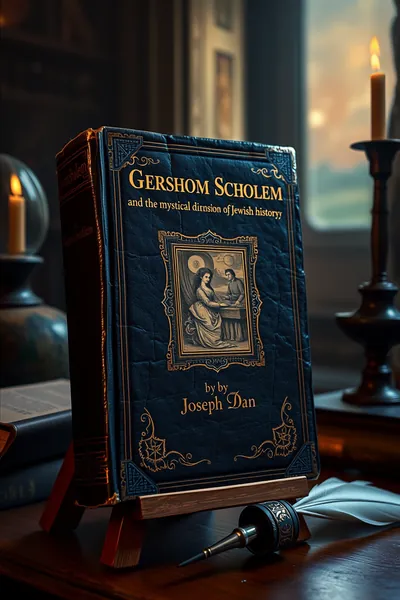
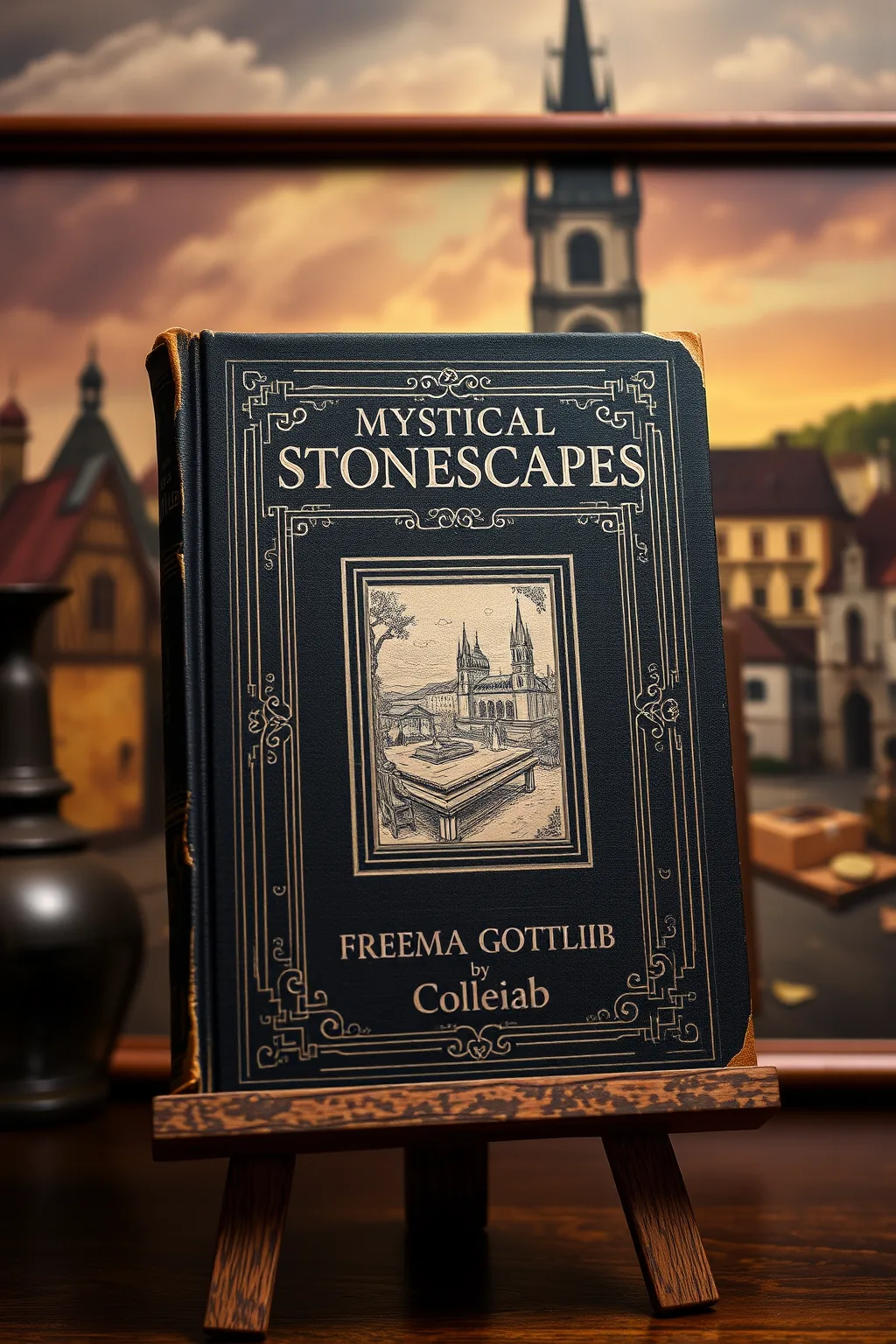
Mystical stonescapes of Prague Jewish town and Czech countryside
 61
61

Mystical stonescapes of Prague Jewish town and Czech countryside


Freema Gottlieb’s 'Mystical Stonescapes' is a tour de force of esoteric scholarship, illuminating the profound spiritual dimensions of Prague’s Jewish heritage and the Czech countryside. Gottlieb masterfully deciphers the complex symbolism of sepulchral art, revealing intricate connections to Kabbalistic principles and ancient Jewish mystical traditions. Her prose is as evocative as the landscapes she describes, drawing the reader into a world of hidden meanings and sacred geometries. This work is indispensable for anyone seeking a deeper understanding of Jewish funerary art and its spiritual underpinnings, offering a bridge between tangible history and intangible wisdom. It’s a compelling read for scholars, mystics, and anyone drawn to the profound dialogue between stone, spirit, and the enduring legacy of the human soul.
📝 Description
61
Freema Gottlieb's 1995 book examines the esoteric symbolism in Prague's Jewish Quarter and Czech countryside.
In 'Mystical Stonescapes of Prague Jewish Town and Czech Countryside,' Freema Gottlieb examines the esoteric meanings found in the architecture and gravestones of Prague's historic Jewish Quarter and the broader Czech landscape. The book deciphers the symbolic language embedded in these sites, drawing connections to Kabbalistic thought and Jewish mysticism. Gottlieb presents these stones not merely as historical markers but as carriers of hidden spiritual knowledge. The text encourages readers to consider the interconnectedness of life, death, and cosmic energy, inviting a contemplative approach to tangible history. It is intended for those interested in uncovering the spiritual heritage within these ancient locations, urging a deeper look at the symbols that have resonated for centuries.
The author's approach aims to reveal layers of meaning often overlooked in a surface examination. The book focuses on how the physical structures and memorial markers of these specific locations contain coded information related to mystical traditions. It functions as a guide for those who wish to understand the spiritual underpinnings of the built environment in these historical Jewish communities and their surrounding areas.
This work sits within the Western Esoteric tradition, specifically focusing on the intersection of Jewish mysticism and the physical environment. It engages with ideas related to sacred geometry, the symbolic language of stone, and the transmission of spiritual knowledge through material culture. The book connects with traditions that view landscapes and built structures as repositories of hidden meaning and spiritual energy, drawing parallels between ancient traditions and contemporary esoteric understanding.
💡 Why Read This Book?
Discover the hidden spiritual language of ancient stones. Uncover profound Kabbalistic insights embedded in Prague's Jewish Quarter and Czech landscapes. This book is essential for seekers, scholars, and practitioners of Jewish mysticism eager to connect with a rich, symbolic heritage. It offers a unique perspective on the intersection of art, history, and esoteric wisdom, transforming how you view sacred spaces.
⭐ Reader Reviews
Honest opinions from readers who have explored this book.
❓ Frequently Asked Questions
What specific Kabbalistic concepts are explored in relation to the stonescapes?
The book explores concepts such as the Tree of Life, divine emanations (Sefirot), the transmigration of souls (Gilgul), and the mystical significance of Hebrew letters as they are symbolically represented or alluded to in the tombstone inscriptions and architectural motifs.
Is prior knowledge of Kabbalah or Jewish mysticism required to understand this book?
While a basic familiarity can enhance appreciation, Freema Gottlieb provides clear explanations of key esoteric terms and concepts, making the book accessible to both seasoned practitioners and curious newcomers to Jewish mysticism.
What makes the sepulchral slabs in Prague's Jewish cemeteries particularly significant?
These slabs are more than mere markers; they are considered sacred texts, imbued with intricate carvings and inscriptions that encode profound theological ideas, prayers, and symbolic representations of the deceased's spiritual journey and connection to the divine.
How does the Czech countryside complement the Prague Jewish Quarter in this study?
The countryside offers a broader context, revealing how mystical principles and symbolic traditions extend beyond urban centers, connecting with the natural world and ancient sites that may hold a shared spiritual resonance.
Can this book be used as a practical guide for spiritual exploration?
Yes, while deeply academic, the book encourages contemplative reading and offers insights that can inspire personal spiritual reflection and a deeper appreciation for sacred environments and their symbolic messages.
🔮 Key Themes & Symbolism
The Silent Language of Stones
This theme explores the profound semiotics of funerary art and architectural elements within the Prague Jewish Quarter and the Czech countryside. It posits that gravestones and sacred structures are not static relics but vibrant carriers of ancient wisdom, encoded through a complex lexicon of symbols, motifs, and inscriptions. Gottlieb explores how these stones communicate spiritual narratives, theological concepts, and ancestral memories, inviting readers to decipher this silent, yet eloquent, language of the past. The focus is on understanding the deeper meaning embedded in the carvings, from floral motifs representing life and resurrection to geometric patterns symbolizing divine order and cosmic unity.
Kabbalistic Echoes in the Landscape
This section examines the pervasive influence of Kabbalah and Jewish mysticism on the spiritual and symbolic range of Bohemia. Gottlieb illustrates how the core tenets of Kabbalistic thought – such as the divine emanations (Sefirot), the concept of Ein Sof (the Infinite), and the interconnectedness of all creation – are subtly or overtly reflected in the design and placement of Jewish cemeteries and historical sites. The book seeks to reveal how these mystical frameworks informed the worldview of the communities that inhabited these lands, imbuing the stonescapes with layers of esoteric meaning that resonate with ancient spiritual traditions.
Sacred Geography and Cosmic Resonance
The book treats the physical locations of Prague's Jewish Town and the broader Czech countryside as imbued with spiritual significance. This theme explores the concept of sacred geography, where certain sites are believed to possess unique energetic qualities or to serve as conduits for divine influence. Gottlieb investigates how the positioning of synagogues, cemeteries, and even natural landmarks within the landscape might align with Kabbalistic principles of celestial harmony and earthly connection. The aim is to understand how these stonescapes act as focal points for spiritual contemplation and as tangible manifestations of a divine order within the material world.
💬 Memorable Quotes
Direct passages from the work, attributed to the author.
“The stone remembers what the flesh forgets.”
— This poignant statement highlights the enduring nature of spiritual truths and historical memory, suggesting that the inscriptions and forms on ancient stones hold a timeless wisdom that outlasts human existence.
“Every chisel mark a whisper from eternity.”
— This evocative phrase emphasizes the sacred intention behind the creation of these monuments, portraying each carved line as a deliberate act of transmitting spiritual messages across time and space.
“The cemetery is not an end, but a doorway.”
— This profound perspective reframes the traditional view of death, positioning burial sites not as final destinations but as transitional spaces or portals to other domains of existence, in line with mystical beliefs.
💡 Key Ideas
Editorial paraphrase of the work's core concepts — not direct quotes.
In the shadow of the Golem, the soul finds its reflection.
Alluding to Prague's legendary mystic, this quote suggests that the city's esoteric heritage provides a unique environment for introspection, where one can confront and understand their own spiritual essence.
Symbolism is the ancient tongue of the divine.
This quote underscores the book's central thesis: that symbols are the universal language through which spiritual truths are conveyed, and that understanding them is key to unlocking hidden knowledge.
🌙 Esoteric Significance
Tradition
The primary esoteric tradition explored is Kabbalah, the mystical interpretive tradition of Judaism. This includes its various branches and historical developments, focusing on concepts like the Sefirot (divine emanations), Gematria (numerological interpretation of Hebrew letters), and the mystical significance of the Zohar. The book also touches upon broader themes of hermeticism and esoteric philosophies that may have influenced or coexisted with Jewish mysticism in Central Europe, creating a rich dialogue between traditions.
Symbolism
The book meticulously deciphers the strong symbolism embedded in the stonescapes. Key symbols include motifs like the lion (representing Judah and strength), the pomegranate (fertility and abundance), the hand of God (divine intervention), and various floral and geometric patterns, each carrying layers of meaning related to life, death, resurrection, divine providence, and the journey of the soul. Hebrew inscriptions themselves are treated as symbolic texts, with their arrangement and content holding profound theological weight.
Modern Relevance
In an age often characterized by secularism and materialism, this book offers a vital connection to ancient wisdom and spiritual depth. It demonstrates how esoteric traditions and symbolic thinking can provide frameworks for understanding life's mysteries, fostering a sense of awe and interconnectedness. For contemporary seekers, it illuminates paths to inner contemplation, encourages a more profound engagement with history and heritage, and highlights the enduring power of symbolism to convey timeless truths about the human condition and the divine.
👥 Who Should Read This Book
This book is a treasure for discerning readers. **Scholars** of Jewish history, art, and religious studies will find invaluable academic insights and primary source interpretation. **Seekers** of spiritual wisdom and esoteric knowledge will be drawn to the profound Kabbalistic concepts and contemplative themes. **Practitioners** of mysticism, particularly those interested in Jewish traditions, will discover new dimensions of symbolic language and sacred geography. Even **beginners** to these subjects will find Gottlieb's accessible yet deep exploration a captivating introduction to the mystical dimensions of history and art, offering a unique lens through which to view the world.
📜 Historical Context
The 'Mystical Stonescapes' are deeply rooted in the rich historical collection of Bohemia, particularly the centuries of Jewish life in Prague and its surrounding regions. The book's focus on the Prague Jewish Quarter places it within the context of one of Europe's most significant and enduring Jewish communities, which flourished from the medieval period through the early modern era. The sepulchral slabs and synagogues discussed often date from the 16th and 17th centuries, a period of intense intellectual and mystical activity, including the era of Rabbi Judah Loew ben Bezalel (the Maharal), a figure intertwined with Kabbalistic lore and the legend of the Golem. The broader Czech countryside context allows for an exploration of how these mystical traditions intersected with local folklore and historical events, often against the backdrop of religious and political upheaval. This historical layering provides a fertile ground for understanding the evolution of Jewish thought and its material manifestations.
📔 Journal Prompts
Reflect on a place you consider 'sacred.' What elements contribute to its spiritual resonance for you?
How might the symbols found on ancient stones communicate messages to us today?
Consider the concept of 'memory' in stone versus 'memory' in the human mind. What are the differences and connections?
If a gravestone could speak, what story would it tell about the person buried beneath and their connection to the divine?
Explore a personal symbol that holds deep meaning for you. What is its origin, and what does it represent in your life?
🗂️ Glossary
Sepulchral Slabs
These are the stone slabs that cover graves, often intricately carved and inscribed. In this context, they are viewed not just as markers of death but as repositories of spiritual narratives, symbolic imagery, and theological concepts.
Kabbalah
The esoteric and mystical tradition within Judaism, seeking to understand the nature of God and the universe through interpretation of the Torah and other sacred texts, often employing complex symbolism and numerology.
Sefirot
In Kabbalah, the ten divine emanations or attributes through which God manifests and interacts with the created universe. They form the structure of the Kabbalistic Tree of Life.
Gilgul Neshamot
The Kabbalistic concept of the transmigration or reincarnation of souls. This belief suggests that souls may undergo multiple earthly lives to complete their spiritual journey or rectifications.
Maharal
An acronym for Rabbi Judah Loew ben Bezalel, a prominent 16th-century Talmudist, mystic, and philosopher in Prague, famously associated with the legend of the Golem and deep Kabbalistic scholarship.
This book appears in 1 collection
🔮 Readers Also Liked
Browse all →








More by Freema Gottlieb
All books →

From the “Kabbalah” Collection
View all →








More Free Kabbalah & Jewish Mysticism Books
View all →