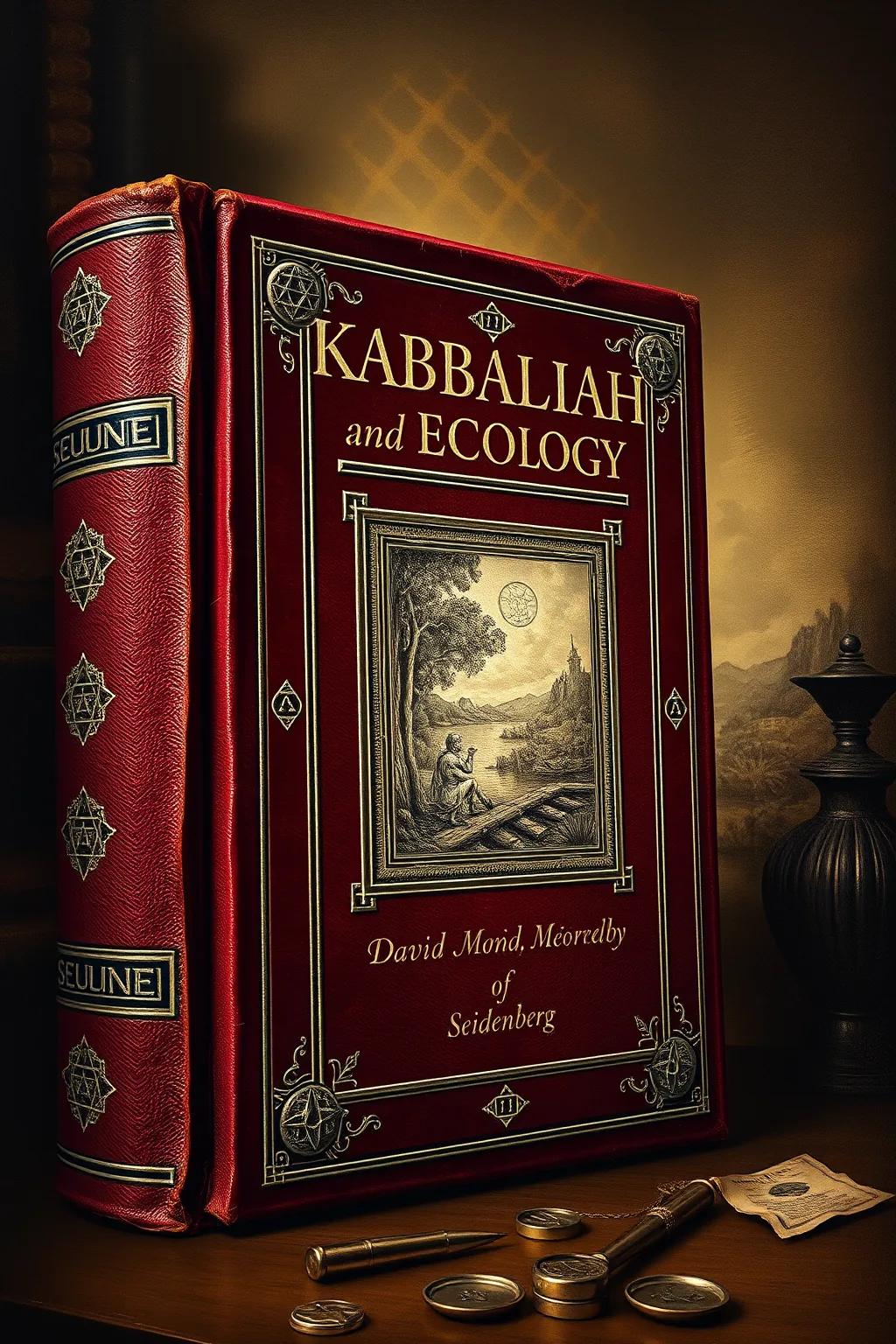
Kabbalah and Ecology
 62
62

Kabbalah and Ecology


Ophelia Vance (Mystical Literature Reviewer) — David Mevorach Seidenberg's 'Kabbalah and Ecology' is a revelation, a meticulously crafted bridge between the esoteric depths of Jewish mysticism and the urgent concerns of our ecological crisis. Seidenberg unveils the profound ecological implications embedded within Kabbalistic thought, demonstrating how ancient teachings offer a potent framework for understanding our interconnectedness with the cosmos. His exegesis is both scholarly and soul-stirring, illuminating the Image of God not just within humanity, but within every facet of creation. This work is essential reading for anyone seeking to integrate spiritual practice with environmental responsibility, offering a much-needed paradigm shift from dominion to dialogue with the natural world. A truly illuminating and vital contribution.
📝 Description
62
David Mevorach Seidenberg's 2015 book connects Kabbalistic thought to ecological ethics.
David Mevorach Seidenberg's book examines the surprising connections between Kabbalah, a tradition of Jewish mysticism, and contemporary ecological thought. He argues that Kabbalistic cosmology presents a view of creation as a dynamic, divinely infused process. Humanity's place within this framework is not one of domination but of responsible care. The book deciphers Kabbalistic symbolism to show how the natural world is seen as a manifestation of the Infinite.
Seidenberg's work invites readers to reconsider their relationship with the Earth. Instead of viewing nature solely as a resource, the text suggests a perspective of sacred stewardship, drawing parallels between the highest spiritual levels and the physical world. This approach offers a way to integrate ecological concerns with a deeper spiritual understanding, bridging the gap between mystical traditions and environmental awareness.
This work is situated within the study of Kabbalah, a body of Jewish mystical teachings that flourished from the medieval period onwards. Kabbalah traditionally focuses on the divine nature, the structure of the cosmos, and methods for spiritual ascent. Seidenberg applies these esoteric concepts to a modern ecological framework, demonstrating how ancient mystical ideas can inform contemporary ethical and environmental perspectives. He draws on specific Kabbalistic texts and concepts to build his argument, placing the book within both the scholarly study of mysticism and the growing field of eco-spirituality.
💡 Why Read This Book?
Discover the hidden ecological wisdom within Kabbalah, a tradition often perceived as solely spiritual. This book reveals how ancient Jewish mystical concepts offer a powerful, sacred framework for understanding and healing our relationship with the Earth. Ideal for spiritual seekers, environmentalists, and scholars of mysticism who yearn for a holistic, divinely-inspired approach to ecological stewardship.
⭐ Reader Reviews
Honest opinions from readers who have explored this book.
❓ Frequently Asked Questions
What is the core connection between Kabbalah and ecology presented in this book?
The book posits that Kabbalistic cosmology views the entire universe as a divine emanation, intrinsically sacred and interconnected. This perspective inherently calls for reverence and stewardship of the natural world, aligning mystical principles with ecological responsibility.
Is prior knowledge of Kabbalah required to understand this book?
While some familiarity with Jewish thought may be beneficial, Seidenberg's clear and evocative prose makes the complex concepts accessible to a broader audience, including those new to Kabbalah but interested in its ecological dimensions.
How does the 'Image of God' concept relate to ecology in this work?
The book explores how the Image of God is not confined to humanity but is imprinted upon all of creation. This understanding elevates the status of the natural world, demanding our respect and care as reflections of the divine.
What kind of reader would benefit most from 'Kabbalah and Ecology'?
This book is invaluable for spiritual seekers, environmental activists, scholars of religion and mysticism, and anyone interested in finding deeper, sacred meaning in their relationship with nature and the cosmos.
Does the book offer practical applications for ecological engagement?
Yes, by re-framing our understanding of the world through a Kabbalistic lens, the book implicitly guides readers toward a more mindful, respectful, and reciprocal relationship with the environment, fostering a sense of sacred duty.
🔮 Key Themes & Symbolism
Divine Immanence and the Sacred Earth
This theme studies the Kabbalistic understanding of God's presence permeating every aspect of creation. Seidenberg argues that the Sefirot, the divine emanations, are not abstract concepts but vibrant forces that manifest in the natural world. This perspective transforms the Earth from a mere physical entity into a living, breathing proof of the divine, imbuing ecological concerns with profound spiritual significance. Understanding this immanence invites a shift from exploitation to reverence, fostering a deep sense of connection and responsibility towards the planet as a sacred vessel.
Humanity's Role as Cosmic Steward
The book re-examines humanity's place within the divine order, moving beyond anthropocentric views. Drawing from Rabbinic literature and Kabbalistic thought, Seidenberg illuminates the concept of humans as co-creators and caretakers, tasked with maintaining the balance and sanctity of the cosmos. This stewardship is not a burden but a sacred privilege, a means of participating in the ongoing divine work of creation and redemption. The interpretation of the Image of God is expanded to encompass this profound ecological responsibility, urging a conscious and ethical engagement with the natural world.
The Language of Creation: Symbolism and Interpretation
Seidenberg masterfully decodes the rich symbolic language embedded within Kabbalistic texts, revealing how it speaks to ecological truths. The Torah, Midrash, and mystical commentaries are presented as a profound commentary on the natural world, offering hidden meanings and insights into the intricate web of life. By learning to 'read' creation through this esoteric lens, readers are empowered to perceive the divine intelligence and interconnectedness that underpins all existence, fostering a deeper appreciation for the subtle yet powerful messages conveyed by the natural environment.
💬 Memorable Quotes
Direct passages from the work, attributed to the author.
“To see God is to see the interconnectedness of all things.”
— This highlights the mystical path to divine perception, suggesting that true understanding lies in recognizing the intricate web of relationships that bind all existence together.
“The Image of God is reflected in the least of creatures.”
— This expands the concept of divine representation beyond humanity, emphasizing the sacredness inherent in all of nature and our obligation to treat it with reverence.
“Ecology is not just a science; it is a spiritual discipline.”
— This profound statement reframes environmentalism, positioning it as a path to deeper spiritual insight and connection, interwoven with the ancient wisdom of mystical traditions.
“We are called to be partners in the ongoing act of creation.”
— This underscores humanity's active and vital role within the cosmic drama, urging a conscious participation in the flourishing and preservation of life.
💡 Key Ideas
Editorial paraphrase of the work's core concepts — not direct quotes.
The universe is not a dead mechanism but a living body.
This quote expresses the core Kabbalistic view of a divinely animated cosmos, challenging mechanistic worldviews and inviting a perception of nature as inherently sacred and alive.
🌙 Esoteric Significance
Tradition
This work is deeply rooted in the esoteric tradition of Kabbalah, the mystical dimension of Judaism. It studies concepts such as the Sefirot (divine emanations), the Ein Sof (the Infinite), the Tree of Life, and the divine sparks scattered throughout creation. Seidenberg unpacks these complex ideas not as abstract theology, but as profound cosmological principles that directly inform our relationship with the natural world, offering a path to esoteric understanding through ecological engagement.
Symbolism
The book meticulously deciphers the strong symbolism within Kabbalistic texts, revealing how metaphors and narratives often carry hidden ecological meanings. The act of creation, the structure of the cosmos, and the divine attributes are all explored through their symbolic representation. Seidenberg demonstrates how understanding these symbols allows for a deeper, more intuitive grasp of the interconnectedness of all beings and the sacred essence inherent in the Earth's diverse forms and processes.
Modern Relevance
In an era grappling with ecological crises, the esoteric insights of Kabbalah offer a powerful antidote to anthropocentric and materialistic viewpoints. Seidenberg's work makes ancient wisdom immediately relevant by demonstrating how Kabbalistic principles can foster a profound sense of reverence, responsibility, and interconnectedness with the natural world. It provides a spiritual and philosophical framework for ecological action, urging a shift in thinking towards sacred stewardship and a recognition of the divine immanence within all of creation.
👥 Who Should Read This Book
This book is a valuable collection for a diverse readership. **Spiritual Seekers** will find a profound pathway to connect with the divine through the natural world, deepening their mystical practice. **Scholars of Religion and Mysticism** will appreciate the rigorous scholarship and novel interpretations of Kabbalistic texts. **Environmentalists and Activists** will gain a powerful, sacred framework for their work, moving beyond secular concerns to a divinely inspired ecological ethic. **Practitioners** of Jewish mysticism will discover a vital new dimension to their tradition, linking ancient wisdom to contemporary ecological challenges. Even **curious newcomers** to Kabbalah will be captivated by its accessible yet profound exploration of earth-honoring wisdom.
📜 Historical Context
Emerging in a period of heightened ecological awareness and a burgeoning interest in spiritual alternatives, 'Kabbalah and Ecology' by David Mevorach Seidenberg offers a timely and deeply resonant exploration. The late 20th and early 21st centuries have witnessed a growing disillusionment with purely materialistic worldviews and a yearning for more holistic and meaningful connections to the planet. Seidenberg's work taps into this zeitgeist, drawing from centuries of Jewish mystical tradition – from the Zohar to later Hasidic thought – and reinterpreting its core tenets through a contemporary ecological lens. It stands as a significant contribution to the field of ecotheology and environmental humanities, providing a rich, esoteric foundation for ecological ethics and practice that can inform and inspire a generation seeking to heal both themselves and the Earth.
📔 Journal Prompts
Reflect on a specific element of nature (a tree, a river, an animal) and consider how Kabbalistic concepts of divine immanence might illuminate its sacred essence.
How does the idea of humanity as a 'cosmic steward' challenge or affirm your current understanding of your role in the world?
Explore a personal experience of profound connection with nature. What Kabbalistic symbols or ideas resonate with that feeling?
Consider the concept of 'divine sparks' within creation. How might recognizing these sparks influence your daily interactions with the environment?
Write about how re-interpreting biblical or rabbinic narratives through an ecological lens changes your perception of their meaning and relevance.
🗂️ Glossary
Sefirot
The ten divine emanations or attributes of God in Kabbalah, often visualized as a Tree of Life, representing the stages of divine unfolding and the structure of the cosmos.
Ein Sof
The Kabbalistic term for the 'Infinite' or 'Endless,' representing God in God's absolute, unknowable transcendence, the primordial essence from which all creation emanates.
Image of God (Tzelem Elohim)
The biblical concept that humans are created in the likeness of God. In this context, it is explored as a reflection of the divine that extends beyond humanity to all of creation.
Shekhinah
The feminine aspect of the divine, often understood as God's immanent presence in the world, particularly associated with the Jewish people and the natural creation.
Tikkun Olam
A Hebrew term meaning 'repair of the world,' referring to the concept of humanity's role in mending and perfecting the world, often understood through spiritual and ethical actions.
This book appears in 1 collection
🔮 Readers Also Liked
Browse all →








From the “Kabbalah” Collection
View all →







More Free Kabbalah & Jewish Mysticism Books
View all →