The way of splendor

 63
63

The way of splendor

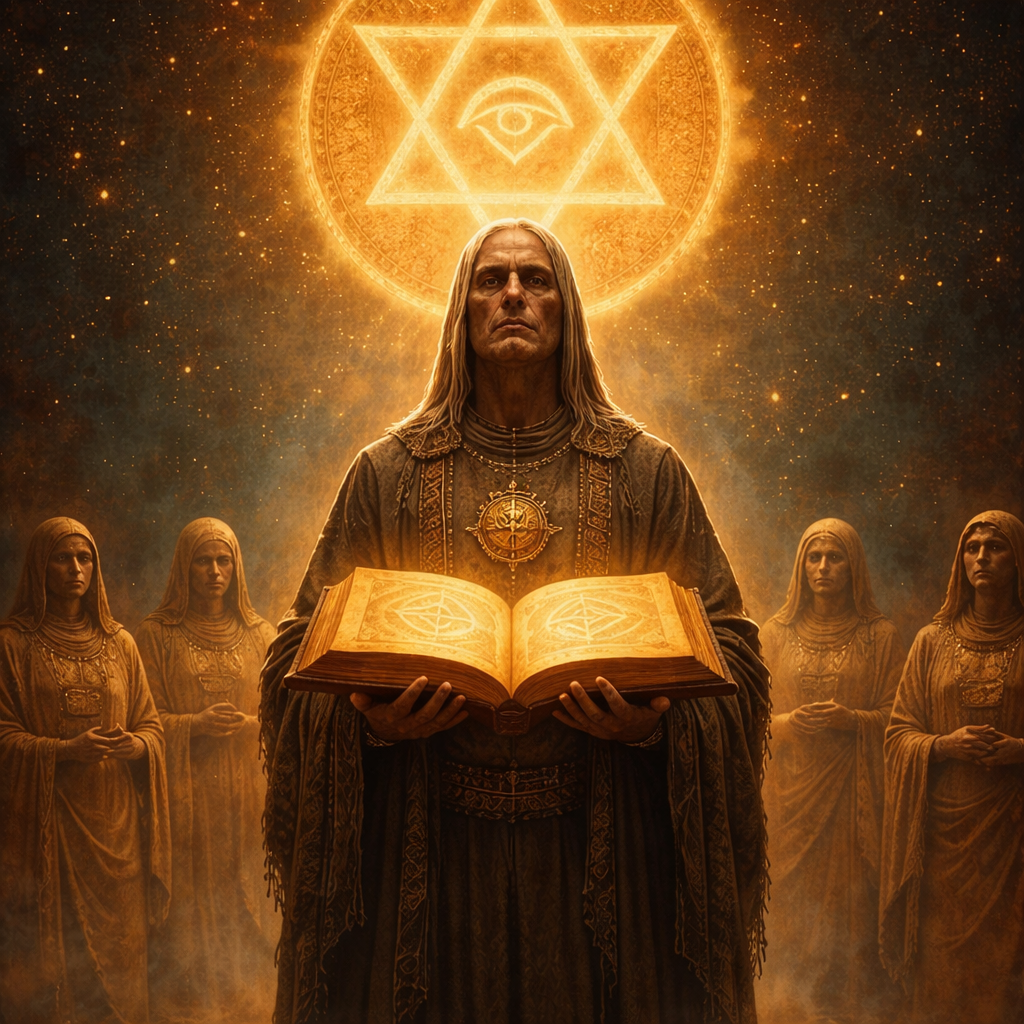

Lorelei Sage, Contemplative Literature Editor — Edward Hoffman's 'The Way of Splendor' stands as a cornerstone for anyone seeking to grasp the profound psychological and spiritual dimensions of Kabbalah. Hoffman’s erudition is evident, yet his prose remains accessible, guiding readers through the labyrinthine symbolism of Jewish mysticism with clarity and grace. He masterfully bridges the gap between ancient esoteric doctrine and contemporary psychological inquiry, offering a unique lens through which to explore the soul's journey. This work is indispensable for serious students of mysticism, scholars of religion, and any individual on a path of inner exploration who seeks to understand the architecture of the divine within the human psyche.
📝 Description
63
Edward Hoffman's 1977 book, 'The Way of Splendor,' deciphers the symbolism of Kabbalah.
Edward Hoffman's 'The Way of Splendor' examines the core concepts of Kabbalah. The book explains the symbolism and mystical language used in this tradition, aiming to make complex ideas understandable for contemporary readers. Hoffman connects Kabbalistic principles to psychological understanding, showing how ancient teachings can support personal development and spiritual change.
The text guides readers through the Sephirotic Tree, explaining the divine emanations. It suggests these teachings can help individuals realize their inner spiritual capacities. The book serves as a resource for those seeking greater meaning and a more profound connection to the sacred, as well as a clearer view of the universe and their role within it.
This book is situated within the tradition of Kabbalah, a system of Jewish mysticism that developed in the Middle Ages. Kabbalah seeks to understand the nature of God and the universe through esoteric interpretations of religious texts and a complex symbolic framework. It often involves meditation on divine names, contemplation of the Sephirot (divine attributes or emanations), and exploration of the hidden meanings within the Torah. Hoffman's work aims to present these often-abstract ideas in a manner accessible to a modern audience interested in spiritual and psychological insights.
💡 Why Read This Book?
Embark on a profound exploration of Jewish mysticism and its psychological underpinnings. 'The Way of Splendor' offers a rare blend of ancient wisdom and modern psychological insight, demystifying the complex symbolism of Kabbalah. It's ideal for spiritual seekers, scholars of esoteric traditions, and practitioners looking to deepen their understanding of the soul's journey and the interconnectedness of all things.
⭐ Reader Reviews
Honest opinions from readers who have explored this book.
❓ Frequently Asked Questions
What is Kabbalah?
Kabbalah is a mystical tradition within Judaism that seeks to understand the nature of God, creation, and the human soul through esoteric interpretations of scripture and symbolic systems, most notably the Sephirotic Tree.
Is this book suitable for beginners?
Yes, Edward Hoffman's accessible writing style makes 'The Way of Splendor' a welcoming entry point for those new to Kabbalah, while still offering depth for seasoned practitioners.
How does this book relate to psychology?
The book explores the psychological parallels and applications of Kabbalistic concepts, viewing the Sephirotic Tree as a map of the human psyche and spiritual development.
What is the Sephirotic Tree?
The Sephirotic Tree is a central diagram in Kabbalah, representing ten divine emanations (Sefirot) that form the structure of the universe and the pathways of spiritual ascent.
What esoteric knowledge does this book reveal?
It reveals the esoteric principles of creation, the nature of divine consciousness, the pathways of spiritual evolution, and the profound interconnectedness between the human and the divine.
🔮 Key Themes & Symbolism
The Sephirotic Tree as a Cosmic and Psychological Map
This theme explores the central symbol of Kabbalah, the Sephirotic Tree, exploring its representation of divine emanations and its profound correspondence with the human psyche. Hoffman elucidates how each Sefirah embodies specific divine attributes and psychological states, offering a framework for understanding spiritual consciousness, personal growth, and the journey towards divine unity. The interconnectedness of the Sefirot is presented as a dynamic system, mirroring the complex interplay of forces within the individual and the cosmos.
Symbolism and Esoteric Interpretation
This theme focuses on the rich symbolic language inherent in Kabbalistic texts and practices. Hoffman guides readers through the decipherment of ancient Hebrew letters, numerical gematria, and allegorical narratives, revealing the hidden layers of meaning that unlock esoteric truths. The book emphasizes that true understanding comes not from literal interpretation, but from engaging with these symbols on a deeper, intuitive, and spiritual level, accessing a wisdom that transcends ordinary language.
The Psychological Journey of the Soul
Central to 'The Way of Splendor' is the exploration of Kabbalah as a path of psychological and spiritual transformation. The book posits that the ascent through the Sephirotic Tree is analogous to the human soul's journey of purification, integration, and self-realization. It highlights how Kabbalistic practices and philosophies can foster self-awareness, heal psychic wounds, and lead to a profound integration of the conscious and unconscious aspects of the self, ultimately guiding the individual towards a more luminous and integrated existence.
💬 Memorable Quotes
Direct passages from the work, attributed to the author.
“Splendor is the divine light shining through the created world.”
— This highlights the concept of 'Shefa' or divine abundance, suggesting that the universe is imbued with God's radiance, visible to those who possess the inner sight.
“To know God is to know oneself.”
— This classic mystical axiom underscores the reciprocal nature of spiritual inquiry, where self-discovery is inextricably linked to the understanding of the divine.
“The path upward is often through the descent within.”
— This paradoxical statement points to the importance of introspection and confronting one's inner landscape as a prerequisite for spiritual ascent.
“Wisdom is not given, but revealed.”
— This emphasizes that esoteric knowledge is not passively acquired but actively uncovered through diligent study, contemplation, and inner experience.
💡 Key Ideas
Editorial paraphrase of the work's core concepts — not direct quotes.
The Tree of Life is a map of the soul.
This quote expresses the book's core thesis: that Kabbalah offers not just theological doctrine, but a profound blueprint for understanding the human psyche and its spiritual trajectory.
🌙 Esoteric Significance
Tradition
This work is firmly rooted in the Kabbalistic tradition, a mystical interpretive practice within Judaism that explores the divine nature, creation, and humanity's relationship with God. It draws upon centuries of esoteric lore, focusing on the Sephirotic Tree as a central diagram for understanding cosmic order and spiritual ascent. The book serves as a gateway to this profound and often hidden stream of Western esotericism.
Symbolism
The book meticulously unpacks the detailed symbolism of Kabbalah, including the ten Sefirot (divine emanations), the Hebrew alphabet, gematria (numerical mysticism), and archetypal figures. Hoffman elucidates how these symbols are not mere decorations but keys to unlocking deeper spiritual realities and understanding the architecture of existence, from the divine realm to the human psyche.
Modern Relevance
In an age often characterized by alienation and a search for meaning, 'The Way of Splendor' offers a potent framework for personal transformation and spiritual integration. Its exploration of the psychological aspects of Kabbalah provides tools for self-understanding, emotional healing, and cultivating a deeper connection to the sacred within oneself and the world, making ancient wisdom profoundly relevant to contemporary life.
👥 Who Should Read This Book
This clear text is essential for spiritual seekers yearning for a deeper connection to the divine and a more profound understanding of their inner lives. Scholars of religion and comparative mysticism will find Hoffman's scholarly yet accessible approach useful for studying Jewish esoteric traditions. Practitioners of meditation and contemplative arts will discover potent techniques and insights for their spiritual journey. Even those new to Kabbalah will find 'The Way of Splendor' a welcoming and transformative introduction to its profound wisdom and psychological depth.
📜 Historical Context
Edward Hoffman's 'The Way of Splendor' emerges from a rich lineage of Kabbalistic scholarship, drawing heavily from the foundational texts like the Zohar and the writings of Isaac Luria. The resurgence of interest in Kabbalah during the modern era, particularly in the late 20th century, saw a growing desire to integrate its esoteric teachings with contemporary psychological understanding. Hoffman's work is a product of this intellectual climate, aiming to make the useful insights of this ancient tradition accessible and relevant to a modern audience grappling with questions of meaning, identity, and spiritual fulfillment. It stands as a bridge between the medieval mystics and the contemporary seeker, offering a comprehensive and psychologically informed interpretation.
📔 Journal Prompts
Reflect on one Sefirah from the Tree of Life that resonates most with your current life situation. How can understanding its qualities guide you?
Consider the concept of divine emanation. How do you perceive the 'splendor' of the divine in your daily life or in the natural world?
What psychological aspect of yourself do you feel is most represented by a particular part of the Sephirotic Tree?
How can the symbolic language of Kabbalah offer a new perspective on a personal challenge you are currently facing?
Explore the connection between self-knowledge and divine knowledge as presented in the book. What does this imply for your spiritual path?
🗂️ Glossary
Sefirot
Ten divine emanations or attributes through which God manifests and interacts with creation, forming the structure of the Kabbalistic Tree of Life.
Ein Sof
The Kabbalistic term for the Infinite, Unknowable, Absolute God, beyond all conception or description.
Tzimtzum
The Kabbalistic concept of divine 'contraction' or withdrawal, which created a space for creation to exist.
Gematria
A system of numerological interpretation in Kabbalah, where Hebrew letters are assigned numerical values to reveal hidden meanings and connections between words.
Shekhinah
The feminine aspect of the Divine, often understood as God's immanent presence in the world, dwelling among the people of Israel.
This book appears in 1 collection
🔮 Readers Also Liked
Browse all →









More by Edward Hoffman
All books →




From the “Kabbalah” Collection
View all →






More Free Kabbalah & Jewish Mysticism Books
View all →