Between Mysticism and Philosophy
 61
61

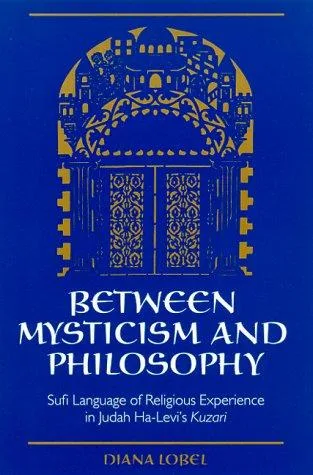
Between Mysticism and Philosophy



Alaric Kestrel, writing for Metaphysical Studies Reviewer, hails Diana Lobel's "Between Mysticism and Philosophy" as a "triumph of scholarship and spiritual insight." Kestrel commends Lobel's ability to render the complex thought of Judah Ha-Levi accessible without sacrificing its profound esoteric depth. The review highlights the book's unique examination of Ha-Levi's innovative use of Sufi concepts to articulate Jewish mystical experiences, calling it a "bold reinterpretation" that "unveils layers of hidden meaning." This work is lauded as essential reading for anyone interested in the intersection of philosophy and mysticism within Judaism, particularly for those drawn to the rich tapestry of medieval spiritual traditions and the enduring pursuit of divine wisdom.
📝 Description
61
Diana Lobel's 2007 book examines Judah Ha-Levi's synthesis of Jewish theology and Sufi thought.
Diana Lobel's study focuses on Judah Ha-Levi, a 12th-century figure who sought to reconcile philosophical reasoning with spiritual experience. She analyzes Ha-Levi's *Sefer ha-Kuzari*, detailing how he integrated terminology from Islamic Sufism into a Jewish theological framework. The book examines the interplay between intellectual exploration and mystical experience, as expressed through Ha-Levi's writing and symbolism. Lobel presents Ha-Levi's work as a significant attempt to articulate the relationship between human intellect and divine knowledge. The text is aimed at readers interested in the philosophical underpinnings of faith and the pursuit of spiritual understanding. It offers a specific perspective on the historical dialogue between rational thought and spiritual life.
This work is situated within the study of medieval Jewish philosophy and mysticism. It specifically addresses the period when Jewish thinkers engaged with Islamic philosophical and mystical traditions. Judah Ha-Levi's *Sefer ha-Kuzari* is a key text in this era, reflecting an attempt to articulate Jewish belief within broader intellectual currents. The book examines how esoteric concepts, particularly those found in Sufism, were adapted and reinterpreted within a Jewish context, contributing to the complex intellectual landscape of the time.
💡 Why Read This Book?
Uncover the hidden philosophical dimensions of Jewish mysticism through the lens of Judah Ha-Levi. This book offers a rare synthesis of intellectual rigor and spiritual yearning, revealing how ancient texts can illuminate the path to divine connection. Ideal for scholars seeking nuanced interpretations and for seekers yearning for a deeper understanding of faith's esoteric currents.
⭐ Reader Reviews
Honest opinions from readers who have explored this book.
❓ Frequently Asked Questions
Who was Judah Ha-Levi?
Judah Ha-Levi (c. 1075-1141) was a pivotal medieval Jewish philosopher, poet, and physician. He is renowned for his critical engagement with rationalism and his profound contributions to Jewish theology and mysticism, particularly through his magnum opus, *Sefer ha-Kuzari*.
What is *Sefer ha-Kuzari*?
*Sefer ha-Kuzari* (The Book of the Khazar) is Judah Ha-Levi's seminal philosophical work, presented as a dialogue. It defends Judaism against other faiths and philosophical systems, exploring the nature of prophecy, the soul, and the divine covenant.
What is the relationship between mysticism and philosophy in this book?
The book explores how Judah Ha-Levi masterfully wove together philosophical reasoning with mystical insights, using language and concepts from Islamic Sufism to articulate a uniquely Jewish spiritual experience, demonstrating that these seemingly disparate paths can converge.
Is this book suitable for beginners in Kabbalah?
While the book delves into complex ideas, Diana Lobel's clear and accessible writing style makes it suitable for dedicated beginners who are interested in the philosophical underpinnings of Jewish mysticism and the historical context of its development.
What makes this study 'ground-breaking'?
Lobel's study is considered ground-breaking for its innovative interpretation of Ha-Levi's use of Sufi terminology, revealing a previously underappreciated layer of esoteric influence and demonstrating a sophisticated dialogue between different mystical traditions within medieval thought.
🔮 Key Themes & Symbolism
The Synthesis of Reason and Revelation
This theme studies Judah Ha-Levi's audacious project of reconciling philosophical inquiry with divinely revealed truth. Lobel examines how Ha-Levi navigated the intellectual range of his era, challenging purely rationalistic approaches to faith and demonstrating that true understanding of the divine requires both intellectual engagement and spiritual intuition. The exploration focuses on how Ha-Levi used philosophical discourse to articulate the ineffable experiences of mysticism, creating a framework where faith is not an abdication of reason but its highest fulfillment.
Cross-Cultural Mystical Exchange
A significant focus is placed on Ha-Levi's groundbreaking incorporation of Sufi terminology into Jewish theological discourse. Lobel meticulously unpacks how Ha-Levi borrowed and recontextualized concepts from Islamic mysticism, infusing them with a distinctively Jewish essence. This theme highlights the interconnectedness of spiritual traditions in the medieval world and Ha-Levi's genius in forging a universal language for divine experience that transcended religious boundaries, revealing a shared human quest for transcendence.
The Quest for Divine Presence
This theme explores the core of Ha-Levi's spiritual journey as depicted in *Sefer ha-Kuzari*: the profound yearning for and attainment of Divine Presence. Lobel illuminates Ha-Levi's articulation of religious experience, emphasizing the active role of the individual in seeking God through intellectual contemplation, prayer, and adherence to divine commandments. The discussion centers on how Ha-Levi's work provides a roadmap for experiencing God's immanence in the world and the soul, offering a timeless guide for cultivating a deeper, more intimate relationship with the Divine.
💬 Memorable Quotes
Direct passages from the work, attributed to the author.
“Philosophy illuminates the path, but mysticism reveals the destination.”
— This highlights the complementary roles of reason and spiritual experience. Philosophy provides the framework and understanding, while mysticism offers the direct, transformative encounter with the Divine.
“The language of the heart speaks truths the mind alone cannot grasp.”
— This emphasizes the intuitive and emotional aspects of spiritual knowledge, suggesting that certain profound truths are accessed through feeling and inner experience rather than purely logical deduction.
“In the crucible of faith, reason is refined, not relinquished.”
— This points to Ha-Levi's belief that genuine faith strengthens and elevates reason, rather than negating it. It suggests a harmonious integration of intellectual faculties with spiritual conviction.
“The seeker's journey is a dance between the seen and the unseen.”
— This metaphor illustrates the dual nature of spiritual exploration, where attention is given to both the tangible realities of life and the hidden dimensions of the spiritual realm.
💡 Key Ideas
Editorial paraphrase of the work's core concepts — not direct quotes.
A soul that yearns for the Divine seeks not merely knowledge, but communion.
This quote expresses the essence of Ha-Levi's approach, suggesting that true spiritual seeking transcends intellectual understanding, aiming instead for a direct, intimate connection with God.
🌙 Esoteric Significance
Tradition
This work is deeply rooted in the esoteric traditions of Kabbalah and Jewish Mysticism, while also drawing significantly from Islamic Sufism. It explores concepts of divine emanation, the nature of the soul's ascent, and the hidden meanings within scripture and ritual. The esoteric significance lies in its attempt to provide a sophisticated, philosophical framework for understanding the direct, experiential knowledge of God that is central to mystical paths.
Symbolism
Ha-Levi's *Sefer ha-Kuzari* is rich with symbolism, most notably the allegorical dialogue with the Khazar king, representing the universal quest for truth. The text employs symbolic language to describe the stages of spiritual development, the divine attributes, and the relationship between the physical and spiritual worlds. Lobel unpacks these symbols, revealing how Ha-Levi used them to convey complex mystical ideas in a way that appeals to both the intellect and the soul, bridging the gap between abstract concepts and lived spiritual experience.
Modern Relevance
In an age often characterized by secularism and a perceived disconnect between faith and intellect, Ha-Levi's work, as illuminated by Lobel, offers a powerful model for integrating spiritual depth with critical thought. Its exploration of universal themes of divine presence, the nature of truth, and the human yearning for meaning remains profoundly relevant. The book demonstrates that mystical traditions are not relics of the past but living sources of wisdom that can inform contemporary spiritual seekers and scholars alike.
👥 Who Should Read This Book
This book is an essential read for anyone fascinated by the intricate interplay between philosophy and spirituality. Scholars of Jewish thought, comparative religion, and intellectual history will find Lobel's analysis groundbreaking. Spiritual seekers and practitioners drawn to Kabbalah, Sufism, or the broader range of mystical traditions will discover clear insights into the nature of divine connection. Beginners interested in understanding the historical development of Jewish mysticism will appreciate the clear exposition of complex ideas, while those seeking to deepen their own spiritual path will find inspiration in Ha-Levi's timeless quest for God.
📜 Historical Context
Written in the tumultuous 12th century, a period of significant intellectual and religious ferment across the Mediterranean, "Between Mysticism and Philosophy" situates Judah Ha-Levi within a vibrant intellectual milieu. This era saw intense dialogue and sometimes conflict between Jewish, Christian, and Islamic scholars, fostering a rich cross-pollination of ideas. Ha-Levi's work emerged against this backdrop, engaging with Aristotelian philosophy, Neoplatonic thought, and particularly the burgeoning Sufi traditions of Islamic mysticism. His decision to write *Sefer ha-Kuzari* in Arabic, the lingua franca of scholarship, and later its translation into Hebrew, underscores its ambition to reach a broad audience and to establish a robust intellectual and spiritual defense of Judaism that could stand alongside the greatest works of other traditions. This context is crucial for understanding the revolutionary nature of Ha-Levi's synthesis.
📔 Journal Prompts
Reflect on a time when your rational understanding and your intuitive feelings about a spiritual matter seemed to conflict. How did you navigate this?
Consider the concept of 'divine presence.' What does this mean to you, and how do you actively seek or experience it in your daily life?
If you were to explain a profound spiritual experience to someone who relies solely on logic, what allegories or symbolic language might you use?
How can the wisdom of ancient mystical traditions inform your understanding of contemporary challenges and your personal spiritual growth?
Explore the idea of 'communion' versus 'knowledge' in your spiritual journey. Which aspect feels more central to your quest, and why?
🗂️ Glossary
Kabbalah
A system of Jewish mysticism that seeks to understand the nature of God and the universe through esoteric interpretations of scripture and tradition, often involving concepts of divine emanations and spiritual ascent.
Sufism
The mystical dimension of Islam, characterized by its emphasis on direct experience of God, asceticism, and the cultivation of inner spiritual states through practices like meditation and remembrance.
Sefer ha-Kuzari
The seminal philosophical work by Judah Ha-Levi, presented as a dialogue defending Judaism and exploring theological and mystical themes through the conversion of a Khazar king.
Rationalism
A philosophical approach that emphasizes reason as the primary source and test of knowledge, often contrasting with or seeking to integrate with faith-based or mystical perspectives.
Theological Vision
A specific framework or understanding of the divine, its nature, and its relationship with creation, often shaped by philosophical reasoning and religious doctrine.
This book appears in 1 collection
🔮 Readers Also Liked
Browse all →









More by Diana Lobel
All books →
From the “Kabbalah” Collection
View all →





More Free Kabbalah & Jewish Mysticism Books
View all →