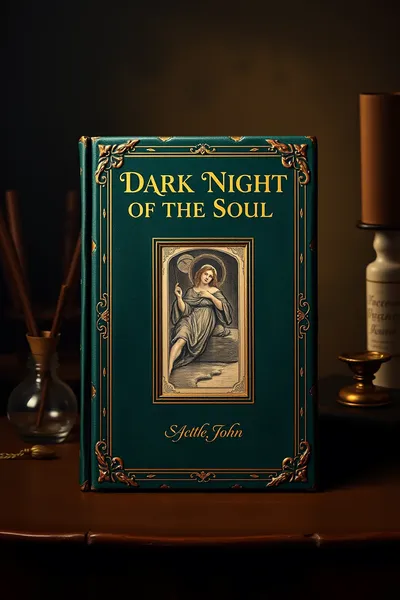
The Dark Night Of The Soul

 79
79

The Dark Night Of The Soul
Sims crafts a compelling portrait of Genevieve Violet Reins, a protagonist whose forward-thinking nature sets her apart, creating a poignant sense of isolation. The narrative effectively builds anticipation around the "door" and the secrets it holds, promising a pivotal moment for Genevieve. While the premise is strong, the execution occasionally leans towards the allegorical, which may leave some readers desiring more concrete grounding in the unfolding events. The exploration of how a "surprise" could both shatter and strengthen the soul is particularly well-handled, hinting at the paradoxical nature of transformative experiences. Sims' prose effectively conveys Genevieve's internal landscape, making her journey feel both personal and universally applicable. The book offers a focused, character-centric exploration of inner awakening.
📝 Description
79
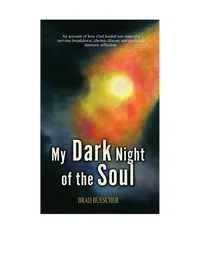
Kiamesha Denise Sims' 2020 novel centers on Genevieve Violet Reins and her isolation due to temporal displacement.
The narrative follows Genevieve Violet Reins, a character experiencing temporal displacement that leaves her isolated. Sims uses this premise to examine a psychological drama with metaphysical elements.
Readers who connect with stories focused on character development and internal struggles will find this work engaging. It delves into themes of isolation, the process of self-discovery, and the potential for significant personal transformation. The novel suggests that confronting deep-seated fears and uncertainties can lead to a more robust sense of self.
Published in 2020, the book engages with the concept of a "dark night" not as mere suffering, but as a necessary period for intense personal growth. This perspective aligns with certain spiritual traditions that view difficult experiences as catalysts for transformation. The narrative suggests that genuine change often comes from confronting one's deepest anxieties and doubts, ultimately fostering a stronger identity.
💡 Why Read This Book?
• Gain insight into the concept of a "dark night" as a catalyst for self-strengthening, as explored through Genevieve Violet Reins' journey. • Understand how facing hidden "secrets" can lead to both profound disruption and ultimate resilience, as depicted in the narrative's central conflict. • Experience a character-driven exploration of isolation and personal revelation, offering a unique perspective on finding hope when one's "only hope" is found behind a mysterious door.
⭐ Reader Reviews
Honest opinions from readers who have explored this book.
❓ Frequently Asked Questions
What is the main theme of The Dark Night Of The Soul?
The central theme is personal transformation through confronting inner challenges. It explores how periods of isolation and mystery can lead to significant self-discovery and a strengthened spirit, as experienced by the protagonist, Genevieve Violet Reins.
When was The Dark Night Of The Soul first published?
The book was first published on October 24, 2020, by Kiamesha Denise Sims.
What kind of protagonist does The Dark Night Of The Soul feature?
It features Genevieve Violet Reins, a woman described as being 'beyond her time,' which leads to her feelings of loneliness and being misunderstood.
What is the significance of the 'door' in the book?
The 'door' symbolizes a threshold of revelation and potential change. Its secrets represent the unknown aspects of oneself or one's life that, when confronted, can lead to profound, albeit challenging, personal growth.
Does the book offer a hopeful message?
Yes, despite the 'dark night' aspect, the book suggests that confronting difficult truths and hidden secrets can ultimately strengthen the soul and lead to achieving desired outcomes.
Who is the author of The Dark Night Of The Soul?
The author is Kiamesha Denise Sims. The book was originally published in 2020.
🔮 Key Themes & Symbolism
Temporal Displacement and Isolation
The narrative centers on Genevieve Violet Reins, a protagonist whose perception and being are out of sync with her surroundings. This "beyond her time" quality isolates her, creating a profound sense of loneliness. The book examines how this imposed solitude, while painful, can become a fertile ground for introspection and the eventual discovery of inner strength. It posits that true connection may require first understanding oneself in isolation.
The Crucible of Revelation
A key element is the 'door' behind which Genevieve's 'only hope' resides. This door represents a threshold to a profound revelation, a surprise that carries the potential for immense disruption. The text suggests that such revelations, while capable of shattering the existing self, are also the very catalysts needed for strengthening and achieving one's deepest desires.
Soul Strengthening Through Adversity
The core concept is that the 'dark night' is not an end but a process of purification and growth. The book interprets this difficult period as essential for forging resilience. By confronting the unknown and potentially shattering truths behind the metaphorical door, the soul doesn't break but is tempered, emerging more robust and prepared to embrace what it has longed for.
The Paradox of Hope
Hope is presented not as a passive wish but as an active pursuit contingent on facing profound challenges. Genevieve's situation, where her hope is hidden and requires investigation, highlights this paradox. The work suggests that the most potent forms of hope are often found not in avoiding darkness, but in navigating through it, ultimately finding fulfillment through self-discovery.
💬 Memorable Quotes
Direct passages from the work, attributed to the author.
“Her only hope hides behind a door.”
— This phrase expresses the narrative's central tension. It suggests that the solution or fulfillment a character seeks is not readily apparent but concealed, requiring active exploration and confrontation with the unknown.
“A surprise that could shatter her soul, strengthen it, and give her everything she's wanted.”
— This highlights the dual nature of profound personal revelations. The 'surprise' represents a truth or event that is both terrifying in its potential to dismantle one's current reality and ultimately empowering, leading to fulfillment.
“Genevieve Violet Reins is a woman beyond her time.”
— This sets up the protagonist's core conflict: her inherent difference from her environment, leading to her isolation and the feeling of being misunderstood by those around her.
“It has unfortunately left her lonely, misunderstood, but not alone.”
— This paradoxically describes the protagonist's state. While her unique nature causes social isolation, she is not entirely without internal companionship or a sense of self, hinting at an inner resilience.
“She is curious to discover its secrets.”
— This emphasizes the active role of the protagonist in her own transformative process. Her curiosity drives her to confront the unknown, which is essential for the revelations the story promises.
🌙 Esoteric Significance
Tradition
While not explicitly aligned with a single esoteric lineage, *The Dark Night Of The Soul* draws upon the universal archetype of the spiritual journey, particularly the concept of the 'dark night of the soul' popularized by St. John of the Cross in the 16th century. This archetype is found in various mystical traditions, suggesting a path of purification and divine union through periods of spiritual desolation and testing. Sims' contemporary interpretation reframes this within a psychological and personal narrative context.
Symbolism
The central symbol is the 'door,' representing a threshold to the unconscious, hidden truths, or a new phase of existence. It signifies a point of no return, where confronting what lies beyond promises transformation. The protagonist's state of being 'beyond her time' also functions symbolically, representing alienation from the mundane world and a potential receptivity to deeper, esoteric realities.
Modern Relevance
Contemporary spiritual seekers and those engaged with depth psychology often explore similar themes of confronting the shadow self and undergoing personal crises as catalysts for growth. Thinkers and practitioners in fields like transpersonal psychology and modern mystical movements, which emphasize direct experience and inner transformation, find resonance in narratives that depict the soul's arduous but ultimately rewarding journey through darkness towards illumination.
👥 Who Should Read This Book
• Individuals interested in contemporary psychological fiction that touches upon spiritual themes, particularly those exploring the concept of personal transformation through adversity. • Readers who appreciate character-driven narratives focusing on isolation, introspection, and the discovery of inner strength when facing challenging circumstances. • Those seeking literature that metaphorically explores the process of self-discovery, using archetypal symbols like a hidden door to represent significant life transitions.
📜 Historical Context
Published in 2020, Kiamesha Denise Sims' *The Dark Night Of The Soul* arrives at a moment when introspective and psychological literature continues to find a significant audience. The early 21st century has seen a resurgence of interest in personal growth narratives, often blending psychological realism with spiritual or metaphysical explorations. While Sims' work is distinct, it exists within a broader cultural conversation influenced by figures like Carl Jung, whose theories on individuation and the shadow self resonate with themes of confronting inner darkness. The book also follows a lineage of literature that uses allegory and metaphor to explore internal states, a tradition stretching back centuries. Its publication in 2020 places it in a time marked by global reflection and personal re-evaluation, making its themes of isolation and inner strength particularly pertinent.
📔 Journal Prompts
Genevieve Violet Reins' isolation and her 'beyond her time' nature.
The potential shattering and strengthening power of the 'surprise' behind the door.
Interpreting the 'dark night' as a period of essential, not destructive, change.
The role of curiosity in driving the discovery of one's deepest hopes.
Reflecting on moments when one's 'only hope' seemed hidden or inaccessible.
🗂️ Glossary
Dark Night Of The Soul
A spiritual concept describing a period of intense spiritual desolation, doubt, and inner turmoil experienced by a soul on its path toward divine union or profound self-understanding. Popularized by St. John of the Cross, it signifies a purification process.
Beyond her time
A state of being or consciousness that is out of sync with the prevailing societal norms, technological advancements, or cultural zeitgeist of a particular era, often leading to feelings of alienation.
Shatter her soul
Refers to a transformative event or revelation that is so profound it disrupts a person's fundamental beliefs, identity, or sense of self, causing significant internal upheaval.
Strengthen it
Indicates the process by which enduring adversity or confronting difficult truths leads to increased resilience, wisdom, and a more robust sense of self or spiritual fortitude.
Her only hope
Represents a singular source of potential salvation, fulfillment, or resolution for a deeply felt need or problem, often found in unexpected or concealed places.
Discover its secrets
The act of uncovering hidden truths, understanding unknown aspects of oneself or one's situation, and gaining knowledge that is essential for growth or change.
Curiosity
A strong desire to know or learn something, often serving as the impetus for exploration and the pursuit of hidden knowledge or understanding, as seen in Genevieve's drive.
This book appears in 1 collection
🔮 Readers Also Liked
Browse all →









From the “Dark Night of the Soul” Collection
View all →




More Free Occult Philosophy Books
View all →