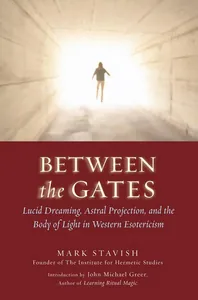
Beyond the Body

 79
79

Beyond the Body
Susan Blackmore’s *Beyond the Body* provides a much-needed empirical lens through which to view the pervasive phenomenon of out-of-body experiences. Rather than succumbing to sensationalism or easy dismissal, Blackmore meticulously compiles anecdotal evidence and experimental findings from 1992, challenging readers to consider physiological and psychological explanations. Her systematic breakdown of OBE triggers—ranging from near-death scenarios to simple fatigue—is particularly effective. While the book’s strength lies in its analytical rigor and data-driven approach, its 1992 publication date means some more recent neurological research on consciousness is absent, a limitation for contemporary readers. A passage detailing the 'flickering' nature of OBEs, where the sensation is intermittent, vividly illustrates the subjective disjunction Blackmore seeks to explain. *Beyond the Body* remains a foundational text for empirically minded explorers of consciousness.
📝 Description
79
Susan Blackmore's 1992 book, *Beyond the Body*, examines the out-of-body experience through empirical research.
Susan Blackmore's *Beyond the Body*, published in 1992, undertakes a thorough study of the out-of-body experience (OBE). Drawing upon extensive surveys, personal accounts, and laboratory findings, Blackmore analyzes this phenomenon. Her work moves past purely spiritual or psychological explanations to investigate the underlying mechanisms. The book looks at subjective reports from individuals who claim to have briefly separated from their physical bodies, a sensation approximately ten percent of the population reports. Blackmore's approach aims for a scientific and historical view of OBEs, appealing to students of consciousness, parapsychology, and the psychology of religion. Researchers studying altered states of consciousness will find data and analytical models useful. Those who have had an OBE or are simply curious will appreciate the systematic method for understanding these often perplexing events.
Published in the early 1990s, the book appeared during a time of heightened interest in consciousness studies and parapsychology. It addressed the existing discussions about OBEs, which often swung between mystical interpretations and outright dismissal. Blackmore's contribution was an empirical push, seeking to anchor discussions in observable evidence rather than relying solely on personal testimony. The book's use of surveys and experimental data fit a growing pattern of scientific investigation into subjects once relegated to esoteric discussions.
Published in 1992, *Beyond the Body* engaged with the esoteric tradition surrounding out-of-body experiences, a topic long explored in spiritualism and occult studies. While many traditional accounts focused on astral projection or spiritual journeys, Blackmore sought to ground these phenomena in empirical research. Her work attempted to bridge the gap between subjective, often mystical, reports and scientific inquiry, examining psychological and neurological factors rather than solely spiritual interpretations. This approach positioned the book within a broader movement to apply scientific methods to subjects previously considered outside the scope of conventional research.
💡 Why Read This Book?
• Understand the neurological and psychological underpinnings of out-of-body experiences, moving beyond purely spiritual interpretations, as detailed in Blackmore's analysis of body dissociation. • Explore the historical context of OBE research as presented in the book, contextualizing the 1992 publication within the scientific and parapsychological discourse of its time. • Gain a framework for analyzing personal or observed OBEs by learning about Blackmore's systematic approach to categorizing triggers and subjective reports, aiding personal reflection.
⭐ Reader Reviews
Honest opinions from readers who have explored this book.
❓ Frequently Asked Questions
What is the primary scientific explanation for out-of-body experiences presented in Susan Blackmore's book?
Susan Blackmore's *Beyond the Body* primarily explains out-of-body experiences (OBEs) as a form of body dissociation, suggesting they arise from disruptions in the brain's ability to integrate sensory information and construct a coherent sense of self and body, particularly in altered states of consciousness.
How does Blackmore's research in *Beyond the Body* differ from earlier esoteric interpretations of OBEs?
Blackmore’s 1992 work grounds OBEs in empirical research, surveys, and laboratory experiments, contrasting with earlier esoteric traditions that often attributed them to spiritual journeys or astral projection without scientific validation.
What percentage of people claim to have had an out-of-body experience, according to Blackmore's surveys?
According to the surveys cited in Susan Blackmore's *Beyond the Body*, approximately one in ten individuals claims to have experienced an out-of-body experience at some point in their lives.
Can *Beyond the Body* help someone who has had an OBE understand their experience?
Yes, the book offers a structured analysis of OBEs, exploring common triggers and subjective phenomena. By presenting scientific hypotheses and empirical data, it provides a framework for understanding the experience beyond mere anecdotal accounts.
What kind of evidence does Susan Blackmore use to support her theories on OBEs in her 1992 book?
Blackmore utilizes a combination of historical anecdotal material, large-scale surveys of reported OBEs, and findings from laboratory experiments focused on perception and consciousness.
Is *Beyond the Body* considered a foundational text in the study of consciousness?
Yes, *Beyond the Body* is recognized for its systematic, empirical approach to a phenomenon often relegated to the fringes, making it a significant contribution to the scientific study of consciousness and altered states.
🔮 Key Themes & Symbolism
The Nature of Dissociation
Blackmore systematically explores the concept of body dissociation as a primary mechanism behind out-of-body experiences. This involves the brain's failure to integrate sensory inputs and self-awareness into a unified corporeal sense. The work examines how various physiological and psychological states, such as extreme stress, illness, or even simple fatigue, can disrupt this integration, leading to the subjective sensation of leaving one's physical form. The book analyzes the commonalities in reports, suggesting a shared underlying process rather than isolated mystical events.
Empirical Investigation of OBEs
A central theme is Blackmore's commitment to empirical methodology in studying phenomena often shrouded in mysticism. *Beyond the Body* presents findings from extensive surveys and laboratory experiments conducted around 1992. This approach contrasts with purely philosophical or anecdotal accounts, aiming to provide verifiable data on the prevalence, triggers, and subjective characteristics of OBEs. The book demonstrates how scientific inquiry can be applied to subjective experiences of consciousness.
Triggers and Varieties of OBEs
The work meticulously categorizes the diverse triggers reported for out-of-body experiences. These range from life-threatening situations (near-death experiences) and accidents to more mundane circumstances like falling asleep or meditating. Blackmore analyzes how these different stimuli might induce similar dissociative states. The book also details the varied subjective reports, from perceiving one's body from above to experiencing a sense of 'floating' or traveling, highlighting the spectrum of phenomena.
Consciousness and the Brain
Ultimately, *Beyond the Body* probes the relationship between consciousness and brain function. Blackmore argues that OBEs are not evidence of a soul separating from the body but rather complex neurological events. By examining how altered brain states affect perception and self-awareness, the book offers a materialist perspective on these profound subjective experiences. It contributes to understanding how the physical brain generates the sense of embodiment and consciousness.
💬 Memorable Quotes
Direct passages from the work, attributed to the author.
“One person in ten claims to have left his or her body at some time.”
— This statistic, presented early in the book, immediately grounds the phenomenon of OBEs in empirical observation, highlighting its prevalence and suggesting it's a common human experience worthy of scientific investigation.
“Some were close to death; others had undergone an accident or shock.”
— This observation points to the common association of OBEs with extreme physiological or psychological stress, framing them as potential responses of the brain under duress rather than supernatural occurrences.
“Blackmore's explanation is based on historical and anecdotal material, surveys, and laboratory experiments.”
— This succinctly outlines the methodological foundation of the book, emphasizing a multi-faceted, evidence-based approach to understanding the out-of-body experience.
“The sensation of being outside one's body can occur during sleep or waking states.”
— This highlights the diverse temporal and cognitive conditions under which OBEs can manifest, suggesting a broad range of potential neurological triggers and states of consciousness involved.
“OBEs are not evidence for the survival of consciousness after death.”
— This direct statement clarifies Blackmore's skeptical stance, differentiating her empirical investigation from spiritualist claims and focusing on the brain's role in generating the experience.
🌙 Esoteric Significance
Tradition
While not explicitly aligned with a single esoteric lineage like Hermeticism or Gnosticism, *Beyond the Body* engages with themes central to many esoteric traditions: the nature of consciousness, the relationship between mind and body, and experiences that transcend ordinary perception. Blackmore's work can be seen as providing a scientific counterpoint or explanatory framework for phenomena traditionally interpreted through mystical or spiritual lenses, prompting a re-evaluation of esoteric claims within a contemporary scientific paradigm.
Symbolism
The primary 'symbol' explored is the body itself, and the experience of its perceived separation. The 'out-of-body' state functions as a potent symbol of detachment, altered perspective, and the potential plasticity of self-awareness. The recurring motif of 'floating' or 'viewing oneself from above' symbolizes a dissolution of ego boundaries and a shift from subjective embodiment to objective observation, themes echoed in contemplative traditions.
Modern Relevance
Blackmore's empirical approach to OBEs remains highly relevant today. Contemporary researchers in neuroscience and psychology continue to investigate the neural correlates of consciousness and altered states, often building upon the groundwork laid by studies like hers. Thinkers exploring the 'hard problem' of consciousness and the nature of subjective experience, as well as virtual reality developers aiming to simulate immersive experiences, can find valuable insights into perceptual and cognitive mechanisms discussed in the book.
👥 Who Should Read This Book
• Individuals interested in the scientific study of consciousness and altered states, seeking empirical explanations for phenomena often discussed esoterically. • Researchers in psychology, neuroscience, and parapsychology looking for a foundational text on out-of-body experiences and their potential triggers. • Anyone who has personally experienced an OBE and wishes to understand it through a rational, evidence-based framework presented in the book's 1992 context.
📜 Historical Context
Susan Blackmore’s *Beyond the Body*, published in 1992, arrived during a period when consciousness studies were gaining academic traction, though often still viewed with skepticism. The early 1990s saw continued interest in parapsychology, influenced by figures like J.B. Rhine, but also a growing push for more rigorous, materialistic explanations. Blackmore’s work engaged with contemporary debates surrounding near-death experiences (NDEs), a topic popularized by Raymond Moody in the late 1970s. While Moody leaned towards spiritual interpretations, Blackmore offered a counterpoint grounded in cognitive science and neuroscience. Her research method, drawing heavily on surveys and empirical data, distinguished her from earlier anecdotal or purely philosophical treatments of the subject. The book contributed to a scientific discourse on altered states that sought to understand phenomena like OBEs as products of brain function rather than evidence of disembodied consciousness.
📔 Journal Prompts
The concept of body dissociation as a mechanism for OBEs.
Specific triggers for out-of-body experiences mentioned in the text.
The prevalence of OBEs as reported in Blackmore's surveys.
Blackmore's distinction between OBEs and claims of survival after death.
The role of laboratory experiments in understanding subjective experiences.
🗂️ Glossary
Out-of-Body Experience (OBE)
A subjective sensation of perceiving oneself and the surrounding environment from a location outside one's physical body, often involving a feeling of floating or traveling.
Body Dissociation
A psychological state where the sense of one's body is fragmented or disconnected, leading to a feeling of separation from one's physical form.
Near-Death Experience (NDE)
A profound personal experience associated with being close to death, often including OBEs, seeing a light, and feelings of peace.
Anecdotal Material
Information or evidence based on personal accounts or stories rather than systematic scientific investigation.
Surveys
Research methods involving collecting data from a sample of individuals to understand patterns, attitudes, or experiences, such as the prevalence of OBEs.
Laboratory Experiments
Controlled studies conducted in a scientific setting to investigate specific hypotheses, often involving physiological measurements or psychological tasks.
Consciousness
The state of being aware of and responsive to one's surroundings; the subjective experience of the world and oneself.
This book appears in 1 collection
🔮 Readers Also Liked
Browse all →









From the “Astral Projection” Collection
View all →








More Free Occult Philosophy Books
View all →