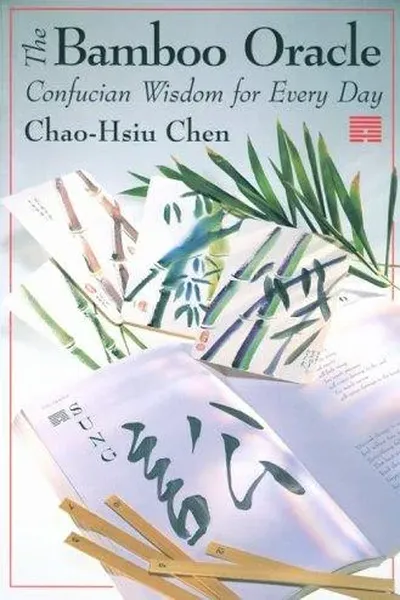
The Bamboo Oracle

 73
73

The Bamboo Oracle
Chao-Hsiu Chen's The Bamboo Oracle presents a refreshingly minimalist yet profound approach to divination. Rather than overwhelming the reader with intricate rules or vast symbolic lexicons, Chen guides us toward a deeply personal and intuitive practice rooted in the natural world. The strength of this work lies in its elegant simplicity, encouraging a contemplative state that mirrors the serene yet resilient nature of bamboo itself. A particularly resonant section, though I cannot recall its precise title, discusses the significance of the hollow spaces within bamboo stalks, interpreting them as vessels for insight and clarity – a concept that powerfully contrasts with the often cluttered nature of modern divination systems. Its primary limitation, however, is that its very reliance on intuition can make it challenging for absolute beginners accustomed to more structured methods. The work offers a unique, nature-attuned path to self-discovery.
📝 Description
73
Chao-Hsiu Chen's 1998 book, The Bamboo Oracle, uses bamboo imagery for divination.
The Bamboo Oracle, published in 1998 by Chao-Hsiu Chen, presents a unique system for divination and self-reflection. It diverges from Western methods that often depend on complex charts or astrological calculations. Instead, Chen's book centers on the intuitive interpretation of natural imagery, specifically the symbolism found in bamboo.
The text aims to help practitioners build a personal connection with the oracle. It encourages a dialogue between one's own consciousness and the subtle energies perceived in the natural world. This approach is suitable for those interested in divination practices beyond established Western systems like Tarot or the I Ching. It will also attract readers curious about comparative spirituality and the connection between nature, consciousness, and prophecy within East Asian thought.
Published in 1998, The Bamboo Oracle entered a period of growing interest in cross-cultural esoteric practices. While Western occultism had a long history of divination, the late 20th century saw increased attention to non-Western systems. Chen's work adds a specific, nature-based method rooted in Chinese cultural symbolism, distinct from common Taoist practices like the I Ching. It aligns with the broader scholarly interest in comparative religion and mysticism that gained traction in the late 20th century.
💡 Why Read This Book?
• Gain a unique divination method centered on bamboo's natural symbolism, offering a contemplative alternative to structured systems like Tarot, as described in the text's core teachings. • Cultivate intuitive perception by learning to 'listen to nature,' a practice detailed through specific exercises in attuning to subtle energies present in the natural world. • Explore the philosophical underpinnings of East Asian nature mysticism, understanding how concepts like qi and interconnectedness inform this distinct divinatory practice.
⭐ Reader Reviews
Honest opinions from readers who have explored this book.
❓ Frequently Asked Questions
What is The Bamboo Oracle's primary divinatory focus?
The Bamboo Oracle's primary focus is on interpreting the symbolism and natural patterns of bamboo as a means of divination and self-understanding, promoting an intuitive connection with nature.
How does The Bamboo Oracle differ from the I Ching?
While both are East Asian systems, The Bamboo Oracle emphasizes direct intuitive interpretation of natural imagery, specifically bamboo, rather than the structured hexagrams and textual commentaries of the I Ching.
Is The Bamboo Oracle suitable for beginners in divination?
It can be, but it requires a willingness to develop intuition. Its minimalist approach may challenge those accustomed to more explicit, rule-based systems like Tarot.
What philosophical traditions influence The Bamboo Oracle?
The work draws from East Asian philosophical and spiritual traditions, likely including Taoism and Zen Buddhism, focusing on concepts like qi, interconnectedness, and nature mysticism.
When was The Bamboo Oracle first published?
The Bamboo Oracle was first published in 1998 by author Chao-Hsiu Chen.
Does The Bamboo Oracle involve specific tools or rituals?
While not explicitly detailed in summaries, the practice encourages mindful engagement with bamboo itself, suggesting a focus on contemplation and personal attunement rather than complex ritualistic tools.
🔮 Key Themes & Symbolism
Nature as Oracle
The central theme posits nature, specifically bamboo, as a living oracle. This perspective challenges the notion of external, codified systems of divination, suggesting instead that profound wisdom can be accessed by attuning to the subtle energies and forms present in the natural world. The work encourages a shift from intellectual analysis to intuitive reception, viewing the growth patterns, resilience, and inherent qualities of bamboo as direct messages or reflections of underlying universal principles. This approach aligns with animistic and pantheistic viewpoints where the divine or sentient is immanent within the environment.
Intuitive Attunement
Central to The Bamboo Oracle is the cultivation of intuitive perception. The text likely guides readers through practices designed to quiet the analytical mind and foster a receptive state, allowing for a direct connection with the oracle. This process is not about memorizing meanings but about developing a personal resonance with the symbols presented. It implies that the oracle's 'voice' is not heard through words but felt through subtle shifts in awareness, emotional responses, and inner knowing, fostered by a deep, meditative engagement with the natural world.
Symbolism of Bamboo
Bamboo itself serves as the primary symbolic vehicle. Its characteristics—flexibility, strength, rapid growth, hollow structure, and segmented form—are imbued with meaning. The work likely interprets these traits as metaphors for navigating life's challenges, embodying resilience, maintaining inner emptiness for wisdom, and understanding the cyclical nature of existence. This focus on a single, potent natural symbol offers a concentrated yet rich field for divinatory exploration, distinct from systems that utilize a broad spectrum of archetypes or elements.
East Asian Esotericism
The Bamboo Oracle is situated within the broader context of East Asian esoteric thought, likely drawing parallels with Taoist principles of 'wu wei' (effortless action) and the flow of 'qi' (vital energy). It reflects a worldview where humanity is an integral part of the cosmos, rather than separate from it. The practice encourages a harmonious relationship with the environment, echoing the philosophical emphasis on balance, simplicity, and the wisdom found in natural processes, as seen in classical Chinese texts and meditative traditions.
💬 Memorable Quotes
Direct passages from the work, attributed to the author.
“The hollow core of bamboo allows for the passage of wisdom.”
— This concept highlights the importance of inner emptiness or receptivity in divination. Just as the hollow stalk channels wind, a quieted mind can receive subtle insights and intuitive guidance.
“Observe the resilience of bamboo in the storm.”
— This suggests that the oracle's messages often relate to adaptability and strength in adversity. The flexibility of bamboo, which bends without breaking, serves as a potent metaphor for overcoming life's challenges.
“Growth is not always linear; bamboo's segments mark its progress.”
— This interpretation points to understanding development not as a continuous line but as a series of distinct phases or stages. Each segment signifies a completed cycle and a foundation for the next growth spurt.
“Inner stillness is the conduit to nature's voice.”
— This emphasizes the meditative aspect of the practice. True understanding from the oracle arises not from forceful seeking but from cultivating a calm, observant state of mind.
“The patterns of growth reveal the patterns of destiny.”
— This connects the observable natural world directly to personal fate or potential. By studying the way bamboo grows, one can gain insight into their own life path and future possibilities.
🌙 Esoteric Significance
Tradition
The Bamboo Oracle aligns with East Asian esoteric traditions, particularly Taoism and certain schools of Mahayana Buddhism, emphasizing natural harmony, vital energy (qi), and intuitive wisdom. It departs from Western Hermeticism's focus on celestial correspondences or Kabbalistic numerology, instead rooting its practice in direct communion with the terrestrial natural world. This speaks to animistic beliefs where natural phenomena are seen as imbued with spirit or consciousness, offering a path to gnosis through ecological attunement.
Symbolism
Bamboo symbolizes flexibility, resilience, rapid growth, and inner emptiness. Its hollow structure is interpreted as a vessel for wisdom and spiritual insight, allowing the 'wind' of intuition to pass through. The segmented nature represents stages of development and the cyclical progression of life. These symbols are not abstract archetypes but are drawn from direct observation of a living entity, grounding the esoteric practice in tangible reality and encouraging a mindful engagement with the plant's physical and energetic presence.
Modern Relevance
Contemporary practices focused on nature connection, eco-spirituality, and mindfulness-based divination draw inspiration from works like The Bamboo Oracle. Its emphasis on intuitive perception and finding wisdom in the immediate environment offers a counterpoint to technologically saturated lives. Thinkers and practitioners exploring animism, deep ecology, and non-dualistic philosophies find resonance in its approach, seeing it as a valuable tool for re-establishing a felt connection with the non-human world and fostering a more holistic understanding of consciousness.
👥 Who Should Read This Book
• Individuals interested in comparative divination systems seeking alternatives to Tarot or I Ching, particularly those drawn to East Asian philosophies. • Practitioners of nature-based spirituality or eco-consciousness who wish to deepen their connection with the natural world through a structured, yet intuitive, practice. • Those seeking self-understanding and insight who value introspective methods and wish to cultivate their personal intuition by engaging with natural symbolism.
📜 Historical Context
The Bamboo Oracle, published in 1998 by Chao-Hsiu Chen, emerged in a Western esoteric landscape increasingly open to non-Western spiritual systems, yet still dominated by established traditions like Kabbalah, Hermeticism, and Theosophy. While the I Ching had gained significant traction since the mid-20th century, Chen's work offered a more focused, nature-centric divination method. Its publication coincided with a growing academic and popular interest in shamanism and nature-based spiritualities, influenced by figures like Carlos Castaneda and the broader New Age movement's embrace of indigenous wisdom. Unlike the highly structured divination systems prevalent in Western esotericism, The Bamboo Oracle's emphasis on intuitive interpretation of a single natural element provided a distinct alternative. It arrived at a time when comparative religion scholars were actively exploring indigenous cosmologies and their divinatory practices, offering a specific example from Chinese cultural heritage that bypassed more complex philosophical texts.
📔 Journal Prompts
The hollow core of bamboo and its capacity for wisdom.
Reflecting on bamboo's resilience in challenging conditions.
Interpreting the segmented growth patterns of bamboo in relation to personal life stages.
The practice of inner stillness as a conduit to nature's voice.
Connecting the visual form of bamboo to current life circumstances.
🗂️ Glossary
Qi (Chi)
The fundamental vital force or energy believed to flow through all living things and the universe in East Asian traditions. It influences health, vitality, and spiritual well-being.
Wu Wei
A Taoist concept often translated as 'non-action' or 'effortless action.' It refers to acting in harmony with the natural flow of the universe, without force or striving.
Divination
The practice of seeking knowledge of the future or the unknown by supernatural means. In this context, it emphasizes intuitive interpretation of natural phenomena.
Intuition
The ability to understand something immediately, without the need for conscious reasoning. It is a key faculty cultivated in The Bamboo Oracle's practice.
Nature Mysticism
A spiritual or esoteric viewpoint that sees the divine or ultimate reality manifest within the natural world, emphasizing direct experience and communion with nature.
Attunement
The process of bringing oneself into harmony or alignment with something else, in this case, the subtle energies and messages perceived in nature, particularly bamboo.
Symbolism
The use of symbols to represent ideas or qualities. In The Bamboo Oracle, the physical characteristics of bamboo are imbued with profound symbolic meaning.
🔮 Readers Also Liked
Browse all →









More by Chao-Hsiu Chen
All books →
More Free Occult Philosophy Books
View all →